

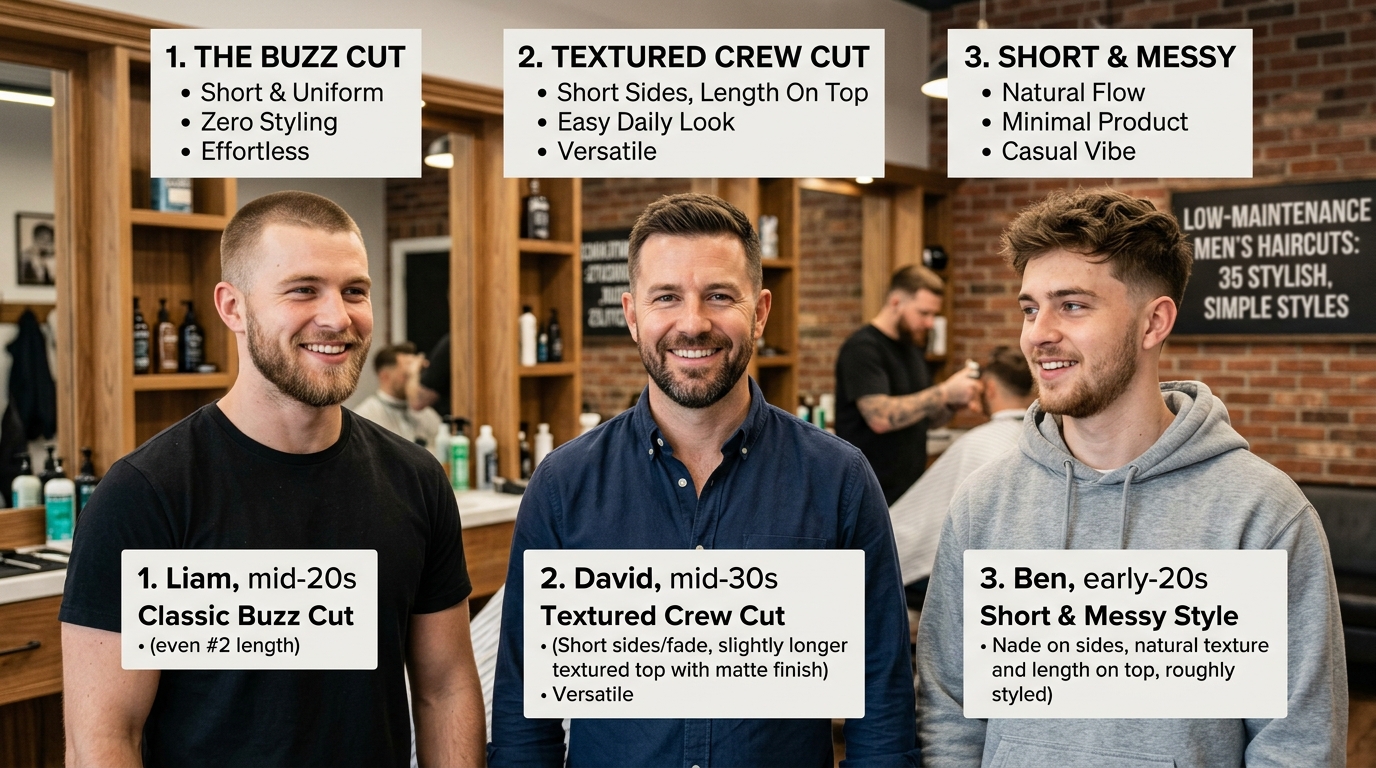
Every guy wants a haircut that just works. No fuss, no daily struggle with product, no dread every time you look in the mirror. That’s exactly what this guide covers. Welcome to 35 Popular Low-Maintenance Haircuts For Men: A Barber’s Guide. Here, you’ll find real styles that fit real life. Busy mornings. Long workdays. Zero patience for styling routines. This isn’t a list of trendy looks that fall apart by noon.
35 Popular Low-Maintenance Haircuts For Men: A Barber’s Guide breaks down the best cuts for every hair type and face shape. You’ll see buzz cuts, crew cuts, fades, and more. Each one holds its shape. Each one saves you time. Think of this guide as your shortcut to looking sharp, without the extra work.
Classic Low-Maintenance Haircuts For Guys
Buzz Cut

The buzz cut sits at the top of every barber’s low-effort list. Grab a pair of clippers, run them over your head, and you’re done. No comb needed. No product required. It works for almost any face shape and holds its shape for weeks.
Guys who want something sharper can add a fade on the sides. Pair it with a clean line up and a trimmed beard, and the whole look feels polished. It takes barely any time each morning, which makes it a favorite for busy schedules.
Crew Cut

A crew cut keeps things short on top and tapered on the sides. It’s a step up from the buzz in terms of styling options. Sweep the hair to one side with a bit of matte pomade, and you get a fresh, put-together look in seconds.
This cut works well in almost any setting. Job interviews, weekend hangouts, and formal events all suit it. It flatters most hair types too, so you won’t need to fight your natural texture just to make it look right.
Curly Hair Fade
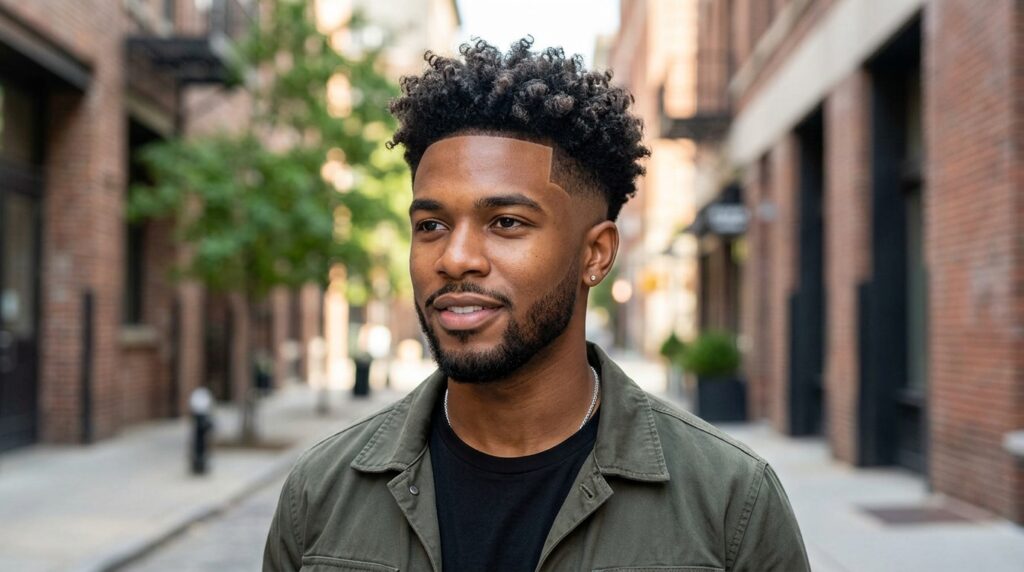
Curly hair often gets a bad reputation for being hard to manage. The curly fade proves that wrong. Let your curls bounce on top while the sides fade down clean and tight. The contrast does most of the visual work for you.
After a shower, apply a curl cream or mousse to damp hair. Scrunch it gently, then let it air dry. You’ll get defined, shiny curls without touching a blow dryer. It’s a fast routine that still looks intentional.
Short Brush Up
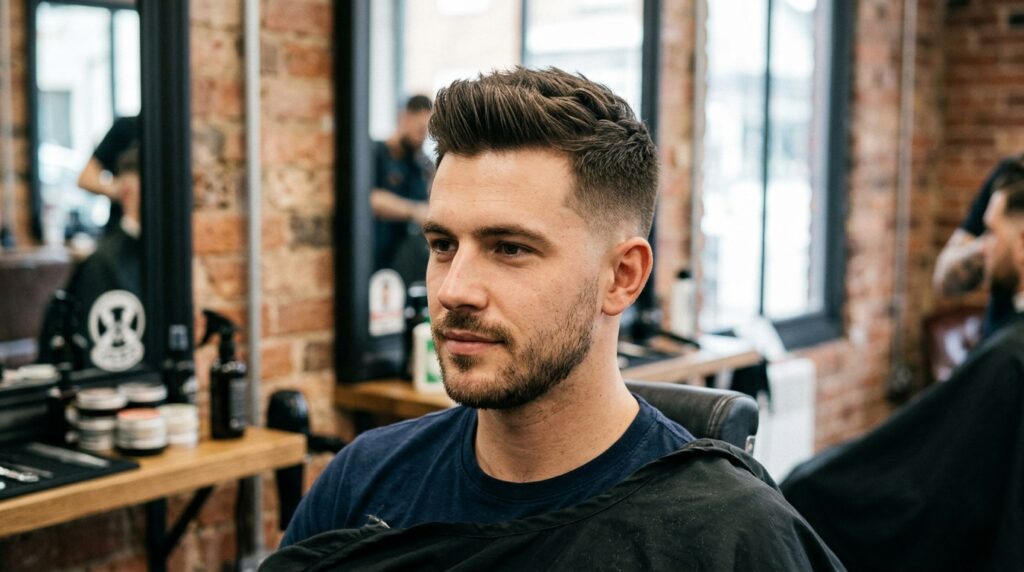
The short brush up takes minutes to style, which makes it perfect for guys short on time. A high fade separates the longer top from the shorter sides, giving the whole cut a clean sense of balance.
Add a bit of wax or cream, then brush the hair up and slightly forward. That’s the entire routine. Pair it with light stubble for a rugged edge, or shave clean for a more buttoned-up, professional vibe.
Burr Cut
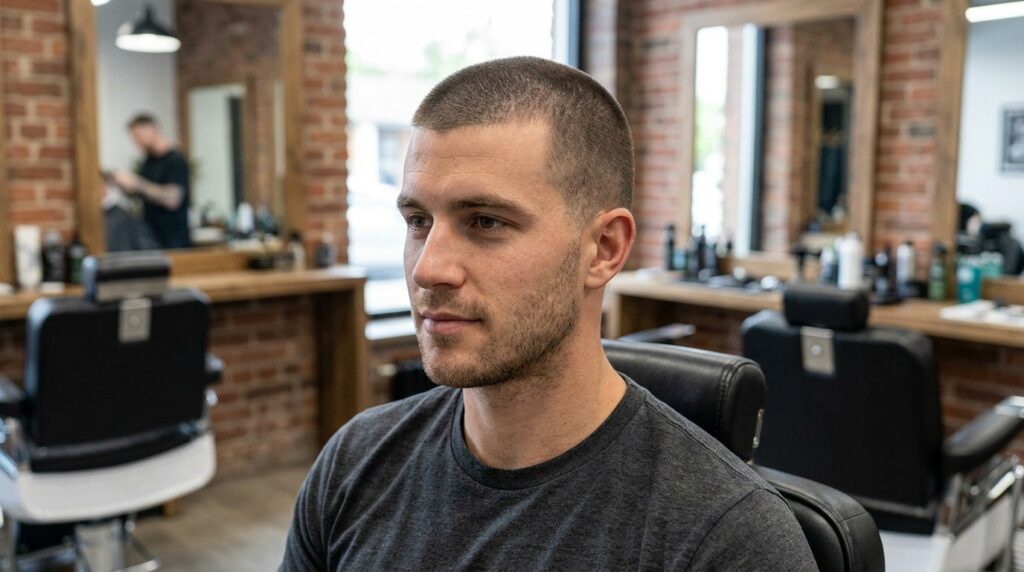
Think of the burr cut as the buzz cut’s more forgiving cousin. Clippers run at a #2 or #3 guard all over, landing between a true buzz and a butch cut. That extra bit of length hides small bumps and dips in your head shape.
Barbers often recommend it to first-timers for exactly that reason. Add a sharp, square line up at the forehead to finish the look. It turns a simple cut into something that reads as deliberate, not lazy.
French Crop
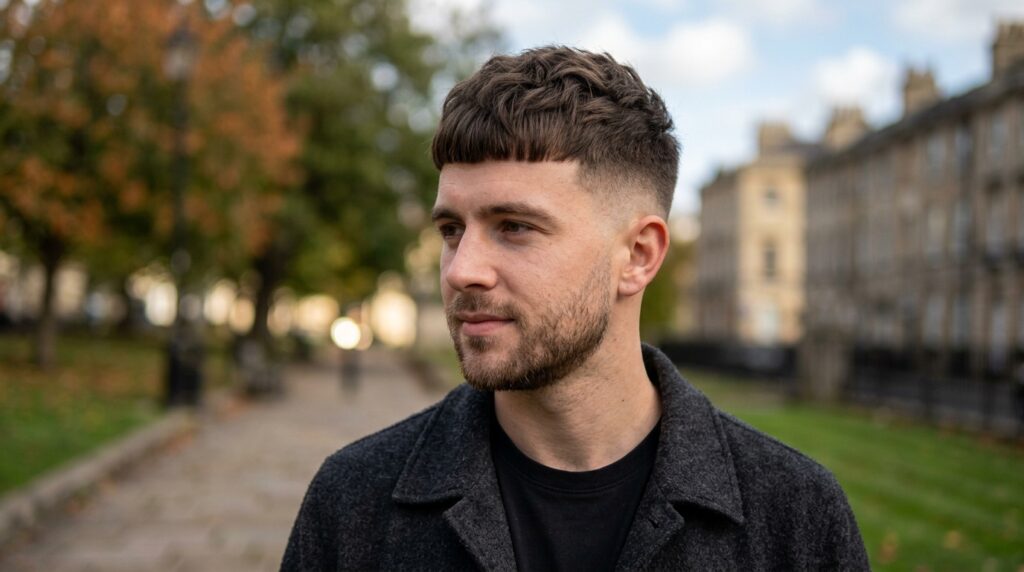
The French crop brings texture and a bit of edge without demanding much upkeep. Hair falls forward from the crown into a slightly jagged fringe. A high or mid fade on the sides makes the top look fuller by contrast.
To style it, apply sea salt spray to towel-dried hair. Brush it forward, then use your fingertips to separate pieces. The whole process takes under a minute, yet the finished look feels far more put-together than the effort suggests.
Comb Over Fade
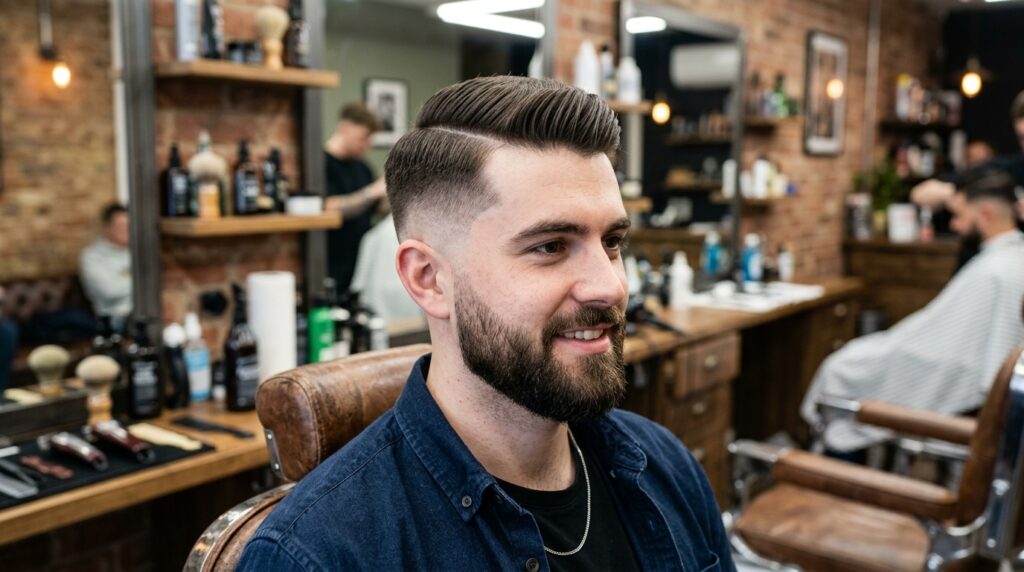
The comb over fade blends old-school sophistication with modern upkeep. Longer hair on top sweeps to one side from a deep part, lifting slightly at the front for extra height. A fade underneath keeps the whole silhouette sharp and clean.
A small amount of pomade or cream holds it in place all day without stiffness. It works equally well in the office, at a wedding, or on a casual weekend, which makes it one of the most versatile cuts around.
Fringe with Scissor-Tapered Sides
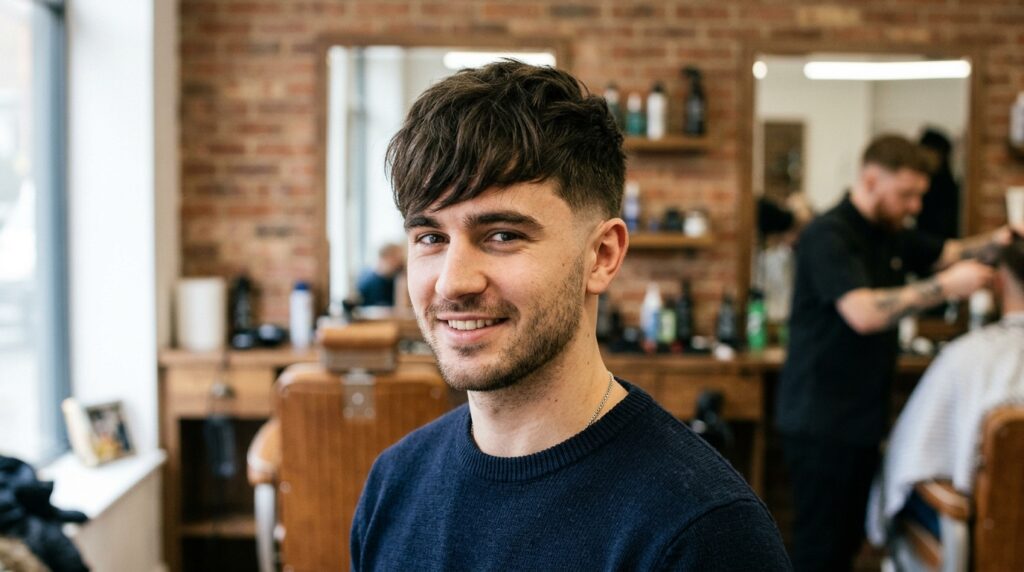
This cut skips clippers on the sides in favor of scissors, which keeps the hair softer and more natural. The forward fringe grazes the eyebrows, giving the whole style an editorial, effortless feel that still looks tidy.
Ask your barber to point-cut the top for a softer edge instead of a blunt line. If your hair has natural wave or texture, skip product entirely. The cut looks best when it moves on its own.
High and Tight Fade
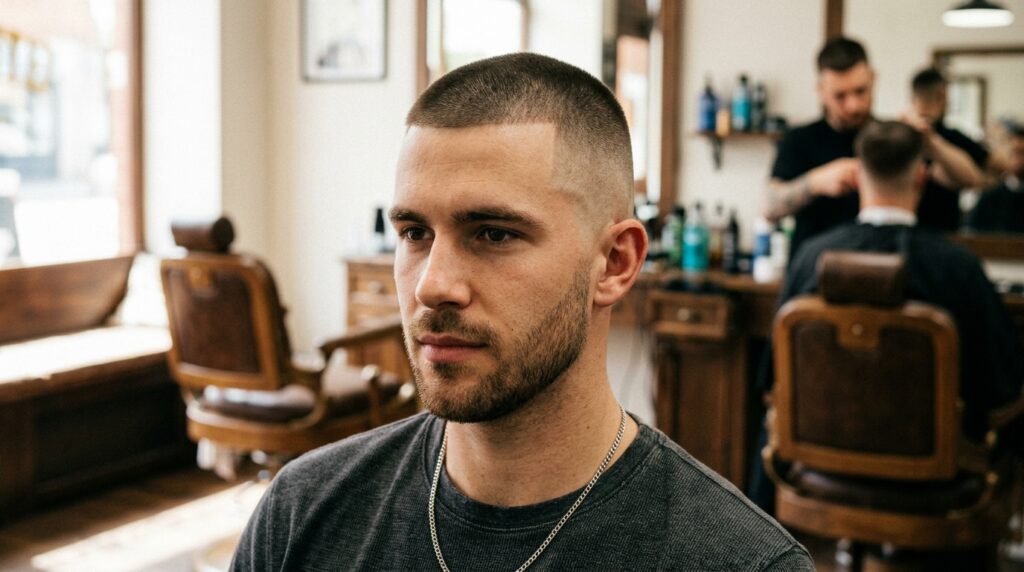
The high and tight fade is about as masculine and simple as haircuts get. A #2, #3, or #4 guard buzzes the top, while clippers skin-fade the sides down to nothing. It’s sharp, clean, and unmistakably intentional.
Add a shaved line part if you want an extra edge. This cut demands almost no daily maintenance, yet it still reads as stylish and put-together, which is exactly the balance most guys look for.
Short, Spiky Hair with Fade
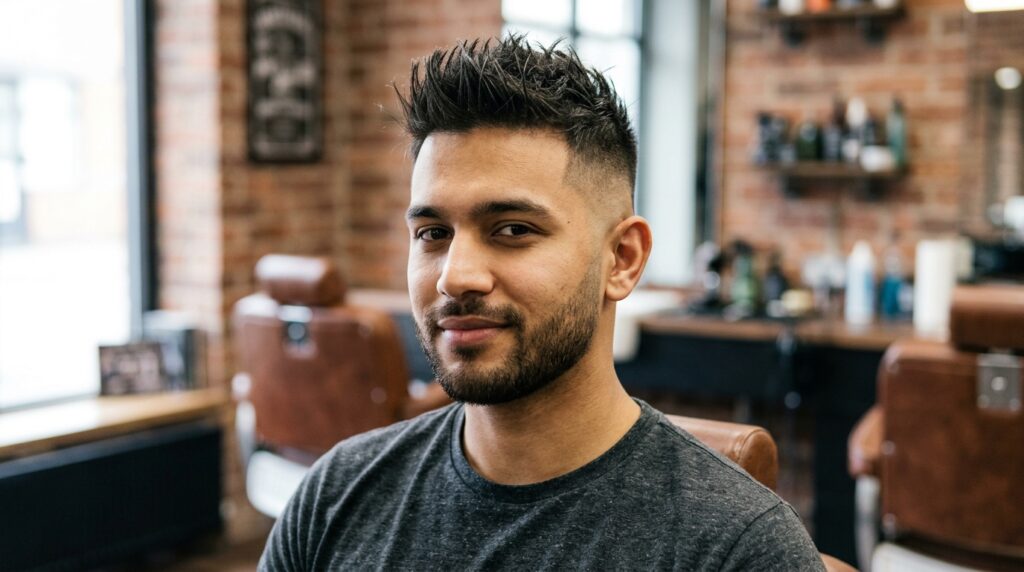
This one leans playful. Short spikes on top flow upward and slightly forward, with a section near the forehead curling gently back. A drop fade underneath creates a bold contrast that makes the spikes pop even more.
Pair it with a short, groomed beard to balance the energy on top. It’s a fun, slightly edgy option for guys who want personality in their cut without adding extra time to their morning routine.
Butch Cut Fade
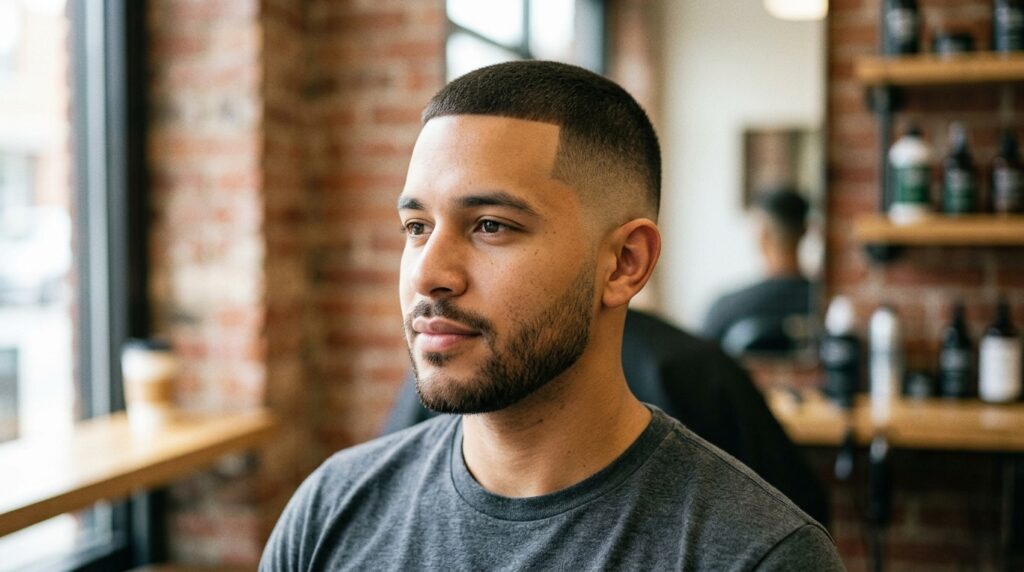
The butch cut fade takes short hair and fades it right down to the skin at the sides and nape. Upkeep is close to zero, and styling isn’t required at all. It’s built for guys who want function over fuss.
Personalize it with a line up at the hairline or a full beard for contrast. Some guys even add a shaved design on the side. Either way, this cut fits athletes, busy dads, and anyone juggling a packed schedule.
Cool Low-Maintenance Short Men’s Haircuts
Textured Quiff
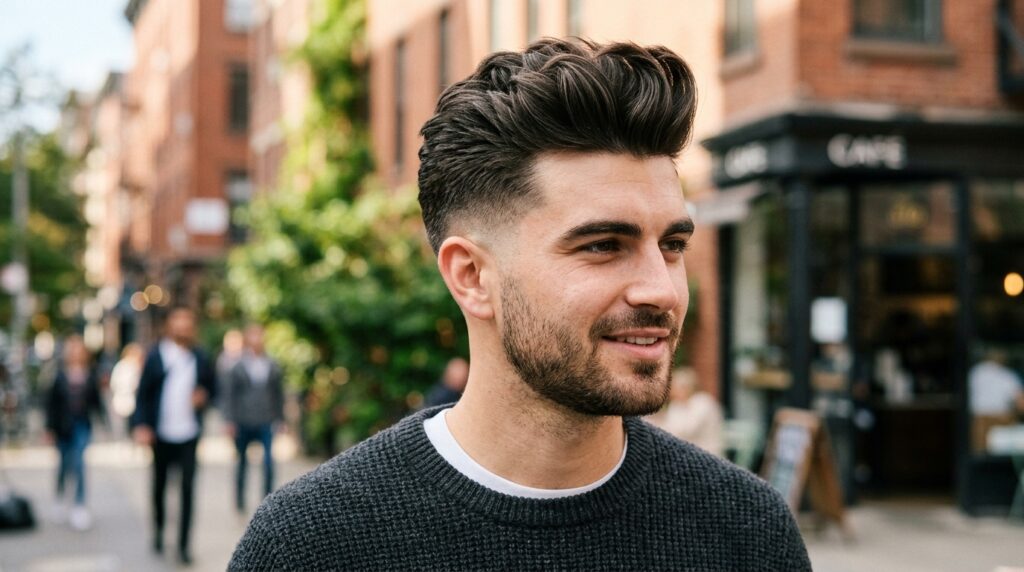
The textured quiff pairs longer layers on top with a taper or fade underneath. Those longer pieces do a lot of quiet work, hiding small imperfections and reducing the need for precision cutting or careful daily styling.
A full, well-groomed beard rounds out the look nicely. The contrast between the textured top and the tighter sides gives the whole style a sense of balance, without asking you to spend extra time each morning.
Short Curls
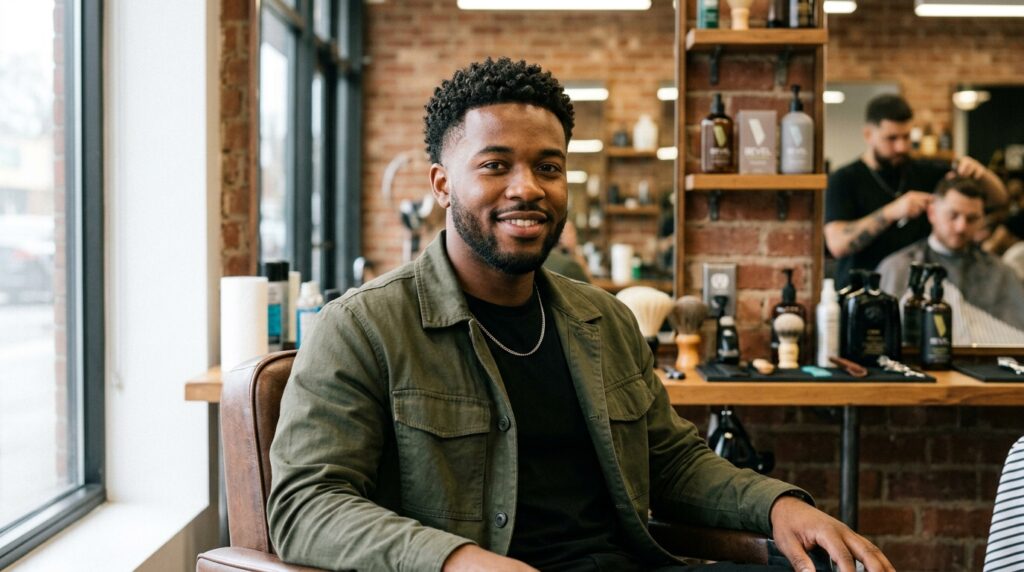
Short curls are naturally practical. Cropping the hair reduces breakage and tangling, which keeps curls healthy between cuts. The natural curl pattern also hides regrowth well, so you can stretch out the time between barber visits.
To style, apply curl cream or mousse to damp hair for light shine and definition. Then either air dry or use a diffuser. It’s a quick process that still leaves your curls looking sharp and defined.
Mohawk Fade
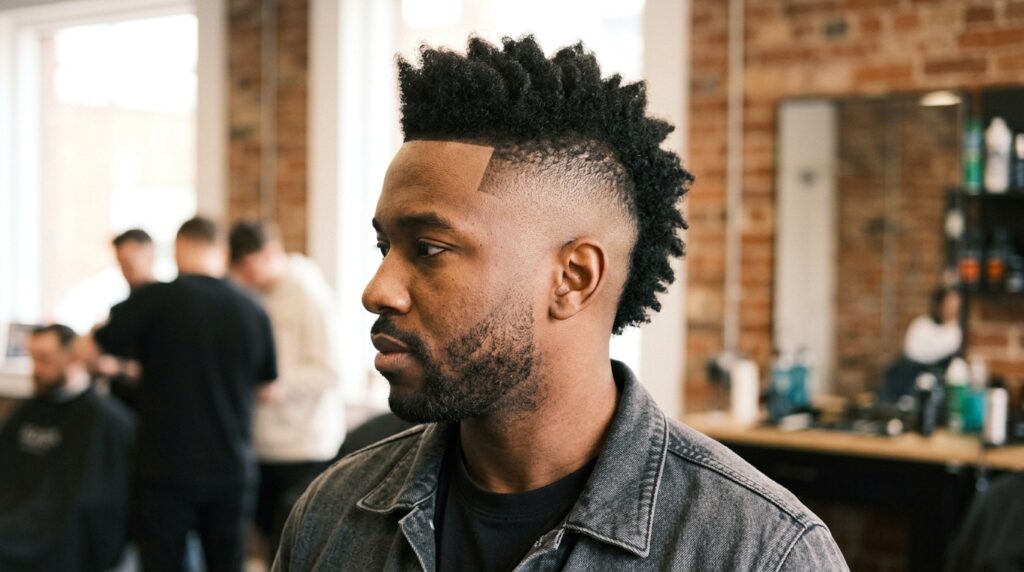
The mohawk fade takes a bold idea and makes it wearable. A burst fade adds shape and depth on the sides, while the longer strip on top can go sleek and structured or loose and tousled, depending on your mood.
A groomed beard adds a rugged finishing touch. Despite its edgy reputation, this cut doesn’t demand a complicated routine. A little product on top is often all it takes to pull the whole look together.
Undercut
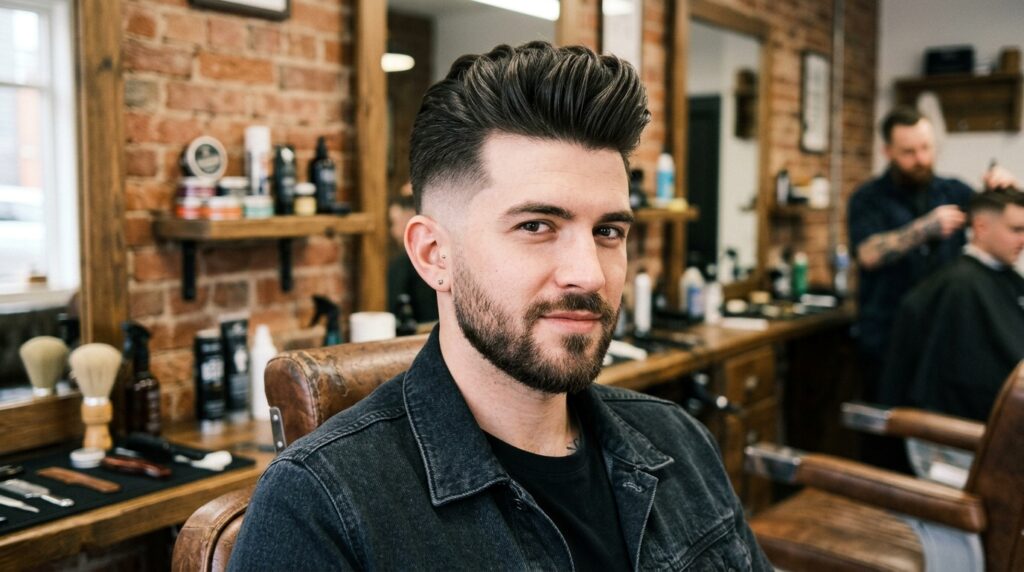
The undercut pairs longer hair on top with buzzed or shaved sides, creating sharp contrast instead of a gradual blend. That hard line is what separates it from a fade, and it draws all the visual attention upward.
Style it slicked back or swept to one side using a medium-hold pomade or clay. You can dress it up polished or keep it relaxed. Add a hard part or subtle highlights if you want to personalize it further.
Learn more:Low Taper Fade vs Mid Taper Fade:2026 Which One Is Right for You?
Braids
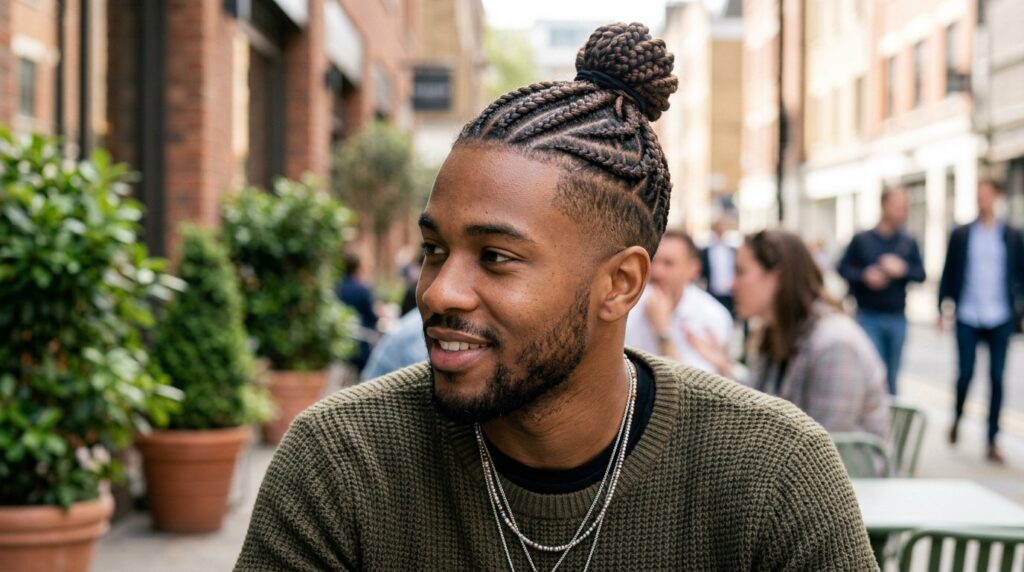
Braids offer a functional, expressive option that doesn’t need daily upkeep at home. From classic cornrows to more detailed patterns, they can reflect personal style or cultural heritage while saving you time morning after morning.
The trade-off comes upfront: you’ll spend real hours in the stylist’s chair getting them done. Once finished, though, braids can last weeks or even months. Combine them with a fade or line up for extra polish.
Short, Messy Hair with Taper Fade
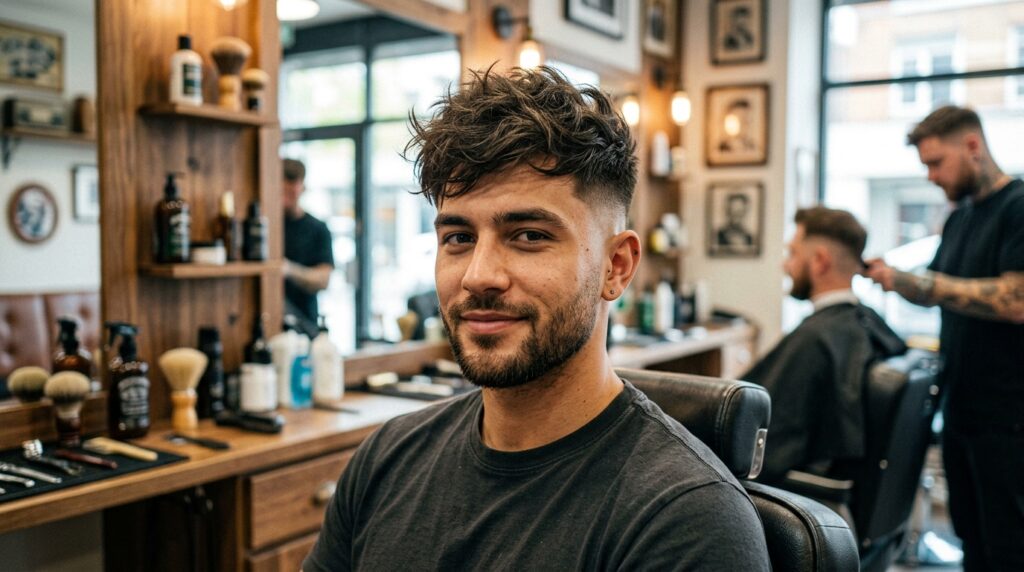
This style balances volume and movement on top with soft, tapered sides underneath. A feathery, wispy fringe grazes the brow, giving the whole cut a relaxed, youthful energy that never feels overworked or stiff.
To style, apply sea salt spray and a bit of styling clay, then tousle with your fingers. The whole process takes seconds. It’s a laid-back look that still manages to feel current and deliberately put-together.
Modern Caesar Cut
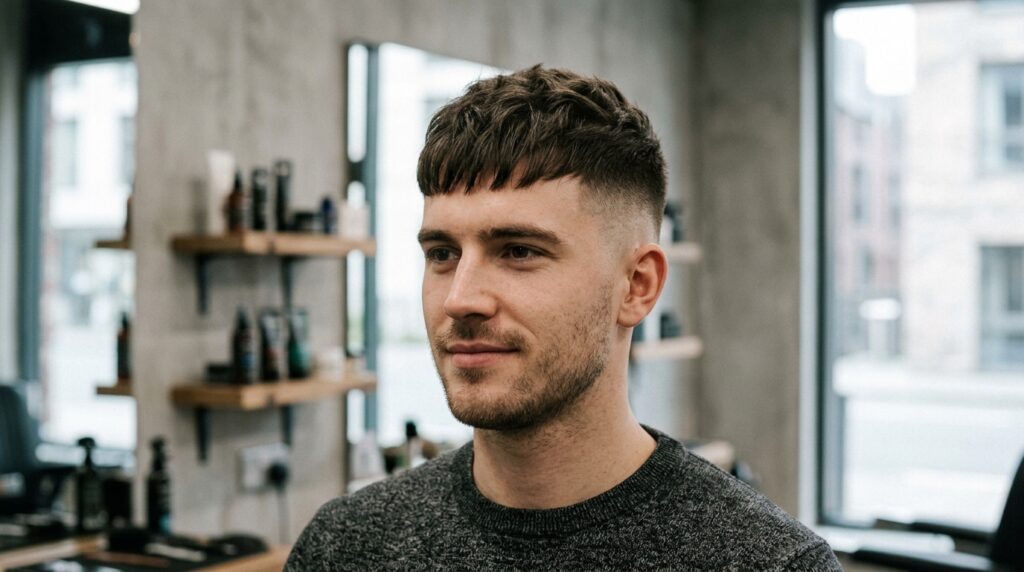
The modern Caesar cut updates a classic with a low taper or skin fade instead of uniform sides. A blunt, horizontal fringe crosses the forehead, giving the whole style a clean, textured, no-nonsense finish.
If you’re dealing with early temple recession, that straight fringe naturally hides it. Ask your barber for point-cutting along the fringe for a softer edge instead of a hard, blunt line straight across.
Temp Fade with Line Up
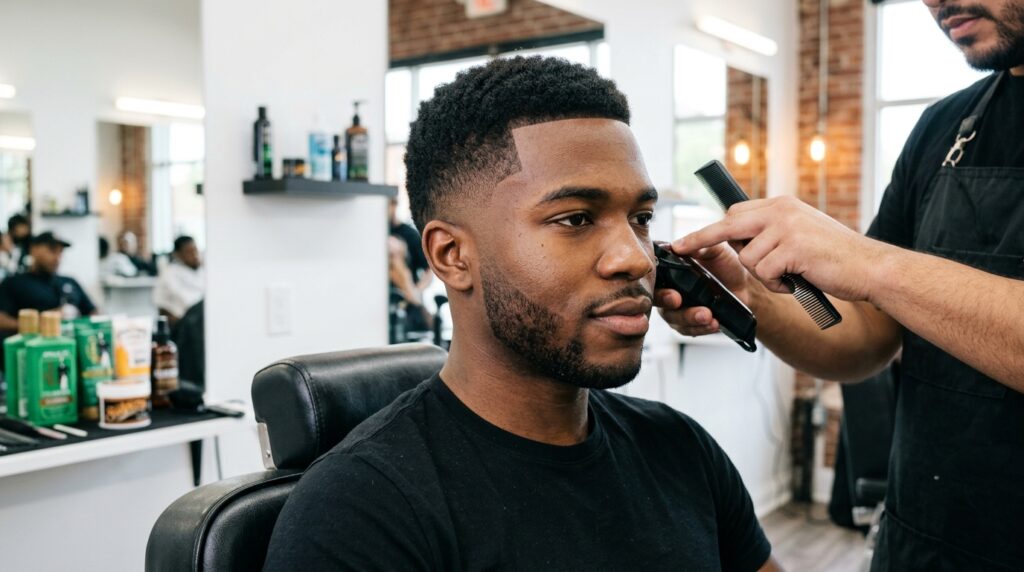
This cut blends modern precision with classic simplicity. Afro-textured hair gets buzzed short, keeping subtle waves and texture, while a low skin fade at the temples adds shape and contrast without going too extreme.
A crisp edge up at the hairline and jawline adds sophistication, and a short stubble beard brings a rugged edge. Beyond regular trims and daily brushing, this cut needs almost no extra effort to look sharp.
Long Buzz Cut Fade
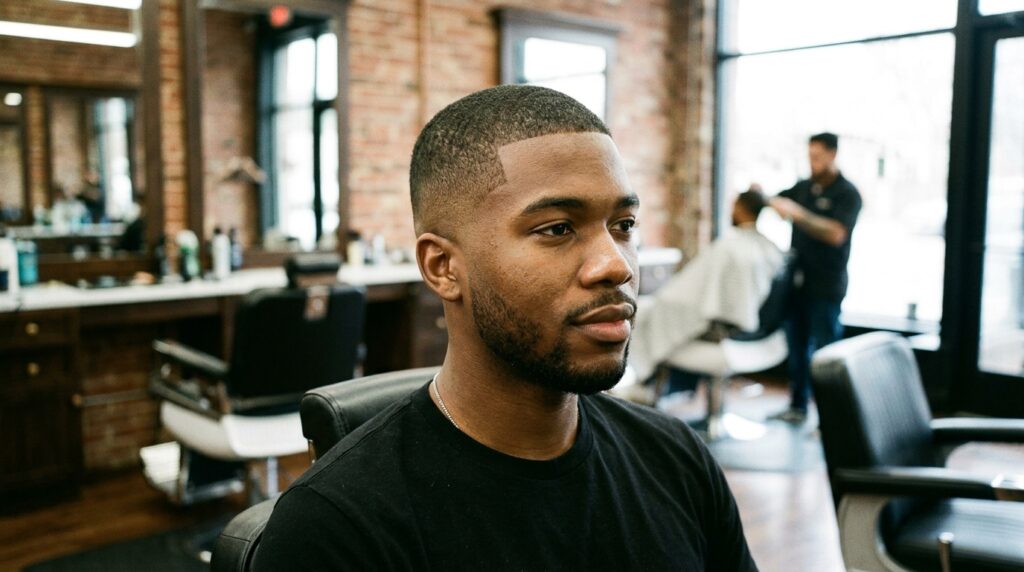
The long buzz cut fade keeps things simple by using a #2 guard on top instead of going shorter. A taper fade at the sides and back, often at a #0 or #1, adds contrast and shape.
The result is a fuller, thicker look that still reads clean and low-key. It’s soft, sophisticated, and easy to maintain. Pair it with a full beard for a look that feels handsome without trying too hard.
Textured Crew Cut Fade with Blunt Fringe
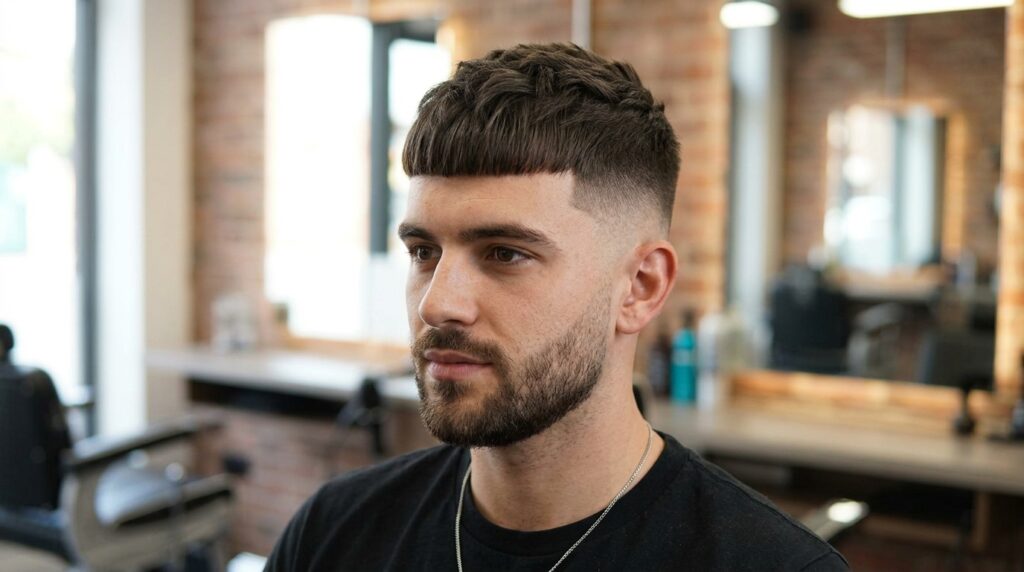
This edgy variation takes the standard crew cut and adds a blunt, forward-falling fringe. The longer hair on top ends abruptly instead of tapering off, which creates an eye-catching, deliberate look right at the front.
A high skin fade on the sides makes the top appear fuller by contrast. Styling is as simple as a quick comb or brush before you head out. There’s no product routine required for this one.
Shaved Sides
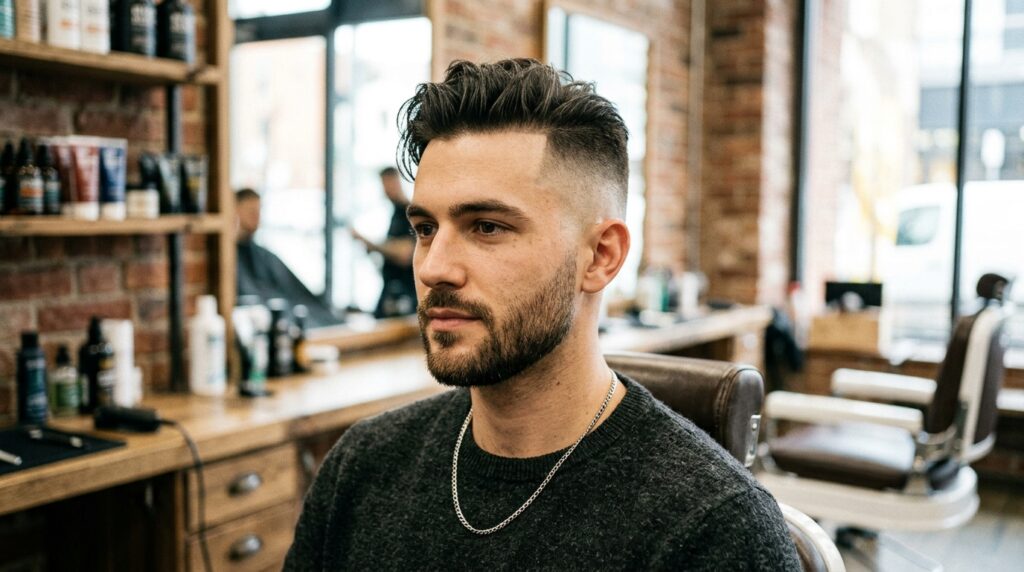
Shaved sides simplify almost any cut on top. They create contrast that makes longer styles appear taller and fuller, and they cut down on the time you’d otherwise spend blending or maintaining length at the sides.
Pair shaved sides with a tall faux hawk fade for extra height and drama. A dense, full beard helps balance out that added volume on top, keeping the whole look grounded and proportionate.
Afro Fade
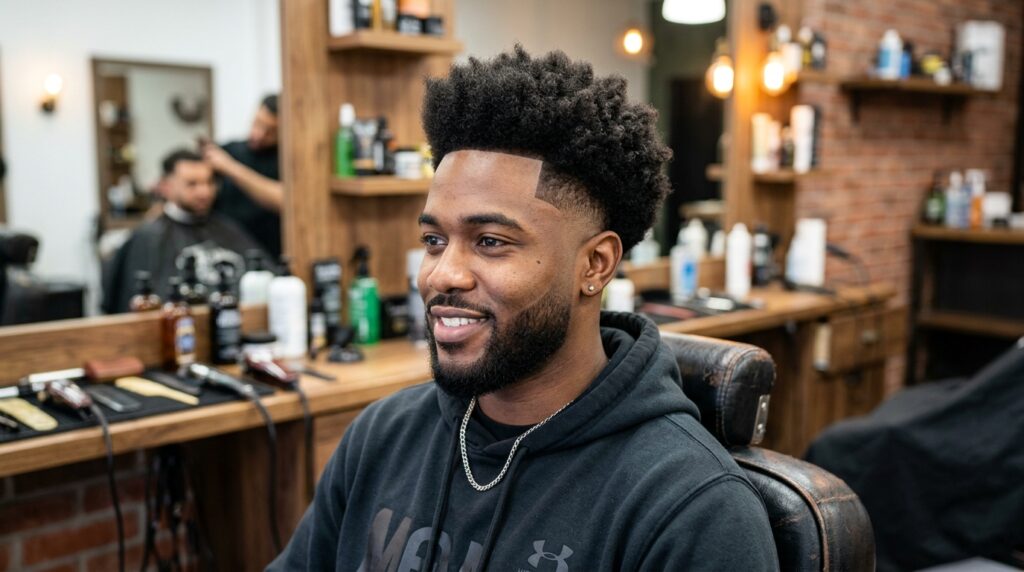
The afro fade celebrates natural texture while keeping things manageable. A mid-length afro transitions into stubble around the ears and nape, and an edge up along the forehead adds a subtle sense of lift and height.
Moisturizer and curl-enhancing oils matter more here than styling tools. Apply them regularly to keep the hair healthy. Actual styling only takes a few minutes, since the cut is designed to work with your natural curl.
Regular Cut with Low Drop Fade
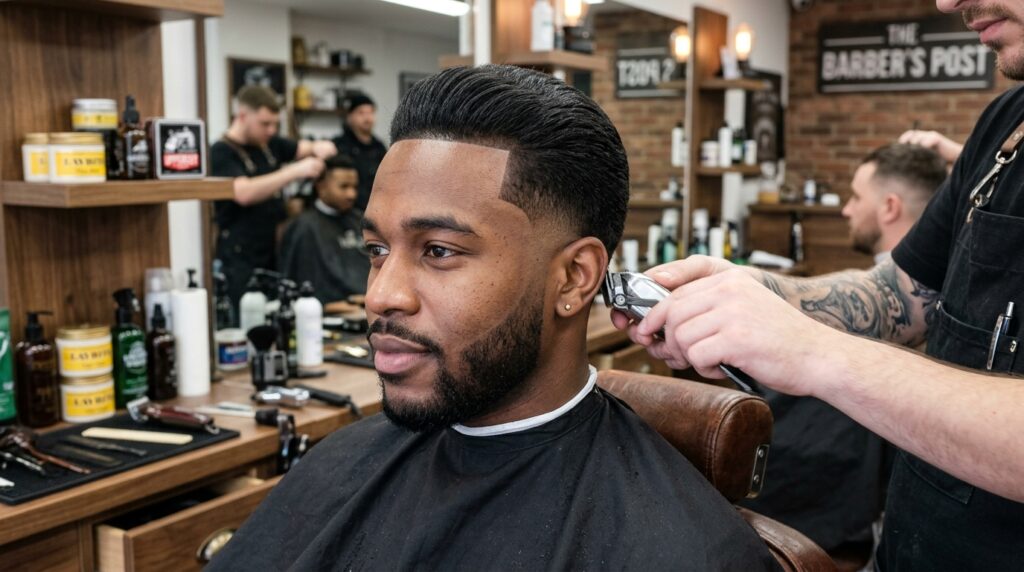
This cut combines evenly trimmed hair on top with a razored drop fade at the sides and back. The front section flows upward slightly, adding volume that contrasts nicely against the closer-cropped hair near the ears.
Clean edges at the hairline and temples finish the look with extra polish. It’s versatile enough for both casual days and dressier occasions, and it doesn’t ask for much beyond regular trims to stay sharp.
Short Twists with Mid Fade and Beard
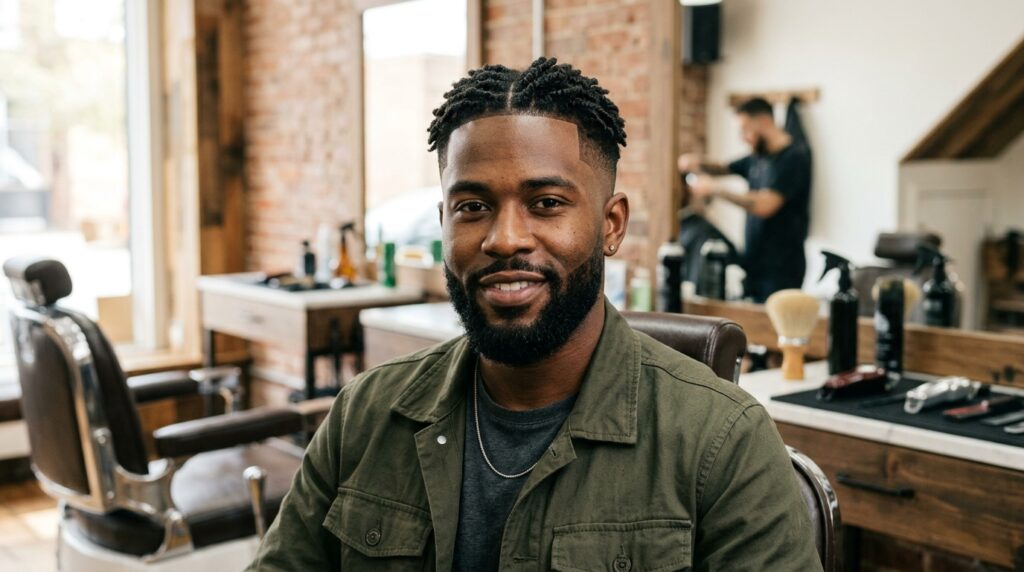
Short two-strand twists, roughly an inch long, pair beautifully with a fresh mid fade underneath. A sharply lined beard adds contrast, making the whole style feel deliberate and well put-together rather than casual.
This works especially well for guys who want a protective style that still reads as office-appropriate. Retwist the roots every three to four weeks to keep the pattern crisp and prevent buildup near the scalp.
Attractive Low-Maintenance Men’s Medium Hairstyles
Layered Flow

The layered flow suits guys who like a bit of length and movement. Hair falls to the collar in soft layers, while a face-framing fringe draws attention up toward the eyes rather than down the sides.
Wavy or curly hair types benefit most here, since the layers enhance natural texture and cut down on styling time. Tousle it for a casual night out, or slick it back when you need something more formal.
Slick Back Fade
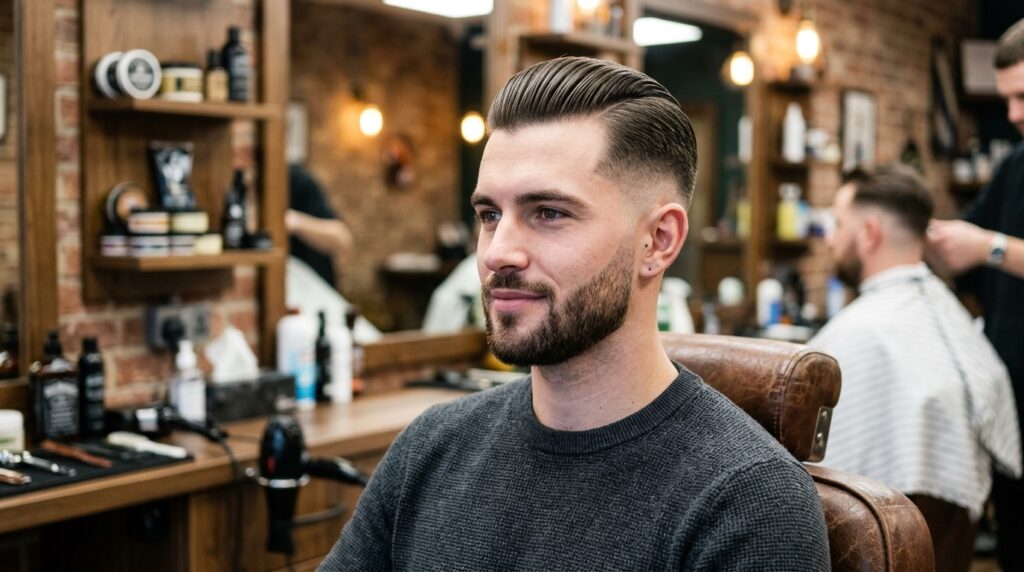
The slick back fade mixes a classic silhouette with modern edges. Hair on top is longest at the front and tapers shorter toward the crown, while a mid fade underneath adds contrast and a sense of extra volume.
Apply a strong clay or pomade, then brush everything straight back. It suits teenagers and professionals alike, and it moves easily between casual and formal settings without needing any real adjustment to the routine.
Shaggy Hair

Shaggy hair leans into a relaxed, effortless vibe. Long, messy layers fall over the forehead in a thick fringe, while scissor-cut sides stay just long enough to show off the hair’s natural texture and movement.
A generous spray of sea salt texturizer, followed by a quick tousle with your fingers, is really all it takes. The style thrives on imperfection, so there’s no need to fuss over getting every strand exact.
Man Bun

The man bun works well for guys growing their hair out who still want it functional day to day. Gather everything at the crown, twist, and secure with an elastic. The whole process takes seconds.
You can wear it loose and relaxed or slicked back and tight, depending on the occasion. Either way, it keeps hair out of your face, which makes it a practical option for long-haired guys on the go.
Short Mod Cut

The short mod cut blends retro styling with a modern edge. Layers on top and sides sweep forward toward the face, ending in a thick, textured fringe with wispy pieces framing the temples on either side.
A strong, shiny styling cream creates that classic wet-look finish. Add a bit of stubble, and the whole style comes together with real confidence. It’s distinctive without asking for a complicated daily routine.
Wavy Medium Shaggy Hair

This cut lets natural waves do most of the visual work. Layered length on top ends in feathered pieces, with longer sections grazing the ears and nape. A razor cut, rather than scissors, keeps the wave pattern intact.
Apply sea salt spray to damp hair, then let it air dry completely. Skip the blow dryer altogether. The texture holds up on its own, which keeps this look genuinely low-effort from start to finish.
Medium Middle Part

The medium middle part brings a confident, beachy energy. Waves fall naturally over both sides of the head, creating a feathery texture that feels current without looking overworked or overly styled.
To get it, apply a moderate-shine wax or pomade to damp hair, part it down the center, and let it fall into place. It’s an easy routine that suits busy guys who still want a stylish, put-together finish.
Messy Medium Waves

Messy medium waves lean into natural texture instead of fighting it. Layering helps the waves stack gently, adding volume and height throughout. Scissor-cut sides keep the whole thing tidy without flattening the movement on top.
Apply curl cream to damp waves, sweep the fringe to one side, and let it dry naturally. A full beard adds a handsome frame to the face. The result feels relaxed but never sloppy.
Dreads
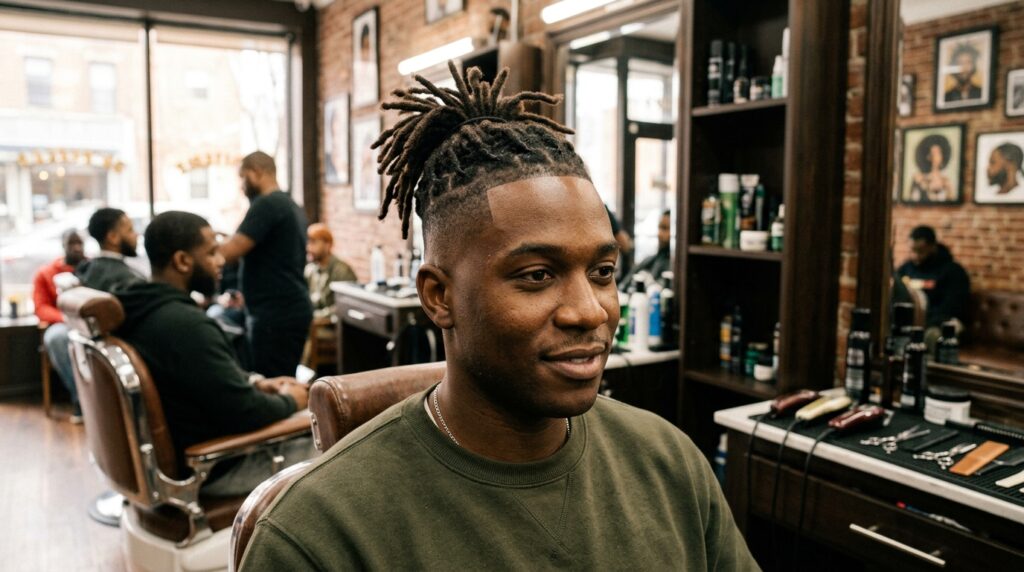
Dreads, also called locs, rank among the most low-effort long styles once they’re fully formed. There’s very little daily maintenance involved, since the style holds its shape on its own without regular restyling or product.
You can keep them simple and natural, or add beads and other details for a more artistic finish. Either way, dreads offer a distinctive, expressive look that doesn’t demand much from your morning routine.
Textured Side-Swept Styling with A Low Fade
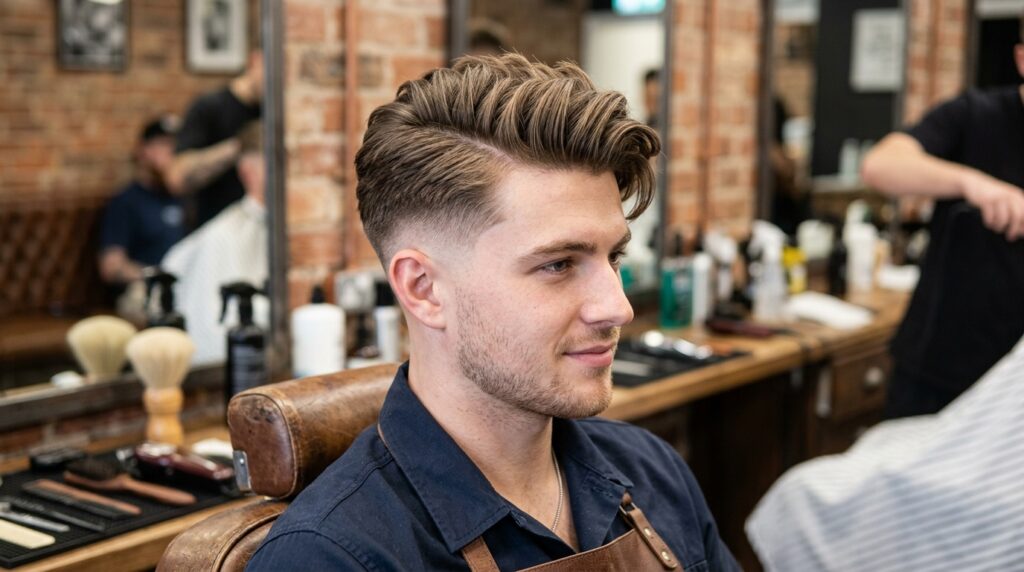
This style pairs medium-length hair on top with a low drop fade underneath. The top brushes cleanly to one side, creating a soft, deliberate finish that still reads as neat and well put-together.
The sides drop gracefully behind the ear, giving the whole cut a softer edge than a standard fade. It’s a great middle-ground option for guys who want more length without sacrificing a clean, manageable shape.
The Most Basic Men’s Hairstyles
The simplest men’s cuts include the buzz cut, crew cut, Ivy League, classic side part, undercut, French crop, slick back, comb over, and messy shag. Each one stays short and needs minimal daily styling to look sharp.
These cuts earn their reputation because they prioritize function without sacrificing style. A small amount of pomade, clay, or wax, worked in with a comb or your fingers, is usually all it takes to finish the look.
Why These Cuts Stay Popular
These styles stay popular because the cut itself does most of the work. There’s no special technique to learn and no product that’s truly required to hold the shape together throughout the day.
A small amount of pomade, clay, or wax adds control when you want it. Beyond that, a comb or your fingers shapes things into place. The simplest morning routine also happens to be the most universally flattering one.
What’s The Easiest Haircut To Maintain For Guys
The classic buzz cut wins this category easily. You can do it yourself at home with a pair of clippers, since the length stays uniform all over. There’s no blending or technique required to get it right.
Modern variations like the short crew cut, butch cut, and burr cut also rank as fast and low-effort, especially if you have strong, angular features. These simple cuts project confidence and a no-nonsense, masculine character.
What Counts As A Low-Maintenance Haircut
Most guys assume low-maintenance simply means short. That’s not quite right. A skin fade looks short and effortless, but it needs a barbershop visit every ten to fourteen days to stay sharp and clean.
A medium-length flow, by contrast, looks more involved but can stretch eight weeks between cuts. True low-maintenance comes down to three measurable factors, not just how much hair gets left on the floor.
The Criteria For A Low-Maintenance Style
A cut genuinely qualifies as low-maintenance when it meets at least two of three standards. First, it needs under five minutes of daily styling. Second, it should go four or more weeks between barber visits.
Third, it needs one styling product or none at all. No stacking heat protectant on cream on finishing spray. Meeting two out of three criteria is the real test, not just how short the hair looks.
The Styling Time Test
Cuts that fall into place naturally, with minimal or no product, rank as the lowest-effort options. The buzz cut and burr cut need zero product to look finished. The crew cut and French crop need just a small amount of clay.
Anything requiring a blow dryer, plus product, plus careful combing every morning has crossed out of low-maintenance territory. That’s true no matter how short the actual hair happens to be.
The Trim Cadence Test
A cut that needs a barber visit every two weeks isn’t truly low-maintenance, even if it looks simple in the chair. The longer the gap between visits, the lower the actual maintenance involved.
Buzz cuts at a #1 or #2 hold shape for two to three weeks. Crew cuts and short crops stretch to four or five weeks. Skin fades, despite looking clean, need re-cuts every ten to fourteen days.
The Product Test
Genuinely low-maintenance cuts need one product or none at all. If a style requires heat protectant, styling cream, and a finishing product just to look right, it’s not low-maintenance, regardless of how short it looks.
The simplest options need zero product. The next tier needs one application of clay, cream, or curl product. Anything beyond that has turned into a real routine, not a quick morning habit.
How To Choose A Low-Maintenance Cut For Your Face Shape
Oval Face
Oval faces are the most flexible shape out there. Almost any low-maintenance cut works well here. The crew cut, French crop, slick back fade, textured quiff, and side part fade all flatter this shape nicely.
Since your face shape won’t limit your options much, lean toward whichever cut fits your daily routine best. Comfort and convenience can take priority over strict styling rules when your face shape gives you this much room.
Round Face
Round faces benefit from added visual height, which helps elongate the face and slim the cheeks. The high and tight fade, textured quiff, comb over, and mohawk fade variations all work well for this shape.
Avoid uniform short buzz cuts without a fade, since they tend to emphasize roundness rather than balance it out. A little height and contrast go a long way for this particular face shape.
Square Face
Square faces look best with cuts that add texture and movement to soften strong, angular features. The textured French crop, short brush up, short curls, and short messy hair with a taper fade all work well.
Skip the strict, uniform buzz cut here, since it tends to exaggerate the squareness of your jawline rather than complement it. Texture and movement matter more than length for this particular shape.
Oblong (Long) Face
Oblong faces benefit from added width and less height on top. The crew cut, layered flow, medium middle part, and short mod cut all help balance out the proportions of a longer face shape.
Avoid pompadour-style cuts, textured quiffs, and any tall styles that add extra height. These tend to stretch the face further, which works against what you’re trying to achieve with an oblong shape.
Heart-Shaped Face
Heart-shaped faces benefit from cuts that balance a wider forehead against a narrower chin. The comb over, slick back undercut, layered flow, and side part with a low fade all work particularly well here.
The angles created by a side part naturally draw attention away from a fuller forehead and toward the eyes instead. That subtle shift in focus helps balance the proportions of this face shape.
Diamond Face
Diamond faces do well with added volume near the forehead and chin, which helps balance out prominent cheekbones. The textured quiff, French crop, and longer styles like the man bun and shaggy hair all work nicely.
Avoid extreme contrast, like pairing a high skin fade with a tall textured top. That combination tends to exaggerate the cheekbones rather than soften them, which works against the goal for this face shape.
The Pro Move for Low-Maintenance Specifically
If low-maintenance is your top priority, choose face-shape-flattering options that lean shorter rather than longer. Longer styles can flatter almost any face shape eventually, but they demand more daily effort to maintain.
Shorter cuts within your face shape’s flattering range give you more value per minute spent styling. You get a look that holds up and stays put, without the extra time investment longer styles require.
The Best Low-Maintenance Haircuts by Hair Type
Straight Hair
Straight hair shows off the precision of any cut clearly, which makes simple styles look sophisticated without much extra effort. The buzz and crew cut, French crop, butch cut, and Ivy League all work especially well here.
Because straight hair holds a clean line naturally, you don’t need extra product or technique to make these cuts look sharp. The simplicity of the hair type pairs perfectly with the simplicity of these styles.
Wavy Hair
Wavy hair does best with cuts that use the natural wave as a feature, rather than fighting against it. The textured quiff, brush up, short messy hair with taper fade, layered flow, and medium middle part all fit well.
Apply sea salt spray to towel-dried hair to enhance the wave pattern naturally. This small step brings out texture without requiring heat tools or a complicated multi-step styling routine each morning.
Curly Hair
Curly hair is naturally low-maintenance once it’s cut correctly. Curly hair fades, cropped curls, and afro fades all make sense for this texture, since shorter styles help the natural curl pattern hold its shape.
Apply curl cream to damp hair, scrunch gently, then air dry or use a diffuser. No styling tools required beyond that. The natural curl does most of the work for you here.
Coily Hair
Coily hair suits the afro fade, buzz cut, temp fade with a line up, short twists, and braids particularly well. These styles work with the natural pattern instead of trying to force it into something else.
Daily moisture matters more here than styling effort. Apply a leave-in conditioner or scalp oil regularly to keep the texture defined and the scalp healthy, which matters more than any styling product.
Thick Hair
Thick hair benefits from crew cuts, crop tops, short comb overs, messy shags, and textured quiffs, all styles that call for a barber to remove some bulk so the cut sits cleanly rather than bulky.
Ask your barber to use thinning shears to manage the volume properly. Avoid uniform medium-length cuts without layering, since they tend to turn thick hair into a heavy, helmet-like shape instead of something styled.
Fine or Thin Hair
Fine or thin hair works best with a short cut that avoids exposing thinning areas underneath. The French crop and textured crew cut both create the appearance of fullness through smart layering and texturizing clay.
Avoid longer styles here, since they tend to expose challenging areas and require more daily styling effort to look intentional. Shorter, textured cuts give the illusion of density without extra work.
Choosing An Easy Hairstyle For Your Lifestyle
For Busy Professionals
The crew cut, comb over taper fade, and slick back undercut all look sharp and refined in client meetings or professional settings. Each one needs roughly three minutes of morning effort to look properly put-together.
These cuts hold their shape for three to four weeks between barber visits, which fits well into a packed schedule. A hair clay or matte pomade is the only product required to finish the look.
For Dads and Parents
The buzz cut, crew cut, short curls, and French crop rank as the fastest, easiest options for parents. The shorter you go, the less time you spend thinking about your hair while managing kids at seven in the morning.
None of these styles require an involved styling routine, and most can even be maintained at home if scheduling regular barber visits proves difficult. That flexibility matters a lot for busy parents.
For Athletes and Gym Regulars
The buzz cut, butch cut fade, high and tight fade, and temp fade all suit active lifestyles well. Sweat dries fast, helmets and headbands fit cleanly, and there’s no product to wash out after every workout.
Skin fades do require more frequent barber visits to stay sharp, but they still hold up cleanly under sports gear. That trade-off is worth it for guys who want a sharper look despite an active routine.
For Students
The French crop, short brush up, textured crew cut, and curly hair fade all strike a good balance for student life. They’re trendy enough to fit in socially, yet simple enough to maintain in a dorm setting.
Each of these cuts works with minimal product and still looks intentional, even after a rough night of sleep. That combination of style and low effort makes them popular picks on campus.
For First Job Interviews and Conservative Workplaces
The crew cut, Ivy League, classic side part with a low fade, and comb over all read as conservative and classy without feeling boring or dated. Each communicates a sense of intention rather than calling attention to itself.
Schedule the cut five to seven days before any major interview, rather than the day before. That gap lets the cut settle in and look natural instead of freshly trimmed and stiff.
For Frequent Travelers
The buzz cut, French crop, and butch fade all travel well. There’s no product to worry about at airport security, no styling tools required, and the look stays consistent across time zones and different water conditions.
These cuts hold up fine in hotel showers with unfamiliar shampoo and low water pressure. That consistency matters a lot for guys who move around often and want their look to stay dependable.
For Men Over 40
The French crop, low fade with a short top, and textured crew cut all read polished and age-appropriate for men over forty. The French crop, in particular, does a nice job masking temple thinning if it’s started.
These cuts strike a balance between classic and current, without trying too hard to look youthful. For more tailored options, a dedicated guide on hairstyles for older men covers even more ground.
How Often To Get A Low-Maintenance Haircut
The cuts that look simplest in the chair often need the most frequent visits to stay sharp. Meanwhile, the more involved-looking styles tend to hold their shape the longest between trims.
Understanding this trade-off helps you plan your schedule realistically. A style that photographs well on day one but falls apart by day ten isn’t actually saving you time in the long run.
Timeline By Style
Buzz cuts and burr cuts need attention every two to three weeks for the cleanest look, or every four weeks if some grow-out doesn’t bother you. Crew cuts and short crops stretch to three or four weeks comfortably.
Cuts with skin fades need re-cuts every ten to fourteen days for the fade itself. Medium-length styles like a layered flow can stretch to six or eight weeks, while long styles like dreads go ten to fourteen weeks.
How to Cut Your Own Low-Maintenance Haircut at Home
Styles You Can Actually Do At Home
Certain cuts are genuinely beginner-friendly. The buzz cut at any guard length, the burr cut, the butch cut without a fade, the long buzz cut, and a crew cut with shorter sides all fall into this category.
Each requires minimal technique to pull off. If you can hold a pair of clippers steady and follow the natural contour of your head, you can realistically manage these cuts yourself at home.
Cuts You Can Maintain at Home, But Shouldn’t Start There
Some cuts, like the crew cut, let you trim length at home once a barber establishes the original shape. Basic perimeter cleanup around the neckline and ears also falls into this maintainable category.
Use these touch-ups between barber visits to stretch out the time before your next appointment. Recreating the original shape from scratch at home, though, isn’t something most guys should attempt without real practice.
Ones You Should Never Attempt
Anything involving a fade ranks as the hardest part of barbering, and it will almost always look worse when attempted at home unless you’re exceptionally skilled. The blending technique takes years for professionals to master.
Skip line ups, since they demand precise edge work, and avoid structured styles like layering or scissor work entirely. Also, never attempt an at-home cut on someone else if you don’t know what you’re doing.
The Minimum Equipment You Need
A solid pair of clippers matters most. Options like the StyleCraft Saber II, BaBylissPRO FX+, Wahl Magic Clip, and Andis Master run between $150 and $300, and they last far longer than cheap alternatives under $30.
You’ll also need a guard set with at least #1 through #4, a T-blade trimmer like the Andis T-Outliner for edge work, and a handheld mirror so you can actually see the back of your head.
The Basic At-Home Buzz Cut Process
Start with clean, fully dry hair, since damp hair drags under the clippers and creates uneven patches. Choose a starting guard, and if you’re unsure, go one size longer than you initially think you want.
Work from front to back, running clippers against the direction of hair growth. Use overlapping passes, switch directions on the sides, and clean the neckline with a T-blade before checking your work in a handheld mirror.
Cost vs. Barbershop Math
A $200 clipper kit pays for itself within four to eight buzz cuts at most barbershops in the U.S. The average men’s haircut runs $25 to $50 in most cities, with major metros pricing higher.
If you plan on cutting your own hair more than four times a year, the math works clearly in your favor. That upfront cost turns into real savings pretty quickly once you factor in regular trims.
The Minimum Product Setup
The One-Product Setup
A matte styling clay or paste can genuinely cover everything you need. Apply a pea-sized amount to damp or dry hair, work it in with your fingers, and you’re out the door in under two minutes.
This single-product approach works well for the crew cut, French crop, short brush up, textured quiff, comb over fade, and slick back. There’s no need for anything more complicated than one solid product.
The Right Styling Product By Texture
Straight hair does best with matte clay or paste, since it adds grip without flattening the cut. Wavy hair benefits from sea salt spray, applied to damp hair and left to air dry naturally.
Curly hair needs curl cream applied to damp strands for definition. Coily hair benefits most from a lightweight oil or moisturizing cream, while fine or thin hair does best with a volumizing matte paste.
The Two-Product Setup (If You Want It)
For a bit more polish, add a clarifying shampoo to your weekly rotation. Use it once a week to break down product buildup that regular shampoo tends to leave behind over time.
Daily styling product paired with regular shampoo alone isn’t quite enough. Without that clarifying step, hair eventually starts looking dull and feels weighed down, even right after washing it in the shower.
What Not to Buy
Skip pomade unless your specific cut calls for it, since it’s often too shiny for short, low-maintenance styles. Gel creates stiffness that works against a casual, natural finish, and hairspray simply isn’t necessary here.
Also skip heat protectant unless you use heat tools regularly, leave-in conditioner unless your style is medium or long, and dry shampoo, since a quick shower refresh usually works better anyway.
Cost Expectation
Most highly-rated hair clays run $20 to $30 and last three to six months on shorter styles. Avoid overpriced brands that charge premium prices for just two ounces of product, since that math rarely works out.
A genuinely low-maintenance routine should cost under $100 a year total, including shampoo and clarifying shampoo. If you’re spending more than that, you’re likely buying products you don’t actually need.
Common Haircut Mistakes
Choosing a Cut That Requires a Fade
A fade needs a fresh trim every one to two weeks to look good, which isn’t low-maintenance no matter how short you go overall. That frequent upkeep adds up fast over the course of a year.
If you want genuinely low effort, ask for a uniform buzz or a tapered blend instead. That switch alone can stretch your visit cadence from every two weeks down to every three or four.
Skipping the Line Up to Save Time
Buzzed haircuts without clean lines at the forehead and neckline read as unfinished rather than intentional. The trimmer work along the perimeter is what separates a polished look from a lazy one.
Always ask for the line up specifically. If your barber doesn’t include it automatically, request it directly. That small detail makes a bigger difference to the finished look than most guys expect.
Picking a Cut Based on a Celebrity, Not Your Hair Type
Celebrity hairstyles look great because of stylists, lighting, and sometimes a bit of photo editing. Your version needs to work with your own hair texture and head shape, not just the reference photo.
Show your barber the picture you like, then ask what would need to change to make it work for you specifically. That conversation matters more than the photo itself for a good final result.
Trying to Fade at Home Without Practice
Blending a fade ranks as the hardest single technique in barbering, and it takes professionals years to fully master. If you’re still learning to cut your own hair, stick to uniform buzz cuts and basic cleanups.
Attempting a fade at home almost always produces a visible step in the gradient. That mistake usually takes weeks to grow out before a barber can properly fix and reshape it.
Not Adjusting the Cut as You Age
A haircut that looked great at twenty-five may not suit the same face at fifty, once features soften or the hairline shifts. Evaluate your look every few years to match how your face has actually changed over time.
The reverse holds true too. A longer style that worked well at thirty might not work as well at fifty if thinning has started. Adjusting with age keeps the look feeling current and flattering.
FAQ’S
What’s the easiest low-maintenance haircut for men?
The buzz cut wins easily. You can do it yourself with clippers, it needs zero product, and it holds its shape for weeks straight.
How often should guys get a haircut?
Most cuts need a trim every three to four weeks. Fades need more attention, roughly every ten to fourteen days, to stay sharp and clean.
What haircut works best for a receding hairline?
A French crop masks thinning at the temples nicely. The forward fringe covers recession naturally, so you won’t need to go shorter than you’d like.
Can I cut my own hair at home?
Yes, for buzz cuts and burr cuts. Skip fades and line ups though. Those need a skilled barber’s hand for clean, even results.
What’s the biggest mistake guys make with haircuts?
Picking a fade without realizing the upkeep. Fades look sharp but need frequent trims. A uniform buzz saves you way more time.
Conclusion
That wraps up our guide to mens haircuts. From buzz cuts to fades, you’ve got real options that fit your life. Mens haircuts don’t have to eat up your morning. The right cut saves you time, money, and stress every single day.
Pick a style that matches your hair type and face shape. Stick to the trim schedule that works for you. Mens haircuts, done right, make mornings easier. Whether you want short and simple or medium with movement, there’s a low-maintenance mens haircut waiting for you. Visit your barber, show them what you like, and enjoy the results.