

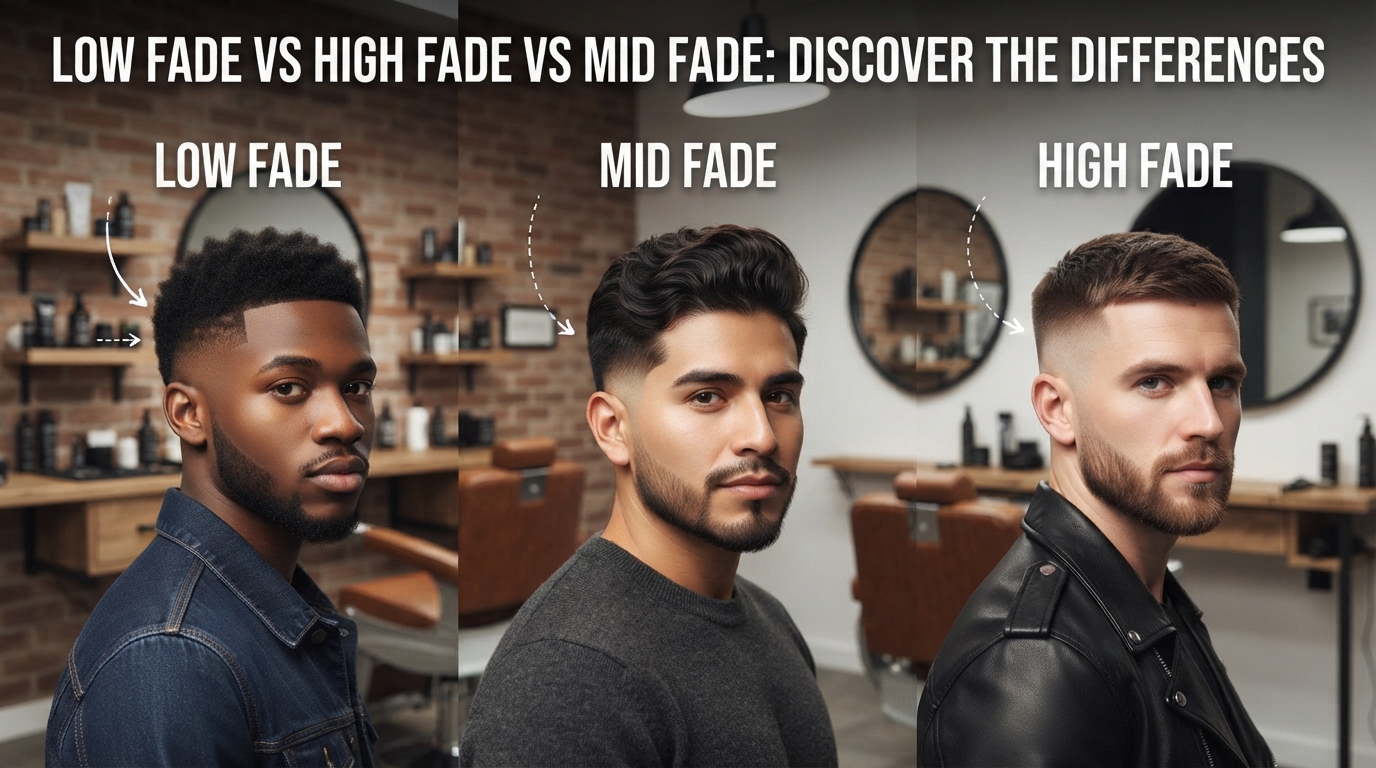
Fade haircuts are everywhere right now. Guys want that clean, sharp look on the sides. But picking the right fade can feel tricky. That’s where Low Fade vs High Fade vs Mid Fade: Discover The Differences comes in handy. Each style says something different about you. A low fade stays quiet and classy. A high fade shouts confidence. A mid fade sits right in the middle.
This guide breaks it all down for you. We’ll walk through Low Fade vs High Fade vs Mid Fade: Discover The Differences step by step. You’ll learn where each cut starts. You’ll see which one fits your face and style best. By the end, you’ll know exactly what to tell your barber.
What Is A Low Fade?
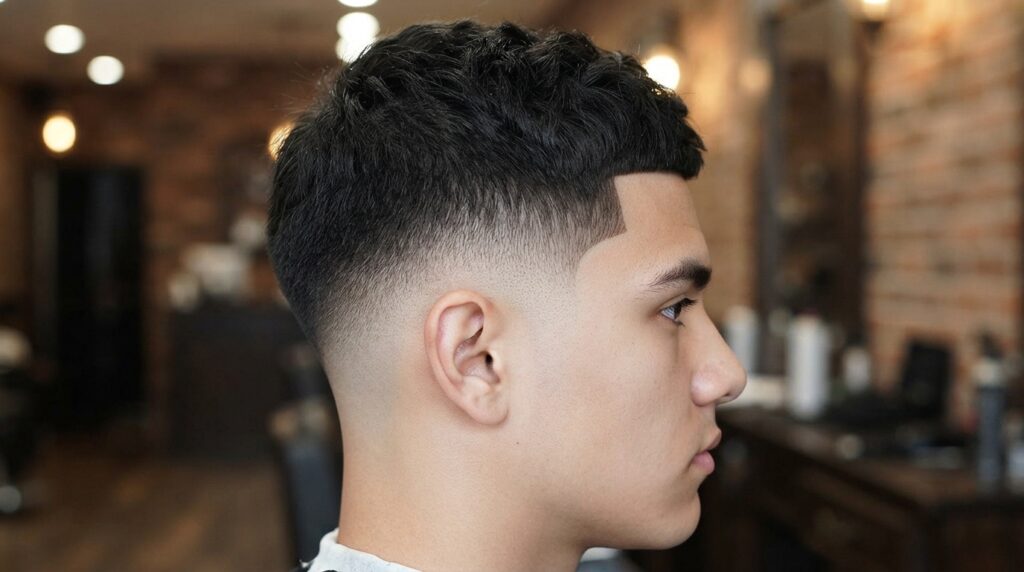
A low fade starts just above the ear. It keeps things simple and clean. The hair fades slowly into the skin. This cut works great for guys who want a subtle change. It doesn’t scream for attention. Instead, it adds a soft touch to your overall look. Many professionals pick this style because it looks neat in any setting.
You can pair a low fade with almost any hairstyle on top. Think comb overs, short crops, or even a man bun. The fade blends smoothly, so it never looks harsh. Barbers use clippers and guards to build the taper. Then they finish with a shaver near the skin. The result feels timeless and easy to maintain week after week.
Defining Characteristics of A Low Fade
| Feature | Details |
| Where It Starts | Just above the ear |
| Look | Soft, subtle, low contrast |
| Transition | Gradual and smooth |
| Customization | Drop, burst, or temp fade |
| Best For | Business professionals and clean-cut guys |
The low fade keeps its transition gentle. Nothing about it feels rushed or sharp. That’s what makes it a safe pick for work or formal events. You still get a fresh, groomed look. But you skip the bold statement. It suits men who like function over flash, without losing any style points along the way.
What Is A Mid Fade?
A mid fade starts around the temples. That’s roughly halfway between the ear and the top of the head. It strikes a nice balance. You get more contrast than a low fade, but it still stays wearable for daily life. This cut fits both office days and weekend plans. It doesn’t lean too far in either direction, which is exactly why so many guys choose it.
Barbers use clippers to create a sharper line here. Some scalp shows through, giving the cut a fresh, modern edge. The style draws the eye upward, toward the top. It photographs well too. If you like a haircut that feels current without going overboard, a mid fade often hits the sweet spot between classic and bold.
Defining Characteristics of A Mid Fade

| Feature | Details |
| Where It Starts | Temples, halfway up the head |
| Look | Noticeable contrast, balanced style |
| Transition | Aggressive but not extreme |
| Customization | Drop, burst, or temp fade |
| Best For | Trendy professionals and young guys |
A mid fade sits comfortably between two extremes. It won’t look out of place in a boardroom. Yet it still turns heads on a night out. That flexibility is its biggest strength. Guys who can’t decide between safe and bold often land here first, and most walk away happy with the choice.
What Is A High Fade?
A high fade starts near the top of the head. From there, it drops fast. The result is bold and hard to miss. This cut favors sharp lines and quick contrast. Guys who want to stand out usually reach for this one. It pairs well with styles like a pompadour, quiff, or slick back. The top stays long while the sides disappear fast.
Barbers mark the fade line high, then shave everything below it. Clippers with guards taper the hair upward from there. The whole process demands precision. One wrong move and the line looks uneven. That’s why skilled hands matter here more than with other fades. Done right, though, the high fade delivers serious style payoff.
Defining Characteristics of A High Fade

| Feature | Details |
| Where It Starts | Near the top of the head |
| Look | Bold, striking, high contrast |
| Transition | Very aggressive, lots of skin shows |
| Customization | Drop, burst, or temp fade |
| Best For | Trendy and adventurous guys |
The high fade doesn’t hold back. It’s built for guys who want their haircut to make a statement. Every angle shows off the sharp taper. It takes more upkeep than other fades since the contrast grows out fast. Still, for pure style impact, few cuts compete with what a high fade brings to the table.
Learn more:The Modern Mullet: 23 Trending Haircut Styles with A Barber’s Guide
Low Fade vs Mid Fade vs High Fade

| Fade Type | Starting Point | Contrast Level | Best For |
| Low Fade | Just above the ear | Low | Professional, classic looks |
| Mid Fade | Around the temples | Medium | Balanced, everyday style |
| High Fade | Near the top of the head | High | Bold, trendy statements |
The real difference comes down to placement. Where the fade begins changes everything else about the cut. A low fade stays quiet. A mid fade finds the middle ground. A high fade goes all in on contrast. Your choice depends on how much change you want and how often you’re willing to visit the barber to keep it sharp.
Different Types of Fade Haircuts
- Skin Fade – Blends all the way down to bare skin for a crisp, clean finish.
- Drop Fade – Curves downward at the back instead of running in a straight line.
- Burst Fade – Wraps around the ear in a half-circle shape.
- Temp Fade – Focuses on the temple area while keeping the back longer.
- Undercut Fade – Creates a hard, disconnected line between the top and sides.
Each type adds its own twist to the classic fade. You can mix any of these with a low, mid, or high fade. That means the combinations are nearly endless. Talk to your barber about which style matches your hair type and face shape. A good barber can guide you toward the version that suits you best.
FAQ’S
Which Fade Haircut Is The Best Choice For Beginners
A low fade works best if you’re new to fade haircuts. It offers a soft start before you try bolder styles. Learning Low Fade vs High Fade vs Mid Fade: Discover The Differences helps you pick the safest first step.
What Is The Main Difference Between A Fade Haircut And A Regular Haircut
A fade haircut blends the sides gradually into the skin. A regular haircut usually keeps one length throughout. Understanding Low Fade vs High Fade vs Mid Fade: Discover The Differences shows how each fade style handles that blend differently.
Can You Combine A Low Fade With A High Fade
Barbers don’t usually mix a low and high fade in one cut. Each fade haircut follows its own starting point and taper style. That’s the core idea behind Low Fade vs High Fade vs Mid Fade: Discover The Differences.
How Often Should You Get A Fade Haircut Touched Up
Most guys need a touch-up every two to three weeks. High fades grow out faster than low fades due to sharper contrast. This detail matters a lot in Low Fade vs High Fade vs Mid Fade: Discover The Differences.
Which Fade Haircut Suits A Professional Work Setting
A low fade or mid fade fits office settings best. Both keep a fade haircut neat without looking too bold. That balance is a key point in Low Fade vs High Fade vs Mid Fade: Discover The Differences.
Conclusion
Choosing the right fade haircut comes down to your style and comfort level. Low Fade vs High Fade vs Mid Fade: Discover The Differences gives you a clear path forward. A low fade stays classic. A mid fade offers balance. A high fade brings bold energy. Every fade haircut tells a different story about you.
Talk to your barber before your next visit. Show them examples of the fade haircut you like best. A skilled barber can guide you toward the perfect match. Whether you pick a low, mid, or high fade haircut, confidence is the real goal. The right cut always makes you feel like your best self.