

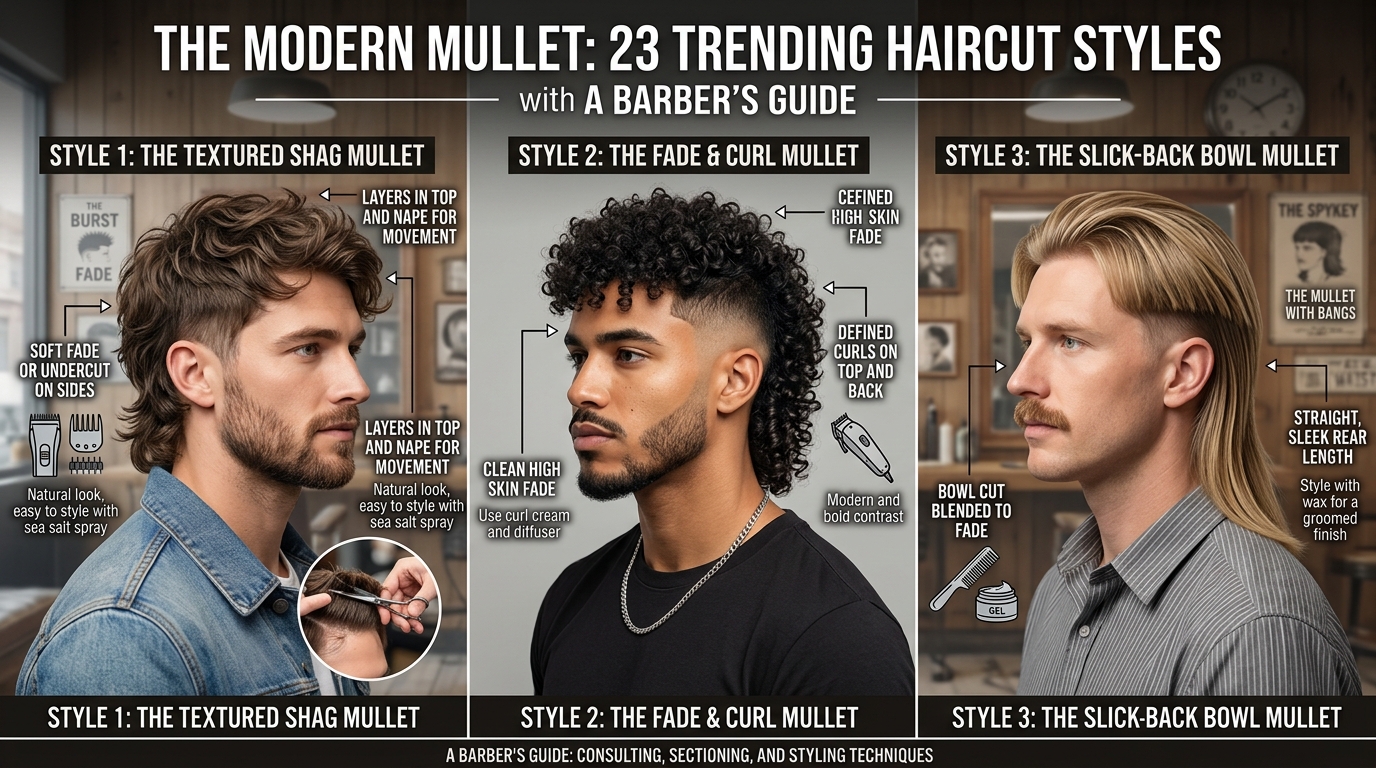
The modern mullet is back, and it’s better than ever. This isn’t your dad’s mullet from the 80s. The modern mullet mixes short, clean sides with a longer back. It’s sharp. It’s stylish. And it works for almost any guy who wants to stand out. Barbers everywhere now see the modern mullet as one of the most requested cuts in the shop.
So what makes the modern mullet different. Fades, tapers, and texture. That’s the secret. A modern mullet takes the classic shape and gives it a fresh, sharp edge. You get contrast without chaos. You get length without looking messy. Whether your hair is straight, curly, or wavy, a modern mullet can work for you. It’s bold, but it’s wearable too.
What Is The Modern Mullet?
A modern mullet keeps the top and sides short or medium length. The back stays longer on purpose. That contrast gives the cut its shape. Barbers now build the style with fades, tapers, and sharp layers instead of just letting hair grow wild. The old rule still applies: short in front, long in back. The difference lives in the details.
Three parts make up every modern mullet: the top, the sides, and the back. The top gets texture and often a fringe. The sides get faded or tapered for clean contrast. The back carries the length and gives the cut its attitude. How much contrast you choose between these three parts decides whether your mullet looks subtle or bold.
Modern Mullets with Fades and Tapers
Taper Fade Mullet

The taper fade mullet is the easiest way into this style. Sides taper down slowly, no skin showing, so the cut stays soft and forgiving. This makes it a smart pick for first-timers who want to test the mullet without going too far. It suits nearly every face shape, too.
Style it with matte clay worked through the top. Let the back sit naturally without forcing it into place. This taper grows out well, so you won’t need constant trims. It’s a low-drama version of the mullet that still delivers real style points at the barbershop.
Burst Fade Mullet

The burst fade mullet curves the fade around your ear like a small arc. Behind that curve, hair stays longer, pulling your eye straight to the mullet’s signature length. This version feels lively and a little rebellious. Younger guys and anyone chasing a bolder look tend to gravitate toward it.
Keep the top textured with a spray or matte paste for grip. This fade needs regular touch-ups, roughly every two weeks, to stay crisp. Skip those visits and the burst loses its sharp curve fast. It’s a style that rewards a little upkeep with a lot of payoff.
Drop Fade Mullet

The drop fade mullet sends the fade line downward behind the ear. That downward curve mirrors the mullet’s own dropping length at the back. The two elements work together instead of fighting each other, which gives the whole cut a cohesive, intentional look. Oval and oblong faces suit this style especially well.
A light cream through the top adds movement without weighing hair down. Let the back follow the curve the drop fade already sets up. This style feels a bit more polished than a burst fade while still keeping plenty of edge and personality.
Low Fade Mullet

The low fade mullet keeps the fade close to your hairline, right above the ears. Most of your length and texture stays put, which makes this one of the calmer versions of the cut. Guys easing into the mullet, or working somewhere a bit more buttoned-up, often start here.
A matte product and a light touch finish the look well. This fade doesn’t shout, and that’s the point. It gives you mullet energy without the drama, which makes it easy to wear daily without feeling like you’re making a huge statement.
Mid Fade Mullet
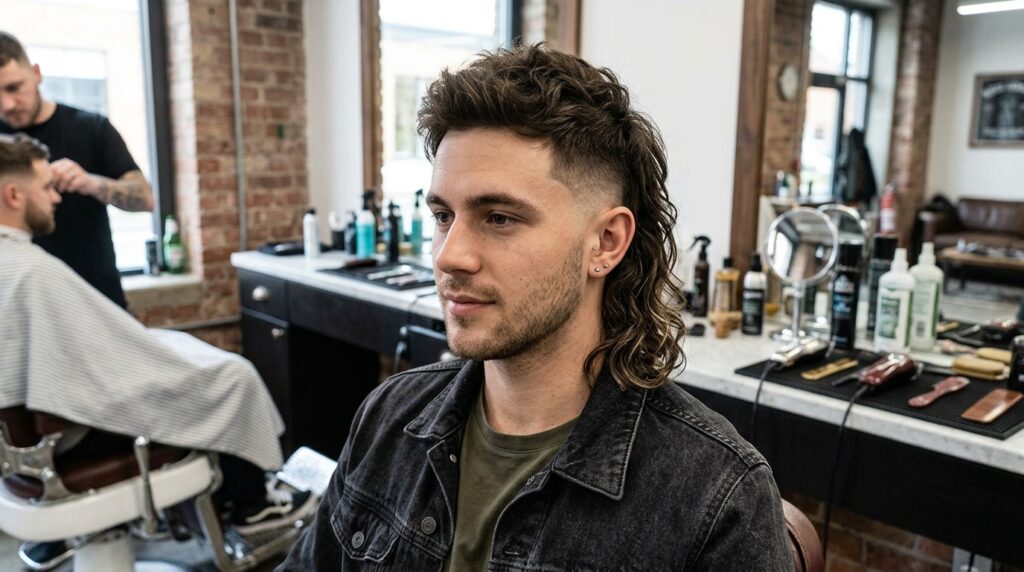
The mid fade mullet starts around your temples, giving noticeable contrast without going extreme. It’s arguably the most flexible fade pairing out there. It flatters a wide range of face shapes and dresses up or down depending on how you style the top.
Work clay or paste through your hair for texture. Keep the back at a moderate length so nothing feels overdone. This fade sits right in the sweet spot: modern enough to turn heads, restrained enough to wear anywhere without a second thought.
High Fade Mullet

The high fade mullet climbs well above the temples, creating dramatic contrast against the length up top and in back. This is the boldest, most graphic fade option on this list. It demands confidence, and it rewards guys with round or oval face shapes that can handle the vertical lines.
Use a strong-hold matte product to keep the top sharp against that steep fade. This isn’t a subtle cut, and it isn’t trying to be. If you want your mullet to make a statement, the high fade delivers exactly that.
Skin Fade Mullet

The skin fade mullet pushes contrast as far as it goes, fading sides right down to bare skin. Against that smoothness, the longer back looks even more striking. It’s the sharpest, cleanest version of the mullet you can get, and it turns heads for good reason.
This look needs commitment. Touch-ups every ten to fourteen days keep it fresh, since skin fades grow out fast. Strong face shapes carry this bold finish best. If you’re ready for upkeep, though, few mullets look this crisp.
Scissor-Cut Taper Mullet
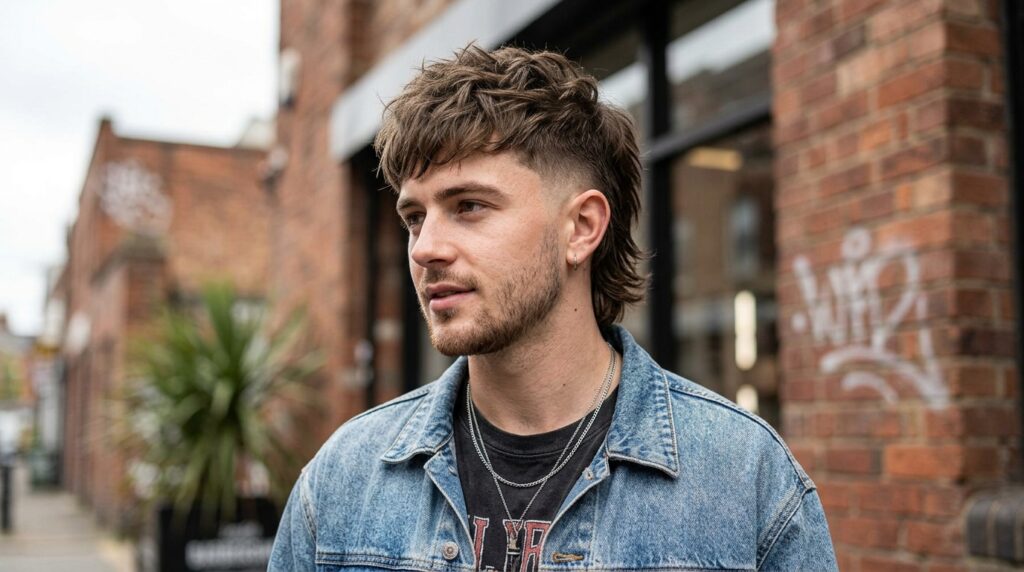
The scissor-cut taper mullet skips the clippers entirely. A barber tapers the sides gradually with shears instead, which creates a softer, more natural transition than any clipper fade. Wavy and curly hair especially shine in this version, since the texture stays intact throughout.
This is the lowest-maintenance mullet fade around. It grows out gently, without the harsh lines a clipper leaves behind. Finish with sea salt spray and let it air dry. The result feels relaxed, a little tousled, and completely effortless.
Trendy Mullets Based on Hair Texture
Curly Mullet

The curly mullet lets your natural texture do the heavy lifting. Curls build volume through the crown, while the longer back adds shape and movement. Instead of looking retro or stiff, the curl pattern softens everything, turning the mullet into a relaxed, effortlessly cool look.
Ask for tapered or lightly faded sides to cut down on bulk. Keep the top layered so curls sit naturally instead of collapsing. To style, work curl cream into damp hair, scrunch gently, then air dry or diffuse for extra definition and bounce.
Learn more:27 Popular Fade Haircuts For Black Men: Cool Styles & Barber Tips
Straight Hair Mullet

The straight hair mullet is the sharpest version of the cut. Without natural curl to soften things, every layer and length change shows clearly, so precision matters. This texture rewards bold layering and confident point-cutting from a barber who knows exactly what they’re doing.
Matte clay gives straight hair the grip it needs, since it can fall flat without help. A fringe adds interest up front and keeps the whole look from feeling one-note. This version reads clean, deliberate, and unmistakably modern.
Textured Mullet

The textured mullet leans hard into point-cutting and choppy layers. Movement shows up everywhere: through the top, the fringe, and the back. It’s the opposite of flat or blunt, built instead around visible separation and a bit of controlled chaos throughout the cut.
Work matte paste or texturizing powder through with your fingers. Don’t fight the slightly undone finish, since that’s exactly the point. This style suits guys who want their hair to look alive rather than perfectly combed into place.
Wavy Mullet

The wavy mullet uses natural movement to make the whole cut feel effortless. Waves add texture through the crown, while the longer back flows rather than sits stiff. It reads relaxed and confident at the same time, which is a tough balance to strike with most haircuts.
Keep sides tapered or lightly faded for structure. Sea salt spray or a light cream brings out the wave pattern nicely. Finger-style the hair back, or just let it fall naturally. Either way, this cut looks easy without looking careless.
Edgy, Statement Mullets
Mohawk Mullet

The mohawk mullet fuses two rebellious cuts into one bold statement. A narrow strip runs from the front straight into the mullet’s tail, while the sides get faded close or shaved for maximum contrast. This is the loudest mullet on the list, built for guys who want attention.
You’ll need real confidence to pull this one off daily. A strong-hold product lifts and shapes the central strip so it stands tall. If you’re after a look that’s impossible to ignore, this combination delivers it without apology.
Slicked-Back Mullet

The slicked-back mullet takes the whole cut in a different direction: sleek instead of shaggy. Both the top and back sweep away from the face, creating an almost formal silhouette. It proves the mullet can look polished, not just rebellious, which surprises a lot of people.
A low-shine pomade or styling cream works best here. Comb the hair back cleanly while it’s still damp for the smoothest finish. Guys who like the mullet’s shape but want to skip the rough edges tend to land on this version.
Thick Textured Mullet Fade with Heavy Fringe

This style pairs a thick, choppy top with a heavy fringe that falls forward to frame your face. Layers through the crown add movement and keep things from feeling bulky, while a clean fade on the sides sharpens the whole look and makes the back read as intentional.
Matte clay or texture powder helps separate the fringe and lift the crown. The finish should feel rugged but controlled, never messy. This version suits guys with thicker hair who want plenty of texture without losing shape or structure.
Mullet with Hair Designs

This variation turns the faded sides into a canvas, adding shaved-in lines or patterns for a personalized touch. The top and back stay simple on purpose, so the artwork can take center stage without competing for attention. It’s one of the more expressive ways to wear a mullet.
Find a barber who’s confident with detail work, since designs take precision. You can change or refresh the pattern at every visit, keeping the look fresh. Just keep the rest of the cut clean so the design stays the focal point.
Long Mullet

The long mullet leans fully into length, movement, and drama. The back becomes a real statement rather than a subtle nod to the classic shape. This version suits guys who are committed to the look and willing to put in the maintenance work it demands over time.
Keep the back conditioned regularly to avoid split ends and dryness. Pair the length with a clean fade or taper up top, so the cut still reads sharp instead of shaggy. Balance is everything with a mullet this bold.
Shaggy Mullet

The shaggy mullet feels relaxed and a little rock-and-roll. Choppy layers build volume through the top, while the longer back adds flow and movement. Compared to a sharper fade mullet, this version stays soft and lived-in, with ends that move freely instead of sitting too perfectly in place.
Keep sides lightly tapered to control bulk without losing the shaggy vibe. Style with sea salt spray or matte cream for separation and texture. The goal here is effortless, not polished, so don’t overthink the styling process.
Classy Mullets
Short Mullet

The short mullet offers shape and attitude without going overboard on length. The top stays textured and controlled, while the back carries just enough length to create that signature silhouette. It’s a clean, wearable take on the cut that works well in most everyday settings.
Tapered or faded sides sharpen the whole look and keep it feeling fresh rather than retro. A matte clay or cream adds separation up top. Finger-style it for a relaxed finish. This version proves a mullet doesn’t need to be extreme to work.
Mullet with Fringe

The mullet with fringe brings youthful energy to the front while keeping length in back. The fringe frames your face and adds movement, pairing nicely with the mullet’s bold shape overall. Together, they create a finish that feels expressive without tipping into anything too wild.
Tapered or faded sides balance out the heavier top so nothing feels bulky. Use a matte cream or clay to define the fringe and add separation through the crown. Keep the style controlled, not stiff, for the best everyday result.
Mullet with Line Up
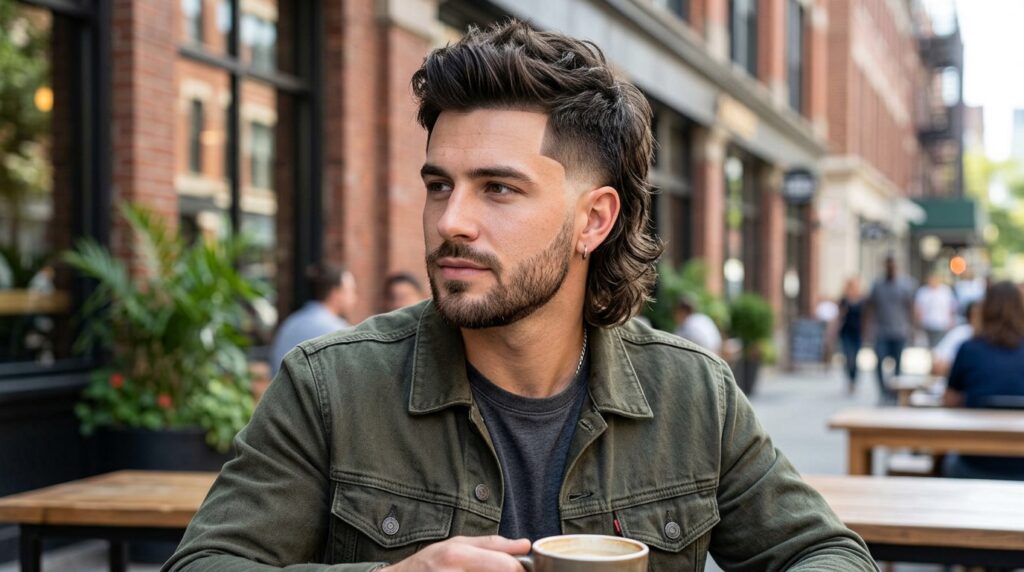
Adding a line up means a crisp, defined edge along your hairline and temples. It’s a small detail, but it makes a big difference in how finished the cut looks overall. A sharp line up is often the thing that separates an intentional mullet from one that just looks grown out.
This detail works with any texture and pairs well with any fade you choose. Ask your barber to finish every visit with a clean line up. Do that consistently, and your mullet will always read deliberate, never accidental.
Mullet with Beard

Pairing a mullet with a beard adds maturity and balance to the whole look. The beard anchors your face against the length and texture happening up top, creating a rugged, cohesive finish. It’s a popular combination for guys who want the mullet to feel grown-up rather than purely youthful.
Keep your beard shaped and trimmed in proportion to the haircut itself. A patchy or overgrown beard can throw off the balance a mullet needs. Regular upkeep on both fronts keeps this combination looking sharp and intentional.
Modern Textured Brush Back Mullet
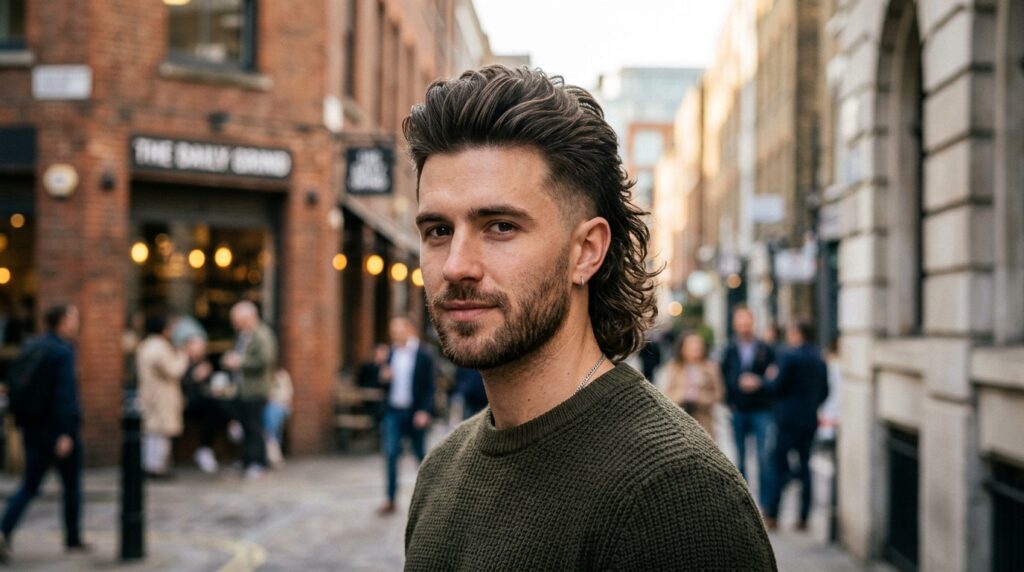
This version blends volume, movement, and shape into a confident, controlled finish. Hair flows back from the forehead with a loose, windswept look, while the longer back gives the cut its edge. It strikes a nice balance between polished and relaxed at the same time.
Tapered or faded sides keep the silhouette sharp and prevent heaviness. Use a lightweight cream or matte paste, then brush hair back with your fingers for natural lift and separation. The result looks effortless, even though it’s carefully built.
Edgar-Style Mullet

The Edgar-style mullet, often called a Takuache mullet, pairs a blunt, squared fringe with the mullet’s classic longer back. It has deep roots in Mexican-American youth culture and carries real cultural significance. Sharp and distinctive, it stands apart from every other version on this list.
Ask your barber for a straight, blunt line across the forehead and a clean fade on the sides. Keep the back textured to complete the look. This is a bold, identity-driven cut that means something beyond just style.
How To Ask Your Barber For A Mullet
Say “Modern,” Not Just “Mullet”
The word “mullet” alone leaves too much open to interpretation. Some barbers picture the 80s version. Others jump straight to the contemporary style. Saying “modern mullet” clears up the confusion right away and sets expectations before the clippers even come out.
Describe the fade and texture you want alongside that word “modern.” The more specific you get, the closer your result lands to what you actually pictured walking in. Vague requests lead to vague haircuts, so don’t leave room for guesswork.
Cover the Specs
Every solid mullet conversation touches four things: top length, side treatment, back length, and texture level. Walking through all four gives your barber a clear roadmap instead of a rough sketch. Skipping even one of these leaves too much open to chance.
Think through each point before you sit in the chair. How short do you want the sides. How long should the back get. These answers shape the entire cut, so it pays to have them ready before the conversation starts.
Talk Through the Fade
Your choice of fade changes the entire character of the cut. A burst, drop, low, mid, or skin fade each creates a completely different vibe, from subtle to dramatic. Picking the wrong one can throw off a haircut you’d otherwise love.
If you’re unsure which fade fits, just describe the vibe you want. Say whether you’re after something conservative or bold, and let your barber recommend the fade that matches. They see this every day and can steer you right.
Bring a Reference Photo
A photo says more than words ever could. Bring one or two images of mullets you like, ideally on someone with hair texture close to yours. This single step prevents more miscommunication than almost anything else you can do in the chair.
A mullet on straight hair won’t translate directly onto curls, and the reverse holds true too. A good reference photo accounts for that difference. It gives your barber a real target instead of a vague verbal description to work from.
Decide How Bold You Want to Be
Tell your barber exactly where you want to land, from subtle and low-key to full extreme contrast. This single piece of direction prevents the most common mismatch between what clients expect and what they end up walking out with.
Think about your daily life, too. A bold, high-contrast mullet fits some workplaces and lifestyles better than others. Being honest about how bold you’re really ready to go saves you from regret later on.
Start Conservative on the First Visit
If you’re new to the mullet, ask for a more restrained version first. You can always go shorter on the sides or longer in back at your next appointment. What you can’t do is undo a back that got cut too short the first time around.
Build toward the bolder, more dramatic version gradually over a couple of visits. This approach protects you from a haircut you might regret. Patience here pays off, especially since hair takes months to grow back once it’s gone.
How To Style A Mullet
The Everyday Styling Routine
Start by washing or rinsing your hair, then towel-dry until it’s damp, not soaking. Apply your chosen product, clay works well for most textures, evenly across your palms first. Work it through the hair rather than dumping it all in one spot.
Use your fingers to create texture and shape through the top and fringe. Check your profile from the side once you’re done, since this cut lives and dies by its silhouette. A quick side-check catches problems before you walk out the door.
Choosing the Right Hair Product
Match your product to your natural texture. Straight and wavy hair respond well to matte clay or paste, which adds grip and definition without looking greasy. Curly and coily hair need something different, usually a curl cream that shapes and hydrates at the same time.
Sea salt spray works across nearly every texture, adding grit and movement wherever you use it. It’s especially good for wavy and shaggy mullets that thrive on a more undone finish. Keep a few products on hand and experiment until you find your favorite.
Do Not Neglect the Back
The back is the whole point of this haircut, so don’t ignore it. Comb or finger-style it so it sits cleanly instead of looking thrown together. A back that gets no attention is exactly what turns a sharp mullet into a sloppy one.
Spend an extra minute on this section every time you style. It doesn’t take long, and it makes a real difference in how finished the whole cut looks. Skipping it is the fastest way to undercut everything else you’ve done right.
Blow-Dry or Air-Dry
Air drying works best for wavy, curly, and shaggy mullets, since it preserves the natural texture instead of flattening it out. This method takes less effort, too, which makes it a great option on busy mornings when you’re short on time.
A blow-dry with a round brush builds more volume and control, which suits straight hair or anyone chasing a polished, sculpted finish. Choose based on your texture and how much time you’ve got. Either method can look great with practice.
How to Maintain A Modern Mullet
How Often to Visit the Barber
Your fade sets the pace for maintenance. A skin fade mullet needs a refresh every ten to fourteen days to stay sharp and clean. Burst, drop, and mid fade styles stretch a bit further, lasting two to three weeks between visits.
Taper and scissor-cut mullets are the most forgiving option, holding their shape for five to six weeks at a time. The top and back, meanwhile, can usually go six to eight weeks before needing attention. Plan your schedule around whichever fade you picked.
The Maintenance Imbalance
Here’s a quirk most people don’t expect: the back can look fantastic while the sides grow shaggy, or the other way around. These two parts of the cut grow out on completely different timelines, which throws off the balance if you’re not paying attention.
Schedule quick visits to refresh just the fade while letting the top and back continue growing. This keeps the whole cut looking intentional instead of neglected. Think of it as touch-up maintenance rather than a full haircut every single time.
Washing and Care
Wash your hair based on your texture, not some fixed schedule you read online. Straight and wavy hair can handle washing every two to three days without trouble. Curly and coily types usually do better with less frequent washing and more conditioning between sessions.
The longer sections, especially the back and top, need extra conditioning to stay healthy. Split ends show up fast on longer hair if you skip this step. A little extra care here goes a long way toward keeping the cut looking its best.
When to Trim the Back
Decide early whether you’re growing the back out or keeping it at a fixed length. If you’re maintaining a set length, ask your barber to trim it at every visit so it doesn’t creep past where you want it.
If you’re growing it out instead, leave the length alone, but still ask for the ends to be cleaned up. This keeps hair healthy without sacrificing the length you’re working toward. Either path works, as long as you’re consistent about it.
How to Grow Your Hair Out for a Mullet
The Realistic Timeline
Hair grows about half an inch every month, which sets a natural pace for this whole process. Depending on where you’re starting from and how dramatic you want the back to look, growing into a proper mullet takes roughly three to six months.
A subtler modern mullet comes together faster than a longer, more dramatic version. If you’re impatient, start with a shorter goal and build from there. Rushing the process usually leads to disappointment, so set realistic expectations from day one.
Managing the Awkward Phase
The in-between stage trips up most guys, and it’s often where people give up entirely. Hair looks neither short nor long, just kind of stuck in limbo. The trick is keeping the sides, top, and area around your ears cleaned up while the back keeps growing.
A skilled barber can remove bulk and blend the shape during this phase, keeping things looking deliberate the whole way through. Without that maintenance, it just looks like you stopped getting haircuts altogether. Regular visits make all the difference here.
The Barber’s Role
Visit your barber every four to six weeks during the grow-out phase, even though you’re technically trying to add length. This might feel counterintuitive, but it keeps the cut shaped and intentional at every single stage of the process.
Tell your barber your end goal clearly, so every trim moves you toward it instead of working against your progress. A good barber treats grow-out as a journey with a destination, not just a series of random haircuts along the way.
The Best Modern Mullets by Hair Texture
Straight Hair
Straight hair produces the sharpest, most precise mullet you can get. Every layer and line shows clearly without any natural curl to soften things, which rewards bold point-cutting and a confident fringe up front. This texture holds detail exceptionally well.
Everything from shaggy to slicked-back versions works nicely on straight hair. A matte styling clay or paste is essential here, since straight hair tends to fall flat without help. Grip and definition make or break this texture’s mullet game.
Wavy Hair
Wavy hair might be the ideal texture for this cut. It brings natural body and flow without much effort on your part, giving the mullet a stylish, lived-in finish right out of the shower. Wavy, shaggy, and scissor-cut taper mullets all lean into this natural pattern.
Apply sea salt spray to damp hair, then let it air dry for an effortless result. This texture practically styles itself once you find the right product. Minimal effort, maximum payoff, which makes wavy hair a genuinely lucky draw for this haircut.
Curly Hair
Curly hair brings built-in volume and a soft, expressive shape that frames the mullet beautifully. The curly, textured mullet stands out as a great option for anyone wanting to try something fresh and a little different from the usual straight-hair versions.
Scrunch a curl cream into damp hair, then air-dry or diffuse for extra definition. Keep the sides faded to balance the volume happening up top and in back. This combination controls bulk while letting your natural curl pattern shine through.
Thick Hair
Thick hair has the density to handle nearly every mullet variation out there, from casual to the boldest options on this list. The real challenge with thick hair is managing bulk so the cut doesn’t end up looking heavy or shapeless.
Ask your barber to use point-cutting and texturizing techniques to remove weight where needed. Thicker hair usually needs a higher-hold product to keep its shape throughout the day. Once you dial in the right cut and product, styling becomes fairly straightforward.
Fine or Thin Hair
A mullet isn’t always the first choice for fine or thinning hair, since the cut relies on density and controlled volume to really work. Sparse crowns or wispy backs can make thinning areas more noticeable once you add extra length.
That said, it’s still possible with the right approach. Keep the mullet softer, shorter, and well-blended, with texture up top for fullness. Skip extreme fades or an overly long tail, since those details can make finer hair look even thinner by contrast.
The Modern Mullet vs. Classic Mullet At A Glance
| Feature | Classic Mullet | Modern Mullet |
| Sides | Uniform length, no fade | Faded, tapered, or scissor-cut |
| Length Contrast | Dramatic, often extreme | Controlled and balanced |
| Texture | Feathered, minimal layering | Sharp point-cut layering |
| Fringe | Rare | Common |
| Overall Finish | Loose and grown-out | Precise and intentional |
The word “modern” does real work in that barber chair conversation. It’s the line between a fade-driven, contemporary cut and a feathered throwback from another decade entirely. Knowing this difference helps you communicate exactly what you want before the scissors even come out.
A Brief History of The Mullet and Its Modern Revival
The shorter-in-front, longer-in-back cut reached its cultural peak during the 1970s and 80s. Rock musicians, country singers, athletes, and action heroes all wore it proudly. For roughly two decades, it wasn’t edgy or ironic. It was just a normal, mainstream way for guys to wear their hair.
Then came the fall from grace. Through the 90s, 2000s, and 2010s, the mullet turned into a punchline rather than a barbershop request. Few haircuts in history have been mocked quite so thoroughly or for quite so long.
The revival kicked off around 2021, driven by nostalgia, soccer culture, and a broader shift toward textured, expressive hairstyles. It found especially strong footing among younger men and within specific communities, including a notable presence in Mexican-American youth culture. What was once a joke is now genuinely one of the most requested cuts around.
The mullet’s comeback proves that fashion moves in circles. Trends we once wrote off as dated have a habit of resurfacing, reworked for a new generation. The modern mullet takes everything people loved about the original and strips out what made it feel outdated in the first place.
Common Mullet Mistakes to Avoid
Going Too Extreme on the First Cut
This is, by far, the most common mistake guys make. A client asks for the boldest possible version right out of the gate, then realizes afterward it’s more than they actually wanted. Once hair’s cut, there’s no taking it back.
Start with a tempered, more conservative mullet instead, and build toward the dramatic version over a couple of visits. You can always go bolder next time around. You can’t un-cut hair that’s already gone, so patience really does pay off here.
Mismatching the Fade to the Face Shape
A high fade on a long face, or a wide, bulky side on a round face, works against your natural proportions instead of flattering them. The fade height you choose should complement your face shape, not fight it every time you look in the mirror.
Use general face shape guidance as a starting point, then let your barber steer you if you’re still unsure. They see a huge range of face shapes daily and know which fades tend to flatter which features best.
Skipping Texture on Top
A mullet without texture on top looks flat and dated, closer to an 80s throwback than anything contemporary. That flat, feathered look is exactly what gave the classic mullet its bad reputation in the first place, and skipping texture drags the cut right back there.
Ask specifically for point-cutting and layering when you sit down. Use a product built for texture rather than one that weighs hair down flat. This one detail separates a genuinely modern mullet from an accidental throwback nobody asked for.
Getting the Wrong Variation for Your Texture
A mullet designed for straight hair won’t behave the same way once it’s cut into curls, and the reverse is just as true. Each texture responds differently to layering, fading, and length, so a style built for one won’t automatically translate to another.
Match your chosen variation to your actual natural texture, not to a photo of someone whose hair looks nothing like yours. A great reference photo only helps if the hair type lines up reasonably close to your own.
Letting the Fade Outgrow the Back
When your fade grows out but the back stays sharp and long, the whole cut loses its balance fast. Suddenly nothing matches, and the mullet starts looking more like an accident than an intentional style choice you made in the chair.
Keep the fade on schedule with regular touch-ups, even between your full haircuts. This small habit keeps the whole look cohesive. Skipping fade maintenance is one of the fastest ways to undo months of careful growing and styling.
Trying to Cut It Yourself
Contrast and layering are much harder to execute well than they look in a mirror or a tutorial video. A DIY attempt at home almost always ends in an uneven back, a botched fade, or both, and neither is easy to fix afterward.
Leave this particular cut to a trained barber who does it regularly. The precision this style demands just isn’t something most people can pull off solo with a pair of clippers and a bathroom mirror. Save yourself the regret.
Treating It as a No-Effort Cut
The mullet looks relaxed and effortless, but that appearance is deceiving. It’s not a cut you can completely ignore between visits. It still needs a short daily styling routine and consistent maintenance to keep looking clean rather than unkempt.
Budget a few minutes each morning for styling, and keep a standing appointment with your barber. Treat it like any other haircut that needs upkeep. Do that, and your modern mullet stays sharp instead of sliding into “grown-out and forgotten” territory.
FAQ’S
What is a modern mullet
A modern mullet is a trending men’s haircut with short, textured sides and a longer back. It stands apart from the classic mullet through added contrast, fades, and clean styling.
Are mullets still in style
Yes, the modern mullet has stayed popular since its revival around 2021. Barbers everywhere now count it among their most requested cuts.
How do I ask my barber for a modern mullet
Say modern mullet clearly, then cover the top length, side fade, back length, and texture. Bring a reference photo so your barber sees exactly what you mean.
How long does it take to grow a mullet
Hair grows about half an inch a month, so a modern mullet takes roughly three to six months to grow in. Keep the sides trimmed during that stretch so it looks deliberate.
How often should I get a mullet trimmed
Skin-faded mullets need touch-ups every ten to fourteen days to stay sharp. Tapered versions stretch further, holding their shape for up to five weeks.
Can I wear a mullet to a professional job
A low-key modern mullet with a subtle taper works fine in creative or casual workplaces. Conservative fields like law and finance tend to be less welcoming of the look.
What’s the difference between a mullet and a wolf cut
A modern mullet focuses on sharp contrast between short sides and a long back. A wolf cut blends that shape with shaggier, more uniform layers throughout.
Do mullets work with curly hair
Yes, a curly modern mullet uses natural volume and texture to create real shape and movement. Tapered sides keep the curls balanced instead of bulky.
How do I style a modern mullet
Towel-dry your hair until damp, then apply a product suited to your texture. Work it through the top and fringe, then shape the back to finish the look.
Can I cut a mullet at home
Cutting a modern mullet at home isn’t recommended, since the fade and layering take real skill. A trained barber gets the contrast and shape right the first time.
Conclusion
The modern mullet has earned its spot as one of the best men’s haircuts around today. It mixes clean fades, sharp texture, and real length into one bold style. Whether you want a subtle taper or a full skin fade, a modern mullet can fit your look.
Talk to your barber, bring a photo, and start conservative if you’re new to it. A modern mullet takes a little patience to grow and style right. But once you nail it, few cuts feel this fresh, this personal, or this fun to wear every day.