
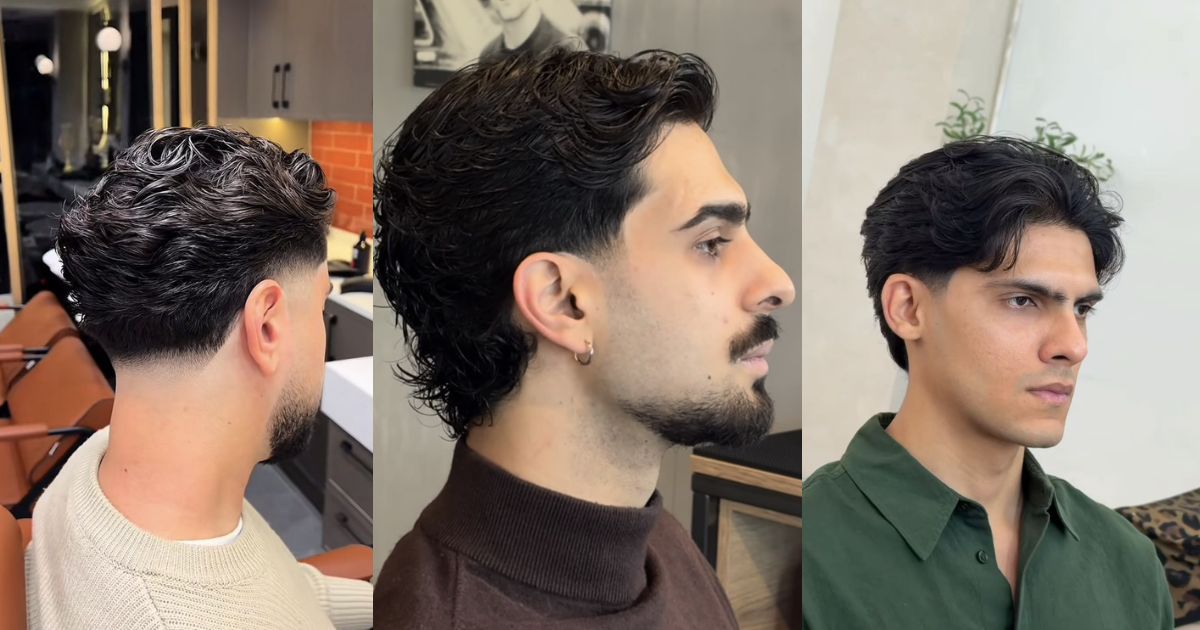
Long hair on top with a Low Taper Fade Long Hair underneath has become one of the most requested combinations in barbershops right now, and it’s easy to see why. It keeps the length you’ve worked hard to grow while cleaning up the sides just enough to look intentional, not overgrown.
This guide breaks down all 35 variations, matches them to face shapes and hair textures, and gives you the exact wording to use in the chair so you walk out with the cut you actually pictured.
What Is a Low Taper Fade with Long Hair, and Who Does It Work Best For?
A low taper fade with long hair is a two-zone haircut. The top is left long, anywhere from two inches to well past the shoulders, while the sides and back are gradually blended down starting just above the ears, close to the natural hairline. Nothing about the length on top is touched by the fade; the taper only reshapes the perimeter.
It suits almost anyone willing to put a little effort into styling. Guys who want to keep growing their hair out but are tired of the awkward, bushy in-between phase are the best candidates, since the low fade keeps the sides tidy while the top keeps building length.
What Is a Low Taper Fade with Long Hair?
Technically, a taper fade is a gradient. Hair length decreases smoothly from long to short without a hard line, and unlike a bald or skin fade, a low taper never reaches bare scalp, it usually stops at a short guard length. That’s what makes it forgiving between barber visits.
How Is a Low Taper Fade Different from a Regular Taper?
A standard taper is usually a subtle trim around the ears and neckline with very little blending elsewhere. A low taper fade goes further, creating a visible gradient from the mid-lengths down to the skin-close hair at the bottom, which reads as more deliberate and more current.
Learn more:BLOWOUT TAPER HAIRCUT: COMPLETE GUIDE TO 5 STYLES BY HAIR TYPE 2026
Where Exactly Does a Low Taper Fade Start?
The blend begins roughly one to two inches above the ear, at or just below the natural hairline. This is what separates it from a mid fade, which starts at the temple, and a high fade, which climbs above the temple toward the crown.
| Fade type | Starting point | Visual effect | Typical upkeep |
| Low taper fade | Just above the ear | Subtle, barely-there contrast | Every 3–5 weeks |
| Mid taper fade | At the temple | Noticeable but balanced | Every 2–4 weeks |
| High taper fade | Above the temple, near the crown | Bold, high-contrast | Every 1–3 weeks |
Why Is the Low Taper Fade Long Hair So Popular in 2026?
Three things are driving it: it’s low-maintenance compared with sharper fades, it works across nearly every hair texture and ethnicity, and it photographs well whether you’re slicked back for a wedding or air-dried for the gym. It also grows out gracefully, so a missed barber appointment doesn’t ruin the look the way it would with a skin fade.
- It bridges corporate and casual settings without needing two different haircuts.
- It preserves length, so guys growing out a buzz cut don’t lose all their progress.
- It flatters a wide range of face shapes since the styling changes on top do most of the work.
- It pairs naturally with beards, man buns, mullets, and curly or coily textures alike.
35 Best Low Taper Fade Long Hair Styles for Men
Below are 35 ways to wear the cut, grouped by vibe so you can find your lane quickly. Each entry notes who it flatters and what to say in the chair.
Classic Long Hair Styles
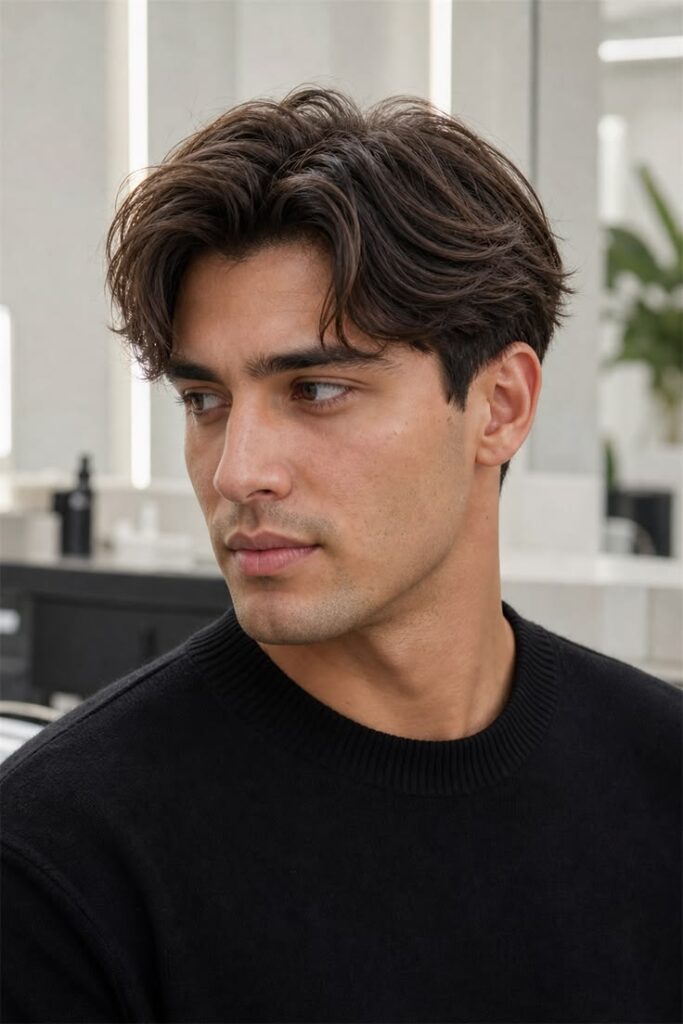
1. Long Hair with Low Taper Fade (The Classic)
The baseline version: hair left natural and loose on top, no heavy styling required. It’s the easiest style to grow into and the easiest to explain to a new barber.
Best for: Straight to wavy hair, oval and square faces.
2. Low Taper Fade with Long Slicked Back Hair
Hair is combed straight back with pomade for a polished, glossy finish that contrasts sharply with the tapered sides. It reads more formal than the classic version.
Best for: Oval and angular faces, thick straight or wavy hair.
3. Low Taper Fade with Long Wavy Hair
The natural bend of wavy hair is left to do the work, often finished with a light sea-salt spray for texture instead of shine. It looks effortless because it mostly is.
Best for: Round and heart faces, medium to thick wavy hair.
4. Low Taper Fade with Long Straight Hair
Straight hair is left to fall flat and sleek, sometimes with a light center or side part. Because straight hair shows every layer mistake, this version relies on clean, even cutting on top.
Best for: Oval and long faces, fine to medium straight hair.
5. Low Taper Fade with Long Curly Hair
Curls are left long enough to bounce and coil naturally, with the fade keeping the sides from adding unwanted width. A leave-in conditioner and diffuser are usually non-negotiable here.
Best for: Round and square faces, curly or spiral-curl hair.
Tied & Pinned Up Styles
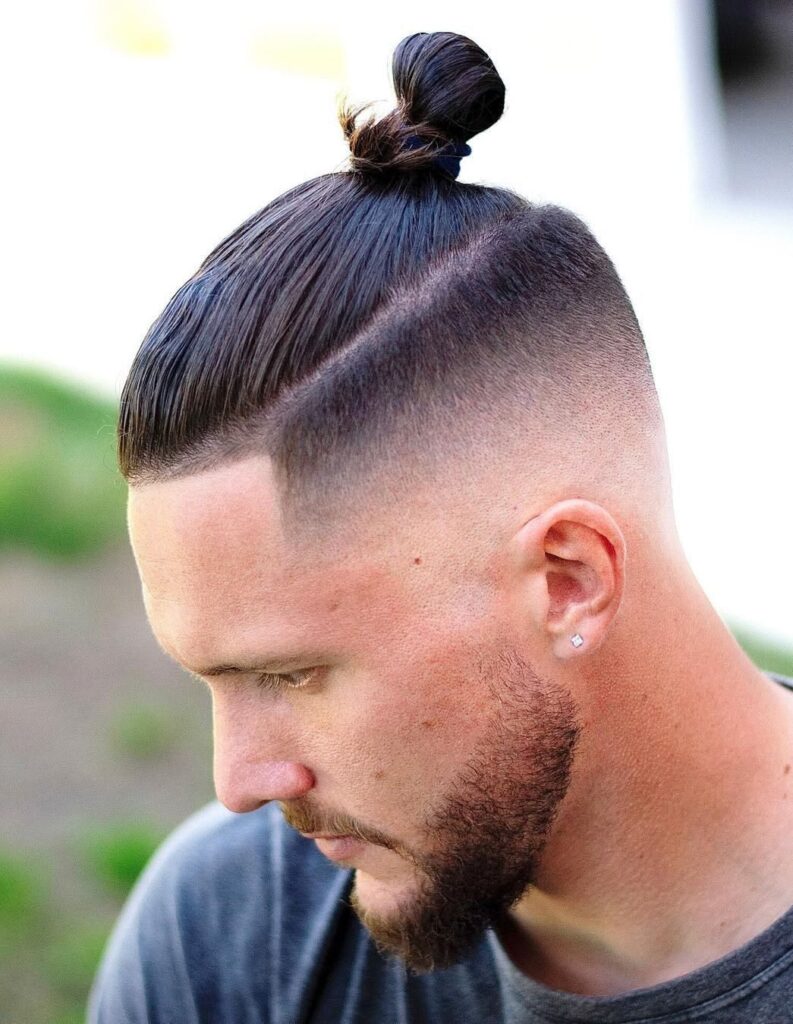
6. Low Taper Fade with Man Bun
Enough length is kept on top to gather into a small bun at the crown, while the tapered sides keep the overall shape neat instead of shaggy. Great for gym days and work days alike.
Best for: Any face shape; needs at least four inches of length on top.
7. Low Taper Fade with Half-Up Long Hair
The top section is tied back while the front and sides fall loose, giving a softer, less severe look than a full bun. It also keeps hair out of your face during workouts without committing to a full tie-back.
Best for: Heart and diamond faces, medium-length hair.
8. Low Taper Fade with Slick Back Bun
Hair is slicked back with pomade before being tied into a tight, low bun, creating a sharp, tailored silhouette. This is one of the more formal ways to wear long hair with a fade.
Best for: Oval and rectangular faces, straight or wavy hair.
Parted & Framed Styles
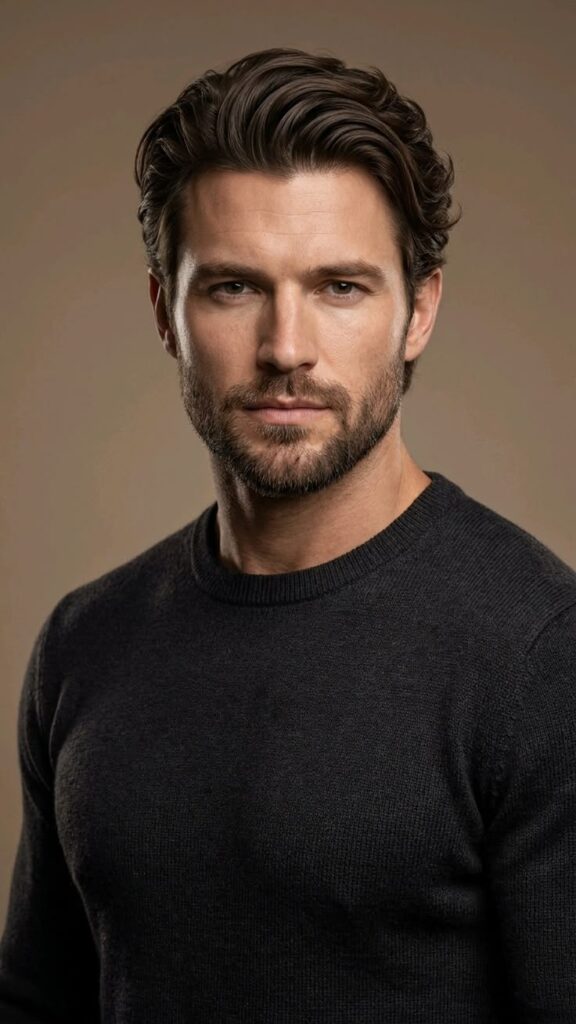
9. Low Taper Fade with Curtain Hair
The top is center-parted and combed to fall on either side of the forehead, framing the face on both sides. It’s a low-effort style with a strong retro edge borrowed from late-90s fashion.
Best for: Oval and heart faces, straight to wavy medium-length hair.
10. Low Taper Fade with Center-Parted Long Hair
Similar to curtains but with more overall length, this version lets hair fall past the jaw on each side rather than just framing the brow. It works best with hair that has some natural weight to it.
Best for: Oval and long faces, thick straight hair.
11. Low Taper Fade with Side Part
A defined line separates a heavier side from a swept-back lighter side, giving a sharp, structured finish that works well in professional settings. A light hold gel keeps the part crisp through the day.
Best for: Round and square faces, straight to wavy hair.
12. Low Taper Fade with Long Fringe
Length is concentrated at the front, creating a heavy fringe that can be worn forward or brushed to the side. The tapered sides keep the rest of the head from competing with the fringe for attention.
Best for: Long and oval faces, straight to wavy hair.
Volume & Statement Styles
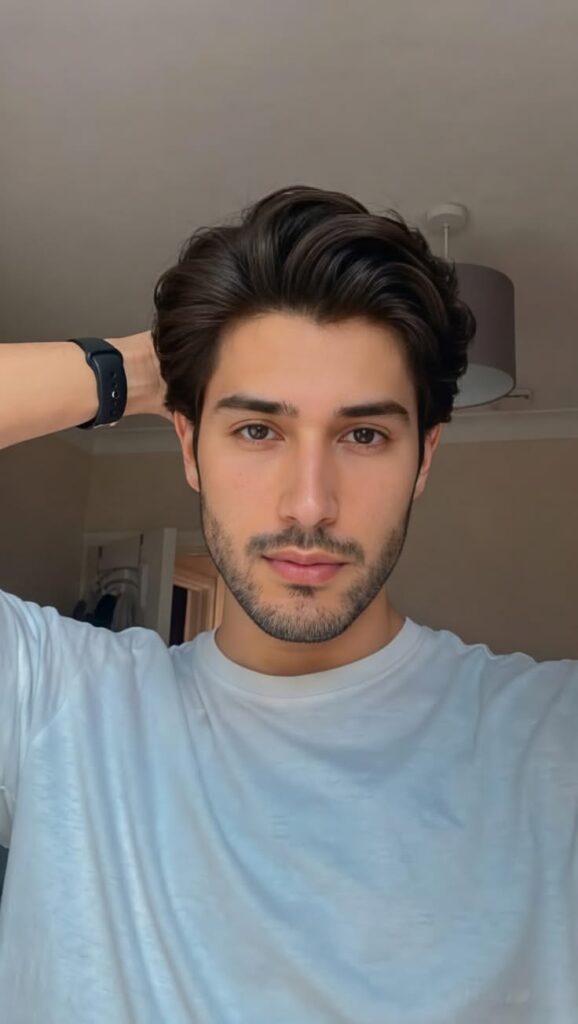
13. Low Taper Fade with Long Pompadour
Hair is lifted and swept back off the forehead for dramatic height, held in place with a strong pomade or clay. The fade underneath makes the height look intentional rather than accidental.
Best for: Round and square faces, thick straight or wavy hair.
14. Low Taper Fade with Quiff
A shorter, more relaxed cousin of the pompadour, the quiff is pushed up and slightly back rather than fully swept. It’s easier to maintain day to day and works with shorter top lengths.
Best for: Most face shapes, medium-length straight or wavy hair.
15. Low Taper Fade with Messy Long Hair
Texture spray and finger-styling create an intentionally undone look, with pieces falling where they naturally want to. It’s the lowest-effort styling option on this list.
Best for: Any face shape, wavy or curly hair.
16. Low Taper Fade with Blowout Long Hair
A round brush and blow dryer add lift and volume at the root, giving the top a fuller, rounder shape. It’s a popular choice for guys with curly or coily hair who want extra height.
Best for: Round and long faces, curly or coily hair.
Retro & Bold Styles
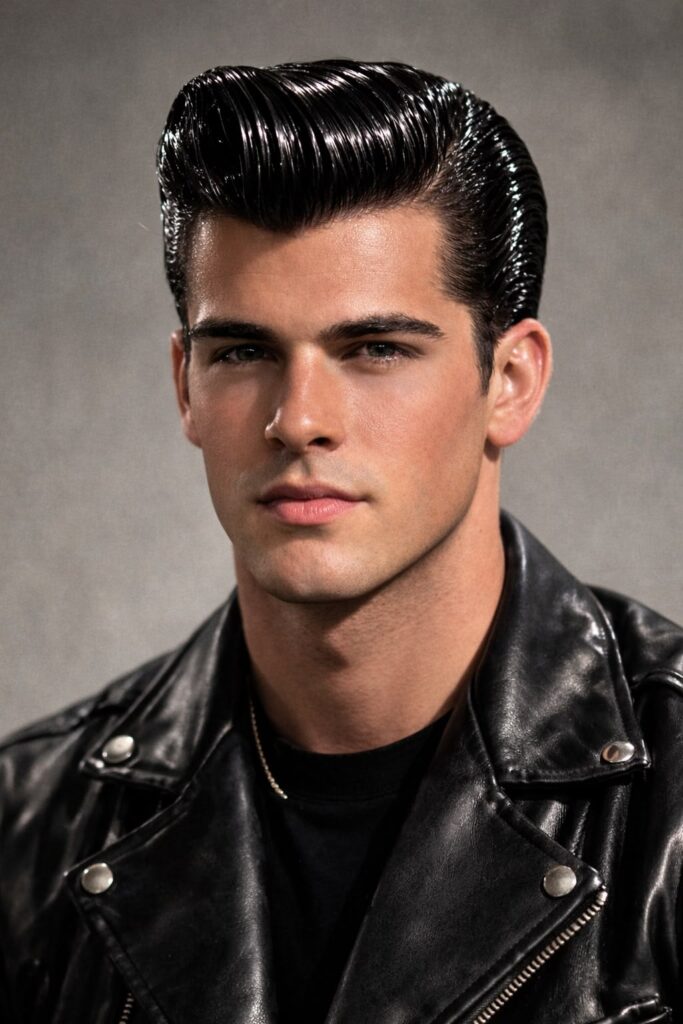
17. Low Taper Fade with Mullet
Short on the sides and top, long at the back, the mullet update pairs a modern low taper with a deliberately retro silhouette. It’s currently one of the most searched variations of this cut.
Best for: Square and oval faces, straight to wavy hair.
18. Low Taper Fade with Curtain Mullet
Combines the center-parted curtain fringe on top with mullet length at the back, giving a hybrid retro-modern look. It needs more patience to grow out evenly than a standard mullet.
Best for: Oval and heart faces, wavy hair.
19. Low Taper Fade with Comb Over
Longer hair on top is combed to one side over a defined part, with the tapered sides supporting a clean, businesslike finish. A firm-hold pomade keeps the comb-over in place through the day.
Best for: Oval and square faces, straight hair.
20. Low Taper Fade with Long Wolf Cut
Heavy layering and shag-like texture on top meet a low taper underneath, borrowing from the popular wolf cut trend. It gives a naturally voluminous, slightly rock-and-roll shape.
Best for: Round and heart faces, wavy or curly hair.
Textured & Cultural Styles
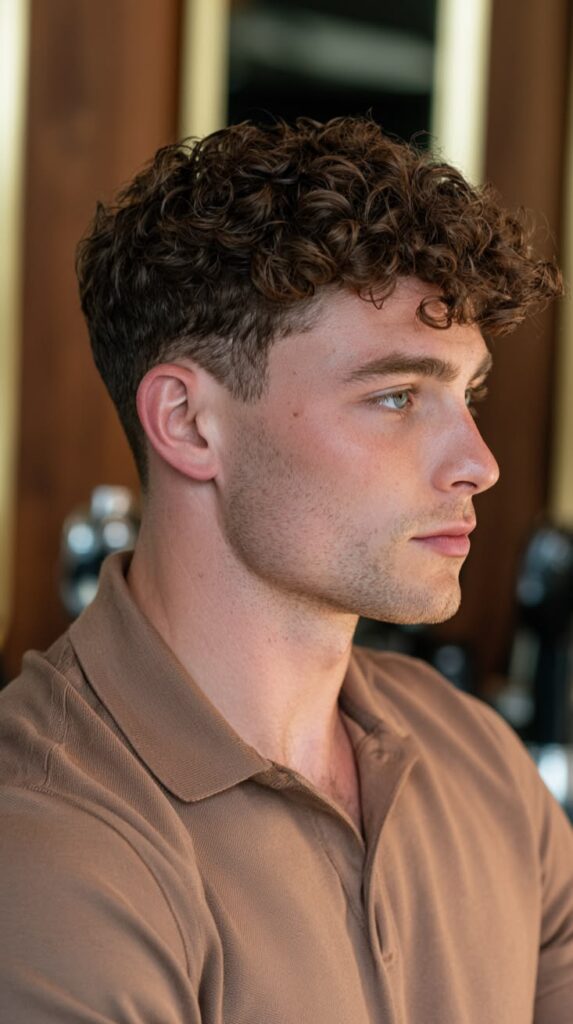
21. Low Taper Fade with Braided Top
Cornrows, box braids, or twists on top sit above a clean low taper, giving a sharp contrast between structured braids and smooth sides. This is a long-standing style within Black barbering traditions.
Best for: Any face shape, coily or afro-textured hair.
22. Low Taper Fade with Twist Out Top
Two-strand twists are set and then unraveled to create defined, springy curls on top, contrasted against the tapered sides. A curl-defining cream keeps the twist pattern visible for days.
Best for: Square and round faces, coily hair.
23. Low Taper Fade with Long Afro-Textured Hair
Natural coils are left unmanipulated and simply picked out for shape, letting the top read as a full, rounded afro above the tapered sides. Regular moisture is essential to prevent breakage at this length.
Best for: Oval and heart faces, coily or afro-textured hair.
2026 Trending Styles
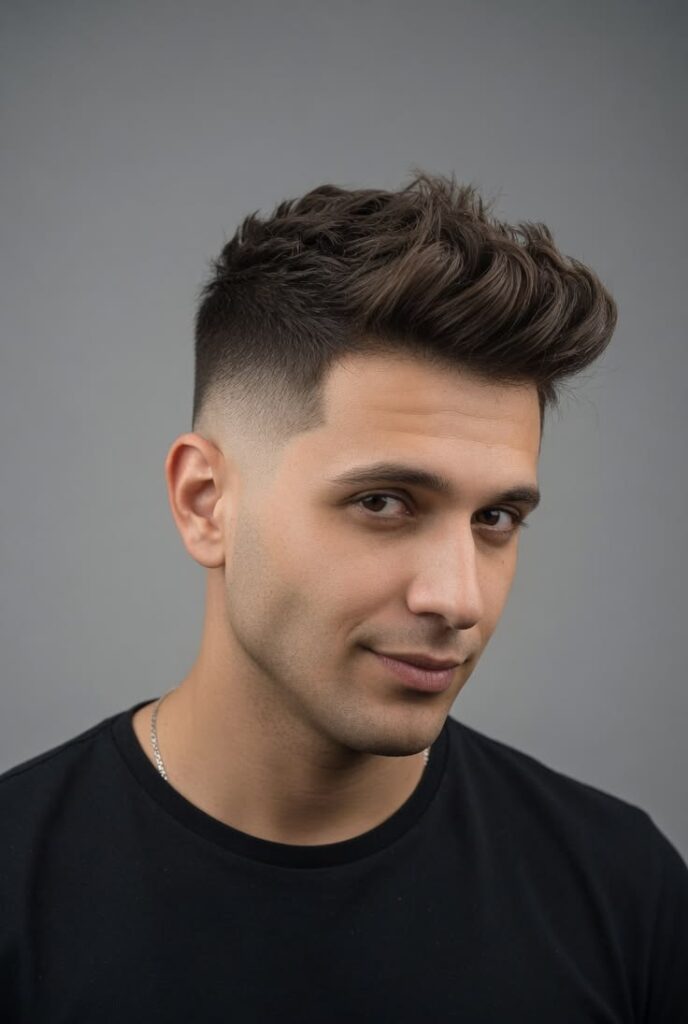
24. Low Taper Fade with Two-Block Cut
Borrowed from Korean barbering, the two-block cut pairs a noticeably longer, fuller top with a much shorter under-layer, and the low taper softens the transition at the sides. It creates strong volume without looking heavy.
Best for: Round and square faces, straight hair.
25. Low Taper Fade with Fluffy Long Top
A light perm or diffuser-dried finish adds airy volume to the top, giving a soft, cloud-like shape that’s trending heavily this year. Minimal product keeps the fluffiness from collapsing into weight.
Best for: Oval and long faces, straight to wavy hair.
26. Low Taper Fade with Textured Long Top
Point-cutting and a matte paste create visible, piece-y texture throughout the top rather than a smooth surface. It reads modern and slightly undone without looking messy.
Best for: Most face shapes, straight to wavy hair.
27. Low Taper Fade with Ponytail
All the top length is gathered into a single ponytail, which can sit high, mid, or low depending on the desired effect. It’s a practical option for very long hair that would otherwise obscure the fade.
Best for: Any face shape; needs significant top length.
28. Low Taper Fade with Beach Waves
A texturizing salt spray and air-drying create loose, sun-bleached-looking waves on top. It’s an especially popular warm-weather pairing with the low taper underneath.
Best for: Round and heart faces, naturally wavy hair.
29. Low Taper Fade with Long Side Swept Hair
The top is grown long enough to sweep dramatically across the forehead to one side, often covering part of the brow. It softens angular features and adds asymmetry to the silhouette.
Best for: Square and diamond faces, straight to wavy hair.
30. Low Taper Fade with Long Shag Cut
Heavy internal layering throughout the top creates a shaggy, textured silhouette reminiscent of 70s rock styling. It relies on regular trims to keep the layers from growing out shapeless.
Best for: Round and long faces, wavy hair.
31. Low Taper Fade for Coily Long Hair
Coils are kept long and allowed to shrink naturally, giving dense volume on top while the low taper keeps the perimeter defined. Deep conditioning weekly keeps the coils from drying out.
Best for: Oval and square faces, coily hair.
32. Low Taper Fade with Flow Hairstyle
Popularized by athletes, the “flow” leaves hair to grow long and loose with minimal parting or product, often worn under a hat between wears. It’s essentially the classic style with a sportier, more casual attitude.
Best for: Any face shape, straight to wavy hair.
33. Low Taper Fade with Long Faux Hawk
The center strip of hair is styled upward and forward while the sides lie flatter, creating a subtle mohawk effect without the commitment of shaved sides. A strong-hold wax is needed to keep the ridge standing.
Best for: Round and square faces, medium to thick straight hair.
34. Low Taper Fade with Sleek Long Top
Hair is straightened or naturally flat, then finished with a light shine serum for a glassy, polished top. It’s a minimalist take that lets the length itself be the statement.
Best for: Oval and heart faces, straight hair.
35. Low Taper Fade with Long Natural Texture
No heat, no heavy product, just natural curl, wave, or coil pattern left to do its own thing above the tapered sides. It’s the most authentic, lowest-maintenance option for guys who want texture without the routine.
Best for: Any face shape, any natural texture.
Which Low Taper Fade Long Hair Style Suits Your Face Shape?
The fade itself barely changes between face shapes, what changes is how you wear the length on top. Use the table below as a quick reference, then read the notes for more detail.
| Face shape | Goal | Best styles from the list |
| Oval | Maintain natural balance | Classic (1), slicked back (2), side part (11) |
| Square | Soften strong jawline | Wavy top (3), textured top (26), mullet (17) |
| Round | Add height, create angles | Pompadour (13), quiff (14), blowout (16) |
| Heart | Balance a wider forehead | Curtains (9), half-up (7), beach waves (28) |
| Diamond | Soften pointed cheekbones | Side-swept (29), half-up (7), curtain mullet (18) |
| Long/oblong | Add width, reduce vertical length | Long fringe (12), shag cut (30), side part (11) |
What Hairstyle Works Best for Oval Face Shape?
Oval faces can wear almost any of the 35 styles, but a classic long top or a slicked-back finish shows off the natural balance of the face without adding unnecessary height or width.
What Hairstyle Works Best for a Square Face Shape?
Softer, wavier top textures, like the wavy classic or a shaggy top, round out a strong jawline instead of emphasizing its angles.
What Hairstyle Works Best for a Round Face Shape?
Height on top is the priority. A pompadour, quiff, or blown-out top elongates the face and offsets width at the cheeks.
What Hairstyle Works Best for a Heart Face Shape?
Curtain fringes and half-up styles draw attention away from a broader forehead and toward the mid-face.
What Hairstyle Works Best for Diamond Face Shape?
A side-sweep or soft curtain mullet balances prominent cheekbones by adding visual weight near the forehead and jaw.
What Hairstyle Works Best for a Long or Oblong Face Shape?
Fringe and horizontal texture, like a long fringe or a shag cut, visually shorten the face rather than adding more vertical length.
How Does the Low Taper Fade Work for Different Hair Types?
The fade technique on the sides stays nearly identical across hair types. What changes is how the barber cuts the top and which products you’ll need to style it.
Low Taper Fade Long Hair for Straight Hair
Straight hair holds sleek, slicked, or parted looks well but shows every uneven line, so it needs precise cutting on top rather than heavy texturizing.
Low Taper Fade Long Hair for Curly Hair
Curls need length left slightly longer than requested, since shrinkage makes hair appear shorter once it dries and coils up.
Low Taper Fade Long Hair for Coily or Afro-Textured Hair
Coily hair thrives with braids, twists, or a natural afro on top, and needs frequent moisture to prevent dryness and breakage at longer lengths.
Low Taper Fade Long Hair for Fine or Thin Hair
Fine hair benefits from lighter layering and volumizing products, since too much length or weight can make it look flat and lifeless.
| Hair type | Recommended top length | Key product |
| Straight | 2–6 inches | Strong-hold pomade or matte paste |
| Wavy | 3–6 inches | Sea-salt texture spray |
| Curly | 4–8 inches (pre-shrinkage) | Curl cream and leave-in conditioner |
| Coily / afro-textured | 4–10 inches (pre-shrinkage) | Moisturizing butter or curl custard |
| Fine / thin | 2–4 inches | Lightweight volumizing mousse |
What Should You Tell Your Barber for a Long-Hair Low-Taper Fade?
Vague requests are the number one reason this haircut goes wrong. Be specific about where the fade starts, which guard to use, and how much length to preserve on top.
What Is the Exact Script to Ask for This Cut?
“I’d like a low taper fade starting just above my ears, blending down to the skin at the neckline. Please don’t touch the length on top, I want to keep it exactly as it is, just clean up any split ends.”
Which Clipper Guard Sizes Are Used for a Low Taper Fade?
| Zone | Guard size | Result |
| Neckline / lowest point | 0.5–1 (skin to very short) | Clean, close finish |
| Mid-blend, above the ear | 2–3 | Smooth transition zone |
| Upper sides, near the top | 3–4 | Softer blend into long hair |
| Top | Scissor-cut, uncut length | Preserved length |
What Reference Photos Should You Bring to the Barber?
- A front-view photo showing exactly where the fade starts.
- A back-view photo showing how the fade blends into the neckline.
- A photo of your desired top length and texture, ideally on similar hair to yours.
When Is the Best Time to Book a Barber Appointment?
Early weekday mornings tend to give barbers more time and patience for detailed blending work, which matters more here than on a simple buzz cut.
How to Pair a Low Taper Fade Long Hair and a Beard
Because the fade sits low and never reaches bare skin at the jaw, it blends naturally into most beard lengths without needing a hard line between hair and beard.
Which Beard Style Complements a Low Taper Fade with Long Hair?
- Short boxed beard: pairs cleanly with classic, slicked-back, or side-part styles.
- Full natural beard: balances heavier top styles like a pompadour or wolf cut.
- Stubble: keeps the focus on the top, ideal with messy or textured long hair.
- Faded beard: mirrors the taper technique on the sides for a cohesive, all-over blend.
How to Style Low Taper Fade Long Hair: Step-by-Step
How to Style Long Straight Hair with a Low Taper Fade
- Towel-dry hair until damp, not wet.
- Apply a dime-sized amount of pomade or paste, working from mid-lengths to ends.
- Comb or brush into your desired direction, back, to the side, or forward.
- Blow-dry on low heat while shaping with a comb for extra hold.
How to Style Long Wavy Hair with a Low Taper Fade
- Apply a texturizing sea-salt spray to damp hair.
- Scrunch gently with your hands to encourage the natural wave pattern.
- Air-dry or diffuse on low heat.
- Finish with a small amount of matte clay to separate pieces.
How to Style Long Curly Hair with a Low Taper Fade
- Apply leave-in conditioner and curl cream to soaking-wet hair.
- Scrunch upward to encourage curl clumping.
- Diffuse on low heat, cupping curls toward the scalp.
- Avoid touching curls once dry to prevent frizz.
Best Products for Low Taper Fade Long Hair
- Water-based pomade, for sleek, slicked, or side-part styles that need shine and hold.
- Matte clay or paste, for textured, messy, or piece-y finishes with no shine.
- Sea-salt spray, for wavy and beachy textures on straight or wavy hair.
- Curl cream or custard, for defining curls and coils without weighing them down.
- Leave-in conditioner, essential for curly and coily hair worn long.
- Light volumizing mousse, for fine or thin hair that needs body without stiffness.
How to Maintain a Low Taper Fade with Long Hair
How Often Should You Get a Low Taper Fade with Long Hair?
Most guys refresh the fade every three to five weeks, while the top only needs a trim every six to eight weeks to keep ends healthy.
At-Home Maintenance Tips Between Barber Visits
- Trim visible split ends yourself with sharp shears if you’re comfortable doing so.
- Use a boar-bristle brush to redistribute natural oils through longer lengths.
- Deep-condition weekly if your hair is curly, coily, or color-treated.
- Keep the neckline and sideburns tidy at home with a trimmer between fade appointments.
Common Mistakes to Avoid with a Low Taper Fade Long Hair
What Are the Most Common Mistakes Men Make with This Haircut?
- Being vague with the barber, “just a fade” leaves too much room for interpretation.
- Waiting too long between fade touch-ups, the sides lose their clean line well before the top needs a cut.
- Over-applying product, heavy pomade on fine hair flattens volume instead of adding hold.
- Skipping conditioner on curly or coily hair, dryness leads to breakage at longer lengths.
- Ignoring face shape, copying a photo that doesn’t account for your proportions.
Is the low-taper fade with long hair suitable for professional settings?
Yes, when the top is kept controlled, slicked back, side-parted, or in a neat bun, it reads as polished and workplace-appropriate in most industries. Looser, messier top styles lean more casual and suit creative or relaxed workplaces better.
How to Style Low Taper Fade Long Hair for Different Occasions
- Work: slicked back, side part, or tied-back bun.
- Casual weekend: messy texture or natural waves.
- Formal event: slick-back bun or polished pompadour.
- Gym or outdoors: man bun, ponytail, or half-up style.
The Low Taper Fade Long Hair in 2026: History, Culture & Modern Influence
Fades have roots in military and barbershop traditions going back decades, while long hair on men has cycled in and out of mainstream fashion since at least the 1960s. The current combination borrows from surf culture, K-pop-influenced two-block cuts, and the return of 90s and 2000s silhouettes like curtains and mullets, all filtered through a cleaner, more barbered finish than the trends they’re inspired by.
Low Taper Fade vs. Mid Taper Fade with Long Hair: Which Is Better?
| Low taper fade | Mid taper fade | |
| Contrast level | Subtle | Moderate |
| Best for | Conservative or first-time fade wearers | Guys who want more visible edge |
| Grow-out forgiveness | High | Moderate |
| Workplace suitability | Very high | High, industry-dependent |
Neither is objectively better, the low taper suits guys who want the fade to stay quietly in the background, while the mid taper suits guys who want it to be part of the style statement.
Expert Barber Tips for the Perfect Low Taper Fade Long Hair
What Do Professional Barbers Recommend for This Style?
- Ask for the fade to be checked and refreshed even on visits where you’re only trimming the top, so the two zones never fall out of sync.
- Bring reference photos rather than relying on verbal description alone, especially for the exact starting point of the fade.
- Match your product to your texture rather than copying what worked for a friend with different hair.
- Build a relationship with one barber for this cut, consistency in blending technique matters more here than with simpler cuts.
Final Thoughts
A low taper fade with long hair gives you the best of both worlds: the freedom to keep growing your hair out and the structure of a clean, barbered finish underneath. With 35 variations to choose from, there’s a version of this cut for every face shape, hair texture, and lifestyle.
Start with the barber script above, pick a style that matches your hair type and face shape, and stay consistent with fade touch-ups every few weeks. Do that, and this cut will look sharp on day one and just as good on day thirty.