
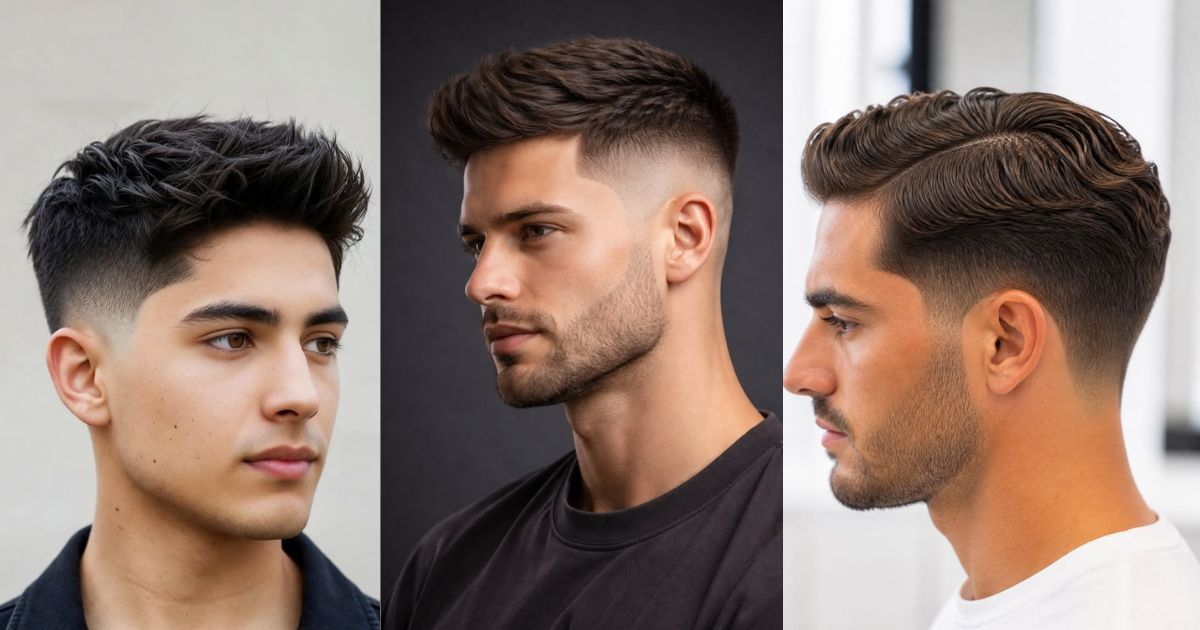
If you’ve scrolled through a hundred haircut photos and keep landing on the same clean, blended look, there’s a good chance you’ve been staring at a classic taper. It’s the cut barbers reach for when a client says “just make it look neat”, and it’s stayed in every barbershop’s rotation for a reason.
This guide breaks down everything about the classic taper haircut: what it actually is, how it differs from a fade, which version suits your face shape and hair type, how to talk to your barber without fumbling for words, and how to style it once you’re home. Whether you’re due for your first taper or you’ve had one for years and want to switch it up, you’ll find a straight answer here.
What Is a Classic Taper Haircut and Is It Still Worth Getting in 2026?
Short answer: yes. The classic taper remains one of the most requested cuts in barbershops because it works with almost any face shape, hair texture, and dress code. It’s not chasing a trend, which is exactly why it hasn’t gone out of style.
What is a classic taper haircut?
A classic taper haircut keeps hair longest on top, usually somewhere between one and four inches, and gradually shortens as it travels down the sides and back toward the neckline and around the ears. Unlike a skin fade, the hair never disappears completely; there’s always a soft layer of hair at the bottom, even if it’s very short.
Barbers typically create this gradual shortening with clippers, then refine the transition zones with scissor-over-comb work for a smoother blend. The result is a cut that looks tidy from every angle without the stark contrast of a fade.
What does “classic” mean in the classic taper?
“Classic” refers to the traditional, barbershop-style approach to tapering, no shaved designs, no razor-sharp skin fades, no exaggerated disconnection. It’s the taper style that’s been cut the same essential way for generations, favoring a natural gradient over dramatic contrast.
Is a regular taper the same as a classic taper?
Mostly, yes. “Regular taper” and “classic taper” are used interchangeably by most barbers and clients. Both describe hair that tapers down gradually without exposing the scalp. Some shops use “classic” specifically to signal a more conservative, business-appropriate finish, while “regular” is just shorthand for any standard taper.
Classic taper vs. fade vs. taper fade: Key differences explained
These three terms get mixed up constantly, so here’s a side-by-side comparison.
| Feature | Classic Taper | Fade | Taper Fade |
| Shortest point | Short, but hair remains visible | Blended down to skin | Blended down to skin, but higher up |
| Contrast level | Low to moderate | High | Moderate to high |
| Formality | Most formal/traditional | Most modern/bold | In between |
| Maintenance frequency | Every 4–6 weeks | Every 2–3 weeks | Every 3–4 weeks |
| Best for | Office jobs, traditional looks | Streetwear, bold personal style | Guys who want some edge, less upkeep |
| Skin showing | No | Yes | Sometimes, only near the bottom |
The core difference
If the barber’s clippers ever touch bare skin, you’re looking at some version of a fade. If hair is present at every point on your head, no matter how short, you’re looking at a taper. A taper fade sits in the middle, it fades to skin, but the fade itself starts higher and is generally more subtle than a full fade.
What is a classic taper fade?
A classic taper fade blends traditional taper styling with a light fade at the very bottom, near the hairline and neckline. It keeps most of the traditional taper’s soft, gradual look on the sides while adding a slightly crisper finish at the base. It’s a good middle-ground option for guys who like the classic silhouette but want a touch more definition where the hair meets the skin.
Learn more:Low Taper Fade Long Hair: 35 Best Styles for Every Face Shape & Hair Type
The history of the classic taper haircut: Why it has lasted over 100 years
The taper haircut traces back to military and traditional barbershop grooming standards of the early-to-mid 20th century, where short, clean, easy-to-maintain hair was a practical necessity. Barbers refined the technique using clippers and scissor-over-comb work to create smooth, graduated lengths rather than a single uniform length.
Because it photographed well, aged well, and required minimal upkeep, the taper carried through decades of shifting hairstyle trends, from the buttoned-up looks of the 1950s to the textured, tousled tops popular today. Its longevity comes down to one thing: it flatters nearly every head shape and hair type without asking for much in return.
60+ classic taper haircut styles for men
Here’s where the classic taper really shows its range. The taper itself is just the “sides and back” foundation, what you do on top is where the personality comes in. Below are the major style categories, broken down by taper height, hair length, texture, and extra details like beards.
Low classic taper haircut styles
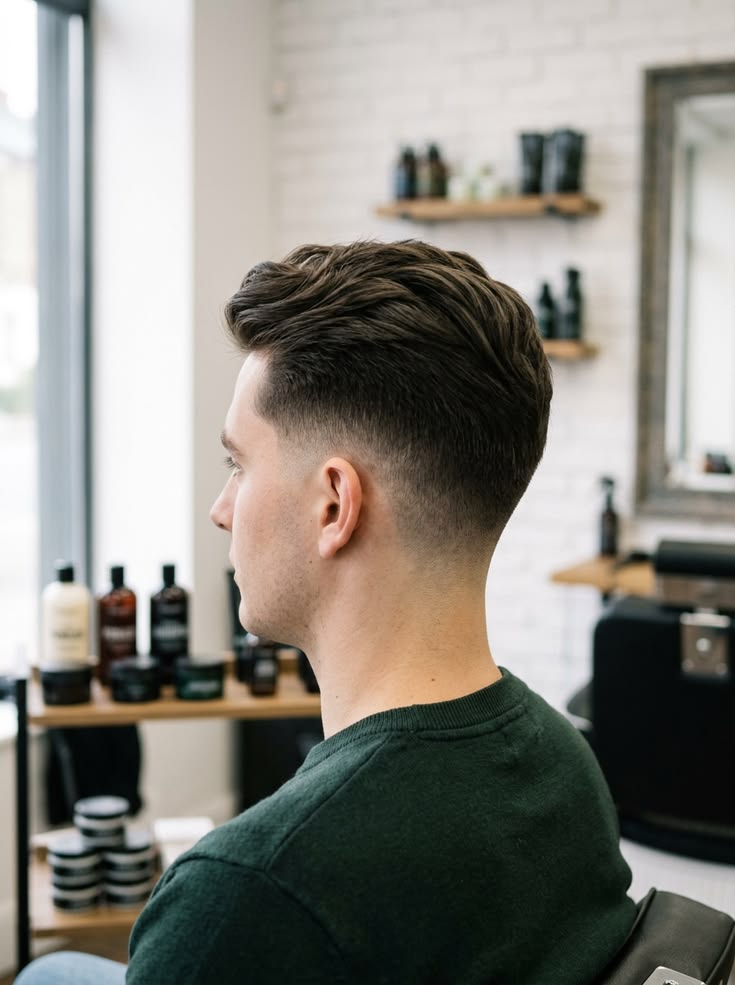
The low taper starts its blending point just above the ear, keeping most of the length on top and sides. It’s the most subtle version and the easiest to wear in conservative or formal settings.
- Low taper with side part
- Low taper with brushed-up top
- Low taper comb-over
- Low taper with textured crop
- Low taper with slick back
- Low taper with natural curls left long on top
- Low taper pompadour
- Low taper with hard part
Mid classic taper haircut styles (Medium taper)
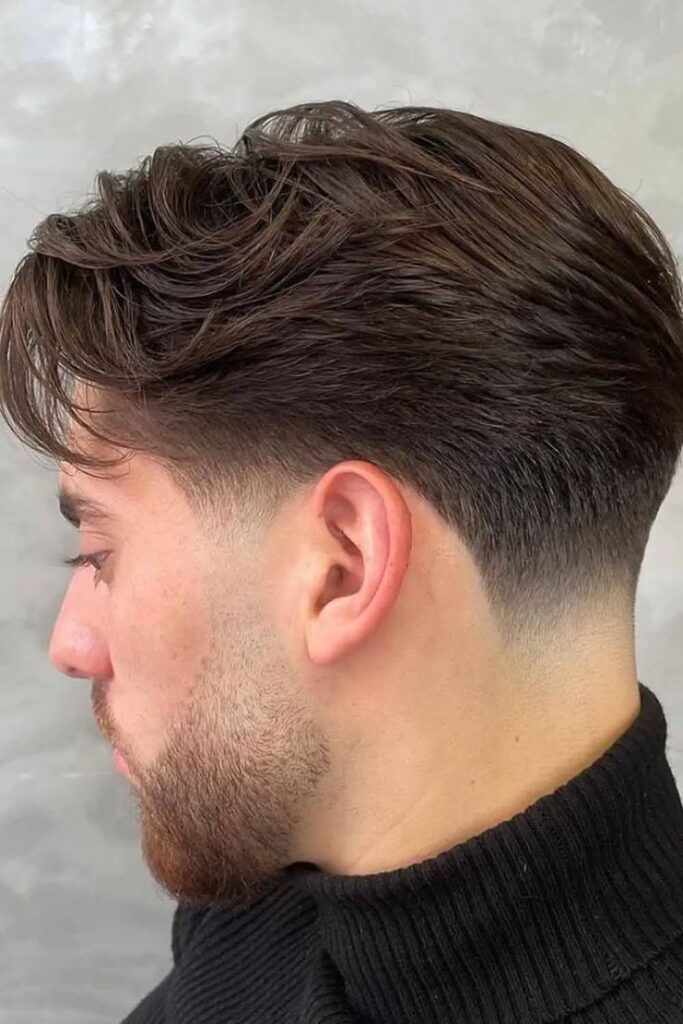
The mid taper begins around the middle of the head, offering more visible contrast than a low taper while staying easy to maintain.
- Mid taper with quiff
- Mid taper with side swept fringe
- Mid taper crew cut
- Mid taper with textured spikes
- Mid taper French crop
- Mid taper with curtain bangs
- Mid taper faux hawk
- Mid taper with volume on top
High classic taper haircut styles
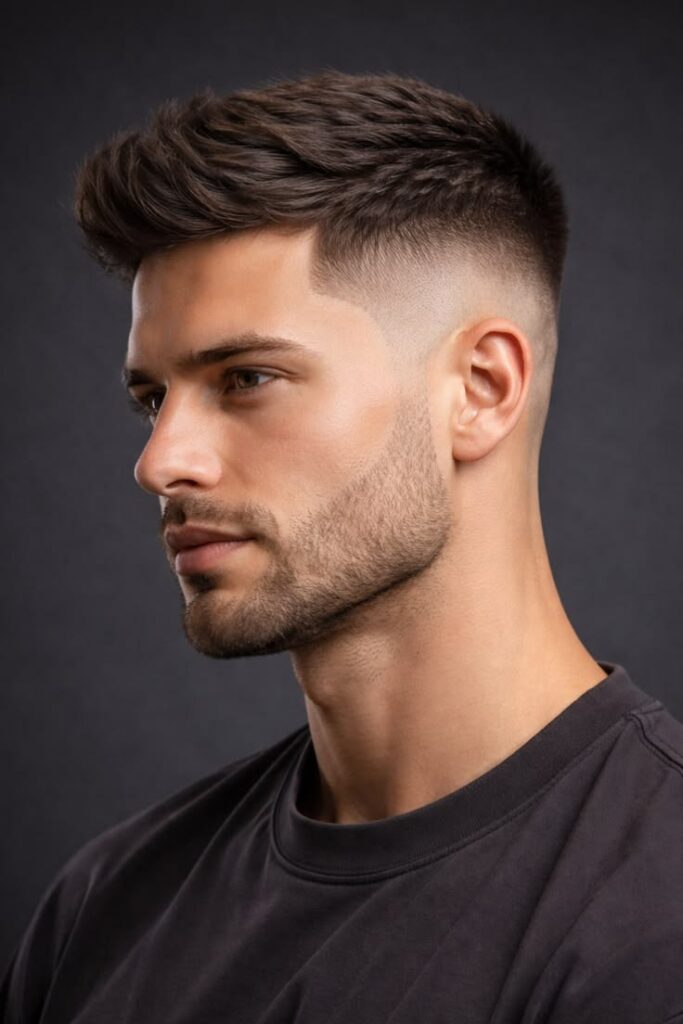
Starting near the temple ridge, the high taper creates the most contrast of the three while still keeping a soft transition (no shaved skin).
- High taper pompadour
- High taper with slicked-back hair
- High taper textured crop
- High taper with disconnected fringe
- High taper mohawk-inspired top
- High taper with curly volume
- High taper business slick
Short classic taper haircut
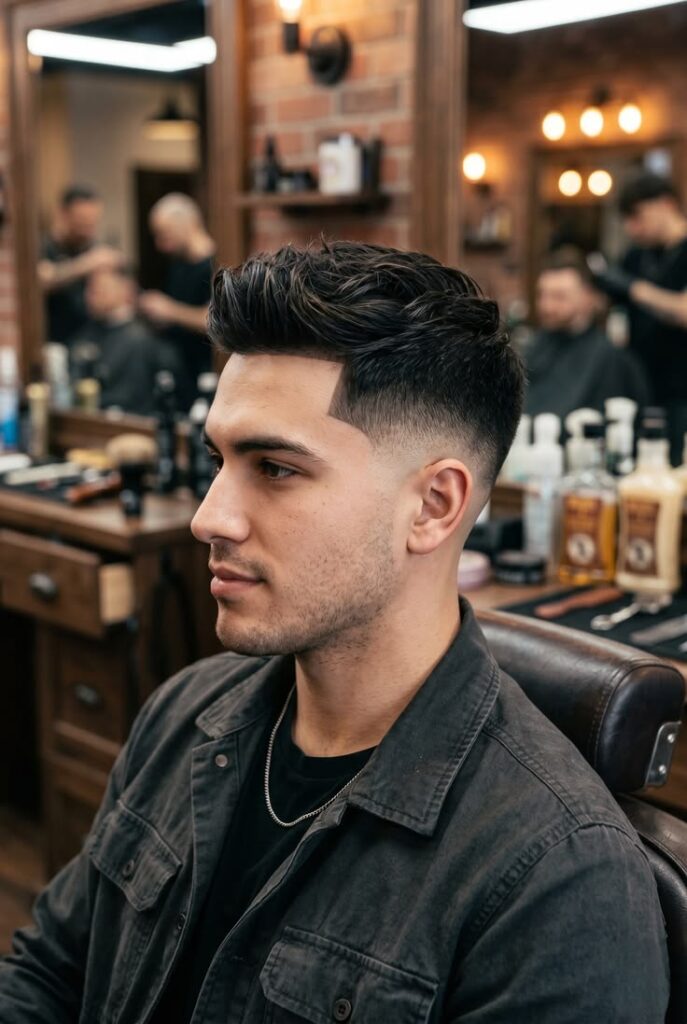
A short classic taper keeps the top length close to an inch or two, making it one of the lowest-maintenance versions. It’s a favorite for guys who don’t want to style much in the morning.
Long classic taper haircut
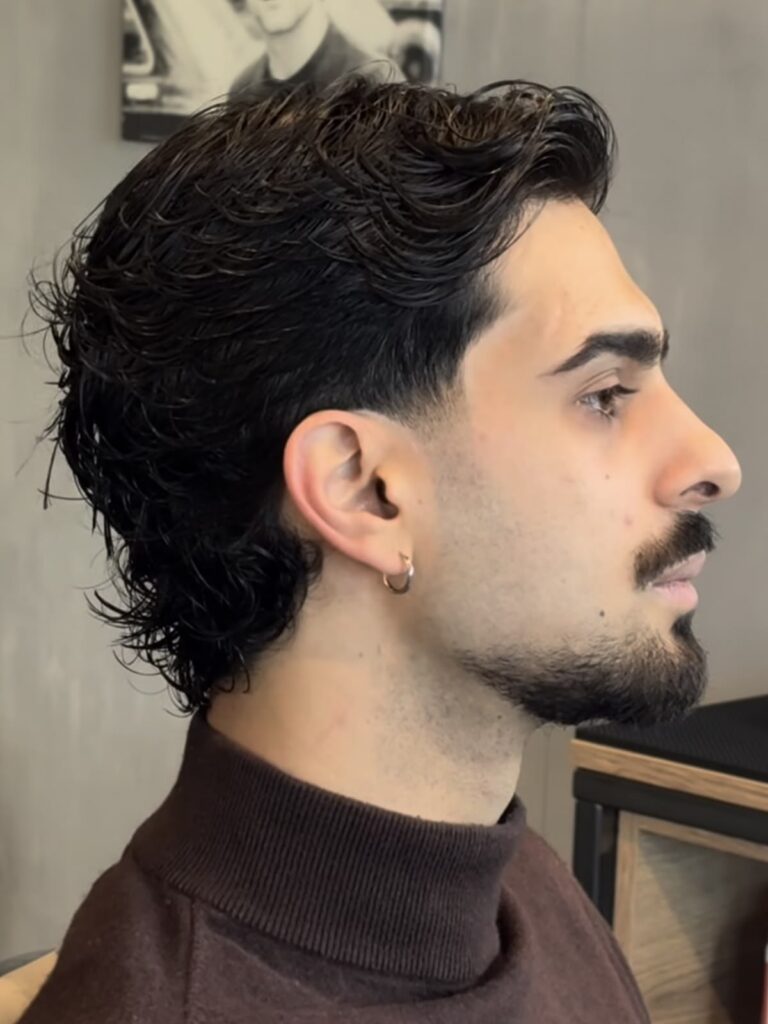
A long classic taper leaves three to five inches (or more) on top, giving room for a slick back, a brushed-up look, or even a small man bun while keeping the sides tidy.
Classic taper fade styles
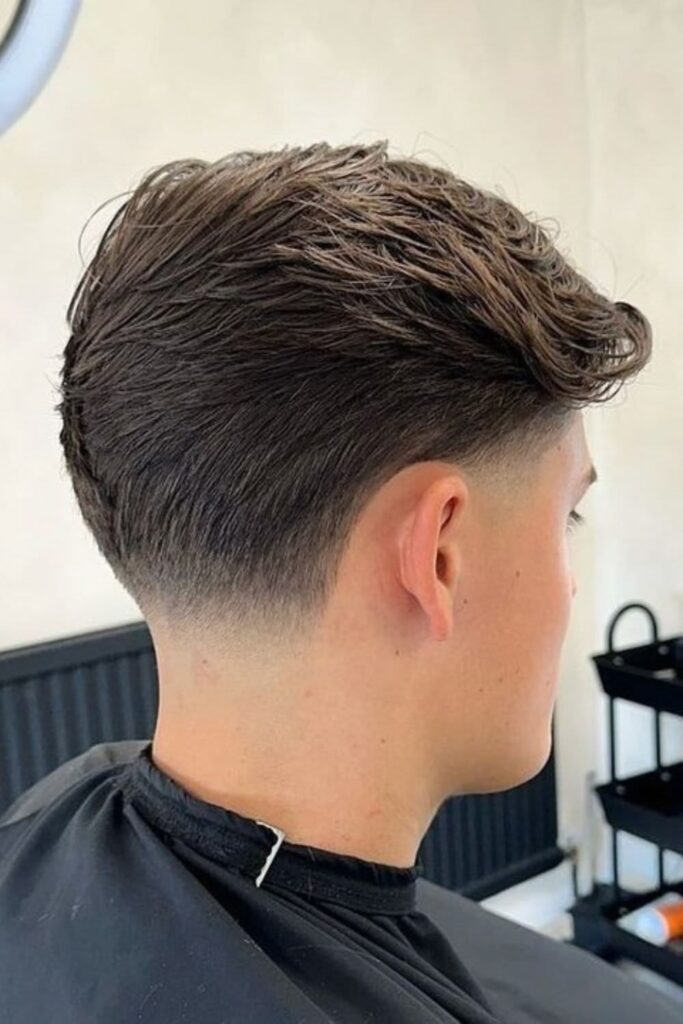
- Low taper fade with textured top
- Mid taper fade pompadour
- High taper fade with curly crop
- Taper fade with hard part
- Taper fade with beard fade to match
Classic taper haircut with beard
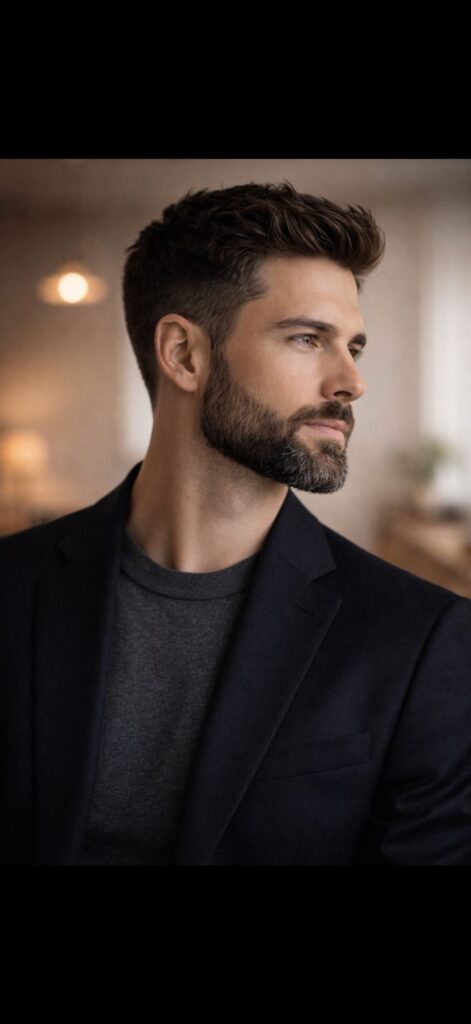
Pairing a taper with a well-groomed beard creates a balanced, masculine look. Common combinations include:
- Low taper with full beard
- Mid taper with stubble
- High taper with boxed beard
- Taper with beard fade for a seamless connection
Classic taper for Black men
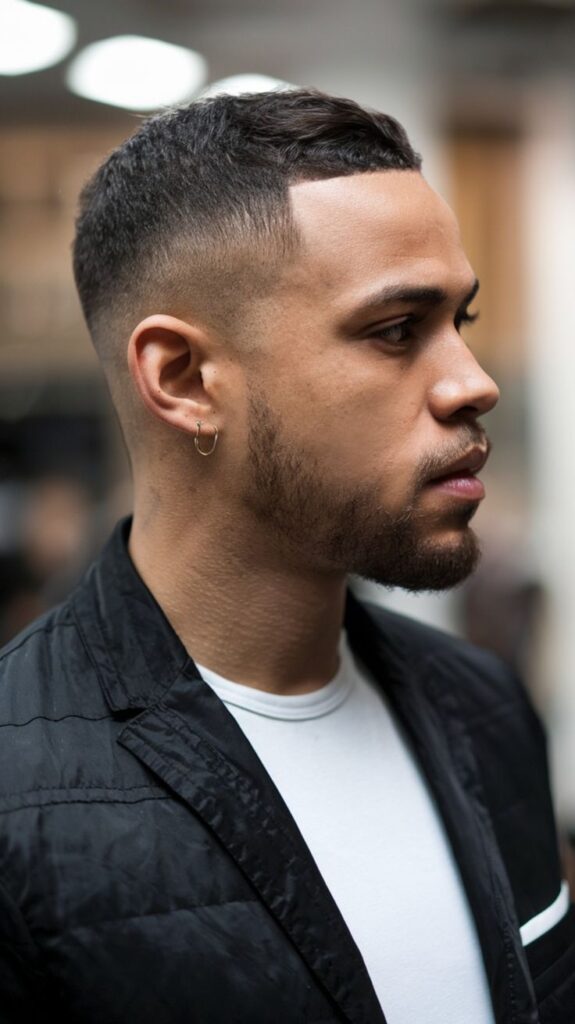
Classic tapers work exceptionally well with coily and tightly coiled hair types, often paired with:
- Taper with waves (360 waves)
- Taper with twists on top
- Taper with an afro-textured crop
- Taper with braids or cornrows blending into the sides
- Taper with a low or high fade base and longer curl definition on top
Additional classic taper variations
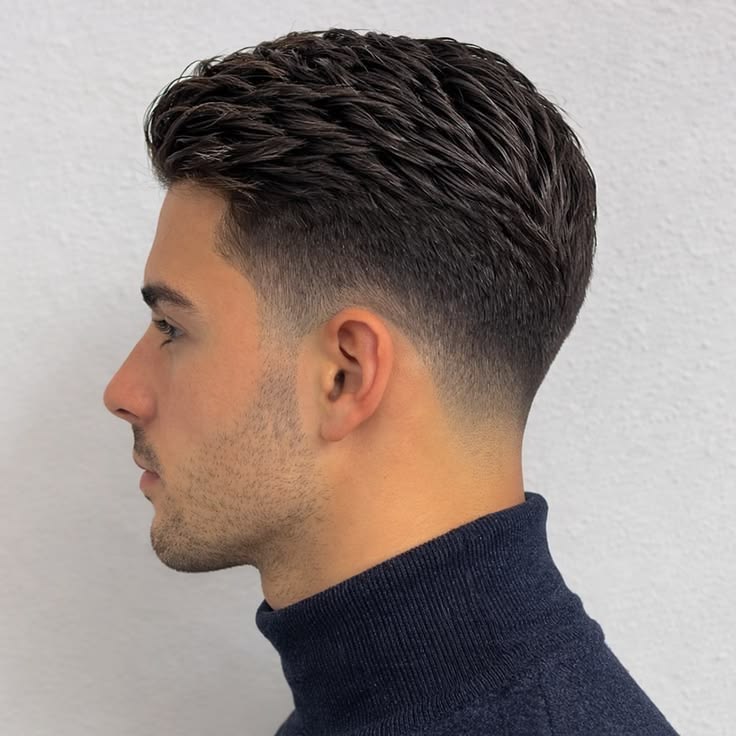
- Taper with undercut disconnection
- Taper with a defined hairline
- Taper with a widow’s peak accentuated
- Taper with a subtle skin fade at the neckline only
- Taper with a shaved part line
Classic taper haircut for every face shape: Which style is right for you?
The right taper height and top style can visually balance almost any face shape. Here’s a quick reference.
| Face Shape | Recommended Taper Height | Top Style Suggestion |
| Round | Low to mid taper | Add height on top (quiff, pompadour) |
| Square | Any taper height | Textured crop or side part to soften angles |
| Oval | Low, mid, or high taper | Nearly any style works |
| Diamond | Mid taper | Fringe or side-swept top to balance cheekbones |
| Heart | Low to mid taper | Side part, avoid too much volume at the crown |
| Oblong/Long | Low taper | Keep top shorter, avoid excess height |
Classic taper for a round face
Go with a low or mid taper and add height on top through a quiff or brushed-up style. This creates the illusion of length and keeps the face from looking wider.
Classic taper for square face
Square faces can handle almost any taper height. A textured crop or side part helps soften strong jawlines without hiding them.
Classic taper for oval face
Oval faces are the most versatile, low, mid, or high tapers all work well, and you have freedom to experiment with top styles.
Classic taper for diamond face
A mid taper with a side-swept fringe or textured top balances out prominent cheekbones and narrower forehead and jawline.
Classic taper for a heart-shaped face
Stick to a low or mid taper with a side part. Avoid piling too much volume at the crown, since that can exaggerate a wider forehead.
Classic taper for oblong/long face
A low taper with shorter length on top helps avoid adding extra visual length to an already long face shape.
Classic taper haircut for every hair type
The taper technique adapts to virtually every hair texture, though styling and maintenance shift depending on what you’re working with.
Classic taper for straight hair
Straight hair shows off a clean taper line especially well. It’s easy to slick back, part, or leave textured with a light matte product.
Classic taper for wavy hair
Waves add natural texture and movement on top, pairing nicely with a textured crop or brushed-up style. A sea salt spray can enhance natural wave pattern.
Classic taper for curly hair
Curly hair benefits from a slightly longer top to let curls show their shape, paired with a low or mid taper on the sides so the curls stay the visual focus. Curl cream or definition gel helps control frizz.
Classic taper for thick hair
Thick hair holds volume well, so a taper helps manage bulk on the sides while a skilled barber thins the top with scissor work to prevent it from looking heavy.
Classic taper for fine/thin hair
Fine hair benefits from shorter to medium lengths on top with a lightweight product, since heavy pastes can weigh it down and make it look thinner than it is.
Business classic taper haircut: The professional man’s guide
Why the classic taper is the ultimate business haircut
The classic taper strikes the balance employers and clients respond well to: neat, intentional, and not distracting. It reads as put-together without looking like you tried too hard, which is exactly the impression most professional settings call for.
Business classic taper vs. business casual taper
A strict business taper usually means a low taper with a conservative side part or slick-back finish and minimal top length. A business casual version allows slightly more length and texture on top, think a soft quiff or matte textured crop, while keeping the sides just as clean.
How to style the business classic taper for a job interview
- Apply a small amount of pomade or light wax to damp hair.
- Comb or brush the top into a neat side part or straight-back direction.
- Use a blow dryer on low heat to set the shape if needed.
- Avoid heavy shine products for interviews; a matte or low-sheen finish looks more natural on camera and in person.
Why the classic taper is the best low-maintenance haircut for men
Maintenance comparison table
| Haircut Type | Trim Frequency | At-Home Styling Effort | Grow-Out Appearance |
| Classic Taper | Every 4–6 weeks | Low to moderate | Grows out softly, still looks decent |
| Skin Fade | Every 2–3 weeks | Moderate | Grows out patchy, needs frequent upkeep |
| Buzz Cut | Every 2–4 weeks | Very low | Grows out evenly but loses shape fast |
| Undercut | Every 4–5 weeks | Moderate to high | Can look messy at the disconnection line |
How long does a classic taper last?
Most classic tapers hold their shape well for four to six weeks before the lines start to soften noticeably. Because there’s no hard line against skin, the grow-out period looks far more presentable than a fade’s does.
At-home maintenance between barbershop visits
- Wash with a sulfate-free shampoo two to three times a week to avoid drying out the scalp.
- Trim stray neckline or sideburn hairs with clippers if you’re comfortable doing so.
- Apply a lightweight styling product daily to keep the top manageable.
- Use a boar-bristle brush to redistribute natural oils and keep hair looking healthy between cuts.
How to make your classic taper last longer
Book your next appointment before you leave the chair, and ask your barber to keep the top slightly longer than you think you want, this gives you more flexibility to style it different ways as it grows out, buying extra time between cuts.
How to ask your barber for a classic taper haircut
Step-by-step: How to ask for a classic taper
- Start with the taper height: say “low taper,” “mid taper,” or “high taper” so your barber knows where the blend should start.
- Specify the guard length on the sides (see the table below) and how much length you want on top.
- Mention the finish you want on top, textured, slicked, brushed up, or natural.
- Ask for scissor-over-comb blending at the taper line for a smoother, more gradual transition.
- Bring a reference photo if you have one; even a rough visual saves a lot of back-and-forth.
Classic taper clipper guard reference table
| Guard Number | Approximate Length | Common Use in a Classic Taper |
| #1 | 1/8 inch | Shortest point of a high or skin-adjacent taper |
| #2 | 1/4 inch | Common starting guard for low/mid taper sides |
| #3 | 3/8 inch | Blending guard, mid-taper transition |
| #4 | 1/2 inch | Upper blending zone, longer taper styles |
| Scissor work | Varies | Top length and final blending refinement |
How to style a classic taper haircut: Step-by-step
Step-by-step styling guide
- Start with clean, towel-dried hair, not soaking wet, not fully dry.
- Apply a dime-sized amount of your chosen product (pomade, clay, or cream) evenly through your palms.
- Work the product from roots to ends, focusing on the top section.
- Use a comb or your fingers to direct the hair into your preferred shape (side part, brushed back, textured).
- Blow dry on a low-medium setting while shaping, if you want extra volume or hold.
- Finish with a small amount of matte product or light-hold spray to lock the style in place.
Best styling products for a classic taper (by finish type)
| Desired Finish | Recommended Product Type |
| High shine, slick back | Oil-based pomade |
| Natural matte texture | Matte clay or paste |
| Light hold, natural movement | Light cream or texturizing spray |
| Strong hold, structured shape | Water-based pomade with firm hold |
| Curl definition | Curl cream or defining gel |
Classic taper haircut: Celebrity inspiration and reference guide
Seeing the cut on recognizable faces makes it easier to picture how a style might translate to your own features. Here are a few well-known reference points.
Ryan Gosling: Classic low taper + side part
A subtle, low taper paired with a clean side part, a go-to look for red carpet events and everyday wear alike, thanks to how effortlessly professional it reads.
David Beckham: Classic mid taper + slick back
A mid taper gives just enough contrast to frame a slicked-back top, creating a sharp, structured silhouette that works equally well in a suit or casual wear.
Chris Evans: Classic low taper + textured matte top
A low taper kept understated on the sides, paired with a textured, matte-finished top, a relaxed but still deliberate look.
Brad Pitt: Classic mid taper + natural texture
A mid taper with natural, unstyled texture on top shows how the cut can look effortless without any heavy product or rigid shaping.
George Clooney: Classic low taper (silver hair)
A low taper proves especially flattering on silver and gray hair, keeping the cut looking refined rather than severe.
Low Taper Fringe Haircut Guide: 12 Styles, Every Hair Type, and Exactly What to Tell Your Barber
The low taper fringe pairs a subtle, low blending point on the sides with a forward-swept fringe on top, giving a soft, youthful silhouette without sacrificing the classic taper’s clean lines.
12 low taper fringe styles to consider:
- Textured fringe with low taper
- Side-swept fringe with low taper
- Curtain fringe with low taper
- Curly fringe with low taper
- Wavy fringe with low taper
- Choppy fringe with low taper
- Disconnected fringe with low taper
- Fringe with a hard part and low taper
- Slicked fringe with low taper
- Messy textured fringe with low taper
- Long fringe with low taper
- Fringe with a low taper fade
By hair type:
- Straight hair: Fringe lays flat naturally; a light matte paste keeps it from looking greasy.
- Wavy hair: Adds natural texture to the fringe without much product needed.
- Curly hair: Ask for the fringe left slightly longer so the curl pattern shows through instead of shrinking too high.
- Coily hair: Works well with a twist-out or braid-out fringe combined with a low taper on the sides.
What to tell your barber: “I want a low taper, start the blend just above my ear, and keep the top long enough in front for a fringe I can comb forward.”
Blowout Taper for Curly Hair: What to Ask Your Barber + How to Style It
The blowout taper for curly hair keeps a rounded, voluminous curl shape on top while the sides taper down cleanly, creating contrast between the fullness up top and the tidy sides.
What to ask your barber:
- Request a low or mid taper on the sides to keep focus on the curls.
- Ask them to round out the top shape rather than leaving it flat or boxy.
- Mention you want length retained on top specifically for a blowout, this usually means at least two to three inches.
How to style it:
- Apply a curl cream or leave-in conditioner to damp curls.
- Use a diffuser attachment on your blow dryer to shape curls upward and outward while drying.
- Avoid touching curls too much while they dry to prevent frizz.
- Finish with a light curl-defining gel or oil for shine and hold.
Blowout Taper Textured Fringe – Low, Mid & High: What to Ask For and How to Style It
This variation combines a blowout’s rounded volume with a textured fringe falling over the forehead, and it can be done at a low, mid, or high taper depending on how much contrast you want.
| Taper Height | Look | Best For |
| Low | Subtle contrast, softer transition | Professional settings, first-timers |
| Mid | Balanced contrast, most versatile | Everyday wear, most face shapes |
| High | Bold contrast, most dramatic | Guys wanting a statement look |
What to ask for: “A [low/mid/high] taper on the sides with a blowout on top, and texturize the fringe so it doesn’t sit flat.”
How to style it:
- Blow dry the top upward and forward using a round brush to build volume at the roots.
- Apply a texturizing spray or light paste to the fringe specifically.
- Use fingers (not a comb) to separate strands for a piecey, textured finish.
- Set with a light-hold spray if you need it to last through the day.
High Blowout Taper Haircut Guide: Low vs Mid vs High, Every Hair Type
The high blowout taper is the boldest version of this style, with the taper starting near the temple for maximum contrast against a full, rounded blowout on top.
Low vs. mid vs. high, compared:
| Version | Contrast Level | Formality | Styling Time |
| Low blowout taper | Subtle | High | Moderate |
| Mid blowout taper | Balanced | Moderate | Moderate |
| High blowout taper | Bold | Casual/trendy | Higher (more volume to shape) |
By hair type:
- Straight hair: Needs a round brush and heat to build volume, since it won’t hold shape on its own.
- Wavy hair: Blows out easily with natural lift; needs less heat styling.
- Curly/coily hair: A diffuser works better than a round brush to preserve curl pattern while still creating height and volume.
Frequently Asked Questions
Is a classic taper high maintenance?
No. It’s one of the lowest-maintenance cuts available, needing a trim only every four to six weeks.
Can I get a classic taper with curly hair?
Yes. Curly hair takes to a classic taper especially well, especially when the top is left slightly longer.
What’s the difference between a taper and a fade?
A taper always leaves some hair at the shortest point; a fade blends all the way down to bare skin.
How short should the sides be on a classic taper?
Anywhere from a #1 to a #4 guard, depending on whether you want a low, mid, or high taper.
Does a classic taper work for older men?
Yes, especially with gray or silver hair, where the softer contrast looks more natural than a sharp fade.
How do I ask for a classic taper without sounding unsure?
Name the taper height (low, mid, or high), the guard number on the sides, and the top length, that’s all your barber needs.
Conclusion
The classic taper haircut has survived a century of changing trends because it simply works, for busy professionals, curly-haired guys, gray-haired gentlemen, and everyone in between. With 60-plus style variations and clear guidance for every hair type and face shape, there’s a version of this cut suited to you.
Whether you’re after a low-key business look, a curly blowout, or a fringe with a bit of edge, the key is communication: tell your barber the taper height, the guard number, and the top style you want. Walk in prepared, and you’ll walk out with a cut that lasts.