

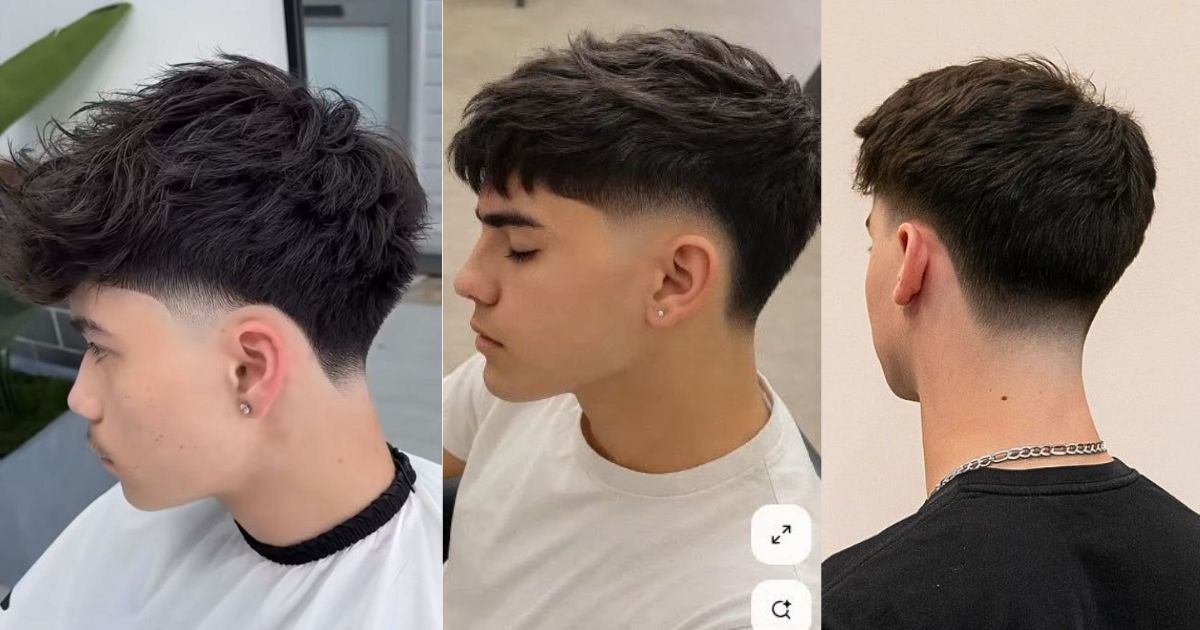
Taper Low Burst Fade Picking the right haircut description matters more than most people realize. Walk into a barbershop and say “gimme a fade,” and you might walk out with something completely different from what you pictured. The taper low burst fade is one of those cuts that sounds simple but gets botched constantly because clients don’t know how to describe it.
This guide breaks down exactly what a taper low burst fade is, who it works best for, and how to talk to your barber so you get it right the first time. We’ll also cover maintenance, common mistakes, and how it stacks up against similar cuts like the blowout taper.
What a taper low burst fade is
A taper low burst fade is a combination cut. It merges a low taper on the sides and back with a burst fade, which is a rounded, half-moon shaped fade that wraps around the ear instead of running in a straight horizontal line.
Here’s the breakdown of what each part contributes:
| Element | What it does |
| Taper | Gradually shortens hair from the top down to the skin or a short guard length |
| Low placement | Keeps the fade starting near the ear and hairline, not up at the temple |
| Burst shape | Curves the fade around the ear in a circular sweep instead of a straight line |
Put together, the cut looks tight and controlled around the ear, blends smoothly into the neckline, and leaves the rest of the head with a soft, natural taper. It’s subtle enough for everyday wear but has just enough detail to look deliberate rather than plain.
Taper vs low fade vs burst fade
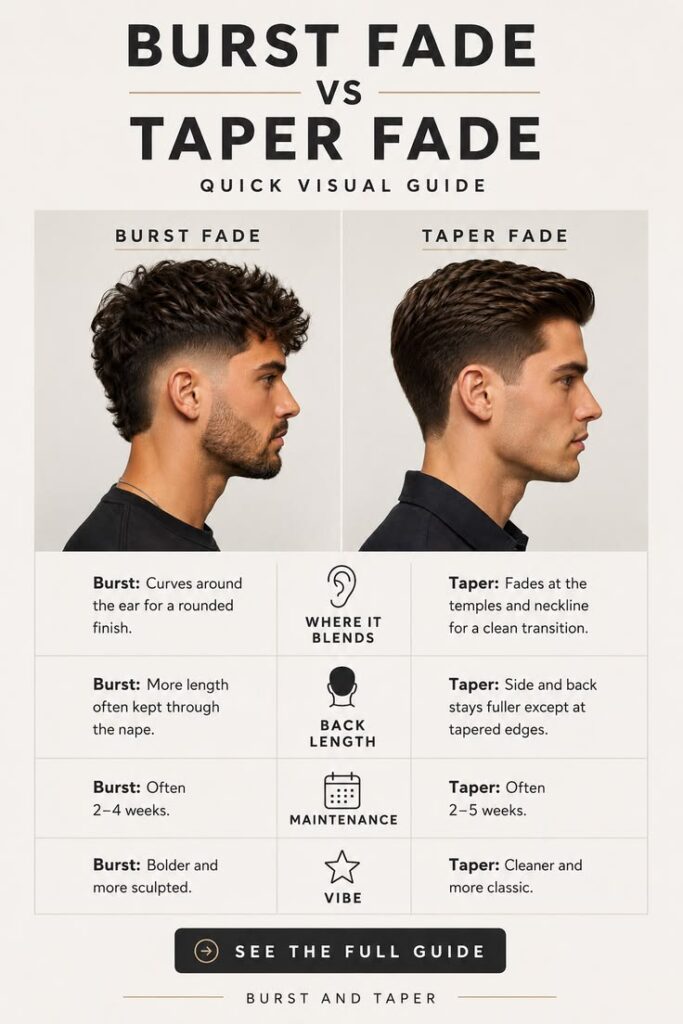
These three words get thrown around interchangeably, but they each describe a different part of the haircut. Understanding the difference is the single best thing you can do before your next barber visit.
Taper
A taper is the general technique of gradually shortening hair, usually without exposing bare skin. It’s the softest fade option and the easiest to grow out without looking messy. Most fades, including the burst, start with a taper as their foundation.
Low fade
“Low” refers to placement, not shape. A low fade means the shortest point of the fade sits close to the ears and the base of the neck, rather than climbing up toward the temples. This keeps more hair overall and reads as a more conservative, professional look.
Burst fade
The burst fade is defined by its curve. Instead of a straight diagonal or horizontal fade line, the hair tapers in a rounded arc around the ear, almost like a comma or a half-sun shape. It’s this detail that gives the taper low burst fade its signature look.
Learn more:Classic Taper Haircut: 60+ Styles, Types, Barber Tips & Expert Guide
| Term | Describes | Visual effect |
| Taper | Technique | Gradual length reduction |
| Low | Placement | Fade starts near ears/neckline |
| Burst | Shape | Rounded curve around the ear |
Who a taper low burst fade suits
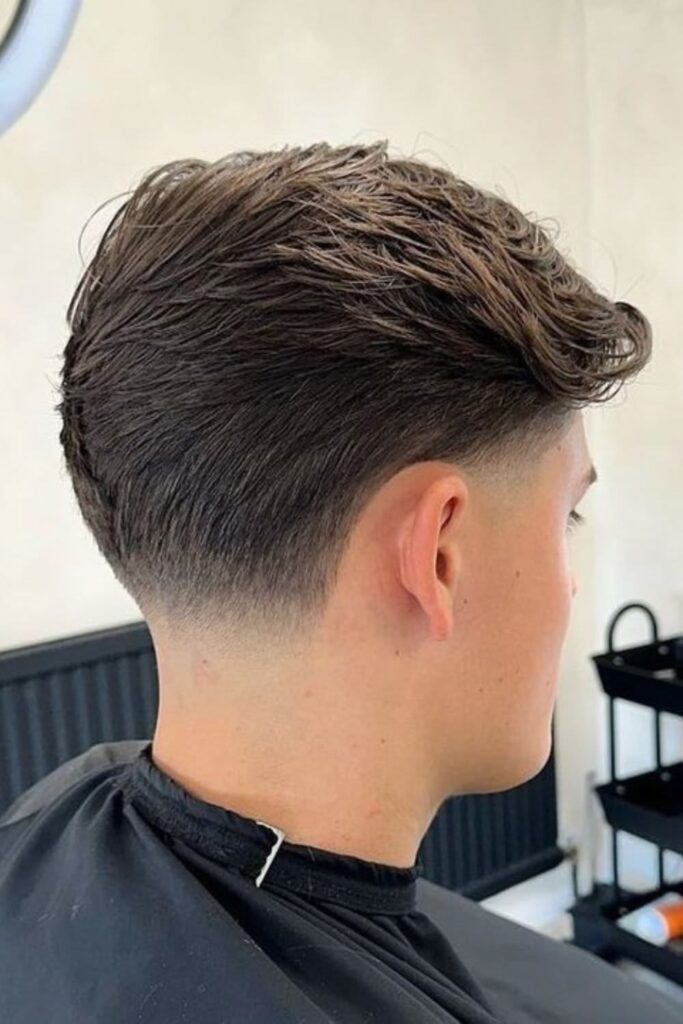
One reason this cut has stayed popular is that it adapts well to different faces and textures. That said, a few tweaks help it work even better depending on your starting point.
Face shapes
| Face shape | How it works |
| Round | Add height/volume on top to counter the roundness; a low burst alone won’t do much slimming |
| Square | Flatters well, the curved line softens strong jaw angles |
| Oval | Nearly foolproof; most top styles work here |
| Heart | Balance with a little more top volume to offset a narrower chin |
| Diamond | Works cleanly since the curve doesn’t fight cheekbone width |
Hair types
- Straight hair – The curve shows up crisply against flat strands, so definition stays sharp.
- Wavy hair – One of the easiest matches; waves flow naturally with the burst’s curve.
- Curly hair – Arguably the best pairing. The rounded shape follows curl patterns instead of cutting against them.
- Coily hair – Handles the low placement well and tends to need less frequent upkeep than a higher fade.
Best styles to ask for
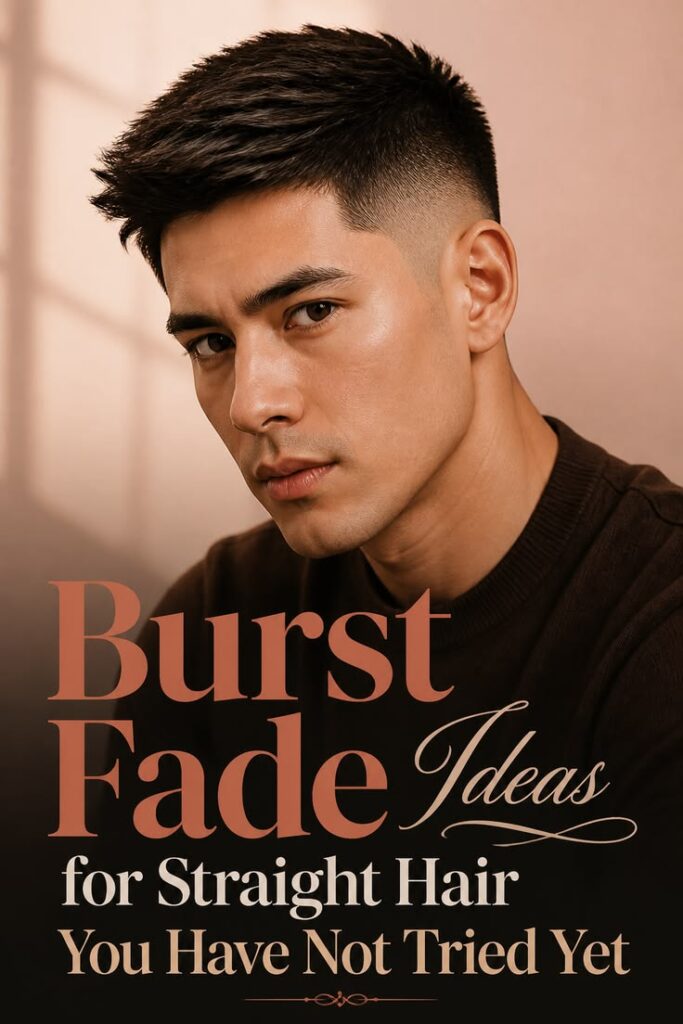
The fade itself stays fairly consistent, but the top is where you customize the whole look. Popular combinations include:
- Textured crop – Short, choppy, low-effort styling.
- Slick back – Combed-back top paired with the clean curved sides.
- Curls on top – Leaves natural curl pattern intact above a controlled fade.
- Burst fade mullet – Longer hair at the back for a bolder, retro-modern combo.
- Textured fringe – Forward-swept bangs that soften the whole cut.
- Short buzz on top – The lowest-maintenance version of the style.
How to ask your barber for it
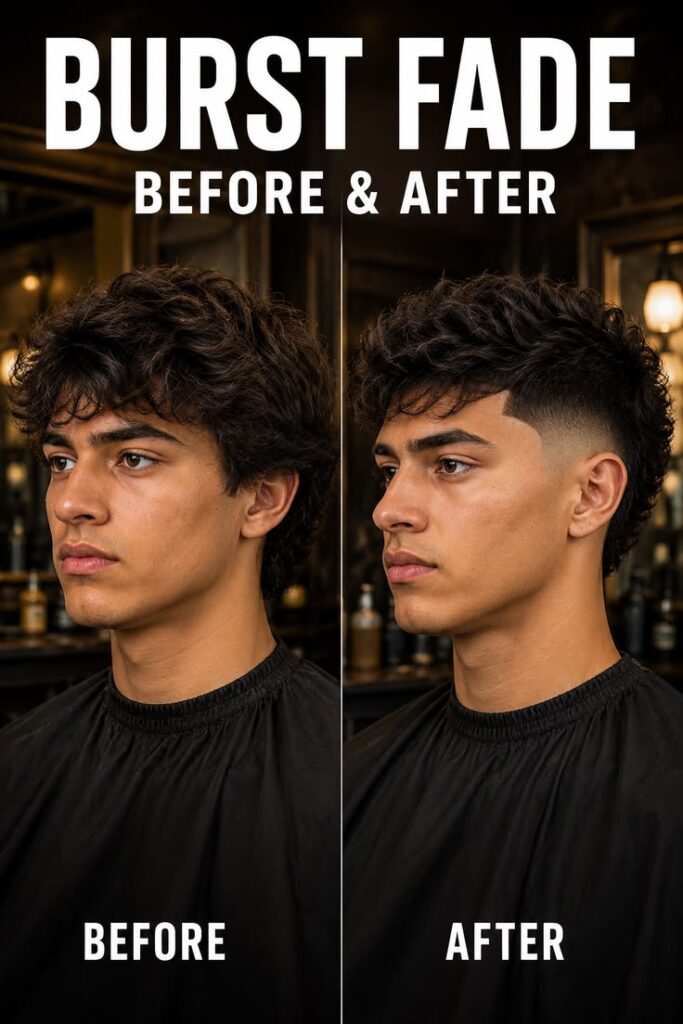
Miscommunication is the number one reason people leave the chair disappointed. Barbers can’t read your mind, so specific wording and visual references go a long way.
A script that works
Try something like this:
“I’d like a low taper on the sides and back, and I want the fade to curve around my ear in a burst shape instead of a straight line. Keep it close to the neckline, and leave [insert length] on top.”
Mentioning your hair type and how much length to leave on top removes almost all guesswork.
What to show
- A clear side profile photo showing the curve around the ear
- A back-of-head photo showing how low the fade sits
- A front photo showing your desired top length and style
Bringing two or three reference images from different angles is far more reliable than describing it verbally alone.
Keeping a taper low burst fade sharp
Because the burst relies on a precise curve, it grows out faster-looking than a plain taper.
Touch-up timeline
| Fade tightness | Recommended touch-up window |
| Tight/skin-close burst | Every 2–3 weeks |
| Standard low burst | Every 3–4 weeks |
| Longer, softer taper | Every 4–5 weeks |
Neckline and sideburn cleanup
Between visits, a trimmer with a close guard can clean up the neckline and stray sideburn hair. Go slowly, follow your natural hairline rather than forcing a hard straight edge, and only trim small amounts at a time, sideburns are easy to overcut and hard to fix.
Mistakes that ruin the cut
- Letting the fade creep upward – A low fade slowly turning into a mid or high fade is the most common complaint.
- Over-thinning around the ear – Removing too much hair flattens the burst’s rounded shape entirely.
- Skipping the blend on the back – An unblended back creates a visible line as hair grows in.
- Vague instructions – Saying “just a fade” without specifying low and burst almost guarantees a different result.
Styling it at home
Daily upkeep is minimal, which is part of the appeal.
- Matte clay – Best for textured or short tops; adds definition without shine.
- Light pomade – Good for a slicker, more polished finish.
- Texture powder – Ideal for fine or straight hair that tends to fall flat.
Apply product to damp, towel-dried hair, work it through with fingers rather than a comb, and style in under two minutes. Most barbers recommend a slightly dry, textured finish over a glossy one for this cut.
Taper low burst fade vs blowout taper
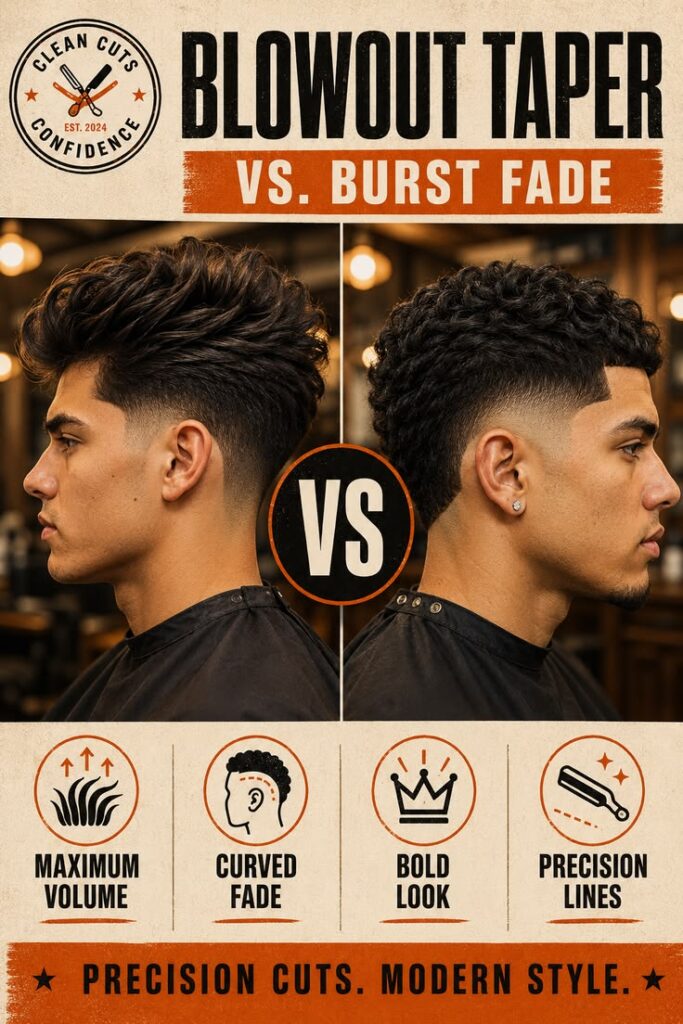
These two cuts are often compared, but the difference mostly comes down to the top styling rather than the fade itself.
| Feature | Taper low burst fade | Blowout taper |
| Fade shape | Curved burst around ear | Straight taper |
| Top styling | Minimal daily effort | Requires daily blow-drying |
| Maintenance frequency | Every 2–4 weeks | Grows out more forgivingly |
| Best for | Curly/wavy hair, low-key polish | Volume-focused, bold top styles |
If you want a defined, low-effort look, the burst wins. If you enjoy daily styling and want more height and volume, the blowout is worth considering.
Is it okay for school, work, or formal settings?
Yes. The low placement keeps the cut conservative enough for most dress codes, while the curved burst adds just enough personality to avoid looking plain. For maximum formality, pair it with a short or medium top length rather than a mullet or heavily textured crop.
Final take
The taper low burst fade earns its popularity by being genuinely versatile. It suits most face shapes, works across every hair texture, and adapts to looks ranging from clean and corporate to bold and trend-forward. The main trade-off is upkeep, that curved line needs regular attention to stay sharp.
If you’re ready to try it, bring reference photos, use specific wording with your barber, and commit to a touch-up schedule every two to four weeks. Get those three things right, and this cut will consistently look intentional rather than accidental.
Go deeper: low taper fade guides
- Low taper fade vs high taper fade
- Low taper fade for curly hair
- Burst fade mullet styles
- Low taper fade for straight hair
- Drop fade vs burst fade comparison
FAQ’S
Is a burst fade the same as a taper fade?
No. A taper fade is a general gradual fade, while a burst fade specifically curves around the ear. A taper low burst fade combines both techniques.
What’s the difference between a burst fade and a drop fade?
A drop fade curves downward behind the ear toward the nape, while a burst fade arcs fully around the ear in a rounded shape.
How often do I need a touch-up?
Most people need a touch-up every two to four weeks, depending on how tight the fade is and how fast their hair grows.
Does a taper low burst fade work with curly hair?
Yes, very well. The rounded curve follows natural curl patterns better than a straight fade line does.
Is this cut good for round faces?
It can work, but adding volume and length on top helps balance a round face more than the fade shape alone.
What should I tell my barber?
Ask for a low taper with a burst shape curving around the ear, specify your desired top length, and mention your hair type.
Is a taper low burst fade high maintenance?
It’s moderate, daily styling is quick, but the curved fade line needs consistent barber touch-ups to stay sharp.