

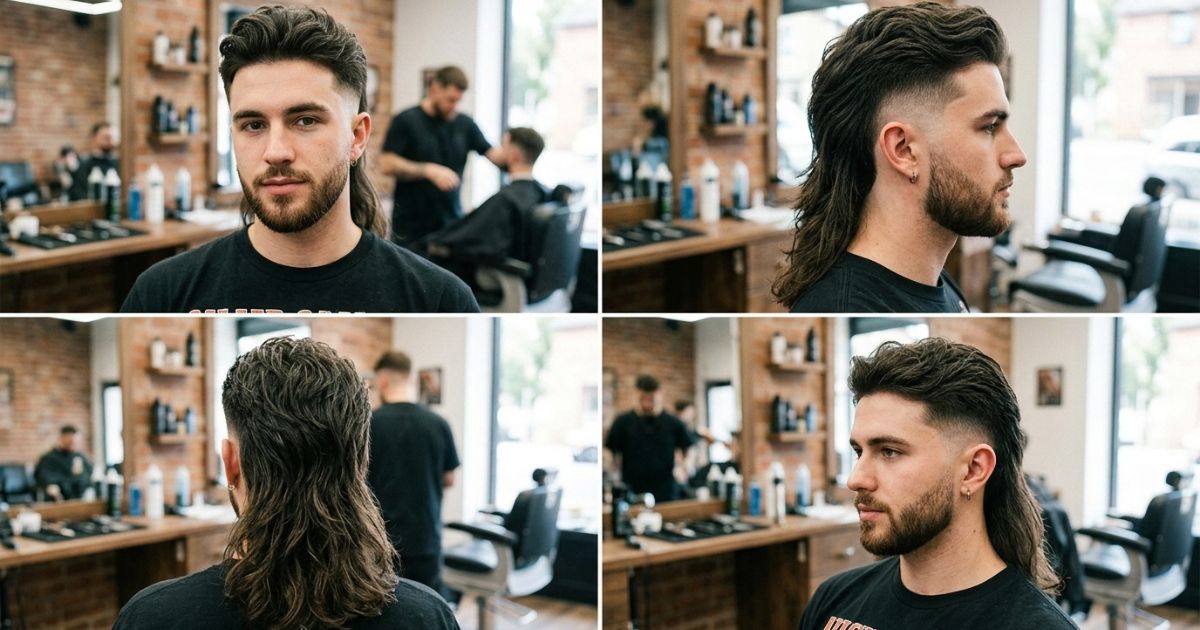
The burst fade mullet has moved from barbershop experiment to everyday favorite. It pairs a rounded fade around the ears with length left at the back, so you get retro attitude without the bulky, shapeless outline. In 2026, it is one of the most requested cuts for men and teens.
This guide explains what the cut is, how it compares with drop and taper versions, and which face shapes suit it best. You will also find 25 variations, a quick reference table, a simple styling routine, and clear words to use with your barber.
What Is a Burst Fade Mullet
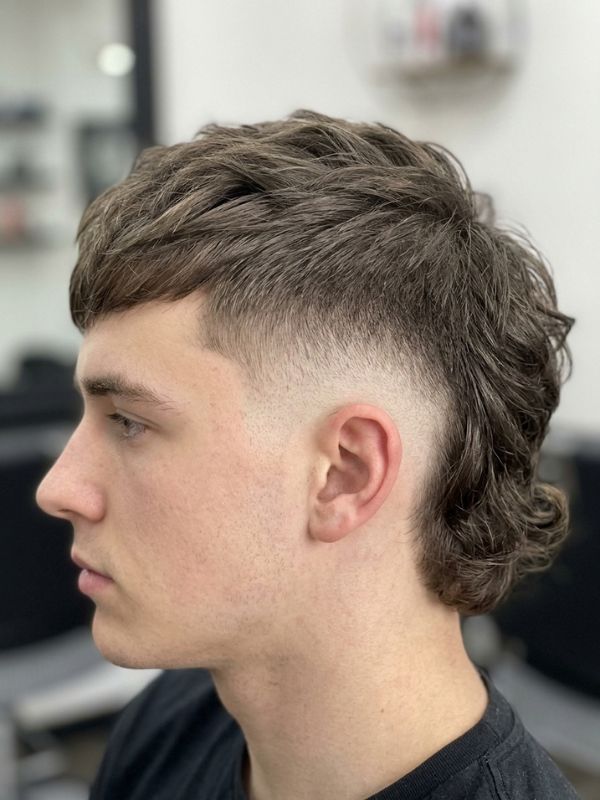
A burst fade mullet is a haircut with a semicircular fade curving around the ear, short sides, and longer hair kept at the nape. The fade “bursts” outward from the ear and blends into the length behind it, so the sides stay tight while the back stays full.
Key parts of the cut:
- The burst: a rounded fade that frames the ear, not a straight line around the head.
- The top: textured, layered, or swept, depending on your hair type.
- The tail: length at the back, from a subtle nape flick to a long, flowing mullet.
The arc is what separates this cut from older mullets. It gives the length behind it a planned, clean edge.
Why Choose a Mullet Fade
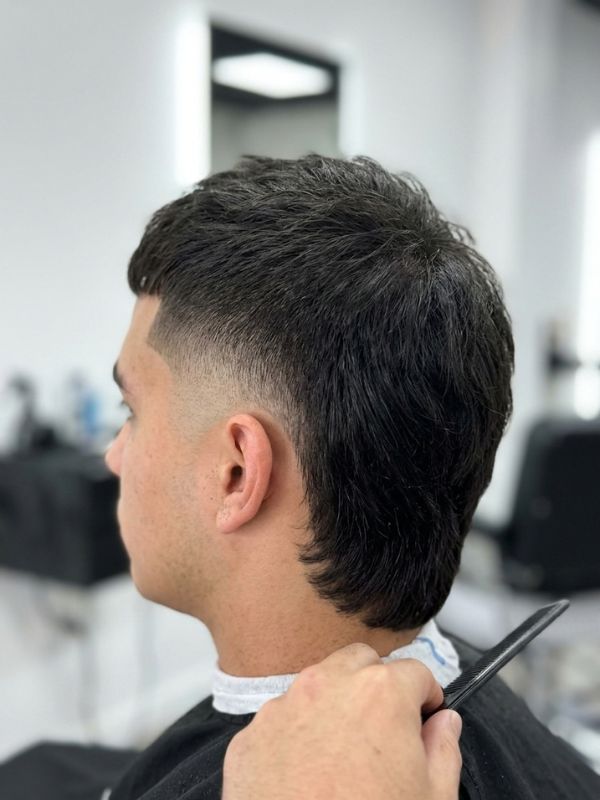
A mullet fade gives you contrast in one haircut. The sides stay sharp and low-maintenance, while the top and back give you room to show personality.
- Works on most hair types: straight, wavy, curly, and coily hair can all carry it with the right layering.
- Modern shape: the fade removes the bulk that made classic mullets look heavy.
- Flexible length: you can keep the back short and subtle or grow it out over time.
- Easy to customize: add a design, a temple fade, or a color accent.
- Good grow-out: the tail keeps growing while the fade gets refreshed.
Burst Fade Mullet vs Drop Fade Mullet
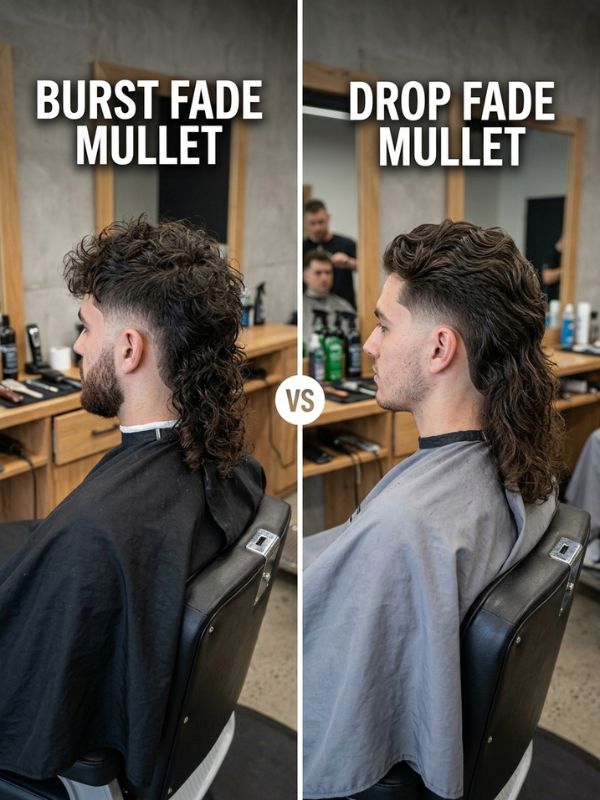
Both cuts curve around the ear, but they behave differently. A burst fade wraps around the ear in a rounded arc. A drop fade follows the ear and then dips lower behind it, toward the nape.
| Feature | Burst Fade Mullet | Drop Fade Mullet |
| Fade shape | Rounded arc around the ear | Line that curves down behind the ear |
| Fade area | Localized around the ear | Extends toward the neckline |
| Back section | Length sits above the arc | Length starts higher, fade dips beneath it |
| Overall look | Compact, sharp, rounded | Long, sweeping, athletic |
| Best for | Ear-focused contrast | Emphasizing the back shape |
Learn more:Low Taper Fade Wavy Hair: Best Styles, Barber Tips, and Styling Guide
Quick pick: choose a burst for a tight, structured look. Choose a drop if you want the fade to follow the curve of your head.
Burst Fade Mullet vs Taper Mullet Fade
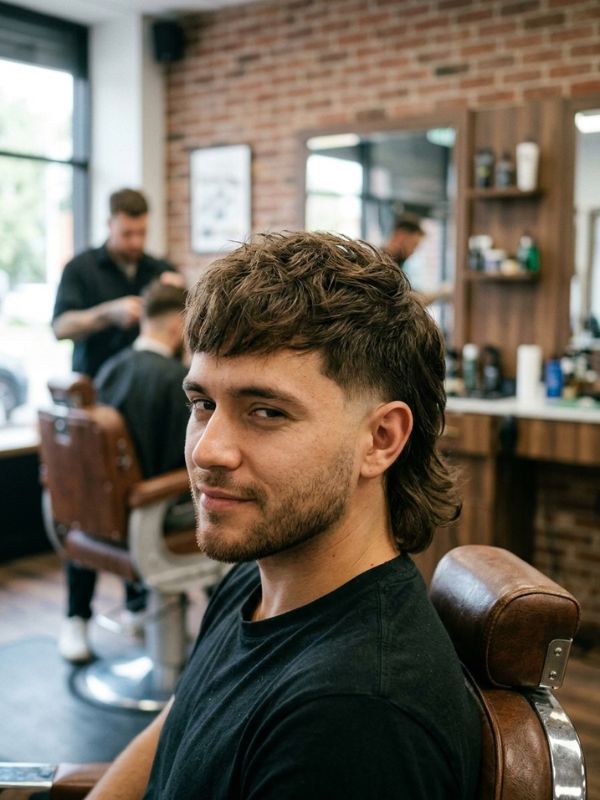
A taper is gentler. It gradually shortens the hair at the sideburns and neckline, while a burst fade cuts much closer around the ear.
| Feature | Burst Fade Mullet | Taper Mullet Fade |
| Contrast | High | Soft to medium |
| Skin showing | Often, around the ear | Rarely, only at edges |
| Maintenance | Cleanup every 2–3 weeks | Cleanup every 3–5 weeks |
| Grow-out | Shows regrowth faster | Grows out neatly |
| Best setting | Casual, creative, bold | School, office, conservative |
Quick pick: a taper is the safer choice. A burst is the bolder one.
Face Shape Tips
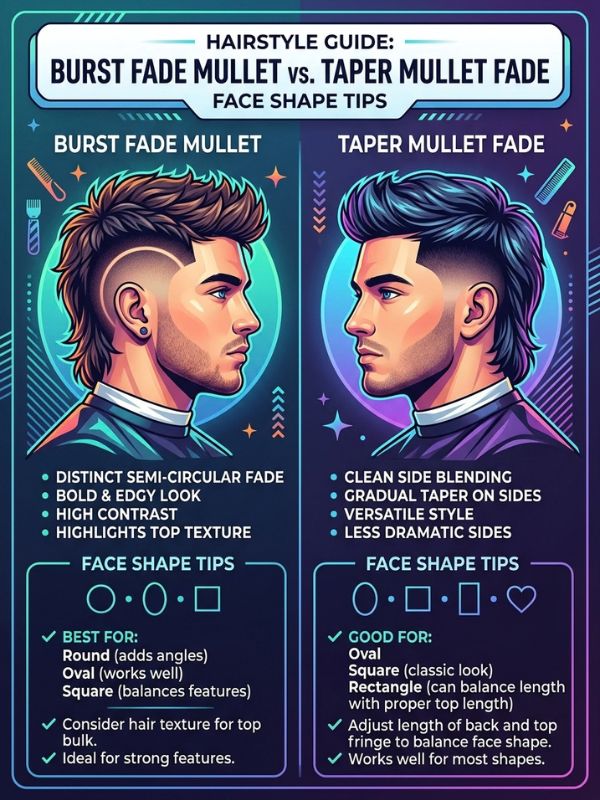
Barbers use fade height and top length to balance proportions. Use these as starting points, then adjust based on your hairline and hair thickness.
| Face Shape | Best Burst Fade Mullet Approach | Why It Works |
| Oval | Almost any version | Balanced proportions handle most cuts |
| Round | Mid or high burst, volume on top | Adds height and slims the sides |
| Square | Low or taper burst, textured top | Softens strong angles |
| Oblong | Low burst, fringe or forward top | Avoids extra height |
| Heart | Low burst, fuller back | Balances a narrower chin |
| Diamond | Temple fade with side texture | Controls width at the cheekbones |
Bangs, Hairline, and Sideburns
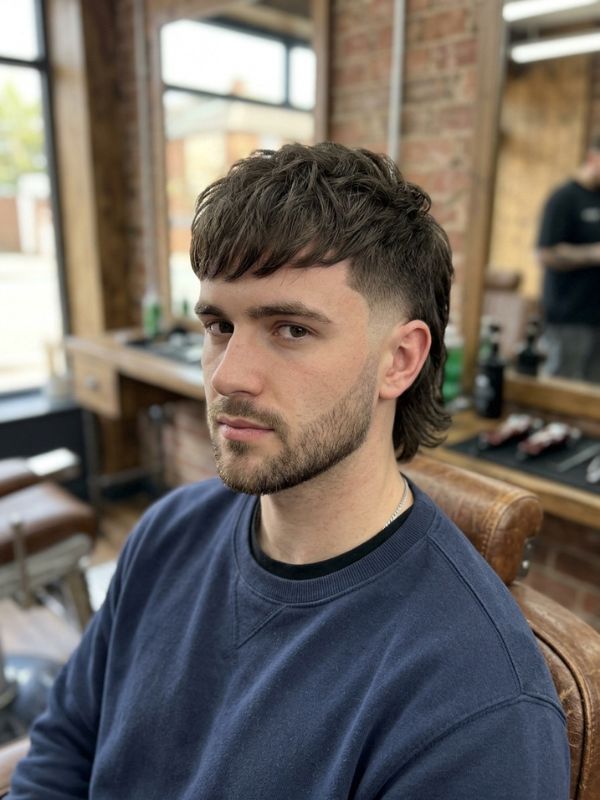
Small details decide whether the cut looks polished.
- Bangs and fringe: A soft fringe shortens a long forehead. A textured fringe suits a wider forehead. Skip a heavy fringe if your hair is very thick and cowlicks are strong.
- Hairline: A receding or uneven hairline works better with a natural, slightly softened edge than a sharp line-up. A strong hairline can handle a crisp shape-up.
- Sideburns: Keep them short and tight with a burst fade. If you wear a beard, blend the sideburn into it so the ear arc looks connected.
25 Burst Fade Mullet Variations
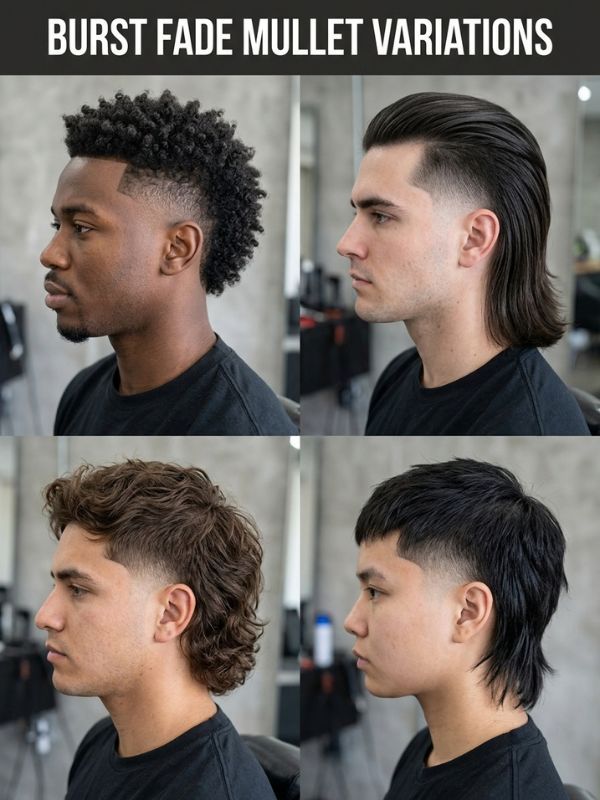
1. Classic Burst Mullet
The foundation cut. A clean rounded fade at the ears, medium top, and a moderate tail. It is a good first-time choice. Best for: anyone new to the style.
2. Burst Fade Mullet Haircut
A balanced everyday version with medium contrast, layered top, and length that skims the collar. Best for: daily wear and easy styling.
3. Low Burst Fade Mullet
The fade stays close to the ear and low on the head, keeping contrast subtle. It looks tidy and grows out gracefully. Best for: school, work, and first-timers.
4. Straight Hair Burst Fade Mullet
Straight hair needs layers to avoid hanging flat. Ask for texture through the top and a slightly feathered tail. Best for: fine or medium straight hair.
5. Burst Fade Mullet Curly Hair
Curls give the tail natural volume. The fade keeps the sides controlled while the curls do the talking. Best for: wavy to tight curls.
6. Mullet Skin Fade
The sides fade down to bare skin for maximum contrast. It is sharp, modern, and demands regular cleanups. Best for: thick hair and bold looks.
7. Mullet Side Fade
A fade focused on the sides, leaving more weight on top and back. It removes bulk without a dramatic arc. Best for: thick hair that needs thinning.
8. Modern Mullet Fade
Cleaner and more balanced than retro cuts. Sides are tight, the top is textured, and the back is tapered rather than blunt. Best for: a current, polished finish.
9. Taper Mullet Fade
A gradual taper at the sideburns and neckline with the mullet length left intact. It is neat and low-risk. Best for: conservative settings.
10. Curly Mullet Fade
Similar to the curly burst version, but the fade style is flexible: low, mid, or skin. Shape the curls while damp so they stay defined. Best for: curl definition with a clean outline.
11. Short Mullet Fade
The back is kept just past the collar, giving a hint of mullet without a full tail. It grows out easily. Best for: subtle style and easy maintenance.
12. Kids Mullet Fade
Keep the fade low and the top soft and easy to manage. Check school or team grooming rules before choosing a skin fade. Best for: kids and younger teens who want a trendy but practical cut.
13. Taper Modern Mullet Fade
A refined mix of taper sides, textured top, and a shaped back. It looks intentional without being loud. Best for: a balanced everyday look.
14. Taper Short Mullet Fade
The lowest-effort option on this list. Short sides, short tail, minimal styling. Best for: busy routines.
15. Modern Mullet Fade Straight Hair
Layering and a light texturizing product prevent a flat, helmet-like shape. A slightly disconnected top adds movement. Best for: straight hair that needs shape.
16. Burst Fade Mullet V Cut
The tail is cut into a V at the nape, pointing downward. It sharpens the silhouette from behind. Best for: a bold outline.
17. Mullet Burst Fade
A stronger arc with more visible skin around the ear and a longer, freer back. It puts the fade front and center. Best for: people who want the burst to be the star.
18. Temple Fade Mullet
The fade focuses on the temples and sideburn area, narrowing the sides of the face. Best for: wider faces or thick side hair.
19. Burst Fade Mullet Straight Hair V Cut
A V-shaped nape on straight hair creates a crisp, graphic finish. Because straight hair shows lines clearly, precise cutting matters. Best for: straight hair and sharp detail lovers.
20. Mid Burst Fade Mullet
The arc begins around the middle of the sides, striking a balance between subtle and bold. Best for: a versatile middle ground.
21. High Burst Fade Mullet
The fade climbs higher above the ear for strong contrast and a taller-looking top. Best for: round faces and confident styling.
22. Burst Fade Mullet with Design
Add a razor line, part, or simple pattern in the faded area. Keep it clean so it enhances the arc rather than competing with it. Best for: personal expression.
23. Taper Burst Fade Mullet
Combines a burst arc with a softer taper finish, so contrast is present but not harsh. Best for: a softer take on the burst.
24. Burst Fade Mullet with Beard Blend
The sideburn flows into the beard so the fade and facial hair look like one piece. A tight beard line keeps everything neat. Best for: men who wear a beard.
25. Burst Fade Mohawk Mullet
Tight sides, a strip of longer hair on top, and a flowing tail. A mid or high burst gives the center strip enough contrast to stand out. Best for: punk-inspired, high-energy looks.
Quick Reference Table
| Your Situation | Suggested Style | Why It Works |
| First mullet | Low Burst Fade Mullet | Subtle and forgiving |
| Fine straight hair | Straight Hair Burst Fade Mullet | Layers add movement |
| Curly hair | Burst Fade Mullet Curly Hair | Uses natural volume |
| Thick hair | Mullet Skin Fade or Side Fade | Removes bulk |
| Low effort | Taper Short Mullet Fade | Easy grow-out |
| Wide face | Temple Fade Mullet | Narrows the sides |
| Beard wearer | Burst Fade with Beard Blend | Smooth connection |
| Bold outline | Burst Fade Mullet V Cut | Sharp back shape |
| Standout look | Burst Fade Mohawk Mullet | High contrast |
Easy Styling Routine
A good routine takes about five minutes.
- Start with clean, damp hair. Towel-dry gently.
- Apply a base product. Use sea salt spray for straight hair or curl cream for curls.
- Blow-dry the top. Use medium heat and lift the roots.
- Add texture. Work a small amount of matte clay or paste through the top and tail.
- Shape the back. Flick the tail outward or let curls fall naturally.
- Set it lightly. A flexible-hold spray keeps the shape without stiffness.
Tip: use less product than you think you need. Too much weighs the tail down.
What to Tell Your Barber
Clear instructions prevent surprises. Bring a photo and say:
- Fade type: “burst fade” and the height (low, mid, or high).
- Sides: “skin fade,” “short taper,” or a guard number.
- Top: how much length to keep and whether you want layers.
- Back: how long the tail should be and whether you want a natural or V-shaped nape.
- Details: fringe, sideburn length, beard blend, or design.
Example script: “I’d like a mid burst fade mullet with a skin fade around the ears, textured top, and a slightly tapered back that stays about an inch past my collar.”
Care and Upkeep
| Task | Recommended Timing |
| Fade cleanup | Every 2–4 weeks |
| Full haircut and shaping | Every 6–8 weeks |
| Shampoo | 2–4 times a week, depending on hair type |
| Conditioner or curl cream | After washing, focusing on the tail |
Trim split ends at the back to keep the tail looking healthy. Curly and coily hair may need extra moisture.
Where It Fits
The burst fade mullet suits casual outings, creative workplaces, social events, and weekends. For stricter environments, a low burst or taper mullet keeps things neat. Always check dress codes before choosing a high-contrast version.
Frequently Asked Questions
Is a burst fade mullet still popular in 2026?
Yes. It remains a common barbershop request thanks to its clean arc and flexible length.
Does a burst fade mullet work on curly hair?
Yes. Curls add natural volume to the back while the fade keeps the sides sharp.
How often should I get a fade cleanup?
Every two to four weeks. Skin fades usually need visits on the shorter end of that range.
What is the difference between a burst fade and a drop fade?
A burst fade rounds the ear, while a drop fade curves down behind it toward the neck.
Can I get a burst fade mullet with short hair?
Yes, but you need some length on top and at the back for the mullet effect to show.
Conclusion
The burst fade mullet works because it balances two opposites: crisp, tight sides and relaxed length behind them. With the right fade height, top texture, and tail shape, it can look clean, bold, or somewhere in between, depending on your hair, face shape, and lifestyle.
Pick a style from this list, save a reference photo, and use the barber script above. Schedule regular cleanups, keep your styling simple, and let your hair grow at its own pace. The cut rewards small, consistent habits more than heavy product.