


Hair Grow Faster, especially if you’ve just had a cut that’s shorter than you hoped for. The truth is, hair only grows about half an inch a month on average, and there’s no overnight fix for that. But your daily habits, diet, and hair care routine all play a real role in how fast and how healthy your hair grows.
The good news is that small, consistent changes can make a noticeable difference over time. From what you eat to how you brush before bed, here are nine practical, dermatologist-backed ways to support faster, stronger hair growth and cut down on breakage along the way.
1. Trim Your Hair
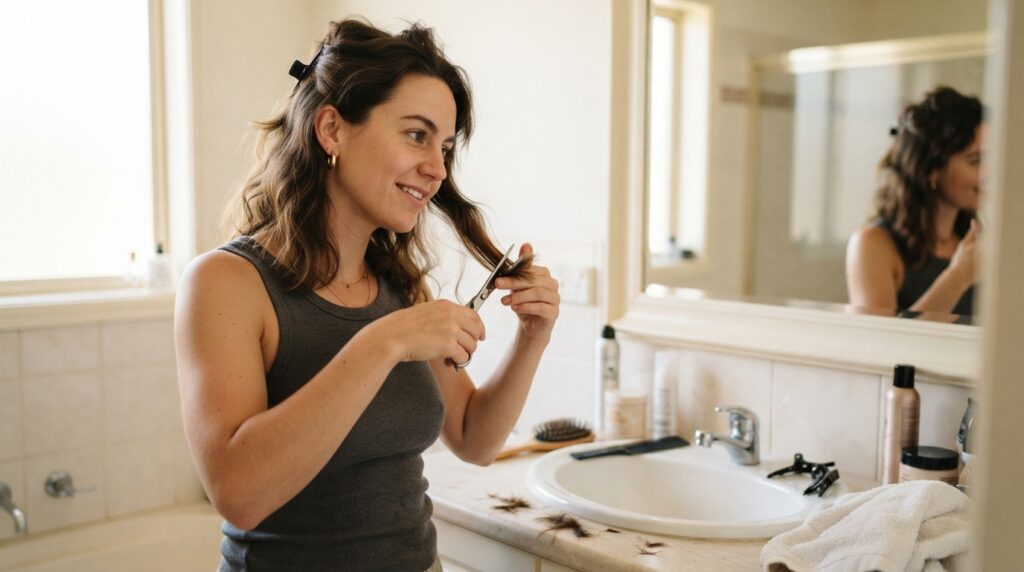
It sounds backwards, but regular trims are one of the best things you can do if you’re trying to grow your hair out. A haircut doesn’t speed up growth at the root, but it removes split ends before they travel up the hair shaft and cause more breakage.
When your ends are damaged, hair snaps off almost as fast as it grows, so you end up stuck at the same length no matter how patient you are. Trimming every 8 to 12 weeks keeps your ends healthy, which means your hair holds onto its length and looks fuller and glossier in the meantime.
Quick tip: Ask your stylist for a “dusting” trim if you only want split ends removed without losing noticeable length.
Learn more:19 Best Low Taper Fade Fluffy Hair Styles for 2026
2. Eat Protein-Rich Foods

Hair is made almost entirely of keratin, a tough structural protein, so what you eat has a direct effect on how well your hair grows. When your diet is low in protein, your body prioritizes vital organs over hair follicles, which can lead to weaker, slower-growing strands.
Aim to include protein at most meals, along with iron and zinc, which support the hair growth cycle and help prevent excess shedding.
| Nutrient | Why It Matters | Good Food Sources |
| Protein | Builds keratin, the main structural protein in hair | Eggs, chicken, fish, lentils, Greek yogurt |
| Iron | Helps carry oxygen to hair follicles | Spinach, red meat, beans, fortified cereal |
| Zinc | Supports follicle repair and tissue growth | Pumpkin seeds, chickpeas, cashews |
| Omega-3s | Nourishes the scalp and reduces inflammation | Salmon, walnuts, flaxseed |
3. Take a Hair-Boosting Supplement

If your diet alone isn’t covering all the nutritional bases, a targeted supplement can help fill the gaps. Look for a formula designed for hair, skin, and nails, or speak with your doctor about which vitamins and minerals you may actually be lacking, since taking more than you need won’t speed things up.
Vitamins commonly linked to healthy hair growth include:
- Vitamin A
- Vitamin B12 and biotin
- Vitamin C
- Vitamin D
- Vitamin E
- Zinc
- Iron
- Omega-3 fatty acids
A blood test from your doctor is the most reliable way to confirm whether you actually have a deficiency before starting any new supplement.
4. Use a Hair Growth Serum

Topical hair growth serums have become one of the most popular ways to support thicker, fuller-looking hair without a major routine overhaul. These serums are typically applied directly to the scalp, where they work to nourish follicles, improve circulation, and create a healthier environment for new growth.
For best results, apply serum to a clean, dry or slightly damp scalp, focusing on areas where hair feels thinner. Many formulas work best when left on overnight, so your scalp has uninterrupted time to absorb the active ingredients.
Look for these ingredients in a hair growth serum:
- Caffeine, which may help stimulate follicles
- Niacinamide, for scalp circulation
- Peptides, to support the hair growth cycle
- Redensyl or biotin, both linked to visible density improvements
5. Use a Weekly Hair Mask

A weekly hair mask does more than a regular conditioner. It’s formulated to penetrate deeper into the hair shaft, replenishing moisture, smoothing the cuticle, and reducing the kind of damage that leads to breakage and slower-looking growth.
For the best results, apply your mask to clean, damp hair, focus on the mid-lengths and ends rather than the roots, and leave it on for 10 to 15 minutes. Wrapping your hair in a warm towel while the mask sits can help the treatment absorb more effectively.
6. Take Care After Washing Your Hair

Wet hair is at its most fragile, so how you handle it right after washing matters more than people realize. Rubbing hair roughly with a towel or brushing it aggressively while soaking wet can strip the cuticle and cause strands to snap.
Here’s a simple post-wash routine to protect fragile, wet strands:
- Gently squeeze out excess water instead of rubbing.
- Blot dry with a microfiber towel or soft cotton T-shirt.
- Apply a leave-in conditioner or detangling spray.
- Use a wide-tooth comb, starting at the ends and working up to the roots.
- Let hair air-dry partially before using any heat tools.
7. Always Use Heat Protection

Heat styling is one of the fastest ways to damage hair and stall your growth progress. High temperatures weaken the protein bonds in each strand, leading to dryness, split ends, and breakage that undoes weeks of careful care.
If you use straighteners, curling irons, or blow dryers regularly, a heat protectant spray isn’t optional. Look for one that forms a barrier against heat while adding moisture, and try to keep styling tools on the lowest effective setting.
| Habit | Why It Helps |
| Apply heat protectant every time | Creates a barrier that reduces heat damage |
| Keep tools under 350°F (175°C) | Lowers protein damage to the hair shaft |
| Let hair air-dry to 80% before styling | Reduces total heat exposure |
| Limit heat styling to 2–3 times a week | Gives hair time to recover between uses |
8. Protect Your Hair From the Elements

Sun, wind, chlorine, and cold, dry air can all wear down your hair over time, making it more prone to breakage and slower to show visible growth. UV exposure in particular can weaken the hair’s protein structure, similar to how it affects skin.
A few easy habits go a long way:
- Wear a hat or scarf during long periods in direct sun.
- Rinse hair with clean water before and after swimming to reduce chlorine absorption.
- Tie hair back on windy days to prevent tangling and friction damage.
- Use a leave-in product with UV filters if you’re outdoors often.
9. Brush Your Hair at Night

A few gentle strokes with a soft-bristle brush before bed helps distribute your scalp’s natural oils down the length of your hair, which keeps strands hydrated and adds shine. It also stimulates the scalp and helps prevent tangles from forming overnight.
Just be careful not to over-brush, since too much friction can have the opposite effect and cause breakage. Pairing this habit with a silk or satin pillowcase reduces friction even further, helping hair hold onto length instead of losing it to overnight tangling and split ends.
Frequently Asked Questions
How fast does hair naturally grow?
On average, hair grows about half an inch per month, or roughly six inches per year, though this varies by genetics and health.
Can you actually make hair grow faster?
You can’t force follicles to grow beyond their natural rate, but good nutrition and gentle care prevent breakage that makes hair look like it isn’t growing.
Do hair growth vitamins really work?
They can help if you have an actual deficiency, but they won’t boost growth further if your levels are already normal.
How often should I wash my hair to help it grow?
There’s no universal rule; wash based on your scalp’s oil production, since both over-washing and under-washing can affect scalp health.
Does cutting hair often make it grow faster?
No, trims don’t affect the roots, but they prevent split ends from causing breakage that makes hair appear stuck at one length.
Is it bad to brush wet hair?
Yes, wet hair is more elastic and prone to snapping, so always detangle gently with a wide-tooth comb instead of a regular brush.
Final Thoughts
Growing longer, healthier hair isn’t about finding one miracle product. It’s the combination of small habits, regular trims, a protein-rich diet, gentle handling, and protection from heat and environmental stress, that adds up over months. Consistency matters more than any single step on this list.
Give these changes at least a few months before judging results, since hair growth is a slow, cyclical process. Track your progress with photos rather than daily checks, and don’t hesitate to see a dermatologist if you notice sudden or excessive shedding that these habits don’t seem to improve.