

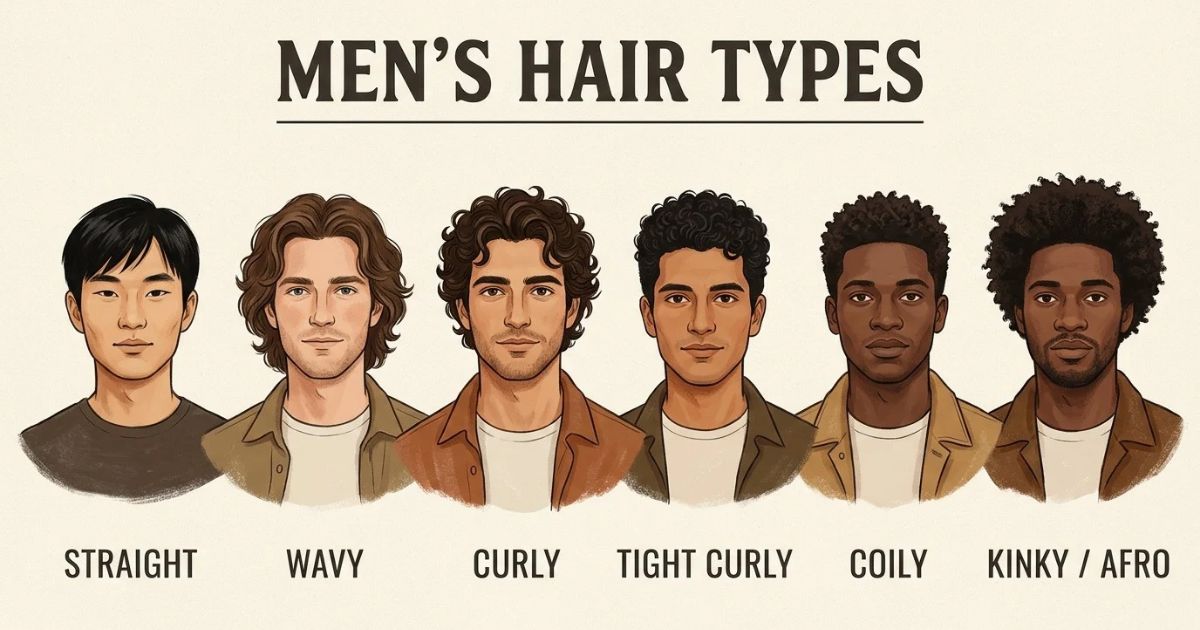
Understanding different hair types can help you choose the right hairstyle, haircut, and hair care routine. Every person’s hair has its own texture, pattern, thickness, and needs. Some people have naturally straight hair, while others have wavy, curly, or coily hair. Learning about these differences makes it easier to find hairstyles that work with your natural hair.
The hair typing system commonly divides hair into four main categories: Type 1 straight hair, Type 2 wavy hair, Type 3 curly hair, and Type 4 coily hair. Each category contains different subtypes, usually labeled A, B, and C. These classifications are useful starting points, but hair can have more than one pattern on the same head.
What Are Hair Types?
Hair types describe the natural pattern that individual strands form as they grow. This pattern can range from completely straight strands to loose waves, defined curls, and tightly coiled shapes.
Hair type is only one part of understanding your hair. Strand thickness, overall density, porosity, and scalp condition also affect how hair looks and responds to products. Two people with the same curl pattern may therefore need different styling routines.
Learn more:Buzz Cut for Women: 12 Bold and Beautiful Styles in 2026
The Four Main Hair Types
1. Type 1: Straight Hair

Straight hair generally grows without a noticeable wave or curl pattern. It may look smooth and reflective because light can travel across its relatively even surface. Depending on the individual, straight hair can be fine, medium, or coarse.
Straight hair may become oily more quickly because scalp oils can travel down the strands easily. Lightweight products can help prevent buildup, while a suitable conditioner can keep the ends manageable.
Popular hairstyles for straight hair:
- Blunt bob
- Long layered haircut
- Sleek ponytail
- Curtain bangs
- Straight lob
2. Type 2: Wavy Hair
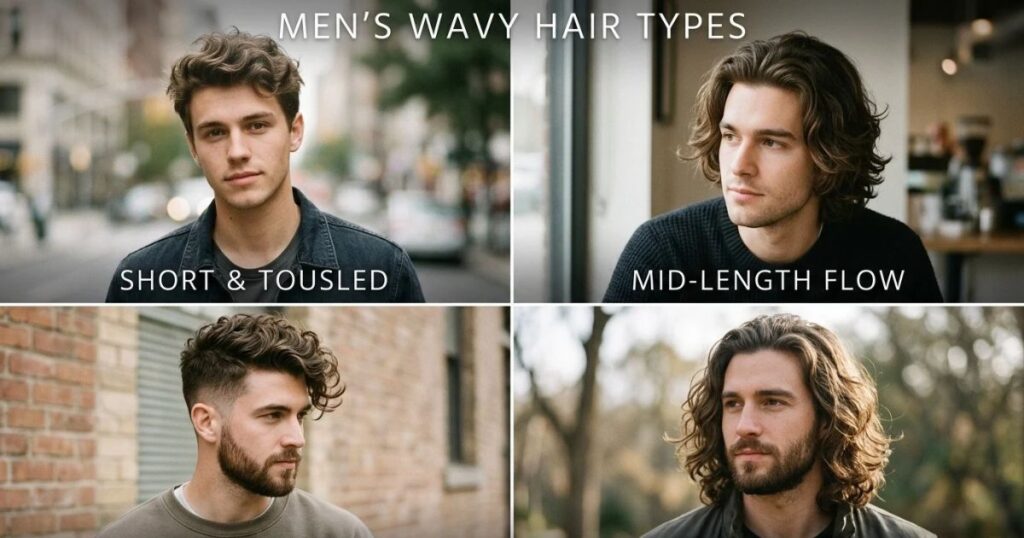
Wavy hair forms an S-shaped pattern rather than remaining completely straight or forming full curls. Some waves are subtle, while others have more definition and volume. Wavy hair can also have straight roots and more noticeable waves toward the ends.
This hair type often benefits from lightweight styling products that enhance natural waves without weighing them down. Gentle drying methods and reduced brushing after styling can help preserve the wave pattern.
Popular hairstyles for wavy hair:
- Shag haircut
- Textured bob
- Beach waves
- Long layers
- Curtain bangs with waves
3. Type 3: Curly Hair

Curly hair forms visible loops, spirals, or ringlets. The curls may be loose and large or smaller and more tightly defined. Curly hair can experience dryness because natural scalp oils may not travel along curved strands as easily.
Conditioning and gentle detangling are important for many people with curly hair. Applying styling products to damp hair can help support curl definition, while excessive heat and rough handling may contribute to damage.
Popular hairstyles for curly hair:
- Curly bob
- Layered curly haircut
- Shoulder-length curls
- Curly shag
- Long curly layers
4. Type 4: Coily Hair
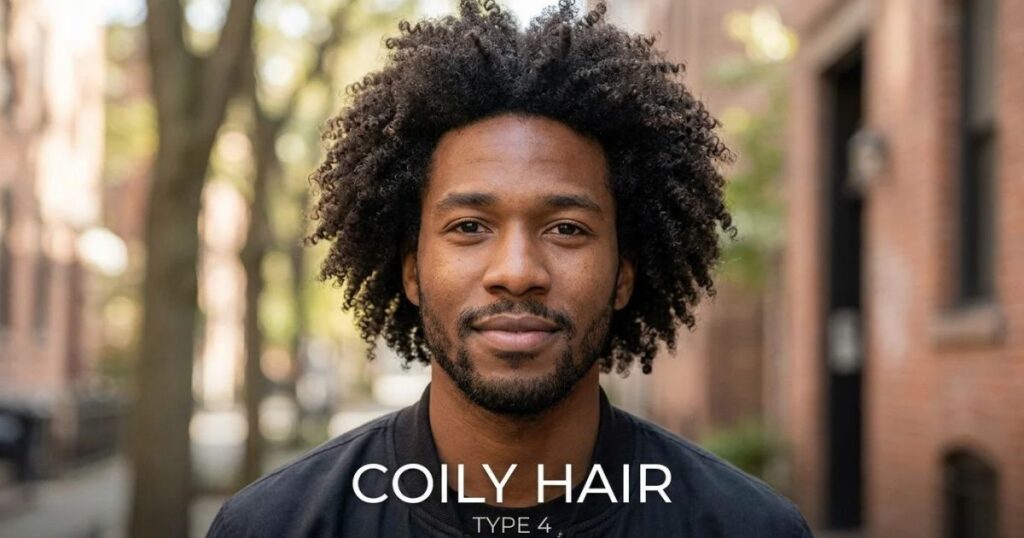
Coily hair forms very tight curls, coils, or zigzag patterns. It often has considerable natural volume and can appear shorter than its actual length because of shrinkage. Type 4 hair can be beautiful in natural styles, protective hairstyles, and carefully shaped cuts.
This hair type may benefit from regular conditioning, gentle detangling, and hairstyles that reduce unnecessary friction. Because individual needs vary, products should be selected according to the hair’s moisture needs and response rather than the type number alone.
Popular hairstyles for coily hair:
- Afro
- Twist-out
- Braid-out
- Tapered natural cut
- Protective braids and twists
Hair Types Comparison Table
| Hair Type | Natural Pattern | Common Characteristics | Popular Styles |
| Type 1A | Very straight | Fine-looking, little natural volume | Sleek bob |
| Type 1B | Straight | Some body and movement | Long layers |
| Type 1C | Straight | Often thicker or coarser strands | Textured lob |
| Type 2A | Loose waves | Subtle S-shaped pattern | Beach waves |
| Type 2B | Defined waves | More noticeable S-shape | Shag haircut |
| Type 2C | Strong waves | Pronounced waves, some frizz | Layered cut |
| Type 3A | Loose curls | Large spiral curls | Curly layers |
| Type 3B | Medium curls | More defined ringlets | Curly bob |
| Type 3C | Tight curls | Smaller, densely packed curls | Shaped curly cut |
| Type 4A | Tight coils | Small, defined coil pattern | Twist-out |
| Type 4B | Z-shaped coils | Less visibly defined pattern | Braid-out |
| Type 4C | Very tight coils | Strong shrinkage and delicate strands | Afro or protective styles |
These descriptions are general guides. Hair patterns can overlap, and the appearance of your hair may change with moisture, styling, products, and length.
How to Identify Your Hair Type
Identifying your natural hair pattern does not require expensive tools. Start by observing your hair when it is clean and free from heavy styling products.
- Wash and condition your hair with products that suit your needs.
- Allow it to dry naturally, if practical, without brushing it straight or creating curls with styling tools.
- Observe the pattern: straight strands, S-shaped waves, spiral curls, or tight coils.
- Compare the pattern with the general categories in the table.
- Check different sections of your head because your hair may contain more than one pattern.
Remember that identifying your hair type is only a starting point. Your hair’s thickness, porosity, density, and response to products can be just as important when choosing a routine.
Hair Texture vs. Hair Type
Hair type and hair texture are related but different concepts. Hair type usually refers to the pattern of the strand, such as straight, wavy, curly, or coily. Hair texture often refers to the thickness of an individual strand, commonly described as fine, medium, or coarse.
For example, a person may have fine curly hair, coarse straight hair, or medium-textured wavy hair. Understanding both characteristics can help you choose products and hairstyles more effectively.
Hair Density and Hair Porosity
Hair density describes how many strands grow across your scalp. High-density hair usually appears fuller, while low-density hair may show more of the scalp. Density can influence how much product you need and which haircut shapes work best for your preferences.
Hair porosity describes how readily hair absorbs and releases moisture. It is influenced by the condition and structure of the hair shaft. Rather than relying on a single home test, observe how your hair responds to water, conditioning products, and drying. This information can help you adjust your routine.
How to Care for Different Hair Types
Care for Straight Hair
Use a shampoo suited to your scalp and avoid applying heavy products to the roots if they make your hair feel greasy. Condition the lengths and ends as needed. If you use heat tools, apply a heat protectant and avoid unnecessarily high temperatures.
Care for Wavy Hair
Choose lightweight conditioners and styling products that support your natural wave pattern. Gently squeeze excess water from your hair and consider using a microfiber towel or soft cotton T-shirt to reduce friction. Avoid excessive brushing after your waves have formed.
Care for Curly Hair
Condition regularly and detangle gently, preferably when your hair is wet and coated with conditioner if that works for your curl pattern. Apply curl-enhancing products in sections and avoid rough towel-drying. A satin or silk pillowcase may help reduce friction while sleeping.
Care for Coily Hair
Focus on gentle handling, conditioning, and reducing friction. Detangle in manageable sections with a suitable conditioner and a wide-tooth comb or your fingers. Protective styles can be useful when they are comfortable and not excessively tight. Keep your scalp clean and avoid styles that cause pain or persistent pulling.
Best Haircuts for Different Hair Types
The right haircut depends on more than the hair pattern. Face-framing preferences, strand thickness, density, daily styling time, and personal taste also matter.
Straight hair can work well with blunt cuts and clean lines. Wavy hair often pairs well with layered styles that encourage movement. Curly hair may benefit from a shape that distributes volume comfortably, while coily hair can be styled into a rounded afro, tapered cut, or other shape that celebrates its natural pattern.
Before making a major change, show your hairstylist reference photos and explain how much time you want to spend styling your hair. A professional can adapt the cut to your natural texture and desired result.
Common Mistakes When Caring for Hair Types
One common mistake is choosing products based only on a hair-type label. A product designed for curly hair, for example, may feel too heavy for fine curls but work well for thicker strands. Your own hair’s response is a better guide than the label alone.
Another mistake is assuming that every hair type needs the same washing schedule. Scalp oiliness, activity, product buildup, and individual needs affect how often hair should be washed. Excessive heat, rough detangling, and very tight hairstyles can also contribute to breakage.
Frequently Asked Questions
1. What are the four main hair types?
The four main hair types are straight, wavy, curly, and coily. Each category is commonly divided into A, B, and C subtypes to describe differences in the natural pattern.
2. How can I find my natural hair type?
Observe your clean hair as it dries naturally without styling tools. Look for straight strands, S-shaped waves, spiral curls, or tight coils, remembering that different sections may have different patterns.
3. What is the difference between hair type and hair texture?
Hair type usually describes the natural strand pattern, while hair texture commonly refers to strand thickness, such as fine, medium, or coarse. Both can influence styling and product choices.
4. Can someone have more than one hair type?
Yes. Many people have different patterns in different areas of the scalp. For example, the hair near the front may be wavier than the hair at the back.
5. Which hair type needs the most moisture?
There is no single rule for everyone. Curly and coily hair often benefit from careful conditioning, but moisture needs also depend on strand thickness, porosity, damage, climate, and styling habits.
Conclusion
Understanding hair types is a helpful first step toward choosing suitable hairstyles and building a practical hair care routine. The four main categories—straight, wavy, curly, and coily—provide a simple way to describe natural hair patterns, while the A, B, and C subtypes offer more detail.
However, your natural pattern is only one part of the picture. Strand thickness, density, porosity, and scalp needs also influence which products and haircuts may work well for you. By observing how your hair behaves and choosing care methods that suit its needs, you can make more informed decisions and enjoy your natural hair with confidence.