


low fade haircuts for black men low-maintenance, and works with your natural texture isn’t always easy. That’s exactly why the low fade has become a go-to choice for Black men who want a clean look without the fuss of constant upkeep. It’s subtle, professional, and flexible enough to pair with almost any hair type.
In this guide, you’ll learn what a low fade actually is, how it differs from a taper, and which variations pair best with curls, coils, waves, twists, and dreads. You’ll also get practical tips on talking to your barber, avoiding common mistakes, and keeping your fade fresh between visits.
What Is a Low Fade Haircut?
A low fade is a haircut where the hair gradually shortens starting just above the ears, blending down toward the neckline and skin. Unlike more dramatic fades, the transition zone sits low on the head, which keeps more length and density on the sides while still delivering a crisp, tapered finish.
The top is left longer, giving you room to style curls, waves, twists, or an afro, while the sides and back stay tight and controlled. This balance is what makes the low fade so popular, it’s polished enough for the office but relaxed enough for everyday wear.
Low Fade vs Taper (Simple Difference)

The easiest way to tell them apart is by how they finish. A low fade blends all the way down to bare skin near the hairline, creating strong contrast. A taper never touches the skin, it simply shortens the hair gradually, leaving a soft, natural edge.
| Feature | Low Fade | Taper |
| Finish | Fades to skin | Fades to short hair, no skin |
| Contrast | High | Subtle |
| Maintenance | Every 2–3 weeks | Every 3–4 weeks |
| Best for | Sharp, defined look | Natural, low-key look |
If you want maximum sharpness, ask for a low fade. If you prefer a softer, grow-out-friendly cut, a low taper fade is the better call.
Why Low Fade Haircuts Are Perfect for Black Men
Black hair textures, coily, curly, and kinky, hold shape and volume exceptionally well on top, which is exactly what a low fade is built to showcase. Here’s why this cut consistently works so well:
- Texture-friendly: It highlights natural curl patterns, coils, and waves instead of fighting them.
- Low upkeep between cuts: The low placement grows out more gracefully than high or mid fades.
- Versatile styling: Pairs with afros, twists, dreadlocks, curls, and beards without clashing.
- Professional-appropriate: Clean enough for corporate settings, yet still has edge.
- Face-shape flexible: Works across round, square, oval, and diamond face shapes with small adjustments.
Popular Low Fade Haircuts for Black Men
There isn’t just one way to wear a low fade. Below are the most requested variations, each suited to a different hair type or personal style.
Learn more:Low Taper Fade with Buzz Cut: Best Styles, Guard Sizes & Barber Tips 2026
Low Fade with Short Hair

This is the cleanest, most low-maintenance version, short, even hair on top paired with a tight low fade on the sides. It’s a favorite for men who want a sharp, no-fuss look for work or daily life. A light line-up at the front finishes it off nicely.
Low Fade with Afro

The low fade with an afro keeps volume and roundness on top while trimming the sides down for contrast. This combination lets your natural texture stand out while the fade adds structure. Regular picking and light trimming around the perimeter keep the shape rounded and even.
Low Fade with Curls

For men with defined curl patterns, a low fade brings out the curls by removing bulk from the sides. Curl-defining cream or gel applied to damp hair helps each curl hold its shape without looking flat or frizzy.
Low Fade with Waves

Waves need visible direction to really pop, and a low fade gives them room to shine by cutting away distraction on the sides. Brushing in a consistent pattern, along with a durag at night, helps the waves stay crisp between barber visits.
Low Fade with Twists

Twists paired with a low fade create a neat, structured contrast between textured top hair and clean sides. This style holds up well over one to two weeks and looks sharp whether the twists are short or shoulder-length.
Low Fade with Dreads
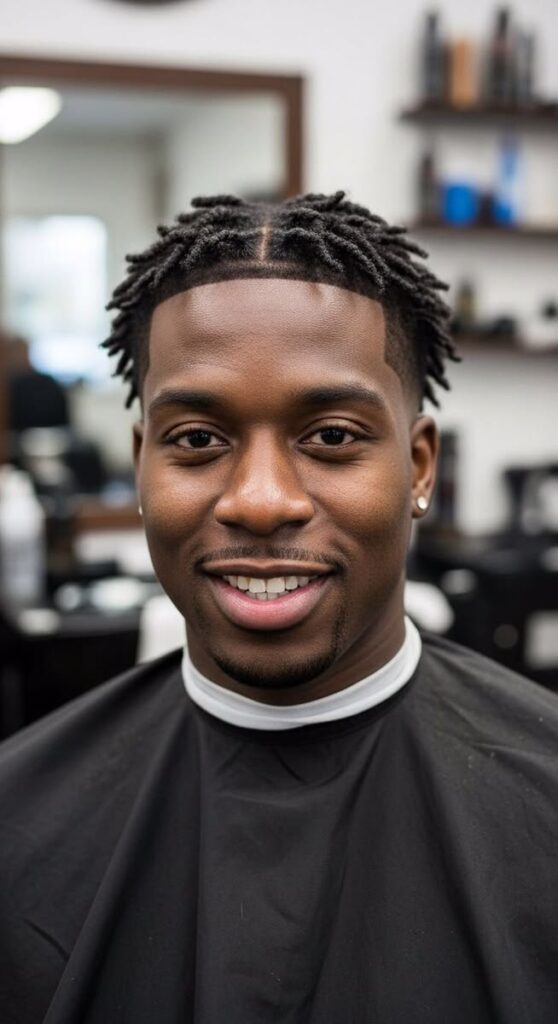
A low fade with dreadlocks is one of the most requested combinations for men growing out locs. The tight fade keeps the sides looking fresh while the locs on top can be worn loose, in a bun, or pulled back.
Low Fade with Beard

Connecting a low fade to a well-groomed beard creates a complete, polished look. The key is a smooth blend at the temples so the haircut and beard read as one shape rather than two separate styles.
Low Fade vs Mid Fade vs High Fade (Quick Guide)
Fades are categorized by where the shortening begins on the head. Here’s a quick side-by-side comparison to help you choose:
| Type | Starting Point | Overall Look | Best For |
| Low Fade | Just above the ears | Subtle, classic | Office, formal settings |
| Mid Fade | Around the temples | Balanced, modern | Everyday versatility |
| High Fade | Near the top of the sides | Bold, high-contrast | Statement or edgy styles |
Low fades sit at the conservative end, while high fades push toward maximum contrast. Mid fades land right in the middle for men who want something noticeable but not extreme.
How to Explain a Low Fade to Your Barber
Communication makes or breaks a fade. Use these pointers to get exactly what you want:
- Name the fade type: Say “low fade” specifically, since “fade” alone leaves too much room for interpretation.
- Point to the starting height: Show where you want the blend to begin, just above the ear is standard.
- Mention your hair type: Curls, coils, and waves each fade differently, so let your barber know upfront.
- Bring a reference photo: A picture removes guesswork and sets clear expectations.
- Discuss the line-up: Decide together whether you want a sharp, straight edge or a softer, natural hairline.
- Ask about beard blending: If you have a beard, request that the fade connects smoothly into it.
Common Mistakes to Avoid
- Going too long between trims, which lets the fade grow out and lose its clean lines.
- Skipping the barber consultation, leading to a fade that’s higher or lower than expected.
- Over-styling with heavy products, which can weigh down curls or flatten waves.
- Ignoring skin sensitivity, since tight fades can cause razor bumps if not handled carefully.
- Pushing the hairline back for a sharper look, which damages the natural shape over time.
How to Maintain a Low Fade (Black Hair Care)
A low fade looks its best when it’s paired with a consistent care routine. Since Black hair textures vary widely, maintenance should match your specific hair type, coily, curly, or wavy.
Trim Frequency
Plan to visit your barber every two to three weeks. Because the fade sits low, regrowth is less noticeable than with high fades, but the edges will still soften over time.
Daily Care
Moisturize daily with a lightweight leave-in conditioner or oil to prevent dryness, especially since fades expose more scalp. Brush or pick your hair based on your texture goal, brushing for waves, picking for volume.
Night Care
Wrap your hair with a satin or silk durag or bonnet before bed to protect moisture and maintain your style. This step also helps waves stay defined and prevents frizz on curls and twists.
Edge Maintenance
Keep your hairline sharp with light touch-ups using a trimmer between full haircuts. Avoid over-shaving the edges, as this can cause thinning or irritation over time.
Best Face Shapes for Low Fades
Low fades are flexible, but small tweaks make them work even better for specific face shapes:
| Face Shape | Recommended Adjustment |
| Round | Add height on top to elongate the face |
| Square | Keep sides tight to soften strong jaw angles |
| Oval | Almost any low fade variation works well |
| Diamond | Balance width with fuller top styling |
Common Low Fade Mistakes to Avoid
Waiting too long for a touch-up. Letting a fade grow out past three weeks makes it lose its defined lines. Choosing the wrong starting height. Not confirming the blend point with your barber can result in a fade that’s higher than intended. Neglecting product use. Skipping moisturizer or leave-in conditioner leaves both the scalp and top hair dry and dull. Forgetting beard blending. A disconnected beard-to-fade transition breaks the clean look you’re going for.
Conclusion
A low fade remains one of the most reliable haircuts for Black men because it adapts to nearly any texture, from tight coils to loose waves. It’s sharp enough for professional settings, yet relaxed enough for daily wear, making it a genuinely versatile choice.
Whether you pair it with an afro, twists, dreads, or a clean beard blend, the low fade rewards regular maintenance with a consistently polished look. Talk to your barber, stick to a trim schedule, and you’ll get a haircut that looks fresh for weeks at a time.
META
Explore the best low fade haircuts for Black men, with afros, curls, waves, twists, dreads & beards. Get styling tips, maintenance advice & barber guide.