


Picking between a Low Taper vs Burst Fade comes down to more than just trend appeal. Your hair type, face shape, lifestyle, and even how often you can visit the barber all play a role. Both cuts are sharp, modern, and barbershop favorites, but they create very different finished looks.
This guide breaks down exactly how a low taper and a burst fade differ, which one suits which hair type and face shape, how they hold up with a beard, and how to describe each one to your barber so you walk out with the cut you actually wanted, not a guess.
What Is a Low Taper Fade?
A low taper fade is a soft, gradual haircut where the hair shortens slowly from the top down to the hairline, with the fade starting just above the ears and neckline. Unlike a full fade, it does not blend all the way up the sides of the head, so it keeps more hair density and a fuller, natural silhouette.
Because the transition stays close to the bottom of the head, a low taper is one of the most subtle and professional-looking fades available. It works with almost any hairstyle on top, from a slick back to a textured crop, and it grows out cleanly without looking messy for weeks.
Learn more:Low Taper Fade: Complete Beginner Guide 2026
Key traits of a low taper fade:
- Fade begins just above the ears and around the neckline
- Keeps more length and volume on the sides
- Blends softly instead of creating sharp contrast
- Suits formal, corporate, and everyday settings
- Grows out gracefully between barber visits
What Is a Burst Fade?
A burst fade is a curved, semi-circular fade that wraps around the ear, cutting the hair short in that specific zone while leaving the back and top noticeably longer. The name comes from the way the fade “bursts” outward from the ear instead of running in a straight line around the head.
This haircut creates a bold, high-contrast look and pairs well with longer top styles, mullets, and textured or curly hair. It draws attention to the ear area and sideburns, giving the overall style a more edgy, statement-making finish compared to the understated look of a taper.
Key traits of a burst fade:
- Curved fade shaped like a half-moon around the ear
- Longer hair retained at the back, often styled into a V-shape
- Higher contrast between short and long sections
- Works well with curly, coily, or textured hair
- Pairs naturally with mullets and longer top styles
Low Taper vs Burst Fade – Main Differences
At a glance, both cuts fade the hair shorter near the ears, but the shape, contrast level, and overall vibe are quite different. The table below sums up the core distinctions.
| Feature | Low Taper Fade | Burst Fade |
| Fade shape | Straight, gradual line near the hairline | Curved, semi-circle around the ear |
| Contrast level | Low to moderate | Moderate to high |
| Hair kept on sides | More volume retained | Less volume near the ear, longer at back |
| Best for | Formal, classic, low-key looks | Bold, edgy, statement looks |
| Back of head | Usually tapered evenly | Often longer, sometimes V-shaped |
| Styling effort | Minimal | Moderate |
| Regrowth appearance | Blends in gradually | Shows growth faster near the curve |
Which Haircut Looks More Professional?
If you work in a conservative office, client-facing role, or any setting with a formal dress code, the low taper fade is generally the safer and more polished choice. Its subtle blend does not draw attention, and it keeps a neat, buttoned-up appearance even a few weeks after a fresh cut.
A burst fade can absolutely look professional too, especially when the curve is kept tight and controlled and the top is styled neatly. But because of its higher contrast and more distinctive shape, it tends to read as a slightly more fashion-forward or casual choice. In creative industries, this is often an advantage rather than a drawback.
Which One Is Easier to Maintain?
Maintenance is one of the biggest practical differences between these two haircuts, and it should factor heavily into your decision if you cannot get to the barbershop often.
| Maintenance Factor | Low Taper Fade | Burst Fade |
| Recommended touch-up | Every 4–5 weeks | Every 2–3 weeks |
| Daily styling | Low | Low to moderate |
| Grow-out appearance | Neat and gradual | Noticeable regrowth near the curve |
| Barber skill required | Standard | Slightly higher precision |
A low taper stretches further between cuts because the blend is gentle and forgiving. A burst fade’s curved line is sharper, so as it grows out, the shape softens quickly and starts to look undefined, meaning more frequent trips to the chair.
Best Hair Types for Low Taper vs Burst Fade
Not every haircut works the same way on every hair type. Here is how each one performs across the most common textures.
Straight Hair

Straight hair shows off the clean lines of a low taper beautifully, since there’s no natural volume to disrupt the gradual blend. A burst fade also works well here, but the curve needs sharp barbering to stand out against flat, straight strands.
Curly Hair

Curly hair pairs exceptionally well with a burst fade, since the added length at the back and top lets the curls show their natural shape and bounce. A low taper still works but tends to minimize the curl pattern by keeping things more uniform.
Thick Hair

Thick hair holds shape well in both cuts, but a burst fade helps manage bulk on the sides while keeping volume up top. A low taper is ideal if you want thick hair to look tidy without removing too much density.
Thin Hair

Thin hair benefits more from a low taper, since it creates the illusion of fuller sides without exposing scalp through aggressive cutting. A burst fade’s high contrast can make thin hair on top look sparser by comparison.
Wavy Hair
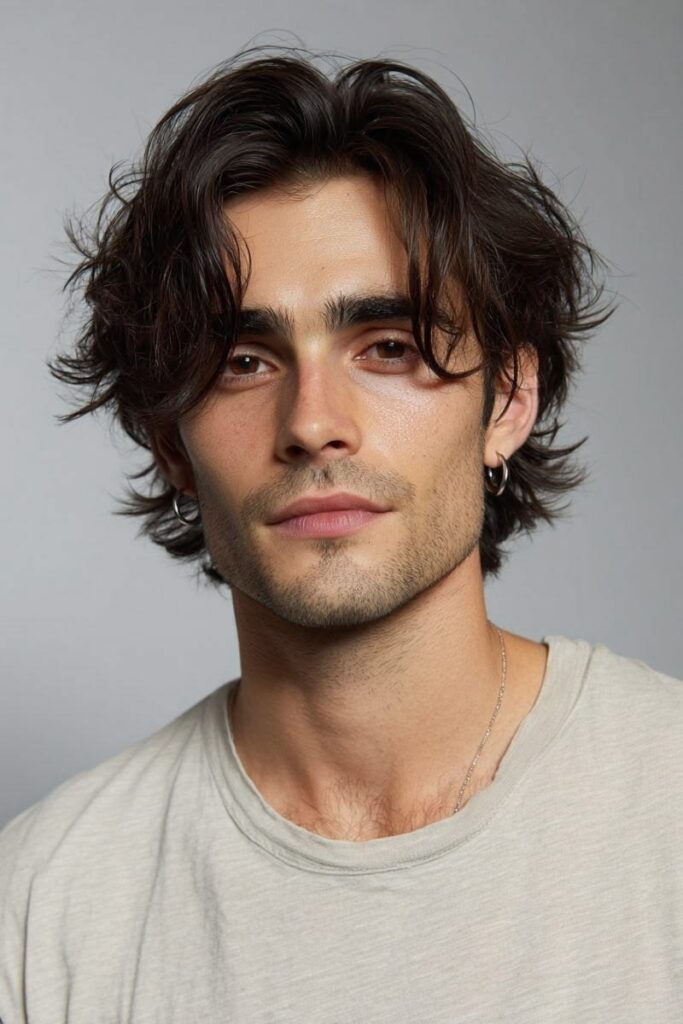
Wavy hair adapts well to either style. A low taper keeps waves looking controlled and classic, while a burst fade gives waves more room to move and adds texture-driven flair around the ear.
Best Face Shapes for Each Haircut
Face shape isn’t a strict rulebook, but it’s a useful starting point when choosing between these two cuts.
Low Taper Works Best For:
- Round faces – the vertical, gradual lines add subtle length
- Square faces – softens strong jawlines without overpowering them
- Oval faces – naturally balanced, so almost any taper style suits it
- Long faces – keeps sides fuller, avoiding extra vertical emphasis
Burst Fade Works Best For:
- Diamond faces – the curved fade complements angular cheekbones
- Heart-shaped faces – draws focus toward the jaw and away from a wider forehead
- Oval faces – works equally well here thanks to balanced proportions
- Triangular faces – the added width near the ear balances a narrower forehead
Low Taper vs Burst Fade With Beard
Both haircuts pair naturally with a beard, but the way they connect to facial hair differs. A low taper fade blends smoothly into a beard along the sideburns, creating a continuous, polished line from hairline to jaw, a popular choice for men who want a clean, unified look.
A burst fade, on the other hand, creates a more distinct break between the hair and the beard because of its curved shape near the ear. This can actually work in your favor if you want your beard to stand out as its own defined feature rather than blending seamlessly into the haircut.
Common Mistakes to Avoid
Even a well-executed haircut can fall flat if a few basics are overlooked before or after the appointment.
Choosing a Fade That Does Not Match Your Lifestyle
If you cannot commit to visits every two to three weeks, a burst fade will start looking messy fast. Be honest about your schedule and budget before picking a high-maintenance style.
Ignoring Hair Texture
A haircut that looks great in a photo may behave completely differently on your hair type. Always discuss your natural texture with your barber instead of requesting a style based on appearance alone.
Not Showing Reference Photos
Haircut names mean different things to different barbers. Bringing clear photos removes guesswork and dramatically improves your odds of getting the result you pictured.
Waiting Too Long Between Haircuts
Both cuts lose their shape as hair grows, but burst fades lose definition faster. Waiting too long between appointments means starting from a rougher baseline each time.
How to Ask Your Barber for the Right Cut
Clear communication is the difference between a great haircut and a disappointing one. Use specific language rather than vague requests.
For a low taper:
- Ask for the fade to start “just above the ears and around the neckline”
- Specify how much length you want kept on the sides
- Mention whether you want a skin, shadow, or zero finish
For a burst fade:
- Ask for a “curved fade that wraps around the ear”
- Clarify how long you want the back kept, especially if you want a V-shape
- Mention if you want the burst high, mid, or low
Always take:
- At least one clear side-view reference photo
- A back-view photo if the neckline shape matters to you
- Notes on your hair type so the barber can adjust technique accordingly
Which One Should You Pick?
Choose a low taper fade if you want a low-maintenance, professional, versatile cut that grows out cleanly and suits nearly any hair type or face shape. Choose a burst fade if you want a bolder, more distinctive style, don’t mind visiting the barber more often, and have hair texture, especially curly or wavy, that benefits from extra shape around the ear.
Conclusion
Both the low taper and burst fade are excellent modern haircuts, but they serve different goals. A low taper offers subtlety, longevity, and professional polish, while a burst fade delivers a sharper, more expressive statement with added maintenance. Neither is objectively better, the right pick depends on your hair, face shape, and daily routine.
Before your next barbershop visit, think honestly about how much upkeep you’re willing to commit to and the impression you want your haircut to make. Bring reference photos, describe your hair type clearly, and trust your barber’s input. Whichever style you choose, a well-executed cut will always look sharper than a trendy one done poorly.