


Picking a haircut shouldn’t feel like guesswork, yet most men sit down in the barber chair without a clear plan and hope for the best. The mid taper fade solves that problem because it flatters nearly every face shape, hair texture, and lifestyle at once.
This guide breaks down 35 mid taper fade styles for Black men, organized by hair length and type, plus face-shape matching, exact barber scripts, and a full aftercare routine so you leave the chair, or finish at home, with a cut that actually holds up.
What Is a Mid Taper Fade for Black Men and Why Does It Work So Well?
The mid taper fade sits in the sweet spot between a dramatic high fade and a barely-there low fade. It’s become the default request in barbershops because it gives just enough contrast to look sharp without stripping away the volume and texture that natural Black hair is known for.
Below, we’ll unpack exactly where the fade starts, how it compares to other taper placements, and why barbers reach for it so often when working with coily, kinky, or wavy hair types.
What is a mid-taper fade?
A mid taper fade is a haircut where the blend begins roughly at the midpoint of the head, between the temple and the top of the ear, then gradually shortens down toward the hairline and neckline. The top section is left at whatever length the client prefers, which is what makes this cut so adaptable.
Unlike a skin fade that shaves all the way down to bare scalp, a taper fade typically leaves a small amount of hair at the shortest point, giving a softer finish that still looks crisp and intentional.
Mid Taper Fade vs Low Taper vs High Taper: What’s the Real Difference?
The three taper placements are defined entirely by where the fade begins on the head. Here’s a quick side-by-side comparison to clear up the confusion before you sit in the chair.
| Fade Type | Starting Point | Contrast Level | Best For |
| Low Taper | Near the ear/neckline | Subtle | Thicker hair, conservative or professional looks |
| Mid Taper | Between temple and ear | Balanced | Most face shapes and hair types, versatile styling |
| High Taper | Above the temple, near the crown | Bold | Men who want maximum contrast and a modern edge |
The mid taper is often called the “Goldilocks” option because it clears bulk from the sides without flattening curl pattern or afro volume on top, while still reading as a deliberate, groomed style rather than a plain trim.
Learn more:Low Taper Fade Long Hair: 35 Best Styles for Every Face Shape & Hair Type
Why the Mid Taper Fade Works So Well for Black Hair
Afro-textured, coily, and kinky hair grows in tight spirals, which means it shrinks visually even when the strand length is longer than it appears. This creates a unique challenge for barbers trying to build a smooth, even fade.
Here’s why the mid taper placement handles that challenge better than most other fade styles:
- It follows the natural growth pattern. The gradient works with the direction Afro-textured hair naturally grows instead of fighting against it, which reduces patchy spots.
- It uses a built-in anatomical guide. The starting point near the parietal ridge (the natural curve above the temple) gives barbers a consistent landmark to anchor the blend.
- It reduces tension on the scalp. Because it doesn’t require shaving all the way to skin low on the neckline, it’s gentler on hairlines prone to bumps or irritation.
- It accommodates shrinkage. Since coily hair can shrink 50–75% from its stretched length, the mid-height starting point keeps the blend looking clean even as curls tighten up day to day.
- It supports every top style. Afros, twists, locs, waves, and braids all sit comfortably on top of a mid taper without competing with the fade for attention.
Which Mid Taper Fade Styles Work Best for Your Hair Type?
Not every variation suits every texture the same way. Use this quick reference before jumping into the full style list below.
| Hair Type | Recommended Mid Taper Styles |
| Short/4C coily | Buzz cut, Caesar, textured crop, French crop |
| Afro-textured (3C–4A) | Classic afro, high top, sponged afro, frohawk |
| Curly/wavy | Curly pompadour, quiff, defined curls, twist-out |
| Long/loc’d hair | Locs, braids, cornrows, man bun |
| Facial hair pairing | Full beard, stubble, angular beard combos |
35 Best Mid Taper Fade Styles for Black Men
Each style below can be adjusted for guard length, fade height, and top texture, but these are the most requested versions barbers see across all hair types.
Short Hair Mid Taper Fade Styles

1. Buzz Cut with Mid Taper Fade
A uniform, all-over short length on top paired with a clean mid fade on the sides. It’s the lowest-maintenance option on this list and works for nearly every face shape.
2. Low Afro with Mid Taper Fade
Slightly longer top hair is left natural and rounded, while the sides taper cleanly. This keeps texture visible without the bulk of a full afro.
3. Textured Crop with Mid Taper Fade
Choppy, piece-y texture on top contrasts with the smooth taper below, adding movement without needing much daily styling effort.
4. French Crop with Mid Taper Fade
A blunt, horizontal fringe sits above the brow while the mid taper handles the sides, a structured, low-fuss option that reads as polished.
5. Caesar Cut with Mid Taper Fade
Short, forward-brushed hair with a straight fringe line, finished off with a mid taper and sharp line-up for extra definition.
6. Crop Top Fade with Mid Taper
A slightly longer crop on top gives room for light texturizing product, while the fade underneath keeps the whole look tidy.
7. 360 Waves with Mid Taper Fade
Short, brushed hair trained into a wave pattern sits above a mid taper, giving the waves a clean frame without extra bulk at the sides.
8. Side Part with Mid Taper Fade
A defined, shaved or comb-created part line on top pairs with the fade for a dressier, more formal finish.
Afro Mid Taper Fade Styles for Black Men

9. Classic Afro with Mid Taper Fade
A rounded, full afro on top with the sides tapered underneath, this keeps the shape intentional instead of letting hair grow out shapelessly.
10. High Top Afro with Mid Taper Fade
A boxier, flat-topped afro silhouette that pays homage to a classic Black barbering style, updated with a modern mid taper underneath.
11. Mini Afro with Mid Taper Fade
A shorter, denser afro shape for men who want the texture of an afro without as much daily upkeep.
12. Sponged Afro with Mid Taper Fade
Using a sponge/twist tool creates uniform, defined curls across the top, which sit cleanly above the fade.
13. Afro Hawk (FroHawk) with Mid Taper Fade
A mohawk-inspired strip of afro volume runs down the center of the head, with the sides shaved lower into the mid taper for maximum contrast.
14. Blowout Afro with Mid Taper Fade
The top is picked out and blown up for extra height and volume, creating a rounder, fuller silhouette above the taper.
15. Afro with Edge-Up and Mid Taper
A crisp, razor-sharp hairline edge-up pairs with the afro and fade combination for an extra-polished finish.
16. Short Afro with Beard and Mid Taper Fade
A compact afro paired with a well-groomed beard and mid taper, a balanced, professional-friendly look.
Curly and Textured Top Mid Taper Fades

17. Defined Curls with Mid Taper Fade
Natural curl clumps are enhanced with curl cream and left loose on top, while the mid taper handles structure on the sides.
18. Finger Coils with Mid Taper Fade
Small, individually twisted coils create a neat, uniform curl pattern that pairs well with a tight fade underneath.
19. Twist-Out with Mid Taper Fade
Two-strand twists are taken down after setting to reveal a soft, wavy curl texture, framed cleanly by the taper.
20. Curly Pompadour with Mid Taper Fade
Extra length on top is swept upward and back into a rounded pompadour shape, with the mid taper trimming volume at the sides.
21. Quiff with Mid Taper Fade
Similar to the pompadour but with more forward lift at the front, giving a slightly more casual, textured finish.
22. Sponge Twists with Mid Taper Fade
A tighter, more compact twist pattern than finger coils, often used to build up curl definition over time on shorter hair.
Long Hair and Protective Style Mid Taper Fades

23. Dreadlocks / Locs with Mid Taper Fade
Mature or freeform locs are left long on top while the sides and back are tapered, keeping the style neat without shortening the locs themselves.
24. Loc Bun with Mid Taper Fade
Locs are gathered and tied up into a bun on top, putting the fade on full display underneath.
25. Box Braids with Mid Taper Fade
Individual braids are installed on top while the sides stay faded, a popular protective style pairing for longer-term low maintenance.
26. Feed-In Braids with Mid Taper Fade
Braids that start thin near the hairline and gradually thicken, often styled straight back, paired with a fade for a sharp perimeter.
27. Cornrows with Mid Taper Fade
Braids sit flat against the scalp in structured rows, with the fade providing a clean visual break at the sides.
28. Man Bun with Mid Taper Fade
Long top hair is pulled back into a bun, letting the mid taper do the heavy lifting for shape and definition.
29. Rope Twists with Mid Taper Fade
Two sections of hair are twisted around each other to form a thicker, rope-like texture on top, framed by the fade below.
Mid Taper Fade with Beard Styles
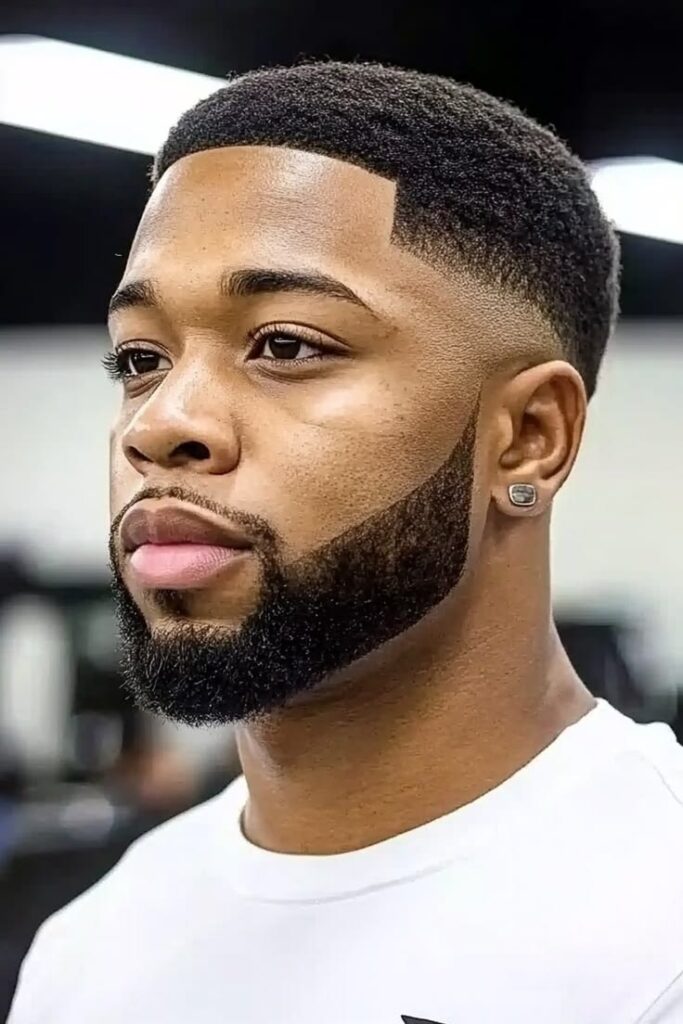
30. Mid Taper Fade with Full Beard
A thick, well-shaped beard balances out the fade for a more mature, grounded look.
31. Mid Taper Fade with Short Beard or Stubble
Light stubble adds definition to the jawline without demanding much grooming time.
32. Mid Taper Fade with Angular Beard
Sharp, geometric beard lines mirror the crispness of the fade for a bold, symmetrical finish.
Mid Taper Fade with Designs and Artistic Details

33. Mid Taper Fade with Shaved Line Design
A single shaved line through the fade adds a subtle graphic detail without overwhelming the cut.
34. Mid Taper Fade with Geometric Pattern
More intricate shaved patterns or shapes are added into the faded section for a custom, artistic result.
35. Mid Taper Fade with Full Line-Up and Crisp Edge-Up
The hairline, sideburns, and neckline are all sharply defined with a razor for the most polished version of the cut.
How to Choose the Right Mid Taper Fade for Your Face Shape
The right variation can visually balance your features, while the wrong one can exaggerate width or length you didn’t intend to highlight. Use this table as a starting point, then talk it through with your barber.
| Face Shape | Best Mid Taper Styles | Styles to Avoid |
| Oval | Almost anything works, buzz cut, afro, quiff | None specifically |
| Round | High top afro, textured crop, pompadour (adds height) | Very rounded afros without shape |
| Square | Curly top, twist-out, softer afro shapes | Sharp box-like afros that emphasize jaw width |
| Heart | Side part, low afro, styles with less top volume | Heavy top volume that widens the forehead area |
| Oblong/Long | Fuller afro, side-swept styles that add width | Extra-tall afros or high tops that add length |
| Diamond | Textured crop, defined curls, side part | Styles that add excess height at the crown |
Oval Face Shape
Oval faces are considered the most balanced shape, so nearly every style on this list, from a buzz cut to a full afro, will work without adjustment.
Round Face Shape
Add height on top with a high top afro or blowout to visually lengthen the face, and keep the sides tapered tight to avoid extra width.
Square Face Shape
Softer, rounded top textures like curls or a twist-out help balance a strong jawline without competing with it.
Heart Face Shape
Keep top volume moderate and let the fade do more of the visual work, since heavy volume up top can emphasize a wider forehead.
Oblong or Long Face Shape
Favor styles with width, like a fuller afro or side-swept top, and avoid anything that adds significant height.
Diamond Face Shape
Textured, medium-volume tops like a crop or defined curls complement diamond faces by softening angular cheekbones.
How to Ask Your Barber for a Mid Taper Fade – The Complete Communication Guide
Miscommunication in the chair is the number one reason haircuts go wrong. Being specific about guard numbers, fade height, and top length removes the guesswork for your barber.
Step-by-Step: What to Say to Your Barber
- Name the fade type first. Say “mid taper fade” specifically, not just “fade,” since barbers use precise terminology for placement.
- Point to the starting height. Show or describe where you want the fade to begin, roughly between your temple and the top of your ear.
- Give a guard number for the top. Whether it’s a buzz cut or longer curls, specify the length you want left on top.
- Mention your desired contrast level. Let them know if you want a subtle blend or a sharper visual break between lengths.
- Bring a reference photo. Even with the right words, a photo removes any ambiguity about the exact look you’re after.
- Confirm beard and line-up preferences. Decide upfront whether you want a full line-up, edge-up, or beard trim included.
Exact Barber Scripts by Style
| Desired Style | What to Say |
| Buzz cut mid taper | “Mid taper fade starting at the temple, guard #2 on top, blended down to skin at the neckline.” |
| Afro mid taper | “Mid taper fade on the sides, leave the top long and full for an afro, don’t touch the curl pattern.” |
| Curly top mid taper | “Mid taper on the sides, leave enough length on top to style curls with cream, taper blended not shaved.” |
| Locs/braids mid taper | “Taper the sides and back starting mid-head, keep all length on top intact for my locs/braids.” |
| Design/line work | “Mid taper fade with a single shaved line through the side, plus a crisp line-up in front.” |
Mid Taper Fade Maintenance and Aftercare for Black Men
A sharp fade fades fast, literally, if it isn’t maintained properly. Building a simple routine keeps the cut looking fresh between barber visits.
How Often Should You Refresh a Mid-Taper Fade?
Most men need a touch-up every two to three weeks to keep the blend crisp, though a quick edge-up between full appointments can stretch that timeline by another week or so.
| Maintenance Task | Recommended Frequency |
| Full fade refresh | Every 2–3 weeks |
| Edge-up / line-up only | Every 1–2 weeks |
| Beard trim | Weekly to bi-weekly |
| Deep conditioning | Weekly |
Daily Styling Routine by Style Type
- Buzz cut/short styles: A light pomade or edge control keeps the hairline sharp with minimal daily effort.
- Afro styles: A pick and a light curl cream or leave-in conditioner keep shape and definition without weighing curls down.
- Curly/twist-out styles: Refresh with a spray bottle and small amount of curl butter each morning to revive definition.
- Locs/braids: A light oil applied at the roots keeps the scalp healthy without disturbing the style itself.
Best Products for Black Hair After a Mid Taper Fade
- Moisturizing leave-in conditioner, replaces moisture lost from daily manipulation of coily hair.
- Edge control gel, keeps the hairline crisp between barber visits.
- Curl-defining cream or custard, enhances curl clumping on textured tops.
- Lightweight hair oil, adds shine without buildup on shorter styles.
- Wide-tooth comb or pick, detangles gently without disrupting curl pattern.
How to Cut a Mid Taper Fade at Home – Step-by-Step
A home fade is doable with patience, the right tools, and realistic expectations for a first attempt.
Tools You Need
- Clipper set with multiple guard sizes (typically #1 through #4)
- Trimmer for edges and lining
- Clipper-over-comb technique tool (a fine-tooth comb)
- Mirror setup with two angles, or a helper
- Cape and neck strip
- Spray bottle with water for damp sectioning
Step-by-Step: Mid Taper Fade at Home
- Start with clean, dry hair and section the top away from the sides using clips.
- Choose your top length and cut that section first with scissors or a guard, so you have a reference point.
- Begin the fade at the midpoint of the head using a mid-length guard (#3 or #4), working in upward motions.
- Step down guard sizes as you move toward the neckline and around the ears (#2, then #1, then skin if desired).
- Blend the transition points using a clipper-over-comb technique to avoid visible lines between guard changes.
- Clean up the hairline and neckline with a trimmer for sharp, defined edges.
- Check both sides in the mirror from multiple angles before finishing, and make small corrective passes as needed.
Common Mid Taper Fade Mistakes to Avoid
- Skipping guard steps. Jumping straight from a #4 to skin creates a harsh line instead of a smooth gradient.
- Cutting hair too dry or too wet. Dry cutting works best for accuracy on coily hair; overly wet hair can hide the true length being removed.
- Ignoring hair growth direction. Cutting against the natural swirl pattern on the crown can create patchy, uneven results.
- Holding the same starting point regardless of face shape. A one-size-fits-all fade height ignores individual proportions.
- Neglecting aftercare. Skipping moisturizer and edge maintenance lets the cut look unkempt well before the next trim is due.
- Overusing heavy products. Too much gel or grease on coily hair can flatten volume and cause buildup over time.
The Cultural Significance of the Mid-Taper Fade in Black Grooming History
The taper fade didn’t appear out of nowhere, it grew out of decades of Black barbering innovation, where clippers and creativity were used to turn hair maintenance into a form of personal expression. Styles like the high top and the classic afro were shaped and refined in barbershops that became community gathering spaces long before “grooming” was a mainstream industry term.
The mid taper fade represents a continuation of that legacy. It respects the structural techniques passed down through generations of barbers while remaining flexible enough to carry modern trends like line designs, curl definition, and protective styling. That blend of heritage and adaptabilityhttps://www.merriam-webster.com/dictionary adaptability is a big part of why it remains one of the most requested cuts in barbershops serving Black clientele today.
Conclusion
Choosing a mid taper fade doesn’t have to be complicated once you understand where the fade starts, how it interacts with your hair type, and which version flatters your face shape. With 35 styles to choose from, there’s a version of this cut for every length, texture, and personal style preference.
Bring a reference photo, use the barber scripts above, and commit to a simple aftercare routine, and this cut will reward you with weeks of clean, sharp results. Whether you’re going short and simple or bold with locs and line designs, the mid taper fade remains one of the smartest, most reliable choices in modern barbering.
Frequently Asked Questions
Does a mid taper fade work with all Black hair textures?
Yes, it works with virtually every texture, from tight coils to waves and locs, since the fade placement follows natural hair growth patterns.
How often should I get my mid taper fade touched up?
Most men need a refresh every two to three weeks, with a quick edge-up in between to extend the sharp look.
What’s the difference between a mid taper and a low taper?
A mid taper starts around the midpoint between the ear and temple, while a low taper starts lower, closer to the neckline, leaving more length on the sides.
Can I get a mid taper fade with locs or braids?
Absolutely, the sides and back are tapered while all length on top stays intact for your locs or braided style.
Is a mid taper fade good for sensitive skin or razor bumps?
Yes, since it doesn’t require shaving fully to skin low on the neckline, it puts less tension on areas prone to irritation or ingrown hairs.
Can I cut a mid taper fade at home?
Yes, with a multi-guard clipper set and patience for blending guard transitions, though first attempts are easier with a helper or two mirrors.
META
Explore 35 mid taper fade styles for Black men, afros, locs, braids & curls. Get barber scripts, face-shape tips & a home-cutting guide.