

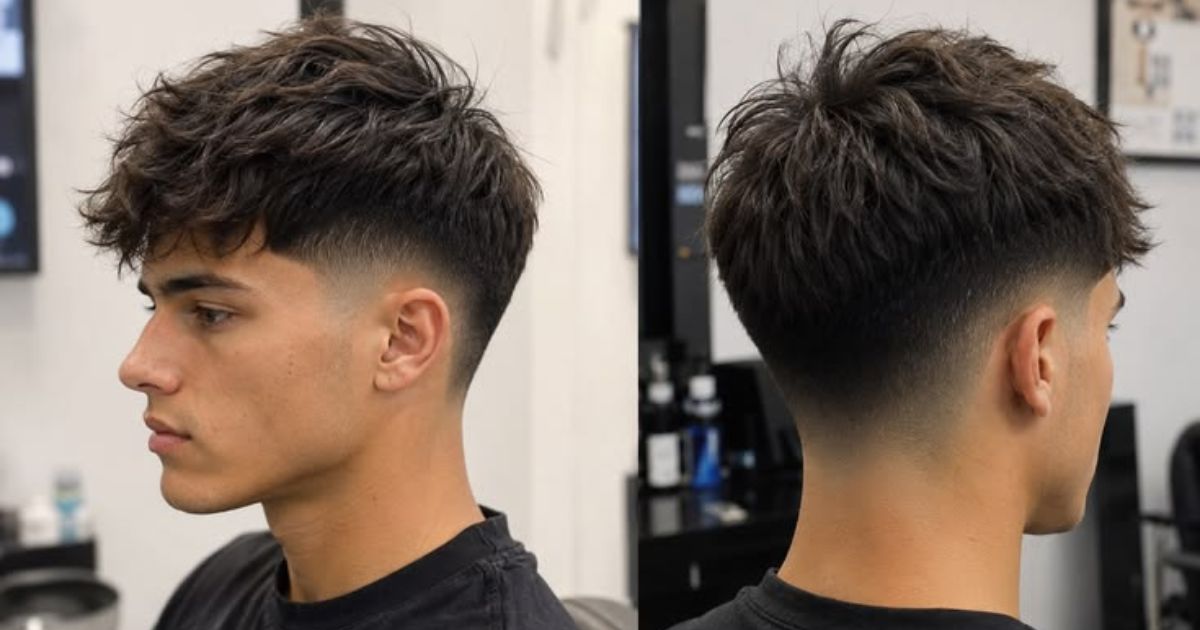
Not every fade needs to shout. The low mid taper fade sits in that sweet spot where the sides look sharp and deliberate but the cut still reads professional on a Monday morning. It’s become one of the most requested cuts in barbershops this year, precisely because it doesn’t force you to choose between polished and edgy.
If you’ve searched “low taper” and “mid taper” and gotten two different answers about where this cut actually falls, you’re not alone. This guide breaks down exactly what a low mid taper fade is, how it compares to its neighbors, which styles and face shapes suit it, and what to say when you sit in the chair.
What a low mid taper fade actually is
A low mid taper fade is a blended men’s haircut where the hair shortens gradually from the crown down to the ear area, with the fade line starting somewhere between the classic “low” and “mid” positions on the head, generally just above the middle of the ear.
Unlike a hard-line fade that snaps from long to short, a taper fade relies on graduated clipper work. The barber moves through a sequence of guard sizes, blending each length into the next so there’s no visible break. The result looks less like two different haircuts stitched together and more like hair that simply tapers off naturally as it travels down toward the neckline.
Key traits of a low mid taper fade:
- Starting point: Roughly at or just above the mid-ear, higher than a low taper but not as high as a full mid fade.
- Blend style: Smooth and gradual, not a hard skin fade (though it can be tightened near the neck).
- Top length: Flexible, works with anything from a short crop to a longer textured style.
- Maintenance: Moderate. It grows out more gracefully than a high or skin fade.
Because the fade sits in a middle zone, it tends to photograph well and hold its shape longer between visits than more aggressive fades, one reason it’s become such a go-to request.
Low taper vs mid taper vs low mid
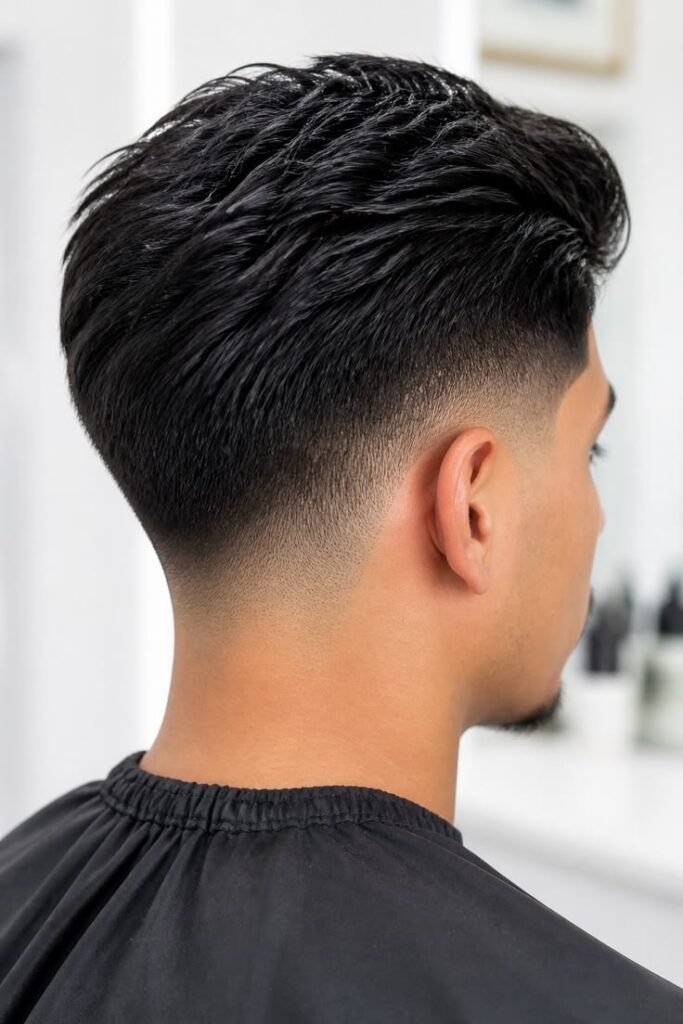
These three terms get used almost interchangeably online, but they describe genuinely different fade heights, and the difference is noticeable once you’re looking at it on an actual head.
| Fade type | Where it starts | Contrast level | Best for |
| Low taper fade | Just above the ear | Subtle | First-timers, conservative workplaces, thicker hair that needs weight removed slowly |
| Mid taper fade | Mid-way between ear and temple | Moderate-to-strong | Men who want a visible fade without going bold |
| Low mid taper fade | Between low and mid, closer to upper ear | Balanced | Anyone who wants more definition than a low taper but less commitment than a full mid |
A low taper is the quietest of the three, it barely leaves the hairline. A mid taper climbs closer to the temple and creates a bigger visual jump between the top and sides. The low mid taper fade splits that difference, which is exactly why it’s become the “safe but stylish” middle ground for people transitioning from a basic trim into fade territory.
Why it’s everywhere in 2026
A few trends have converged to push this cut to the top of barbershop requests this year.
- Versatility with top styles. It pairs with crops, quiffs, curls, and slicked looks equally well, so people don’t have to commit to one “look”, they can change the top without changing the fade.
- Longer wear between cuts. Because the blend isn’t extreme, regrowth doesn’t wreck the shape as fast as it does with a high or skin fade.
- Social media reference culture. Clean, photogenic fades travel well on Instagram and TikTok, and this middle-ground fade tends to look sharp in both stills and video.
- A shift away from ultra-high contrast. The last few years leaned into skin fades and shaved designs. 2026’s grooming mood favors something a little softer and more wearable day-to-day.
- Workplace flexibility. It reads as groomed and intentional without looking like a statement cut, which matters for people who need one haircut to work in multiple settings.
Best low mid taper fade styles
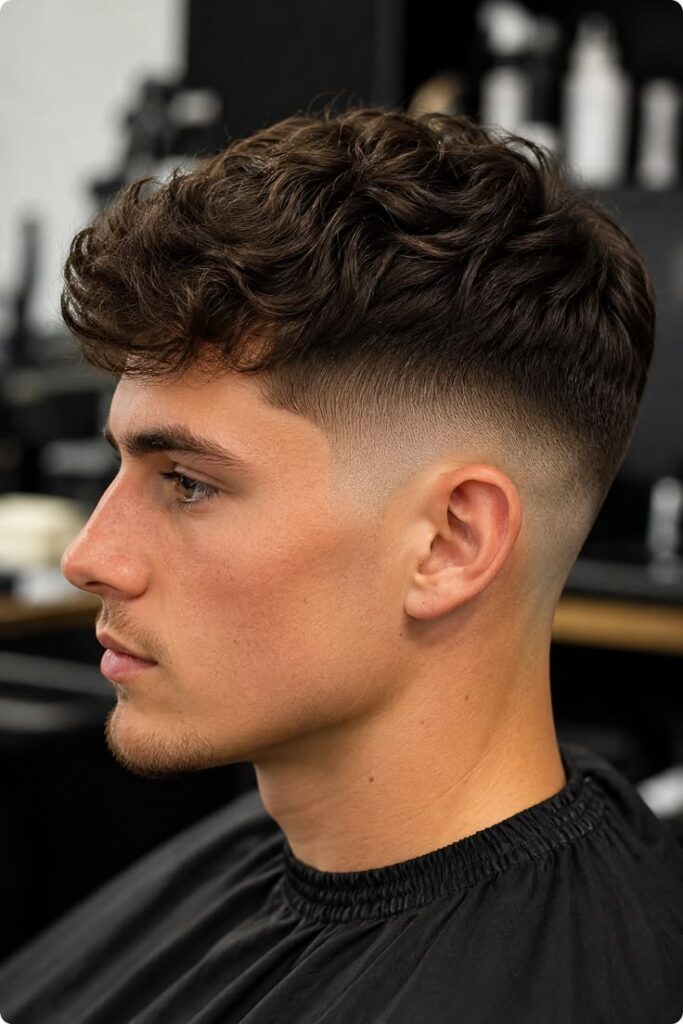
The fade itself stays fairly consistent, it’s what happens on top that changes the whole personality of the cut.
- Textured crop. Short, choppy layers on top with natural texture. Low-maintenance and currently the most requested pairing.
- Textured quiff. A bit more length pushed up and back for height. Works especially well for rounder face shapes.
- Slick back. Combed straight back with a light-hold product for a polished, formal-leaning finish.
- Curly top with taper. Leaves natural curl pattern intact on top while the sides stay tight and controlled.
- Side part. A defined part line paired with the fade gives a sharper, more tailored appearance.
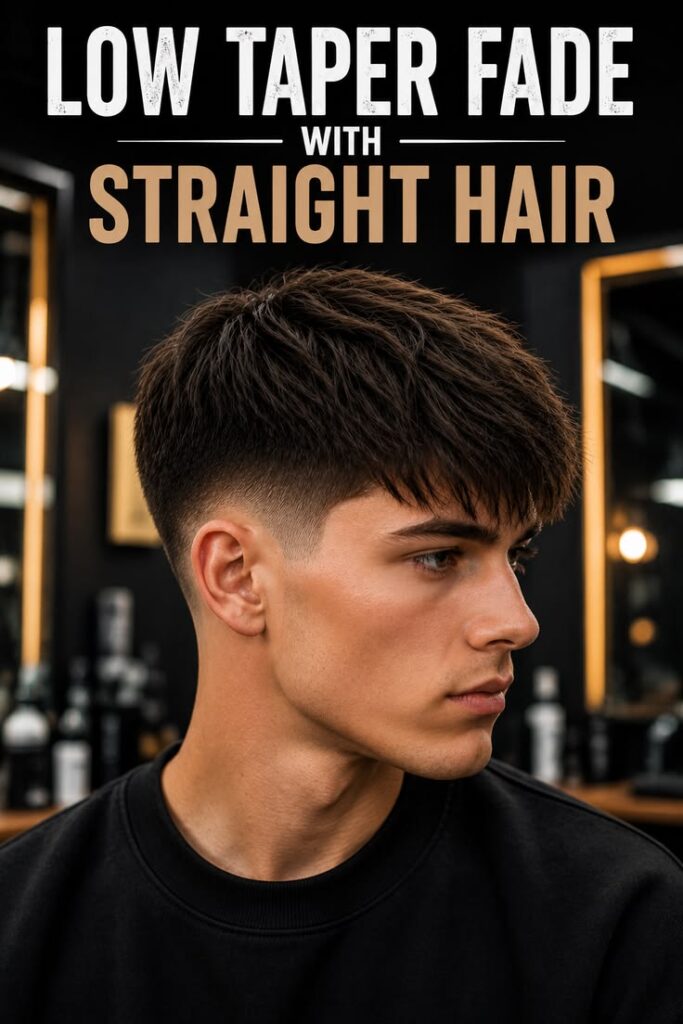
- French crop with fringe. A short fringe brought forward over the forehead, blended into the fade, a popular pick for thicker, straighter hair.
Matching the cut to your hair type
Hair texture changes how the fade blends and how much upkeep the top needs.
| Hair type | What works well | What to watch for |
| Straight | Slick back, side part, textured crop | Fine straight hair can look flat, ask your barber about texturizing on top |
| Wavy | Textured crop, messy quiff | Waves add natural movement, minimal product needed |
| Curly | Curly top left longer, tight taper on sides | Ask for shears rather than heavy clipper work on top to preserve curl pattern |
| Coily/kinky | Rounded top, sponge-friendly styles | Moisture is key, dry curls can look uneven against a crisp fade |
| Thick | Crop, French crop | Regular thinning keeps the top from looking bulky |
| Fine | Shorter top lengths, textured finishes | Avoid overly long tops that can look thin or limp |
Which face shapes it suits
Because the fade is moderate rather than extreme, it flatters a wide range of face shapes, but the top style is where you fine-tune the fit.
- Oval: Almost any top style works; this is the most forgiving shape for this cut.
- Round: Add height on top (quiff or crop) to elongate the face; avoid too much width on the sides.
- Square: A textured crop or fringe softens strong jawlines without hiding them.
- Diamond: A side part or slight height on top balances narrower forehead and chin.
- Rectangular/long: Keep the top shorter and avoid excessive height, which can exaggerate length.
- Heart-shaped: A textured fringe or side-swept top balances a wider forehead against a narrower chin.
How to ask your barber for it
Communication matters more than terminology here. Barbers hear “low,” “mid,” and “taper” used loosely all the time, so being specific saves you from a fade that lands higher or lower than you wanted.
Try this approach in the chair:
- Show a reference photo. Even a rough one gives your barber a visual target that words alone can’t.
- Point to the height. Physically touch the spot on your head where you want the fade to start, around the upper ear area.
- Specify the blend. Ask for a “gradual, blended taper” rather than a hard line if you want the soft, low mid look.
- Describe the top length. Give a rough measurement or reference (“keep about two inches on top”) rather than vague terms like “not too short.”
- Mention your hair type. Let them know if your hair is thick, fine, curly, or coily so they can adjust their technique.
A simple line that works almost anywhere: “I’d like a taper fade starting around the upper ear, blended low to mid, with [X] length left on top.”
Learn more:Taper Low Burst Fade: Styles, Barber Tips, and a Complete Guide 2026
Styling it at home
Once you leave the chair, upkeep is mostly about the top, not the fade itself.
- Damp styling: Apply product to slightly damp hair for more even distribution and better hold.
- Matte clay or paste: Best for textured crops and quiffs, gives hold without shine.
- Light pomade: Better for slick backs or side parts where you want some sheen.
- Curl cream or leave-in: For curly or coily tops, this maintains definition without weighing curls down.
- Blow-drying with a brush: Adds volume and lift for quiff-style tops.
- Less is more: Start with a dime-sized amount of product and build up rather than overloading from the start.
How often to get it trimmed
| Maintenance goal | Recommended trim schedule |
| Keep the fade razor-sharp | Every 2 weeks |
| Balance sharpness with cost/time | Every 3 weeks |
| Lower-maintenance, softer regrowth | Every 4 weeks |
Because the blend is gradual rather than a stark line, this fade tends to hold its shape a little longer than higher-contrast fades. Most people find the 3-week mark keeps it looking intentional without requiring constant trips to the barber.
Mistakes worth avoiding
- Going too high without asking. A barber unfamiliar with your intent might default to a full mid or high fade, always confirm the starting point.
- Skipping the reference photo. Verbal descriptions alone often lead to mismatched expectations.
- Neglecting the top. A great fade with an unstyled or overgrown top undercuts the whole look.
- Overusing product. Heavy pomade or gel can make textured tops look greasy rather than defined.
- Waiting too long between trims. Letting the fade grow out past a month blurs the blend and loses the shape entirely.
- Ignoring hair type. The same fade technique doesn’t work identically on straight, wavy, curly, and coily hair, a good barber adjusts, and you should ask them to.
The short version
The low mid taper fade works because it splits the difference between subtle and sharp, enough contrast to look deliberate, not so much that it demands constant upkeep. It suits nearly every face shape and hair type when the top style is matched thoughtfully to your features.
Getting a great result comes down to clear communication: bring a photo, point to the height you want, and describe your hair type. Pair that with a trim every three weeks or so, and this fade stays looking sharp with minimal fuss between visits.
Go deeper: low taper fade guides
- Low taper fade for curly hair, styling tips specific to natural curl patterns
- Mid taper fade vs high taper fade, comparing the bolder end of the fade spectrum
- Best products for taper fade maintenance, a closer look at pomades, clays, and creams
- Taper fade haircuts for round faces, face-shape-specific style breakdowns
- How to grow out a fade without it looking messy, transitional styling advice
FAQ’S
What’s the difference between a low mid taper fade and a regular taper fade?
A regular taper fade can start almost anywhere on the head; “low mid” specifically means the fade begins between the low and mid positions, near the upper ear.
Does a low mid taper fade work for curly hair?
Yes, it’s one of the more popular choices for curly hair since the tight sides let natural curl volume stand out on top.
How long does a low mid taper fade last before it needs a trim?
Most people get about 3 weeks of sharp definition before the blend starts to soften.
Can I style a low mid taper fade without product?
Yes, especially with shorter crops or natural curls, though a small amount of product usually improves definition and hold.
Is a low mid taper fade good for work environments?
Yes, its moderate contrast keeps it looking polished rather than edgy, making it suitable for most professional settings.
What should I say to my barber to get this exact cut?
Ask for a taper fade starting around the upper ear with a gradual low-to-mid blend, and specify your desired top length.