

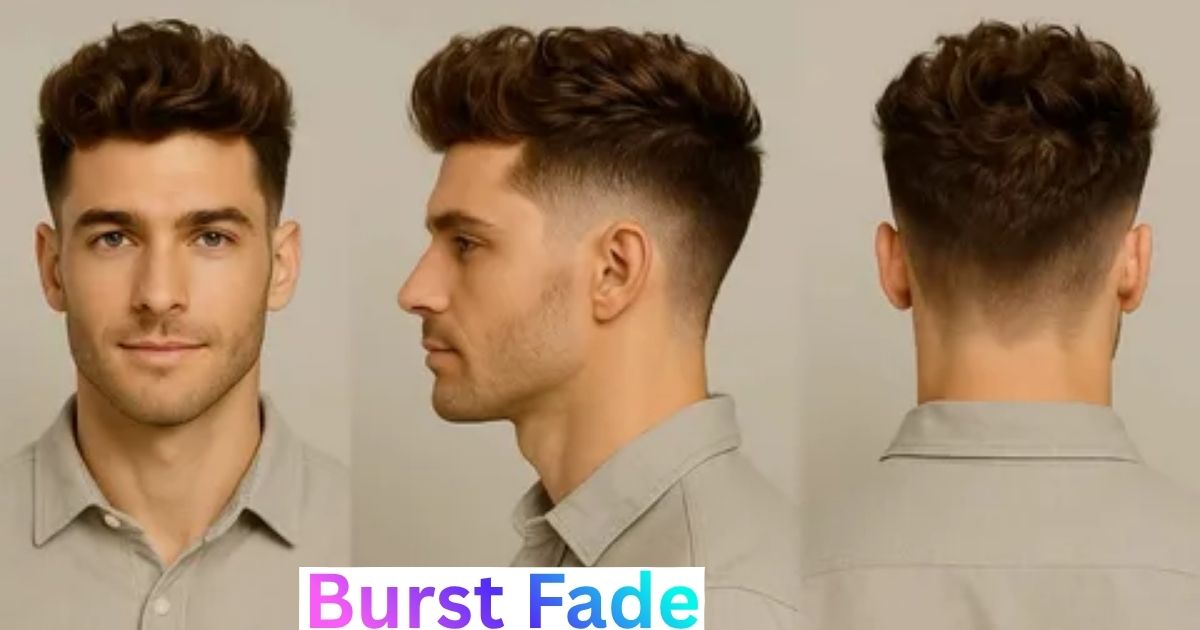
Taper Low Burst Fade Walking into a barbershop and asking for “a fade” is a gamble. You might get a skin fade, a mid fade, or something that looks nothing like the photo saved on your phone. The taper low burst fade solves that guessing game by combining two well-defined techniques into one cut you can actually describe and repeat.
This guide breaks down exactly what a taper low burst fade is, who it flatters, and how to ask for it without confusing your barber. You’ll also get maintenance timelines, styling tips, and answers to the questions men search for most before booking their next appointment.
What a taper low burst fade is
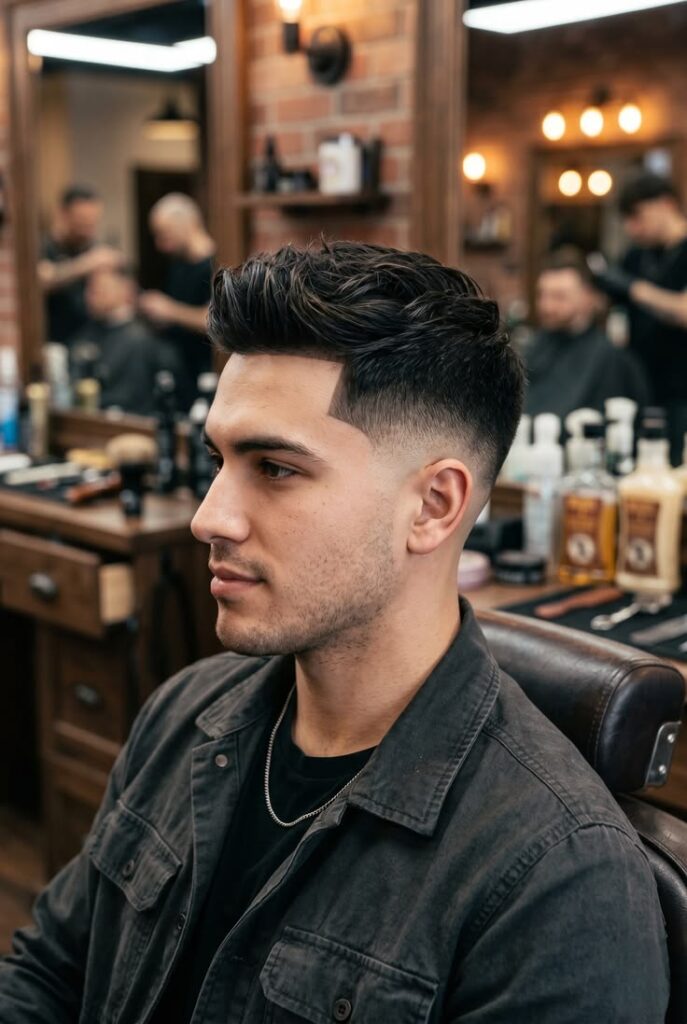
A taper low burst fade blends a low taper along the sides and neckline with a burst fade that curves around the ear in a half-circle. Instead of the fade line running straight down the side of the head, it arcs outward from the ear like a small sunburst, then tapers off gradually rather than dropping to bare skin.
The word “low” tells the barber where the shortest point of the fade sits. A low placement keeps the blend close to the ear and neckline, leaving more length on the sides and top compared to a mid or high fade. This makes the cut read as neat and controlled rather than aggressive or overly trendy.
Learn more:Low Mid Taper Fade: Best Styles, Barber Tips, and a 2026 Guide
Here’s what separates the components at a glance:
| Element | What it controls | Typical result |
| Taper | Length gradient at the sides and neckline | Soft, gradual shortening, not skin-tight |
| Low placement | Where the fade starts on the head | Fade stays near the ear, more hair left on top |
| Burst | Shape of the fade line around the ear | Rounded, sunburst-style contour instead of a straight line |
Because the burst wraps around the ear rather than running in a straight vertical line, this cut works especially well with hairstyles that need shape around the ears, think curly tops, textured crops, or slicked-back styles.
Taper vs low fade vs burst fade
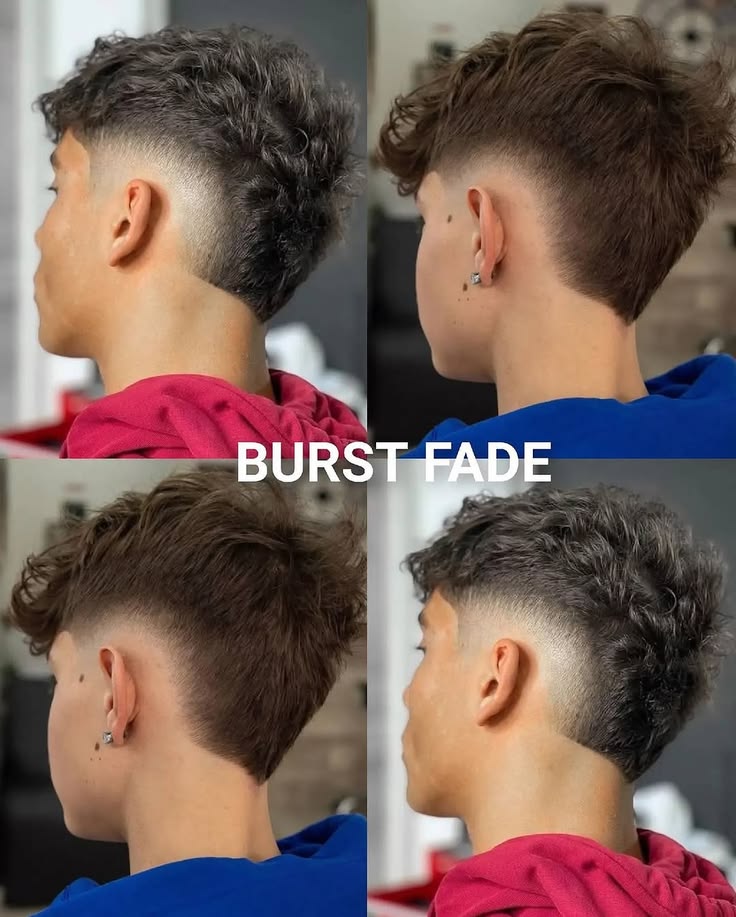
These three terms get used interchangeably online, but they each describe a different part of a haircut. Understanding the distinction is the fastest way to avoid a miscommunication in the chair.
Taper
A taper is a gradual length reduction, usually limited to the neckline and around the ears, while the rest of the sides keep more length. It never has to touch skin. Barbers often use tapers on longer or business-appropriate cuts because the transition is subtle rather than sharp.
Low fade
A low fade is a fade that starts its blend close to the ears and hairline, staying low on the head. Unlike a taper, a fade can go all the way down to skin, creating more visible contrast between the top and the sides. “Low” simply refers to how high up the head the fading begins.
Burst fade
A burst fade describes the shape of the fade line, not its height. It curves around the ear in a semicircle instead of running straight, creating a rounded “burst” of shorter hair. A burst fade can be combined with a low, mid, or high starting point, which is exactly why “taper low burst fade” specifies all three details at once.
| Term | Describes | Can go to skin? | Typical placement |
| Taper | Rate of length change | Rarely | Neckline, sideburns |
| Low fade | Height where fade begins | Yes | Close to ears |
| Burst fade | Shape of the fade line | Depends on style | Curves around the ear |
Who a taper low burst fade suits
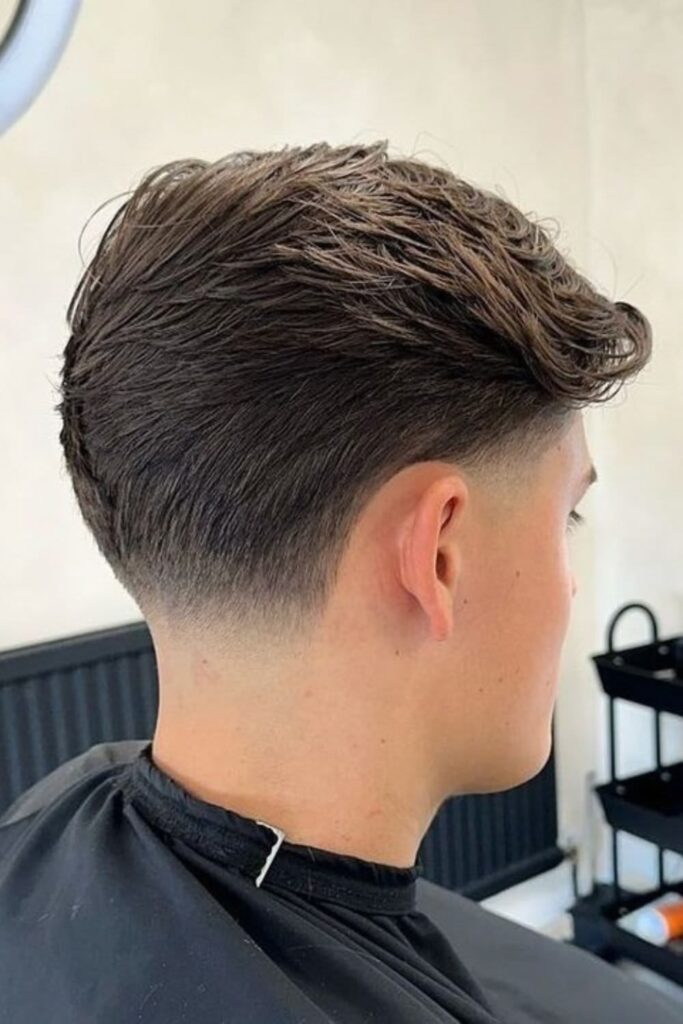
This cut is flexible, but a few factors decide how sharp it will look once it grows out a little.
Face shapes
- Oval faces: Almost any version works well since the fade doesn’t need to correct proportions.
- Round faces: A slightly higher taper on the sides with added height on top helps elongate the face.
- Square or diamond faces: A lower, softer burst fade complements strong jawlines without adding harsh lines.
- Heart-shaped faces: Keeping more width at the temples balances a narrower chin.
Hair types
- Straight hair: Shows the burst’s curved line most clearly, giving it a crisp, graphic look.
- Wavy hair: Softens the fade edge for a more relaxed, lived-in finish.
- Curly or coily hair: Adds volume and texture on top that contrasts nicely with the tight fade underneath.
- Fine hair: Works best kept slightly shorter on top to avoid looking flat next to a defined fade.
Best styles to ask for
A taper low burst fade isn’t one fixed haircut, it’s a technique that pairs with several finished looks. Popular combinations include:
- Textured crop with burst fade, short, choppy layers on top for a low-effort, modern silhouette.
- Slick back with burst fade, longer top hair combed backward, using the burst to keep the sides clean.
- Curly top burst fade, natural curls left long on top, faded low with the rounded burst line framing the ear.
- Burst fade mullet, length retained at the back while the sides and ear area stay tightly bursted.
- Buzz cut with burst fade, a low-maintenance option where the burst adds detail to an otherwise simple cut.
How to ask your barber for it
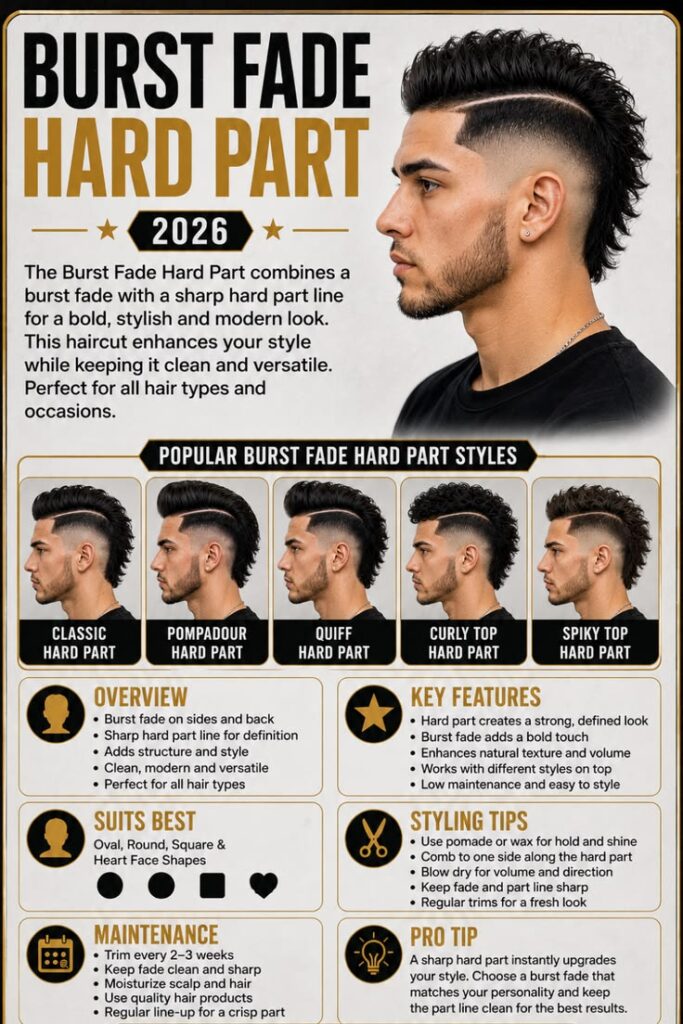
Barbershop terminology varies by region and by barber, so clear communication matters more than using the “correct” name.
A script that works
Try saying something like:
“I’d like a low taper on the sides and neckline, with a burst fade that curves around my ear instead of running straight down. Keep it low and not too dramatic, I don’t want it fading all the way to skin higher up.”
This tells the barber three things at once: the height (low), the shape (burst/curved), and the intensity (soft taper, not a hard skin fade).
What to show
Bring a reference photo, ideally from a couple of angles. A single front-facing photo rarely shows the burst detail around the ear clearly. If you can, show:
- A side profile photo highlighting the curve around the ear
- A back photo showing how the neckline is handled
- A photo close to your own hair type and length for realistic expectations
Keeping a taper low burst fade sharp
Touch-up timeline
| Hair growth speed | Recommended touch-up |
| Fast growth | Every 2 weeks |
| Average growth | Every 3 weeks |
| Slow growth | Every 4 weeks |
Because the burst fade relies on a clean, curved line, it grows out faster-looking than a straight taper. Waiting too long blurs the shape the cut depends on.
Neckline and sideburn cleanup
Between full barber visits, you can maintain sharpness at home:
- Use a trimmer with a guard close to your natural hairline to clean the neckline.
- Avoid touching the burst curve itself unless you’re confident with a trimmer, this is the detail most easily ruined by an uneven hand.
- Trim sideburns evenly on both sides using a mirror on each side, not just a single front view.
Mistakes that ruin the cut
- Skipping touch-ups too long, letting the burst curve grow into a blurry, undefined line.
- Asking for “just a fade” without specifying low and burst, which often results in a straight-line fade instead.
- Over-trimming at home, especially around the ear, where the curve is easy to flatten into a straight edge.
- Ignoring hair type, such as requesting a style built for straight hair when you have thick, curly hair that needs different product and cutting technique.
- Not communicating face shape concerns, leaving a good barber unable to adjust height or width to suit your features.
Styling it at home
Daily styling depends on the top length you paired with the fade:
- Textured crops: Apply a small amount of matte clay to damp hair, then scrunch or finger-comb for texture.
- Slick backs: Use a pomade with medium-to-high shine, comb straight back while hair is still damp.
- Curly tops: A lightweight curl cream keeps definition without weighing curls down.
- Buzzed tops: Little to no product needed, a light matte spray adds texture without shine.
Whichever product you choose, keep it away from the faded sides. Product buildup on short hair can look greasy and make the fade line less crisp.
Taper low burst fade vs blowout taper
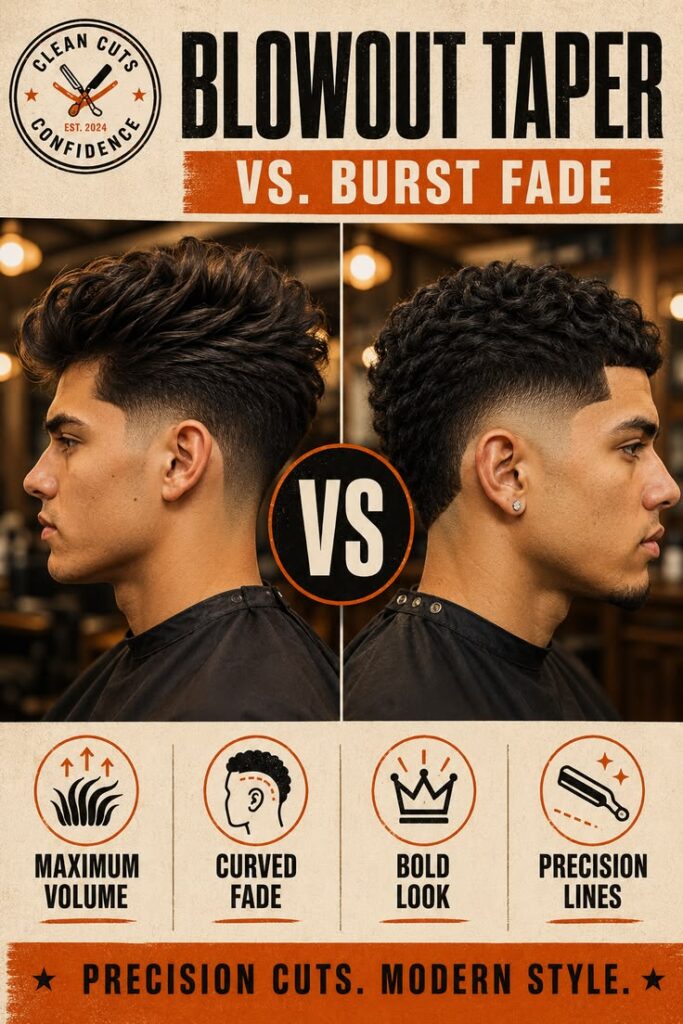
| Feature | Taper low burst fade | Blowout taper |
| Fade shape | Curved, wraps around ear | Straight vertical line |
| Typical length on sides | Short to medium | Very short, close to skin near the fade |
| Top hair | Flexible, any length | Usually longer, blown out for volume |
| Best hair type | Works with most types | Best suited to curly or coily hair |
| Maintenance | Every 2–3 weeks | Every 2–3 weeks |
A blowout taper focuses on maximizing volume and height on top with a straight taper underneath, while a taper low burst fade emphasizes the rounded detail near the ear. Both are low-fade-family cuts, but the visual effect is different enough that mixing up the two names can lead to a very different result at the chair.
Is it okay for school, work, or formal settings?
Yes, especially in its low, subtle form. Because the fade stays close to the ears and doesn’t require an aggressive skin fade higher up the head, it reads as neat and professional rather than flashy. Pairing it with a classic top style, like a side part or slick back, makes it even more suitable for conservative dress codes.
Final take
A taper low burst fade works because it gives you a specific, describable haircut instead of a vague request. The low placement keeps things wearable, and the burst adds a detail that a plain fade can’t offer. It suits most face shapes and hair types with small adjustments.
Whether you’re headed into a job interview or just want a cleaner weekend look, this cut adapts easily. Keep up with touch-ups, communicate clearly with your barber, and choose a top style that matches your hair type for the best results.
FAQ’S
What’s the difference between a taper and a fade?
A taper gradually shortens hair without reaching skin, while a fade can blend all the way down to bare skin for sharper contrast.
How often should I get a taper low burst fade touched up?
Most men need a touch-up every 2 to 3 weeks to keep the curved burst line looking clean.
Can I get a burst fade with curly hair?
Yes, curly hair actually highlights the burst’s rounded shape and adds natural volume on top.
Is a low taper burst fade good for a receding hairline?
Yes, since the low placement keeps the fade away from the hairline, drawing less attention to thinning areas.
Does this haircut work for older men?
Yes, especially with a low, subtle taper and a conservative top style suited to a more classic look.
Can I style it without any product?
Yes, especially with a buzzed or short top, though a small amount of product helps most styles hold shape longer.