

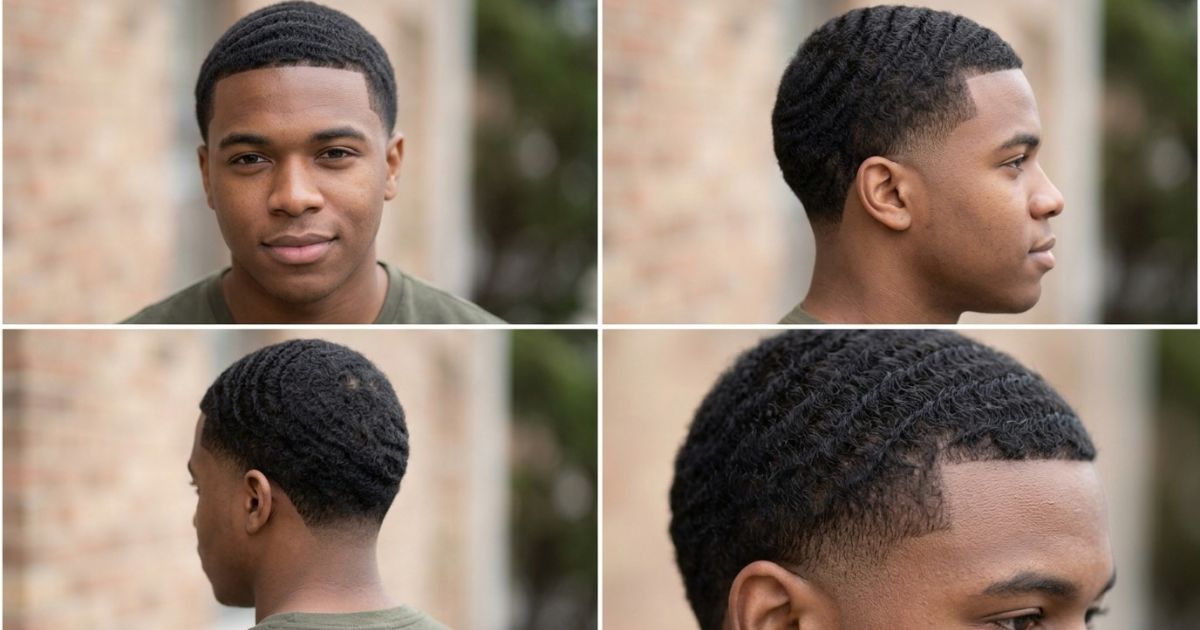
Low taper fade wavy hair, but it also makes barber visits risky. Cut the sides too harshly and the waves look top-heavy. Cut the top too short and the texture disappears. A low taper fade for wavy hair avoids both problems by keeping texture on top and tidying only the edges.
This guide covers what the cut is, who it suits, six wavy styles, and the exact words to use in the chair. You will also get a home styling routine, product picks, beard pairings, and upkeep tips so your waves stay visible and your fade stays clean.
What a low taper fade is
A low taper fade is a haircut where the hair gets gradually shorter around the sideburns, ears, and nape. It blends down close to the skin but stays near the hairline. The top keeps its length, so the transition looks soft and natural instead of sharp.
Waves benefit from this because the sides are neat while the top keeps its shape and movement. Nothing competes with your natural pattern.
Low taper fade vs low fade
The two terms overlap, but barbers treat them differently. A taper is subtle and often leaves some length at the edges. A fade goes shorter, sometimes to bare skin, and creates more contrast.
| Feature | Low taper fade | Low fade |
| Where it starts | Just above the ears and nape | Slightly above the ears and nape |
| How short it gets | Very short, usually not bare skin | Short, often down to skin |
| Contrast | Soft and gradual | Sharper and more defined |
| Grow-out | Looks tidy for longer | Fuzzes up faster |
| Best for waves if you want | A natural, grown-in blend | A crisper, more modern edge |
Who it suits: face shapes and hair types
This cut is flexible, but a few details help you fine-tune it.
Face shapes
| Face shape | What works | What to watch |
| Oval | Almost any wavy style | Very little; it is the most flexible shape |
| Round | Extra height on top, such as a quiff or textured crown | Avoid heavy, wide volume at the sides |
| Square | Soft, tousled waves to ease strong angles | Skip overly stiff, boxy styling |
| Oblong or long | A fringe or side part with moderate height | Too much vertical volume lengthens the face |
| Heart | A fringe or forward-swept waves to balance the forehead | Avoid slicking everything back |
Learn more:Low taper fade short hair: styles, face shapes, and easy upkeep 2026
Hair type and density
Wavy hair is usually grouped into 2A (loose, subtle), 2B (defined S-shapes), and 2C (thick, almost curly). The cut works across all three, with small adjustments.
- Fine or thin waves (2A): Keep the top a bit shorter so it looks fuller. Use texture powder at the roots for lift.
- Medium waves (2B): The easiest match. Leave 3 to 4 inches on top and let the pattern show.
- Thick, coarse waves (2C): The fade removes bulk at the sides, which prevents the “mushroom” look. Ask for extra length on top to balance it.
If your hair changes with humidity, keep the top slightly longer so it can go wavy or curly without looking uneven.
Best low taper fade wavy hair styles
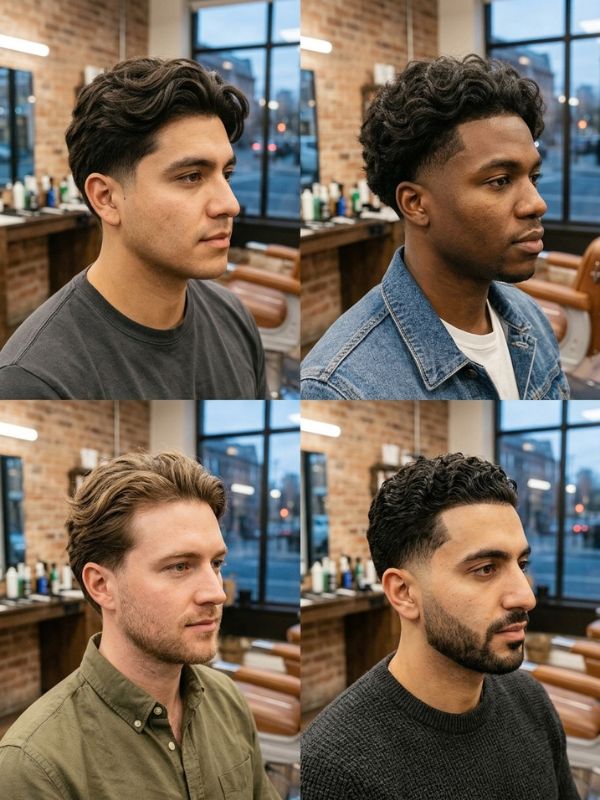
Pick the style that matches your hair length, density, and morning routine.
1. Textured wavy top
Layers are cut into the top to create movement. It is the safest starting point and works for nearly every face shape and density.
2. Wavy fringe
The front section falls forward over the forehead. It suits defined waves and can soften a longer forehead. Ask for a fringe that lands just above the eyebrows.
3. Messy waves
Styled with fingers, not a comb. It is the lowest-effort option, but it needs medium to thick hair so it does not look flat.
4. Side part
A defined part with the waves brushed to one side. It looks polished for the office and still shows your natural texture.
5. Wavy quiff
The front is lifted up and slightly back, and the low fade adds contrast. It needs some density to hold its shape, so it favors thicker hair.
6. Curly-wavy version
Ideal if your hair sits between wavy and curly. Leave enough length for loose curls to form, and let the fade keep the sides tidy.
| Style | Ideal top length | Effort | Best for |
| Textured wavy top | 2.5 to 4 in | Low | Beginners, all face shapes |
| Wavy fringe | 3 to 5 in at front | Low to medium | Defined waves, long foreheads |
| Messy waves | 3 to 5 in | Very low | Casual, thick hair |
| Side part | 2.5 to 4 in | Medium | Work and formal settings |
| Wavy quiff | 3.5 to 5 in at front | Medium to high | Thick hair, round faces |
| Curly-wavy | 3 to 5 in | Medium | 2C hair, humid climates |
How to ask your barber
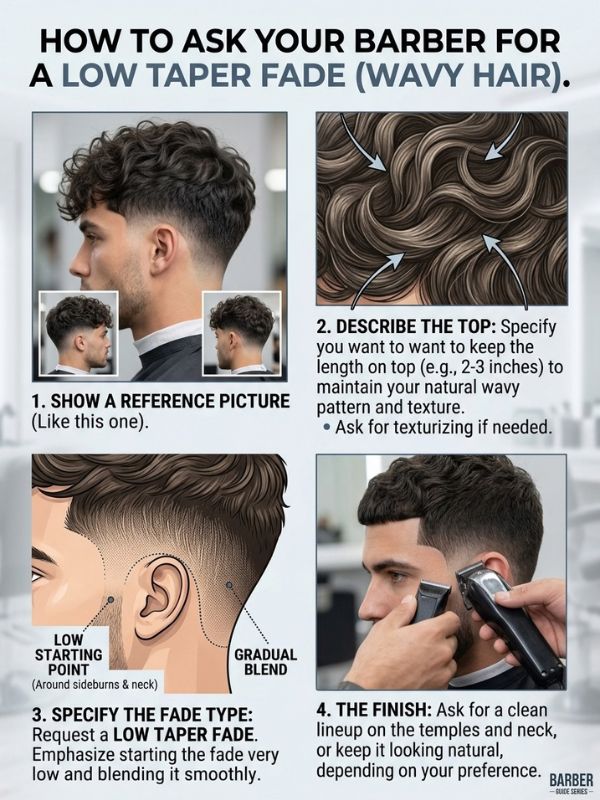
What to say
Keep it clear and specific. For example:
“I’d like a low taper fade around my ears and neckline. My hair is wavy, so please leave length and texture on top.”
Then mention how the top should look: fringe, side part, or textured and messy.
Length and guard numbers
Guard numbers vary by clipper brand and barber, so treat these as starting points, not strict rules.
| Area | Typical starting point |
| Sideburns and nape (shortest point) | #0.5 to #1, or a very short blend |
| Blend zone above the ears | #2 to #3 |
| Upper sides | Scissor-over-comb blend into the top |
| Top | 2.5 to 4 inches, depending on style |
A barber who works with waves will often blend the upper sides with scissors so the transition stays soft. It is fine to ask, “Can you blend the sides into the top with scissors?”
Reference photos
Bring two or three photos of men with hair similar to yours. Wavy references are better than straight or tightly curly ones. Point to what you like, such as the fade height, the fringe, or the top length, so your barber knows what to copy.
Styling it at home
Daily routine
- Wash with a gentle shampoo. You do not need to wash every day.
- Towel-dry lightly, so the hair is damp but not dripping.
- Apply a dime-sized amount of product through the mid-lengths and ends.
- Scrunch upward to encourage waves.
- Air-dry, or use a diffuser on low heat.
- Finish with a pinch of matte clay or texture powder if you need extra hold.
Controlling frizz and keeping waves visible
- Style on damp hair. Dry hair with product tends to frizz.
- Avoid brushing dry waves. Use a wide-tooth comb only when wet.
- Scrunch, do not rub, with a towel. Microfiber or a cotton T-shirt is gentler.
- Keep the product light. Heavy products flatten waves and make them look greasy.
- Condition regularly. Dry hair frizzes more easily.
Products that work
| Product | What it does | Best for |
| Sea salt spray | Adds grip and a matte, beachy texture | Fine to medium waves |
| Curl cream | Defines waves and reduces frizz | Medium to thick waves |
| Matte clay | Adds hold without shine | Textured and messy styles |
| Texture powder | Lifts roots and adds volume | Fine or flat hair |
| Light pomade | Adds control for side parts | Formal styling, used sparingly |
Wearing it for work, casual, and formal settings
The same haircut can change tone depending on how you style it.
| Setting | How to style it | Products |
| Work | Side part, waves brushed neatly | Light cream or pomade |
| Casual | Finger-styled, air-dried, a bit messy | Sea salt spray |
| Formal | Combed to the side or back, cleaner finish | Light pomade, a little clay |
| Gym or active | Push the fringe back, keep product minimal | Curl cream only |
Pairing it with a beard
A low taper fade blends well with a beard when the fade flows into the beard line. Ask your barber to connect the sideburns to the beard so the transition looks continuous.
- Short stubble: Keeps the look clean and works with every style.
- Short boxed beard: Balances volume on top and adds structure.
- Full beard: Looks great, but trim the cheek line and neckline regularly so it does not overpower the fade.
If your beard is patchy, keep it short and let the fade do the work.
Keeping it sharp between visits
How often to refresh it
| Goal | Suggested schedule |
| Very crisp fade | Every 2 to 3 weeks |
| Standard upkeep | Every 3 to 4 weeks |
| Softer, grown-out look | Every 4 to 6 weeks |
A low taper grows out more gracefully than a skin fade, so small delays are easy to hide.
Neckline and volume
The neckline usually looks messy first. A quick nape cleanup between cuts extends the life of the fade. To keep volume, avoid washing too often, use a light product as the hair grows, and trim the top every few visits so the waves keep their shape.
Mistakes to avoid
- Cutting the top too short: The waves lose room to move and look flat.
- Starting the fade too high: It creates a harsh line that fights the natural flow.
- Using heavy products: Thick waxes weigh waves down.
- Brushing dry hair: It breaks the wave pattern and causes frizz.
- Skipping the barber conversation: Vague requests lead to surprises, so use clear terms and photos.
- Over-washing: It dries the hair and makes the waves fluffy and undefined.
Frequently asked questions
Is a low taper fade good for wavy hair?
Yes. It keeps the sides tidy while your natural texture stays visible on top.
What do I tell my barber for a low taper fade on wavy hair?
Ask for a low taper around the ears and neckline, and say you want length and texture kept on top.
How long should wavy hair be on top?
Around 2.5 to 4 inches works for most people. Thicker hair can go longer.
What is the difference between a low taper and a low fade?
A low taper is softer and often leaves more length. A low fade goes shorter and looks sharper.
How often should I get a low taper fade?
Every 3 to 4 weeks is typical. Go every 2 to 3 weeks for a crisper look.
What product is best for wavy hair with a low taper fade?
Sea salt spray, curl cream, or matte clay work well. Use a small amount on damp hair.
Can fine wavy hair pull off a low taper fade?
Yes. Keep the top slightly shorter and add texture powder at the roots for fullness.
Does a low taper fade work with a beard?
Yes. Ask your barber to blend the sideburns into the beard for a smooth transition.
Can I style it without a blow dryer?
Yes. Apply product to damp hair, scrunch, and let it air-dry.
Conclusion
A low taper fade lets wavy hair look neat without losing its character. The sides stay clean, the top keeps its movement, and the cut adapts to work, casual, and formal settings with only small styling changes.
Success comes down to a few basics: leave enough length on top, keep the fade low, bring reference photos, and use light products on damp hair. Follow a steady trim schedule, and the cut will stay sharp and easy to manage.