

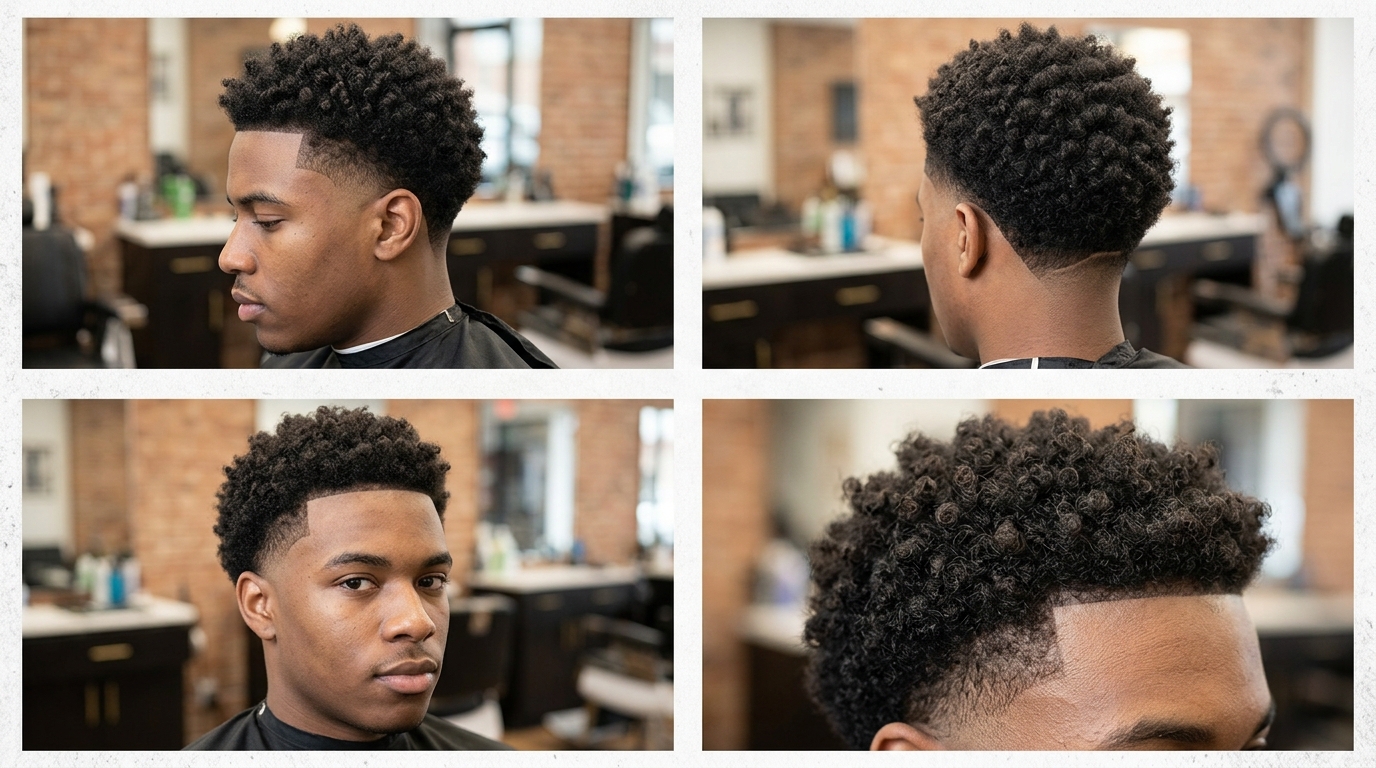
Walking into a barbershop with curly hair can feel like a gamble. Too much off the sides and you lose the texture that makes your hair distinctive; too little shaping and the cut looks unfinished. The curly low taper fade solves that problem by cleaning up the perimeter while leaving your natural curl pattern completely intact on top.
This guide breaks down exactly what the cut is, how it differs from similar fades, which version suits your curl type and face shape, and how to talk to your barber so you leave the chair with what you actually pictured. We’ll also cover the at-home routine that keeps curls defined between appointments.
What a curly low taper fade is
A low taper fade is a haircut where the hair length decreases gradually as it travels down toward the ears and the back of the neck, with the shortest section sitting close to the skin near the hairline rather than higher up the head. Placing the fade “low” is what separates it from a mid or high fade, the blend stays near the bottom, so more length is preserved overall around the sides.
Learn more:Low Taper Fade with Buzz Cut: Best Styles, Guard Sizes & Barber Tips 2026
When this technique is applied to curly hair, the sides and back get tidy while the curls on top stay untouched in both length and shape. The result is a haircut that looks intentional instead of overgrown, because the eye is drawn to the clean transition rather than to bulk on the sides.
A quick way to remember the terminology:
| Term | Meaning |
| Taper | Hair gradually shortens toward the edges, without necessarily reaching bare skin |
| Fade | Hair blends all the way down to the skin at some point |
| Low taper fade | A soft taper that eases into a fade, kept low near the ears and neckline |
Because the fade sits low, curls with more volume or height on top read as fuller rather than top-heavy, since the sides no longer compete for visual space.
Low taper fade vs low fade vs mid taper
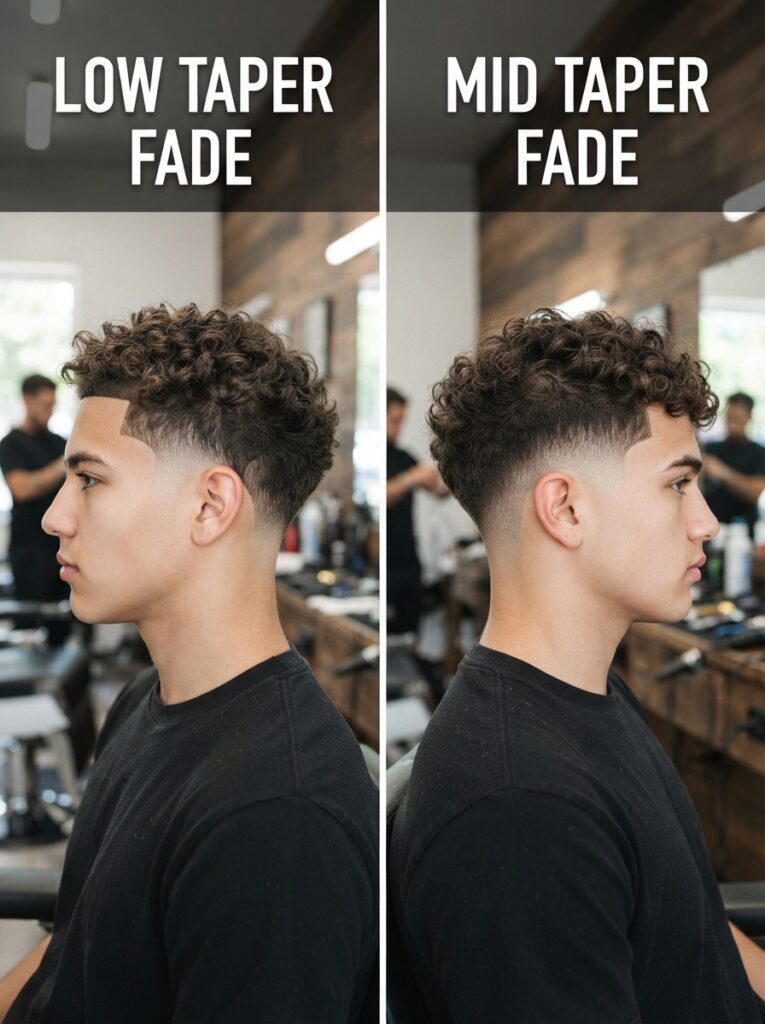
These three terms get used interchangeably, but the placement and sharpness of the blend actually change quite a bit on curly hair.
| Cut | Fade placement | Contrast level | Best suited for |
| Low taper fade | Starts low, near the ears/neckline | Soft, gradual blend | Nearly all curl types; most forgiving option |
| Low fade | Similar starting point, but blends faster | Sharper, more defined edge | Guys who want a crisper line without going higher |
| Mid taper | Starts halfway up the side of the head | Noticeably higher contrast | Looser curls and waves; can look harsh on very tight coils |
A plain low fade moves into the fade zone quickly, creating a firmer line. The taper version stretches that transition out, which matters more on curly hair because a hard line next to dense texture can look choppy. A mid taper raises the starting point, adding contrast that flatters looser 2-type and 3A patterns but can feel severe against tighter 3C or 4-type coils. If you’re unsure which to pick, starting low is the safer call, you can always ask for more height at your next visit.
Is this cut right for you?
The curly low taper fade adapts to nearly every curl pattern and hair density, which is part of why it has stayed popular across so many different looks. Thicker, denser hair tends to show the most noticeable change, since the fade removes real bulk from the sides while the top keeps its natural fullness.
It’s not the right pick for everyone, though:
- If you prefer a wash-and-go routine with minimal styling time, a shorter curly top or buzzed length may suit you better than a fuller curly top.
- If your curls are naturally fine or sparse, this cut relies on some volume up top to look balanced, so a simpler style without a dramatic fade might work better.
- If you want zero visible contrast anywhere on your head, even a low fade may feel like too much of a statement.
Is a curly low taper fade professional?
Yes, when the length on top is kept moderate and the sides stay tidy, this cut reads as polished in almost any workplace. For interviews or formal settings, define curls with a light cream rather than a heavy, wet-look product, and schedule a fade touch-up a day or two beforehand so the lines look fresh but not razor-sharp.
For kids and teens
Younger children usually do best with a short curly top over a soft low taper, it requires almost no daily upkeep and holds its shape well between cuts. Teens often want more personality, such as extra length on top paired with a defined hairline or a textured fringe, while still staying within most school dress codes.
Best curly low taper fade styles
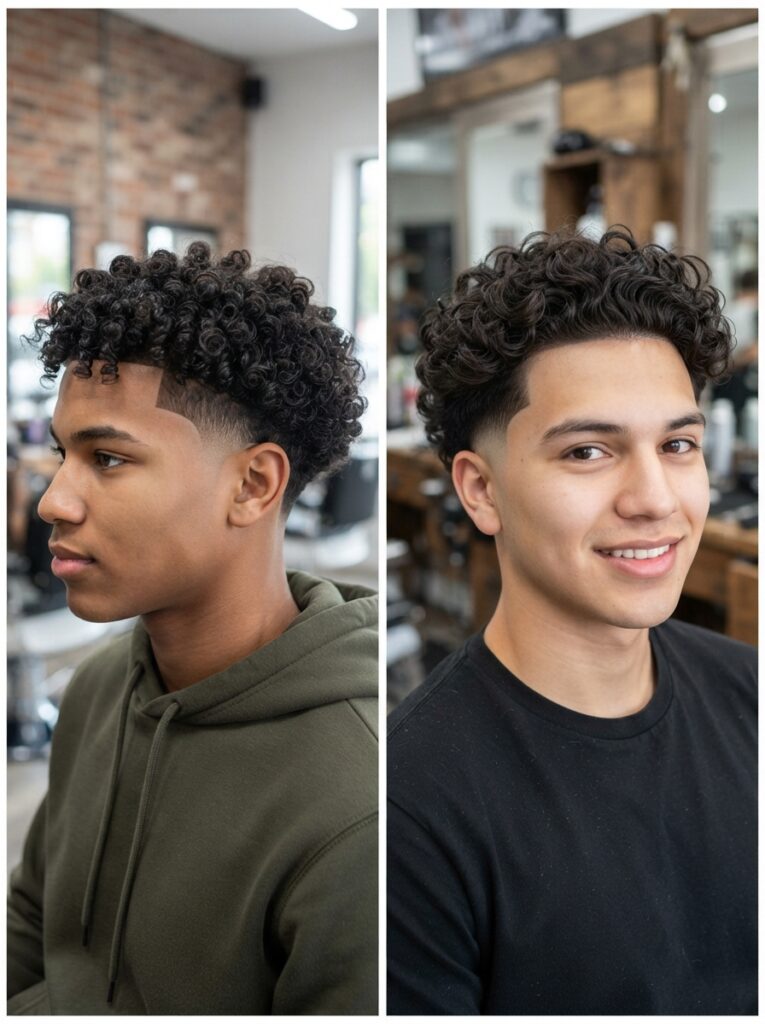
There’s no single “correct” version of this cut, the low taper is really a foundation that different top styles sit on top of.
- Classic curly taper – Clean low fade with natural curl length preserved on top; the most requested version because it works almost anywhere.
- Curly fringe – Front section left longer and combed forward, which softens round or square face shapes.
- Afro taper – Full, rounded volume on top with the low fade doing all the tidying work underneath.
- Textured crop – A matte paste or cream separates individual curls for a deliberately tousled, lived-in finish.
- Curly blowout – Top dried upward and outward for extra height, contrasted against clean, low sides.
- Undone top – Minimal product with a relaxed, natural finish that still looks purposeful because of the sharp base underneath.
Choosing your length: short, medium, or long
The length you leave on top has a much bigger impact on the overall look than the fade itself does.
| Length | Daily upkeep | Ideal for |
| Short | Minimal, little to no styling needed | First-time fade wearers; a tight, compact shape |
| Medium | Moderate, a quick morning routine | The most balanced option: definition without heavy time investment |
| Long | Higher, daily product and drying routine | Maximum curl movement and a bolder overall look |
Keep in mind that curls shrink noticeably as they dry. What looks like a generous length while hair is wet can end up shorter than expected once it fully dries and springs back, so always mention shrinkage to your barber before any cutting starts.
How each curl type wears it
Small adjustments help each curl pattern get the most out of this cut.
- Waves (Type 2): A looser blend lets natural movement show through; light product is usually enough.
- Loose curls (3A–3B): The most flexible pattern for this cut, holds up well whether the top is short or long.
- Tight curls (3C): Compact and well-defined, especially with curl cream applied to damp hair while the low fade handles the sides.
- Coily hair (Type 4): Needs the most moisture to prevent dryness and frizz; the low fade keeps side bulk in check while a weekly deep conditioner supports the curls on top.
Best styles for your face shape
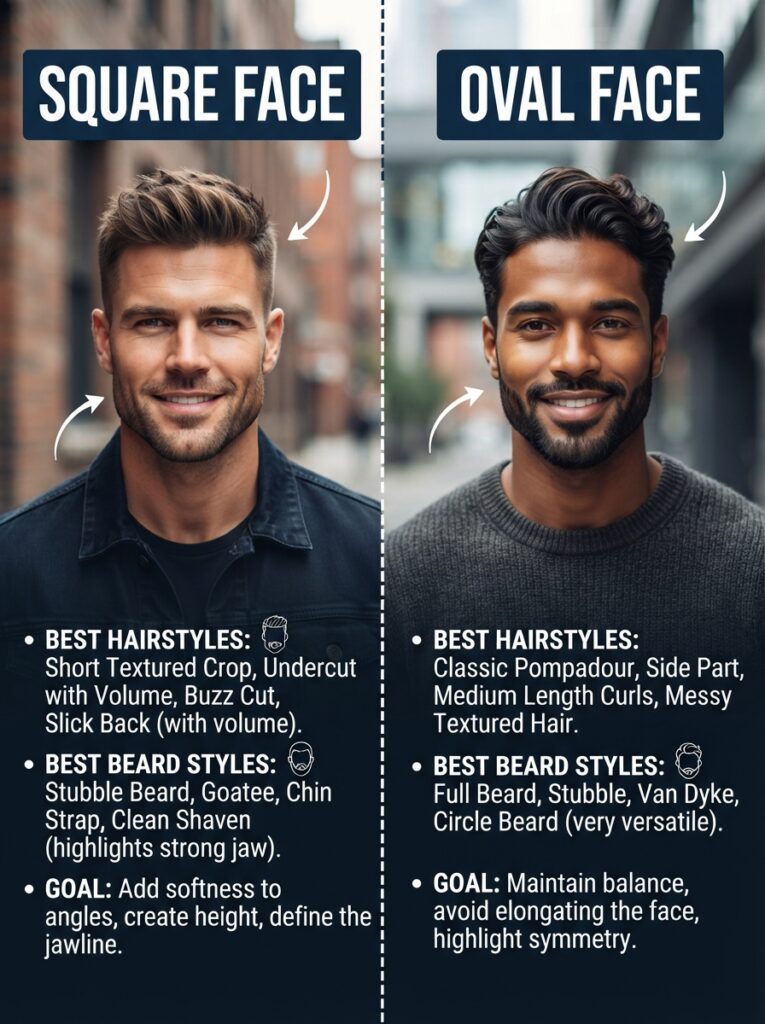
| Face shape | What to ask for |
| Round | A little extra height on top with tighter sides, height lengthens the face rather than widening it |
| Oval | Nearly any version works well, short or long |
| Square | Softer, rounder curls on top balance strong jaw angles |
| Long | Keep top length short to medium rather than tall, to avoid stretching the face further |
| Heart | Slightly fuller sides paired with a low, soft fade help balance a narrower jawline |
How to ask your barber for a curly low taper fade
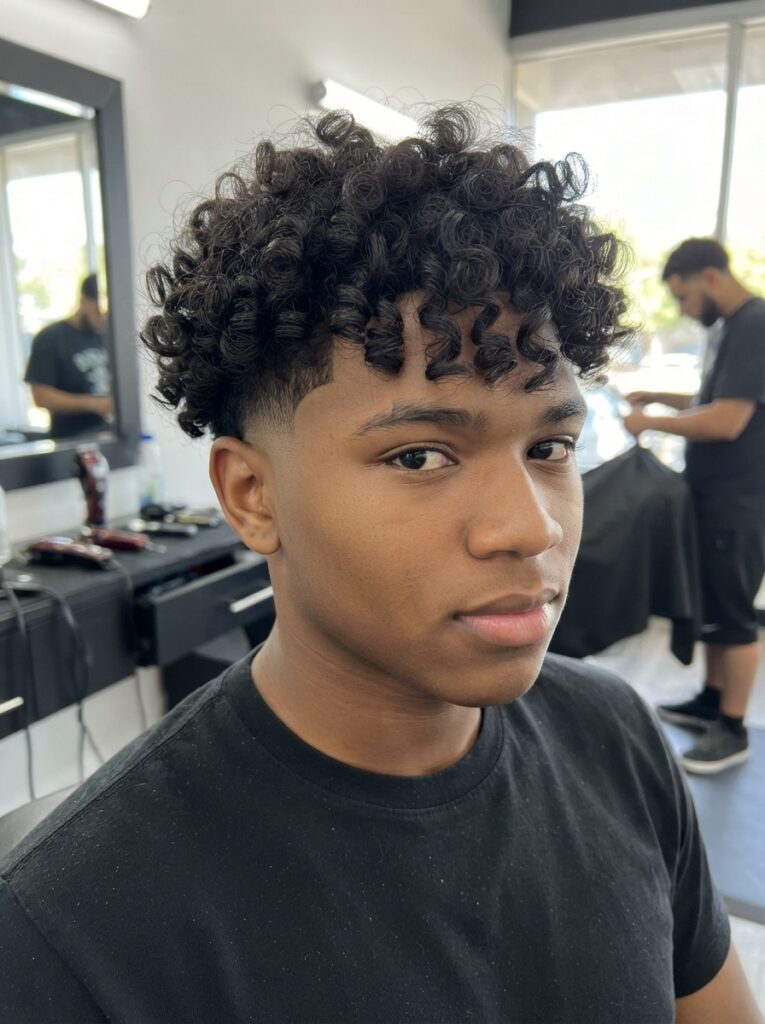
Clear, simple language avoids most miscommunication. Try something like: “Low taper fade, keep the blend low around my neckline and sideburns, and leave most of the length and curl definition on top.”
Bring reference photos
Words alone rarely translate the way you picture them. Bring two or three photos, front, side, and back, ideally of someone with a curl pattern similar to yours, since a style shown on straight hair won’t look the same on curls.
Settle the details first
Before the clippers start, agree on:
- Neckline style, natural (grows out more gracefully) or blocked (sharper, more defined)
- Sideburn length
- How tight the taper should be at the temples
- How much length stays on top
These small decisions shape the final result more than the name of the haircut does.
Pairing your fade with a beard
When the sideburn taper flows directly into the beard without a gap or an abrupt length change, the whole look reads as one continuous line from hairline to jaw. Most barbers handle both in a single visit to keep the blend even. Short-to-medium beards tend to balance curly volume best, while a longer beard shifts more visual weight downward.
Styling, products, and upkeep at home
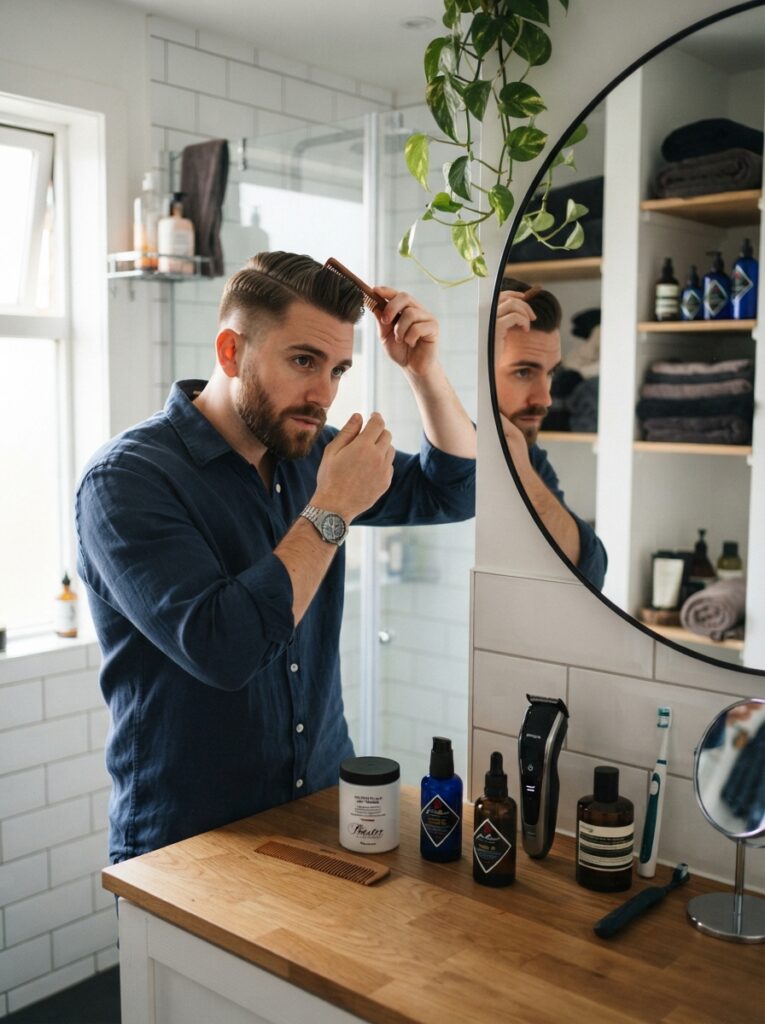
How to style your curls at home
- Start with damp, not soaking-wet, hair.
- Work a leave-in conditioner through first.
- Add curl cream section by section.
- Air dry or diffuse on low heat, avoiding touching curls until fully dry to prevent frizz.
- For extra clumping, “plop” damp hair in a soft cotton t-shirt before drying.
For added volume, dry with your head tilted slightly forward to lift the roots, and use a diffuser or fingers instead of a brush.
Best products for curly hair
| Product | What it does |
| Curl cream | Defines curls without adding heaviness |
| Leave-in conditioner | Adds moisture and prevents dryness |
| Lightweight gel | Adds hold for medium-to-long tops without stiffness |
| Mousse | Weightless volume for finer curl types |
| Sea salt spray | Relaxed texture for looser waves |
| Sulfate-free shampoo | Keeps curls hydrated and reduces buildup |
Washing and maintenance
Book a fade touch-up every two to four weeks, since the sides grow out faster than the curls on top. Wash curly hair only once or twice a week, over-washing strips the natural oils that keep curls defined. Between washes, a light mist of water combined with leave-in conditioner refreshes the curls. At night, a silk or satin pillowcase, or a loose “pineapple” tie on top of the head, helps preserve curl shape overnight.
Common mistakes to avoid
- Cutting the top too short without accounting for shrinkage
- Using heavy gels or waxes that weigh curls down
- Leaving a hard, unblended line at the neckline or sideburns
- Washing curly hair too frequently
- Attempting to line up your own edges freehand
Frequently asked questions
Is a low taper fade good for curly hair?
Yes. It keeps the sides controlled without touching the volume on top, making it one of the more forgiving fades for curls.
How long does a curly low taper fade last?
The fade itself stays sharp for about two to three weeks, while the curls on top can go longer depending on length.
Is this cut low maintenance?
Shorter versions are very low maintenance; longer curly tops require daily product and drying time.
Low taper or mid taper for curly hair?
A low taper generally looks more natural on curls, while a mid taper suits looser or straighter textures better.
Can you get a low taper fade with thick curls?
Yes, thick curls are ideal, since the fade removes bulk from the sides while keeping the top’s natural fullness.
How do I keep my curls defined between cuts?
Stick to leave-in conditioner, a light curl cream, and air drying or low-heat diffusing, while avoiding heavy products and frequent washing.
Conclusion
The curly low taper fade works because it complements natural texture instead of fighting it. It adapts across curl patterns, face shapes, and lengths, giving you room to go subtle or bold depending on how much styling time you’re willing to put in.
Before your next barber visit, gather a few reference photos with a similar curl type to yours and decide how much length you want on top. That small bit of preparation is often the difference between a haircut you merely accept and one you’re genuinely happy walking out with.