
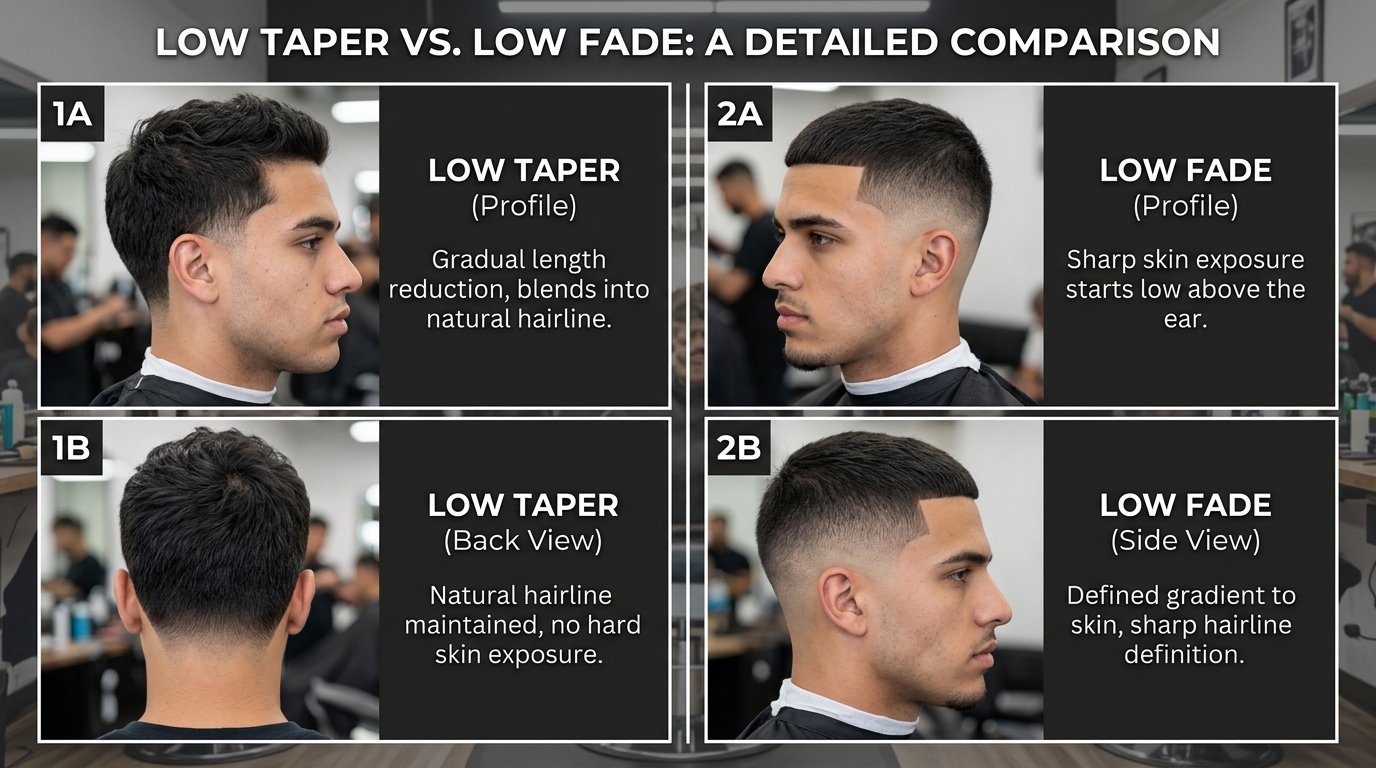
Low Taper vs Low Fade Sit down in almost any barbershop today and you’ll hear these two terms thrown around like they mean the same thing. They don’t. A low taper and a low fade both start in the same spot, right around your ears and neckline, but what happens after that point is where the two haircuts go their separate ways.
Understanding that difference matters more than it seems. Pick the wrong one for your hair type, your job, or how often you can realistically get to the barber, and you’ll end up frustrated within a few weeks. This guide breaks down exactly how a low taper differs from a low fade, which one suits your face shape and hair texture, and the words to use so your barber gets it right the first time.
The main difference
The gap between a low taper and a low fade comes down to a single word: contrast.
A low taper trims the hair gradually as it travels down toward the sideburns and the back of the neck. The change in length is smooth and continuous, and the skin almost never shows through. It’s the kind of cut people notice without quite knowing why, it just looks tidy.
A low fade takes that same starting point but pushes the blend further, cutting the hair down to a very short length or all the way to bare skin near the bottom edge. The transition is still gradual technically, but it happens over a much shorter distance, which makes the change in length obvious to the eye.
Put simply:
- Low taper = soft, continuous blend, little to no skin showing.
- Low fade = sharper blend, often finishing at or near skin level.
Neither cut is objectively superior. They’re built for different goals, one for a understated, low-key finish, the other for a crisp, styled look that shows off the shape of the cut itself.
What is a low taper?
A low taper is a gentle haircut technique where the hair gets progressively shorter as clippers move down toward the ears, sideburns, and nape of the neck. Because the reduction happens over a longer stretch of hair, there’s no hard line to spot, just hair that quietly gets shorter the lower it goes.
Key traits of a low taper:
- The blend sits low, close to the ears and neckline, leaving the rest of the sides untouched or barely shortened.
- Skin exposure is minimal, so the scalp rarely peeks through.
- It looks clean and put-together without appearing “done.”
- It’s one of the more versatile haircuts, fitting comfortably into office dress codes, school policies, and formal occasions alike.
Because there’s no sharp edge to grow out of shape, a low taper tends to age gracefully between visits. The hairline just gets a touch longer rather than looking unkempt, which is a big reason people with busy schedules gravitate toward it.
What is a low fade?
A low fade also begins near the ears and neckline, but instead of a soft gradient, it drops the hair length quickly, usually down to a very short clipper guard or straight to skin, within a tight band close to the bottom of the head.
What defines a low fade:
- The contrast between the top length and the faded section is clearly visible.
- The fade zone stays low on the head, unlike a mid or high fade, which climbs higher up the sides.
- It delivers a crisp, barbershop-fresh look with a defined edge between the top and sides.
- It pairs particularly well with textured, curly, or voluminous styles on top, since the sharp sides create a clean frame.
The trade-off is that this sharp definition doesn’t hold forever. As new hair grows in, the fade line softens fast, which means more frequent trips back to the chair if you want it looking crisp.
Low taper vs low fade at a glance
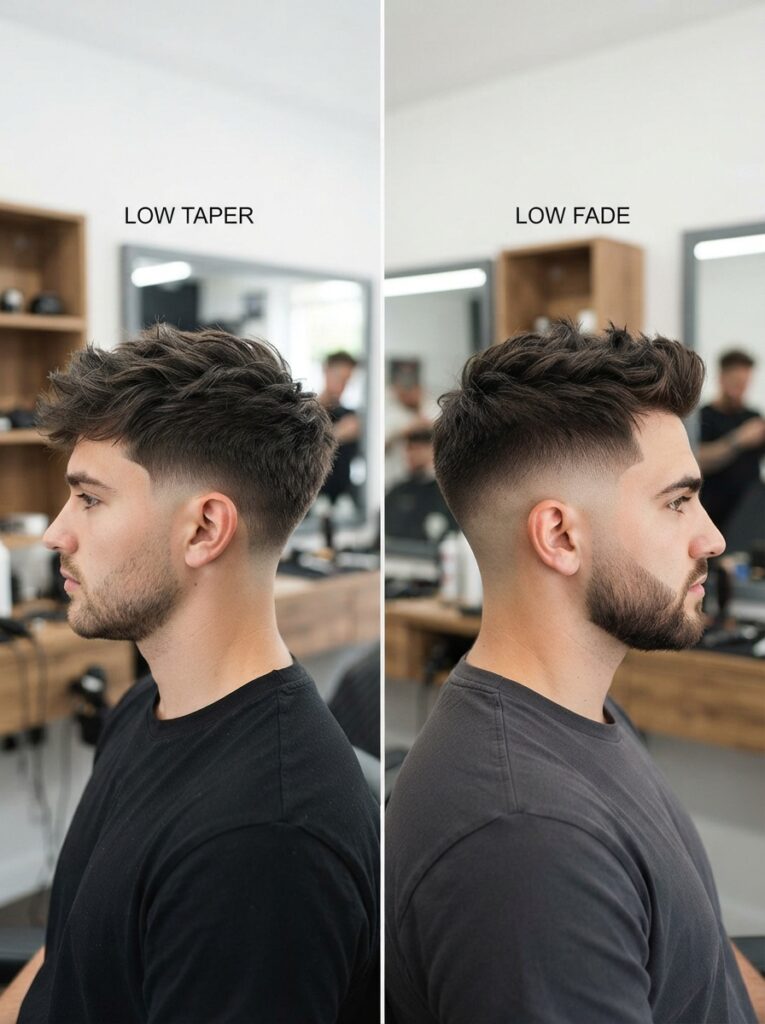
Here’s a side-by-side snapshot of how the two compare on the details that actually influence your decision.
| Feature | Low Taper | Low Fade |
| Starting point | Low, near the ears and neckline | Low, near the ears and neckline |
| Blend style | Gradual and smooth | Sharp and clearly defined |
| Skin exposure | Minimal to none | Often visible, sometimes down to skin |
| Overall vibe | Natural, understated, classic | Bold, crisp, modern |
| Grow-out behavior | Ages gracefully, stays neat | Loses definition within days to weeks |
| Best suited for | Formal settings, everyday wear | Trend-driven, statement looks |
| Touch-up frequency | Roughly every 4–5 weeks | Roughly every 2–3 weeks |
Learn more:Curly low taper fade: best styles, barber tips, and care guide 2026
Which one looks more natural, and where each works best
If your priority is a haircut that blends in rather than stands out, the low taper is the more natural-looking choice. It mimics the way hair naturally grows shorter toward the neckline instead of introducing a deliberate line, which makes it look effortless rather than “styled.”
A low fade, on the other hand, is meant to be noticed. The sharper the contrast, the more the cut announces itself, and that’s precisely the appeal for people chasing a current, fashion-forward look.
Where each one fits best:
- Corporate offices and conservative workplaces: A low taper reads as polished without drawing attention, which suits stricter grooming expectations.
- School environments: Low tapers tend to satisfy dress codes while still looking sharp for everyday classes or events.
- Weddings, interviews, and formal events: A freshly cut low taper looks deliberate without seeming flashy.
- Nights out, social settings, and casual wear: A low fade paired with texture on top gives a finished, current look.
- Streetwear and trend-conscious styling: The fade’s contrast makes it a favorite among people who like their haircut to be part of the outfit.
Choosing based on your face shape
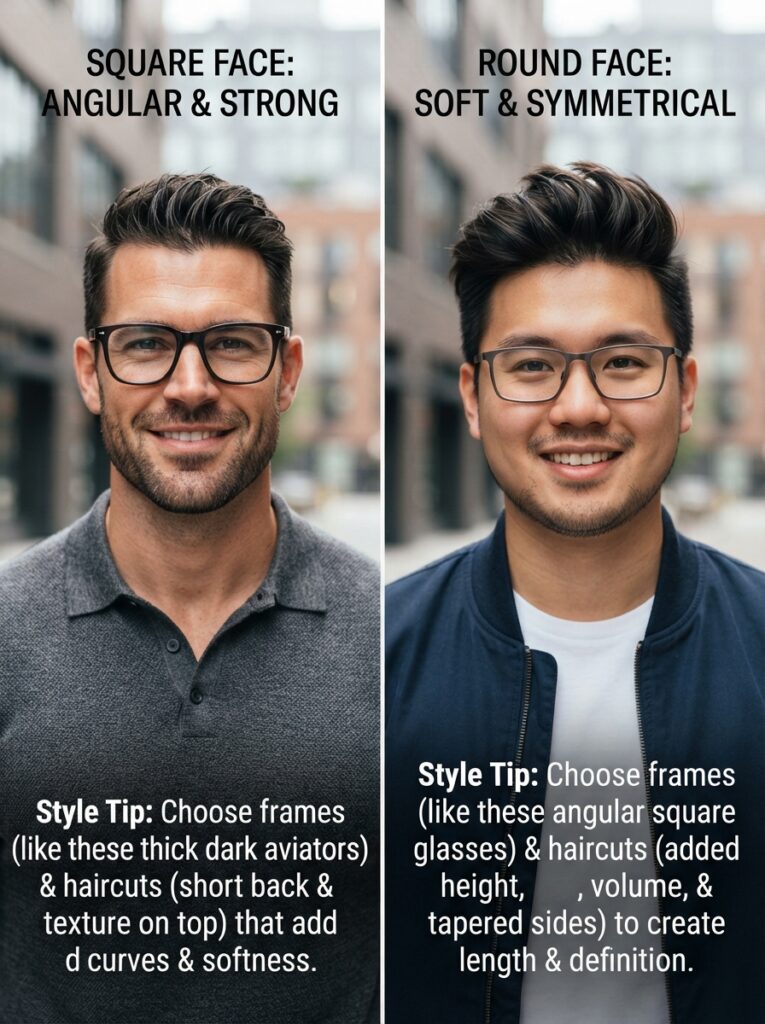
Face shape isn’t a hard rule, but it’s a useful starting point before you commit to either style.
- Round faces: A low fade can add visual length and angularity thanks to the contrast at the sides. A low taper works too, especially if you keep some height on top.
- Oval faces: The most adaptable shape, both cuts suit an oval face equally well, so personal preference can lead here.
- Square faces: A low taper tends to soften an already strong jawline, while a heavy fade can occasionally exaggerate sharp angles.
- Long or oblong faces: A low taper is usually the safer pick, since it avoids adding extra length to the sides. Keeping some fullness on top also helps balance proportions.
- Heart-shaped faces: Either style can work. A low taper keeps things even, while a fade with volume on top may draw more attention to a wider forehead.
Whatever shape you’re working with, bring a reference photo and be specific about what you want changed or preserved, a skilled barber will adjust the height and blend accordingly.
Choosing based on your hair type
Hair texture and density change how each cut looks and behaves just as much as face shape does.
| Hair type | Better fit | Why |
| Straight | Either works well | Both blends show cleanly on straight strands |
| Wavy | Either works well | Natural movement complements a taper; texture on top pairs nicely with a fade |
| Curly | Low fade | A defined base frames curls and sharpens the silhouette |
| Coily / textured | Low fade | Creates a crisp outline that highlights natural texture |
| Thick | Either works well | Fade contrast reads especially bold on dense hair |
| Fine or thin | Low taper | Avoids the sparse look a hard fade can create on thinner sides |
If there’s one takeaway here, it’s this: a low taper is the safer bet across the widest range of hair types, while a low fade delivers the sharpest payoff on curly, coily, and thicker hair.
Maintenance and how long each lasts
Before you commit to either cut, think honestly about how often you’re willing to sit in a barber’s chair.
Low taper maintenance:
- Grows out slowly and evenly, so it rarely looks messy between cuts.
- Most people can go 4 to 5 weeks before it needs a refresh.
- Lower overall cost and time commitment over the course of a year.
Low fade maintenance:
- New growth softens the sharp line quickly, especially near the fade zone.
- Typically needs a touch-up every 2 to 3 weeks to stay crisp.
- A skin fade (faded all the way to bare scalp) shows regrowth the fastest of all; a shadow fade, which stops just short of skin, holds slightly longer.
If your schedule doesn’t allow for regular barber visits, the low taper is the more practical, lower-maintenance option by a clear margin.
Pairing with popular styles on top
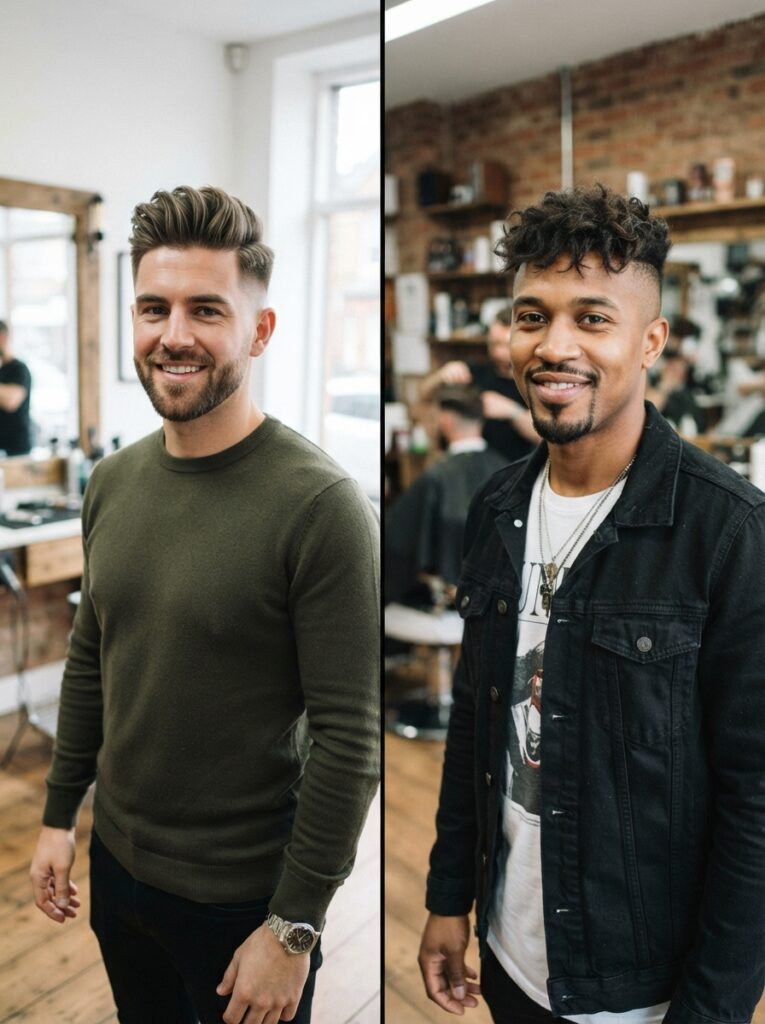
The sides only tell half the story, what you do with the top changes the entire look.
- Textured crop: Looks sharp with a fade, clean and classic with a taper.
- Buzz cut: A taper keeps it understated; a fade adds more definition at the base.
- Curly top: Generally pairs best with a fade, since defined sides set off the volume above.
- Fringe: A taper keeps a fringe looking classic; a fade gives it a more modern edge.
- Quiff: The natural contrast of a fade complements the height of a quiff, while a taper offers a softer, more vintage take.
- Slick back / comb-over: A taper suits the traditional, polished feel; a fade makes it feel more current.
- Middle part: Works with either, taper for a relaxed finish, fade for added structure.
- Messy or textured top: A fade’s clean sides create balance against a deliberately tousled top.
How to ask your barber
Knowing the right terms to use in the chair saves you from a haircut that misses the mark.
- State the technique clearly. Say “taper” or “fade” specifically, they’re different cutting methods, and mixing up the words leads to mixed-up results.
- Specify the height. For a low version, ask the barber to keep the blend close to the ears and neckline rather than climbing higher up the sides.
- Describe the finish. Let them know if you want it to fade down to skin, a close shadow, or a soft blend with no visible scalp.
- Mention the neckline and sideburns. Some people prefer a naturally tapered neckline; others want it squared off.
- Talk about the top. The length and style you’re keeping on top should factor into how the sides are cut.
A few example phrases that work well:
- “Low taper around the sideburns and neckline, keep it soft and natural.”
- “Low fade starting just above the ears, taken down to a shadow.”
- “Taper it into the neck at the back, nothing too sharp.”
Bringing a photo is always a good idea, even for an experienced barber, it removes any guesswork about exactly how low or how sharp you want the blend.
So, which should you choose?
There’s no universal right answer here, it depends entirely on your lifestyle, hair, and personal taste.
Choose a low taper if:
- You want a subtle, natural-looking finish.
- Your workplace or school calls for conservative grooming.
- You’d rather not visit the barber every couple of weeks.
- You have fine or thinning hair and want to avoid a sparse look.
- You’re new to these styles and want something low-risk and versatile.
Choose a low fade if:
- You want a sharper, more defined look.
- You enjoy keeping up with current, trend-driven styles.
- Your hair is curly, coily, or thick and can carry strong contrast.
- You don’t mind regular touch-ups to keep the line crisp.
- You wear textured or voluminous styles on top that benefit from clean sides.
If you’re still torn, describe your daily routine and grooming habits to your barber and let them guide the final call based on your hair and face shape.
FAQs about low taper vs low fade
Is a low taper better than a low fade?
Neither is inherently better, a low taper suits people who want subtlety and lower upkeep, while a low fade suits those chasing sharper contrast and don’t mind more frequent visits.
Does a low fade expose more scalp than a low taper?
Yes, in most cases. A low fade often finishes at a very short length or bare skin, while a low taper typically stops well before the scalp becomes visible.
Which one lasts longer between haircuts?
A low taper generally lasts longer, often 4 to 5 weeks, since its gradual blend grows out evenly rather than losing its shape.
Can I get a low taper and low fade combined?
Not really as a single technique, but many barbers use taper-style blending on top with fade-style contrast lower down, ask about a “taper fade” if you want elements of both.
Does hair type affect which one I should pick?
Yes. Fine or thin hair generally looks fuller with a taper, while curly, coily, or thick hair tends to show off a fade’s sharp lines more effectively.
What should I say if I can’t decide which to get?
Tell your barber how much contrast you’re comfortable with and how often you can return for touch-ups, they can recommend the better fit based on your hair and routine.