

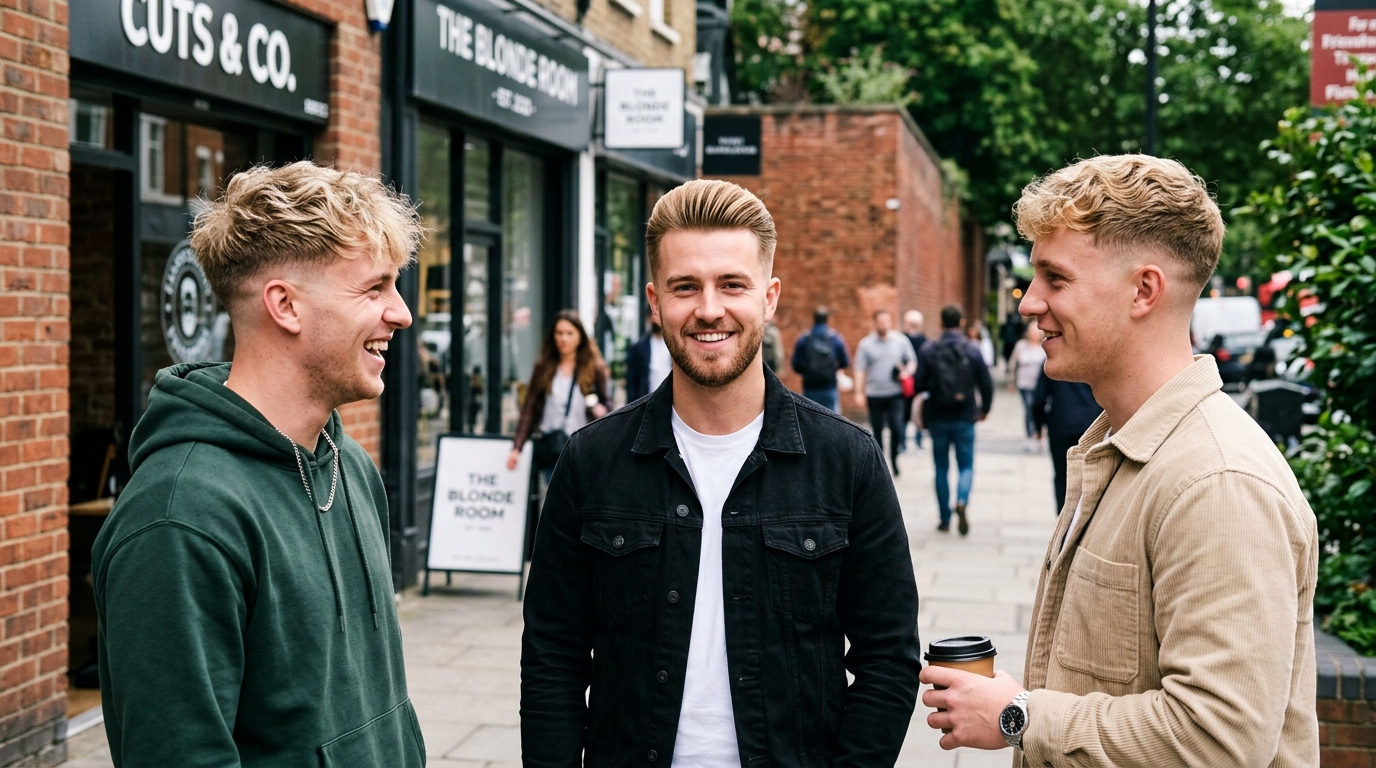
A low taper fade blonde hair is one of the easiest ways to look sharp without looking loud. The sides shorten gently around the ears and neckline, while the top keeps its length and color. The result feels clean, modern, and easy to wear almost anywhere, from work to weekends.
This guide covers what the cut is, which blonde styles work best, and exactly how to ask your barber for it. You will also learn how to style it daily, keep the color bright, and avoid common bleaching mistakes before you book your next appointment and leave the chair happy.
What is a low taper fade on blonde hair?
A low taper fade on blonde hair is a haircut where the sides and back shorten gradually, starting low near the sideburns and neckline, while the top stays longer and blonde. The blonde can be natural, highlighted, or bleached. The fade stays subtle, so your top length and color take center stage.
Barbers build the blend with clipper guards, working from the shortest length at the neckline up to longer ones. A taper lever on the clippers then softens the steps between guards. Because the fade stays low, most of the head keeps its length. That is why the cut looks tidy rather than dramatic.
Quick facts:
- The fade begins just above the ears and around the nape.
- The shortest point is often a 0.5 or 1 guard, or bare skin if you ask for it.
- Blonde is a color choice. It doesn’t change how the cut is built.
Low taper fade vs low fade vs skin fade
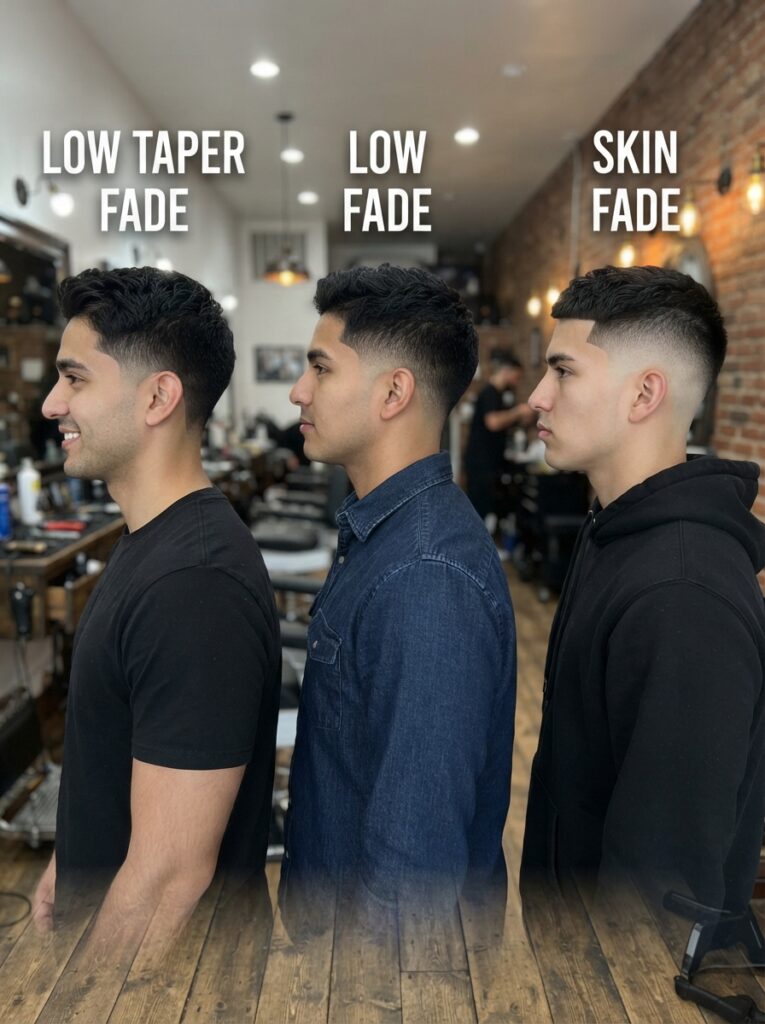
These terms overlap, and barbers don’t always use them the same way. In general, “taper” and “low fade” describe where and how widely the hair shortens. “Skin” describes how short it ends up. You can have a low taper with a skin finish or a low fade with a soft shadow.
| Cut | Where it starts | Area affected | Usual finish |
| Low taper | Low, around sideburns and nape | Narrow band | Soft shadow, short guard |
| Low fade | Low, just above the ear | Wider, wraps further around | Shadow or skin |
| Skin fade | Low, mid, or high | Depends on placement | Bare scalp at the shortest point |
Because of this overlap, a photo describes your cut better than the label alone.
Why does blonde hair change the look of the fade?
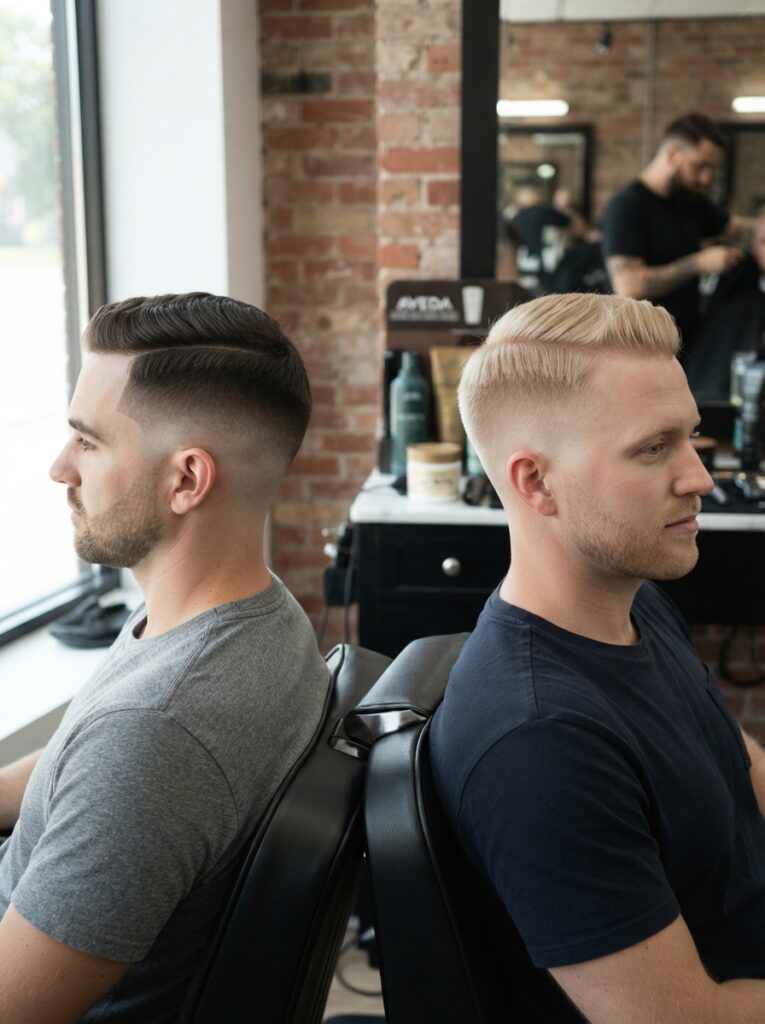
Blonde doesn’t change the cut’s structure, but it changes how visible the fade looks. Light strands have less contrast against skin than dark hair, so the blend can look softer, and sometimes fainter, than the same fade on brown hair.
- Fine blonde hair looks lighter and thinner as it gets shorter, so a skin finish can seem to climb higher than intended.
- Dark roots create a visible line between the fade and the blonde above it.
- Skin tone matters. A pale scalp blends with platinum. Tanned skin shows more contrast.
| Blonde type | How the fade reads | Best finish |
| Natural or dirty blonde | Soft, low contrast | Shadow taper |
| Golden or highlighted | Medium, with dimension | Shadow or light skin |
| Platinum or bleached | Very soft against pale skin | Shadow, to keep definition |
| Blonde with darker roots | Sharper separation | Either, depending on taste |
Does a low taper fade suit your hair?
For most men, yes. The cut is forgiving because the fade stays low and the top is customizable. The real decision is how much daily styling and color upkeep you want. A soft shadow taper is a safe first choice, especially if it’s your first bleach or your workplace is conservative.
Learn more:Low taper fade blowout: a complete guide for men 2026
Which hair textures work best?
All four main textures can carry this cut. Each just needs a different top length and product.
| Texture | Best top approach | Watch out for | Product type |
| Straight | Fringe, crop, or quiff with cut-in texture | Flat, limp look on fine hair | Matte clay, sea salt spray |
| Wavy | Medium length to show movement | Frizz if cut too short | Light cream or mousse |
| Curly | Enough length for curls to form | Shrinkage when dry | Curl cream, gel |
| Coily | Rounded top, clean edges | Dryness at the short perimeter | Moisturizing cream, oil |
Ask your barber to check the length on dry, styled hair. That matters most with curls.
What about face shape, density, and hairline?
Nothing here rules the cut out. These are proportions to adjust, not rules to obey.
| Factor | What to adjust |
| Round face | Add height on top, keep sides tight |
| Long or oval face | Use a forward fringe, keep less height |
| Square face | Soft texture on top to balance strong angles |
| Fine or thin hair | Keep the top shorter, avoid heavy bulk |
| Thick or coarse hair | Ask for thinning or texturizing to reduce weight |
| Receding temples | Leave a bit more length at the sides |
| Cowlicks or crown swirl | Let the barber plan the fade around the growth direction |
10 best low taper fade blonde hair styles
Use this list to match a top style to your texture and effort level. Each group below pairs two related looks.
Textured fringe and messy crop
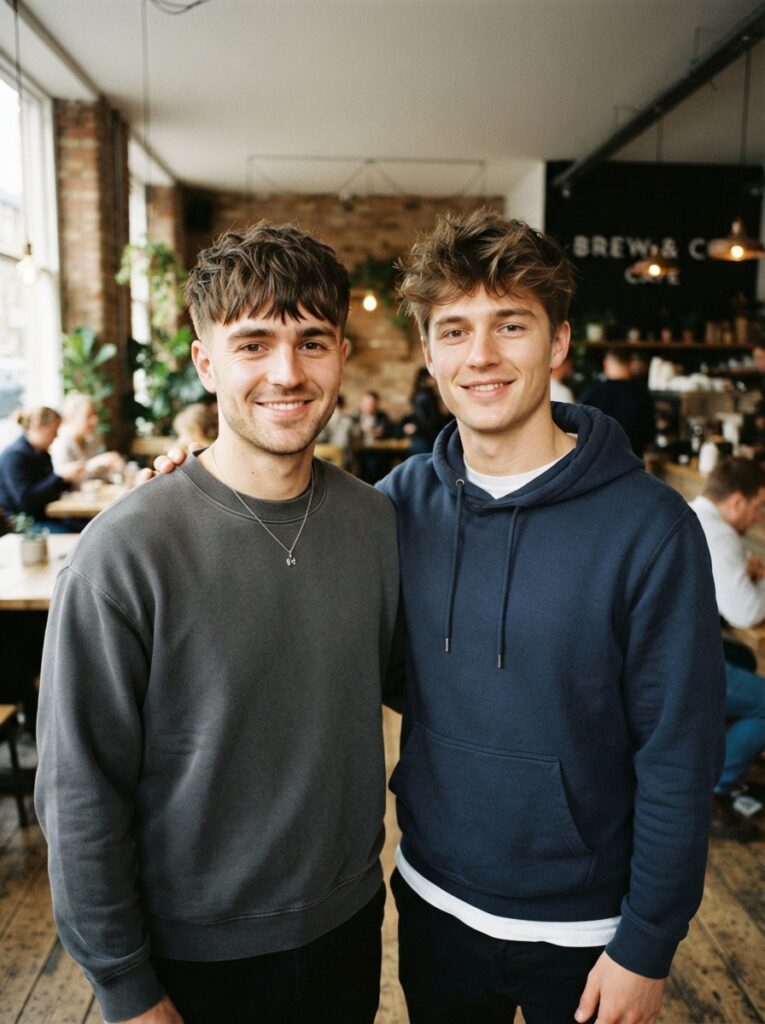
1. Dirty blonde textured fringe. A choppy, forward fringe in a warm, natural blonde. It looks casual and hides regrowth well. Style with a pinch of matte clay on damp hair.
2. Platinum messy crop. A short, piece-y top in bright platinum. The contrast is bold, so use a light texture powder to avoid a greasy look.
Curly, wavy, and fluffy top
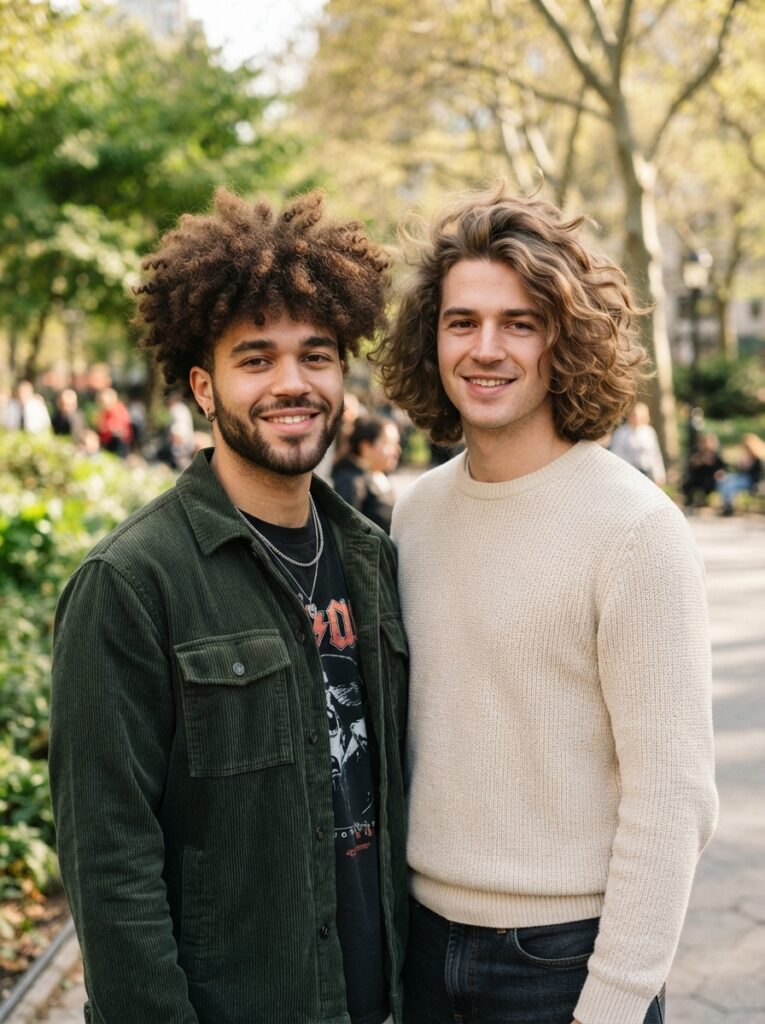
3. Natural blonde curls. Keep the curls on top and let the taper frame them. Cut the length with dry shrinkage in mind, and use a curl cream on wet hair.
4. Fluffy wavy top. A blow-dried, airy top with soft waves, sometimes with highlights for dimension. Finger-dry with mousse or sea salt spray for volume.
Short crop, Caesar, and buzz cut
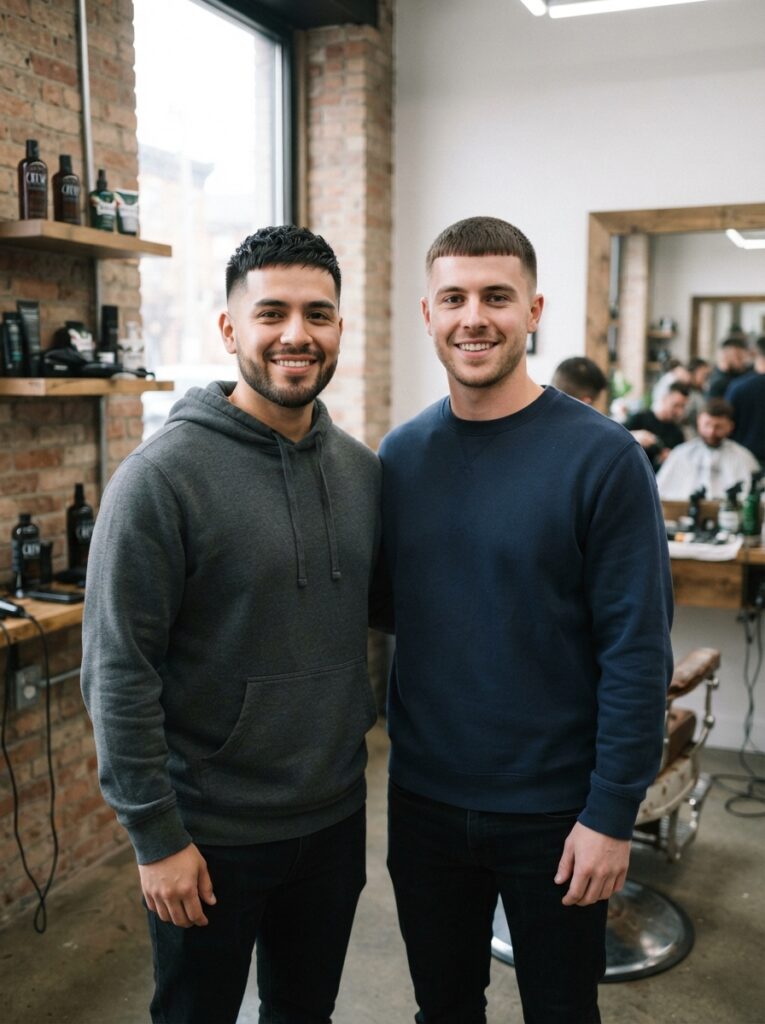
5. Short blonde crop or Caesar. A short, forward fringe with tight sides. It’s a low-effort cut that takes only a dab of product. Fine hair suits it well.
6. Blonde buzz cut with low taper. The shortest option. The fade becomes the main detail, so even blending and clean color matter most.
Quiff, side part, and slick back
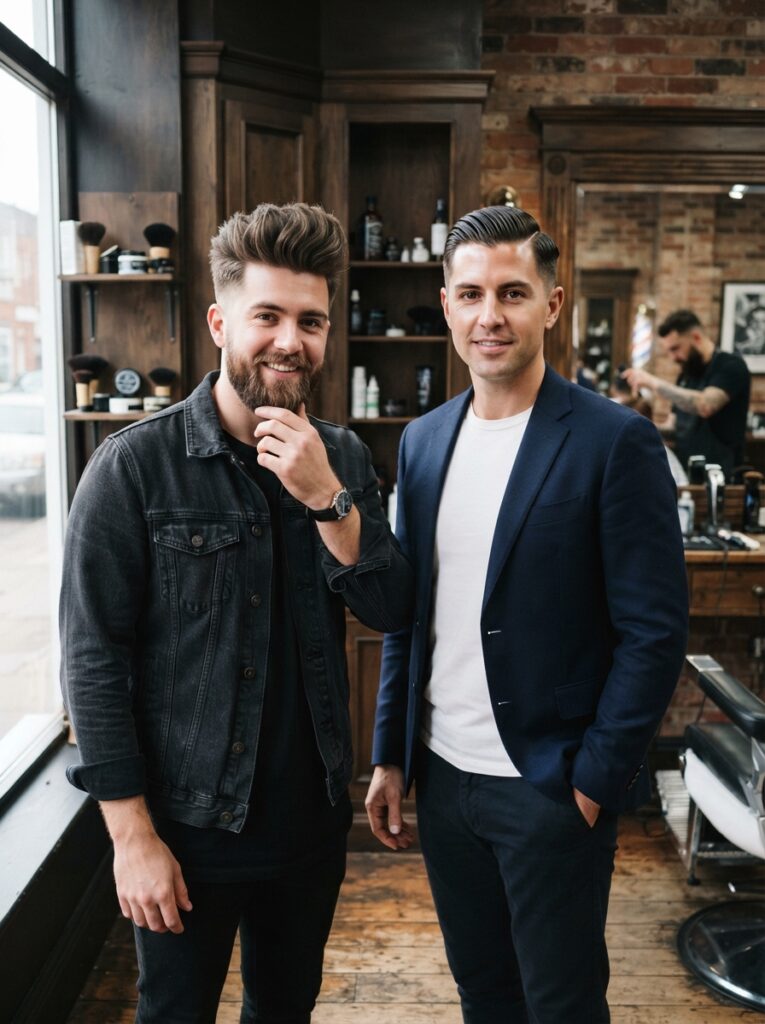
7. Textured blonde quiff. Needs enough length to lift and sweep back. Blow-dry upward and finish with a matte, medium-hold product.
8. Side part or slick back. A cleaner, more polished finish. Use pomade or cream, and comb through while the hair is damp. It takes the most product and shows damage the most, so skip it if your hair is very dry.
Blowout, mullet, and longer top
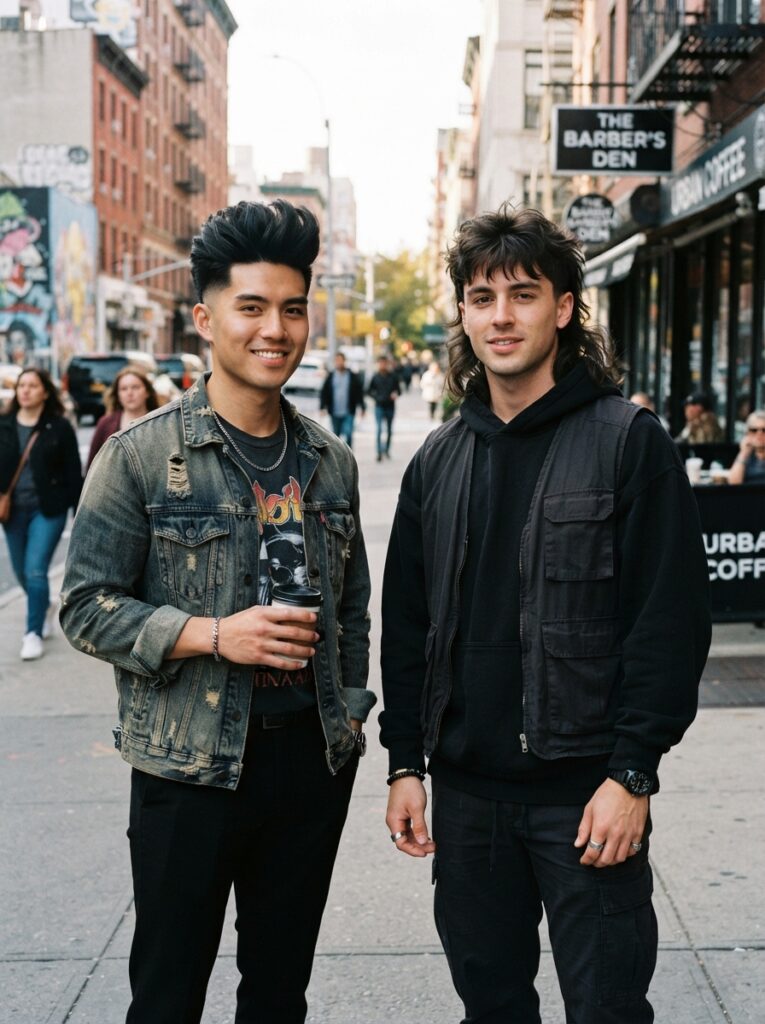
9. Blonde blowout. A rounded, voluminous top built with a brush and dryer, with a subtle taper at the sides. It suits thick hair best.
10. Mullet or longer swept top. More length at the back or across the top, with the taper cleaning up the sides. Cuts are less frequent, but daily styling takes longer.
| # | Style | Best for | Top length | Upkeep |
| 1 | Dirty blonde textured fringe | Straight, wavy | Medium | Low |
| 2 | Platinum messy crop | Straight, fine | Short | Medium (color) |
| 3 | Natural blonde curls | Curly, coily | Medium–long | Medium |
| 4 | Fluffy wavy top | Wavy | Medium | Medium |
| 5 | Short crop or Caesar | Any, fine hair | Short | Low |
| 6 | Buzz cut with taper | Any | Very short | Low (cut), high (edges) |
| 7 | Textured quiff | Straight, thick | Medium–long | Medium |
| 8 | Side part or slick back | Straight, wavy | Medium–long | High |
| 9 | Blowout | Thick, wavy | Long | High |
| 10 | Mullet or longer top | Wavy, thick | Long | High |
How do you ask a barber for this haircut?
Give your barber three separate pieces of information: where the fade sits and how it ends, how long the top should be, and what the color plan is. Then ask them to repeat the plan back before they start cutting.
- Name the style family, such as a textured fringe or a quiff.
- Show your reference photos.
- Say “low taper” and choose a shadow or skin finish.
- Give the top length, in inches if you can.
- Say whether the blonde is done, needs refreshing, or will be handled by a colorist.
- Ask about the neckline: squared, rounded, or natural.
- Mention any beard, so the fade can blend into it.
What reference photos should you bring?
- Bring front, side, and back photos, not one angle.
- Pick people with similar texture, density, and blonde shade to yours.
- Skip heavily filtered or edited images, since lighting can change the color and fade contrast.
- Point out what you like about each photo, whether that’s the neckline, the blend, or the texture.
What exactly should you say?
Say it in plain words. Here is a sample you can adapt:
“Low taper around the sideburns and neckline, a 1 guard at the shortest, blended softly with no hard line. Leave about two inches on top with texture. The blonde is already done, so today is just the cut.”
| If you want | Say this |
| A subtle finish | “Shadow taper, no bare skin” |
| A sharper look | “Take the shortest point down to skin” |
| Blonde to blend smoothly | “Keep the color through the sides for a soft transition” |
| A clean neckline | “Tapered neckline that follows my natural hairline” |
How do you style and maintain it?
Think of upkeep as three separate jobs: the cut, the daily styling, and the color. They run on different schedules, so handle each one on its own.
What is the fastest daily styling routine?
- Rinse or lightly wash your hair.
- Towel-dry, leaving it slightly damp.
- Add a pea-sized amount of product for your texture.
- Dry or shape with your fingers, or a comb for polished looks.
- Finish with a light spritz or a touch of clay if needed.
Lightened hair is more porous and dries out easily, so use low or medium heat and a heat protectant whenever you blow-dry.
How often should you refresh the cut and color?
| Task | Typical timing | Sign it’s time |
| Neckline and sideburn tidy-up | Every 2–3 weeks | Neckline looks fuzzy |
| Full taper cut | Every 3–5 weeks | Fade line blurs into the top |
| Toner or gloss | Every 4–6 weeks | Blonde looks yellow or brassy |
| Root touch-up or bleach | Every 6–8 weeks, if needed | Visible regrowth |
These are general ranges. Your hair’s growth speed and your standards decide the real schedule.
How do you keep blonde hair bright without over-toning?
Purple shampoo cancels yellow tones because violet sits opposite yellow on the color wheel. It tones only. It doesn’t repair damage.
- Wait about 48 to 72 hours after bleaching before you use it.
- Start with once a week, and go up to twice if brassiness returns.
- Leave it on for one to three minutes, not longer.
- Alternate it with regular sulfate-free shampoo.
- Follow with conditioner, and a deep mask once a week.
If your hair turns lilac or gray, you’ve overdone it. Skip a few washes, or dilute the shampoo with water.
What are the risks and common mistakes?
A bad fade grows out in a few weeks. Damaged hair takes months to recover. That’s why bleaching deserves more caution than the haircut itself.
What should you know before bleaching?
Bleach lifts color by breaking down pigment, and that weakens the hair. It can also irritate the scalp or cause an allergic reaction in some people.
- Do a patch test 48 hours before, as hair dye guidance recommends. Skip the product if you get a rash or itching.
- Never bleach over already damaged or previously bleached hair without a professional’s opinion.
- Expect orange or yellow tones after the first lift. Toner is what makes it actually look blonde.
- Go lighter over several sessions if you’re starting from dark hair.
- For a first big color change, see a colorist. Talk to a dermatologist if you have a sensitive scalp or skin condition.
Which haircut and color mistakes should you avoid?
| Mistake | What happens | Fix |
| Not saying “low” clearly | Fade sits too high | Give the height and show a photo |
| Photos that don’t match your hair | Unrealistic result | Use texture-matched, unedited images |
| Cutting off too much side bulk | Top looks flat or oversized | Ask how much to keep |
| Expecting platinum in one session | Uneven tone, breakage | Plan several sessions |
| Skipping toner and conditioner | Brassy, dry hair | Add both to your routine |
| Overusing purple shampoo | Lilac or gray cast | Alternate with regular shampoo |
| Skipping the patch test | Possible skin reaction | Always test first |
What are the best alternatives?
If a low taper isn’t quite right, these cuts pair well with blonde hair too.
| Cut | How it differs | Contrast |
| Low fade | Wider shortened area | Moderate |
| Mid taper | Starts higher on the head | Stronger |
| Drop fade | Curves down behind the ear | Moderate, curved |
| Burst fade | Fans around the ear, leaves the back longer | Focused |
| Scissor taper | Blended with scissors instead of clippers | Softest |
| Undercut | Sides cut short with a sharp disconnect | High |
A mid taper suits you if you want more definition. A scissor taper suits you if you want the gentlest grow-out.
Frequently asked questions
Does a low taper fade look good on natural blonde hair?
Yes. Natural blonde gives a soft, low-contrast fade, so a shadow finish looks especially clean.
Can you get a low taper fade with bleached or platinum hair?
Yes. Just have a colorist check your hair’s condition first, and book the cut and color separately.
Is a low taper fade the same as a low fade?
Not exactly. A taper is usually a narrower band at the sideburns and nape, while a low fade wraps further around.
Does it work on curly or coily hair?
Yes. Ask the barber to cut with dry shrinkage in mind, and keep the hair moisturized.
How long should the top be?
It depends on your style. Crops need very little length, while quiffs and blowouts need several inches.
How often should I get a trim?
Most people tidy the neckline every 2–3 weeks and get a full cut every 3–5 weeks.
How do I stop blonde hair from turning yellow?
Use purple shampoo once or twice weekly, limit heat, and book a toner every 4–6 weeks.
Is bleaching hair safe?
It can be, with a patch test, careful timing, and professional advice. Bleach always weakens hair to some degree.
Conclusion
A blonde low taper fade works because it keeps the sides tidy and lets the top do the talking. Pick a top style that matches your texture, decide between a soft shadow or bare skin finish, and choose natural, highlighted, or bleached blonde based on the upkeep you can handle.
Bring clear, texture-matched reference photos, describe the fade height and top length, and ask questions before the clippers start. If you plan to bleach, patch test first and consider hiring a colorist. Book trims every few weeks, protect your color, and your cut will stay sharp and fresh for longer.