

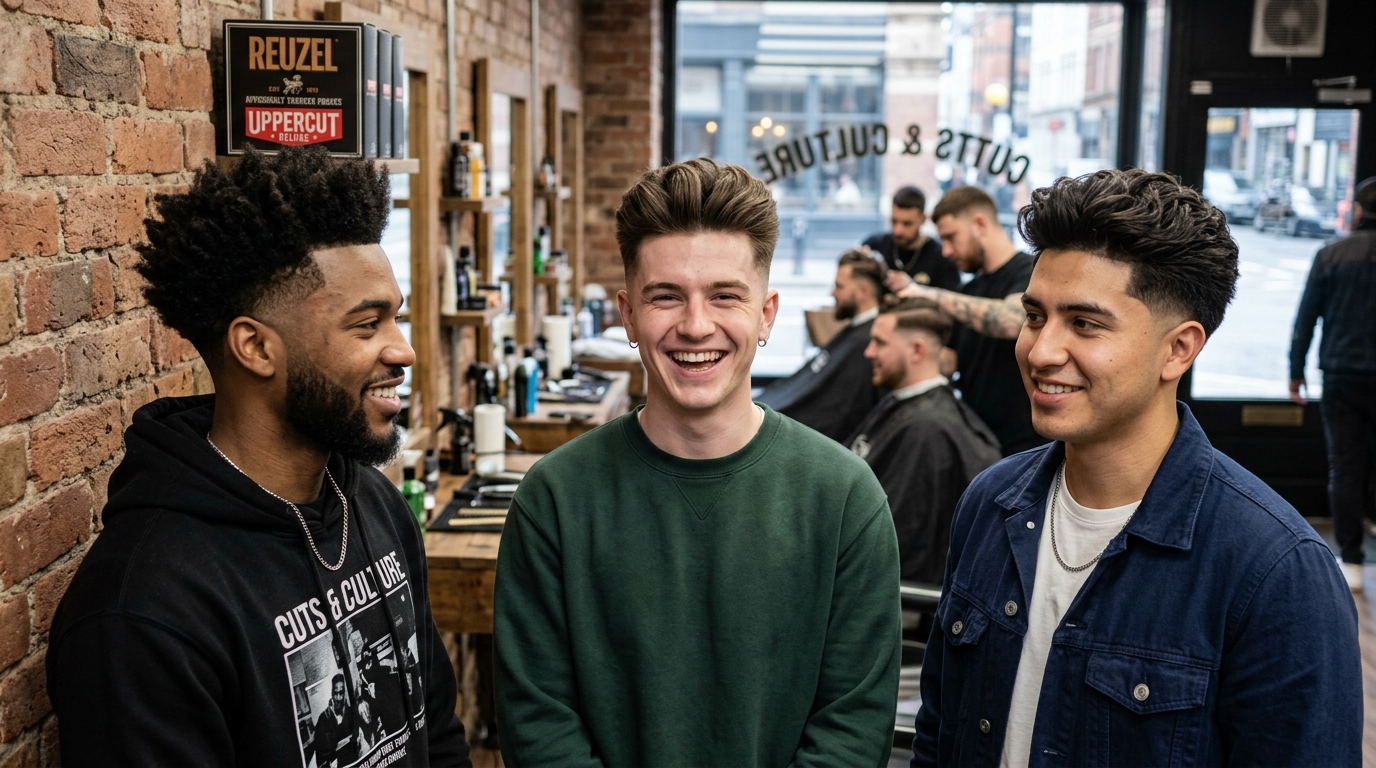
The low taper fade blowout pairs short, softly blended sides with a full, lifted top. It has spread from barber reels to everyday streets because it looks sharp without looking stiff. The fade stays low, near the ears and neckline, so the cut feels clean, modern, and easy to wear.
This guide explains what the cut is, how it differs from a regular blowout, and who it suits. You’ll also get the exact words to say to your barber, a step-by-step home styling routine, product picks, upkeep timelines, and common mistakes to avoid, so you can walk into your next appointment prepared.
What is a low taper fade blowout?
A low taper fade blowout is a haircut with sides and back that gradually shorten toward the ears and neckline, topped with longer hair that is blow-dried up and slightly back for lift. The fade stays low, and the volume sits on top.
The two halves do different jobs:
- The low taper: The shortest point stays close to the hairline, near the sideburns, behind the ear, and at the nape. It doesn’t climb up the head like a mid or high fade.
- The blowout: The top is left long enough (usually around three to five inches) to be dried with a brush or fingers. The drying is what builds the height. Without it, the cut is just a taper.
Ask for a “taper” and you’ll generally get more length left at the bottom than with a skin fade. That makes it softer and more forgiving as it grows out. If you want the shortest edges, tell your barber you’d like the taper taken close to the skin.
Low taper fade blowout vs a regular blowout
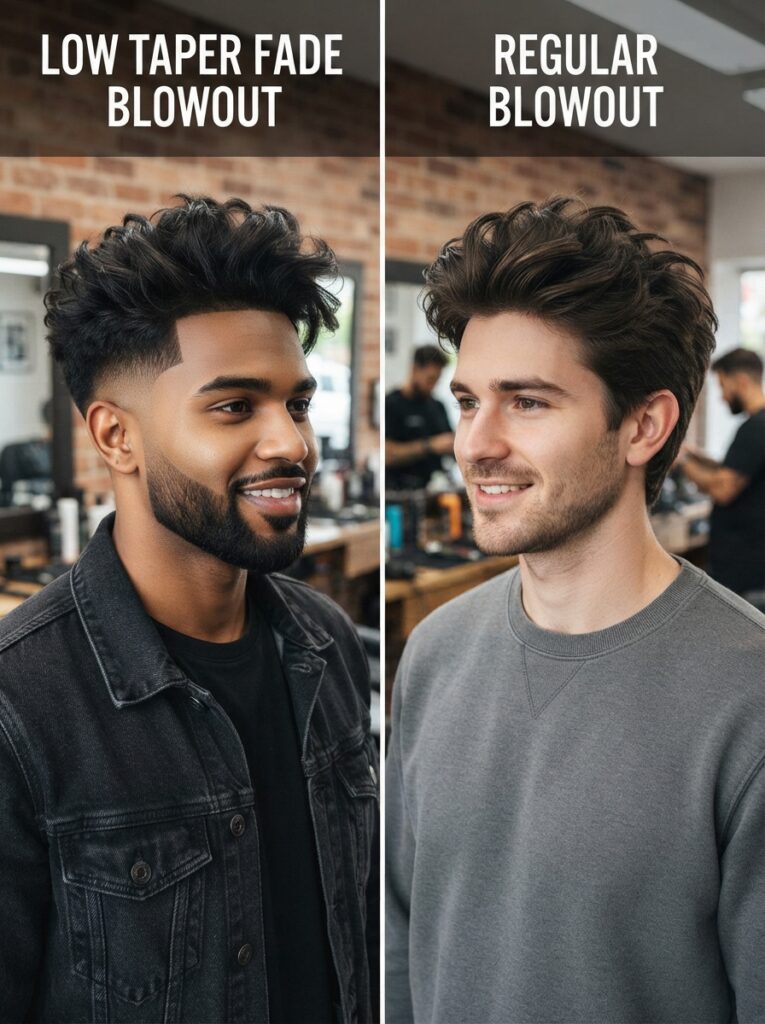
A regular blowout focuses on the top only. The sides are usually left longer or trimmed to one even length. A low taper fade blowout adds a defined taper around the sides and back, which frames the volume and keeps it looking deliberate.
| Feature | Low taper fade blowout | Regular blowout |
| Sides and back | Blended taper, short near the ears and neckline | Longer or evenly trimmed |
| Top | Lifted, brushed up and slightly back | Lifted or swept, often with more overall bulk |
| Overall shape | Defined and structured | Fuller and looser |
| Look | Clean, modern, neat | Casual, sometimes bulky |
| Upkeep | Touch-up every 3 to 4 weeks | Trim every 6 to 8 weeks |
| Best for | Guys who want volume with tidy edges | Guys who prefer minimal shaping |
Without a taper, a big top can feel heavy. The low fade acts like a frame around a picture. It keeps the sides quiet so the hair on top gets the attention.
Who does the low taper fade blowout suit?
Most men can wear it. The cut is adjustable: your barber changes the top length, the volume, and the fade height to suit your head and hair. A few details make it work better on some faces and textures than others.
Best face shapes
Height on top changes how your face reads. Clean sides keep the jawline in view.
| Face shape | How the cut works | Barber tip |
| Oval | Balanced proportions handle almost any version | Any variation works |
| Round | Lift adds vertical length and makes the face look slimmer | Keep the sides tight and the top tall |
| Square | Volume softens a strong jaw while the taper keeps edges crisp | Try a textured or slightly messy top |
| Long or oblong | Too much height can lengthen the face further | Keep volume moderate or add a soft fringe |
| Heart | Fuller top balances a narrower chin | Leave a little length at the front |
Hair types and textures
Medium to thick hair is the easiest to work with because it gives you natural body. Fine or thin hair can still pull it off. A slightly shorter top with lighter product often looks fuller than long, limp strands, and the lift on top draws attention upward.
Very coarse or dense hair can turn bulky. Ask your barber to thin the weight with point cutting or thinning shears so the top holds a shape instead of puffing out.
Straight, wavy, and curly hair
| Hair type | What to expect | Styling notes |
| Straight | Smooth, clean lift, but it can fall flat by afternoon | Use mousse on damp hair and texture powder once dry |
| Wavy | Natural movement and body, with an easy finish | Use sea salt spray and avoid over-brushing, which straightens the wave |
| Curly | Built-in volume and a rounded crown | Use curl cream and a diffuser, and keep the brush out of it |
| Coily | Holds height well, with a defined shape | Stretch gently while drying, then shape with fingers or a pick |
Popular low taper fade blowout variations
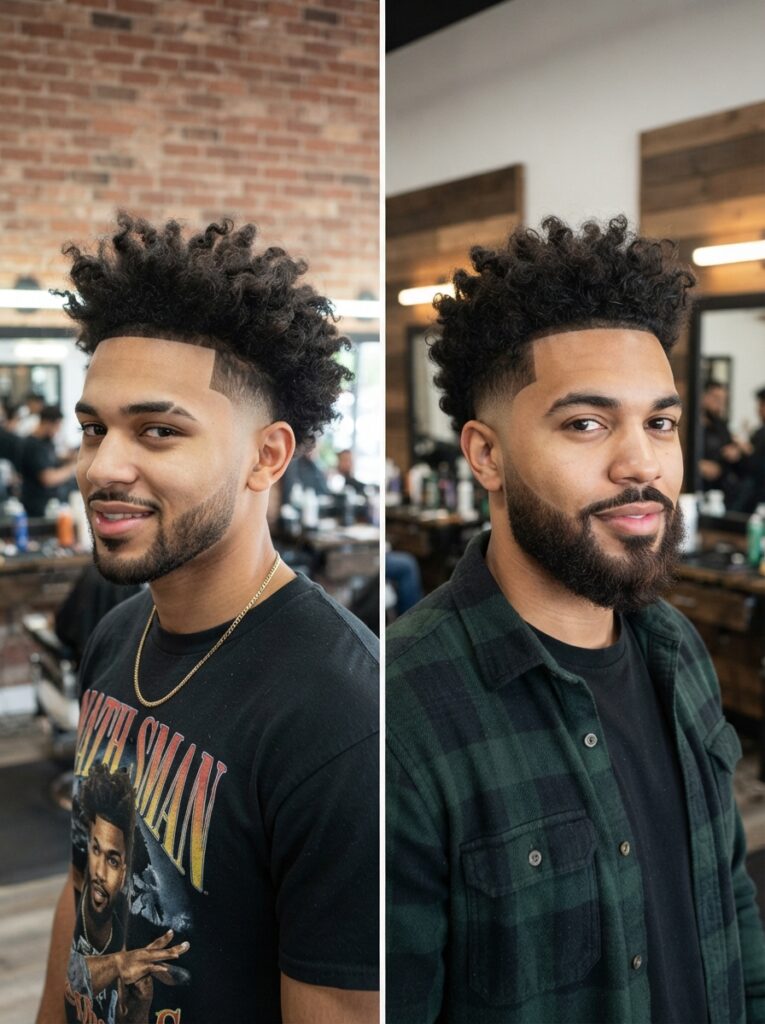
Think of this cut as a base. The fade stays low, and the top changes with your texture and mood. Here’s how the main versions compare.
| Variation | Top styling | Effort level |
| Classic | Smooth, brushed up and back | Medium |
| Textured | Choppy layers, matte finish | Low to medium |
| Curly | Defined curls with lift | Medium |
| Wavy | Loose movement, relaxed shape | Low |
| With a fringe | Front section falls forward | Medium |
| With a middle part | Even split, framed by the fade | Medium to high |
| Messy | Tousled, deliberately undone | Low |
| With a beard | Fade blends into the beard line | Medium |
Classic
The safe choice. The sides fade low, and the top is dried up and slightly back with a light finish. It works for the office, a wedding, or a weekend.
Textured
Your barber cuts choppy layers through the top, and you finish with clay or powder. The broken-up texture hides small styling slips, so it suits guys who don’t want to fuss.
Curly
Instead of smoothing curls out, this version keeps them full and lifted. The tight taper keeps the outline neat while the curls sit on top with body. A diffuser and curl cream keep frizz down.
Learn more:Low Taper Fade Middle Part: A Complete Guide to Styles and Upkeep
Wavy
Waves give you movement without much work. Sea salt spray on damp hair, a few minutes with the dryer, and some finger shaping are usually enough.
With a fringe
The front section falls forward instead of sweeping back, while the rest of the top stays lifted. Ask your barber to point-cut the fringe so it looks soft rather than blunt. This version tends to flatter longer faces and higher foreheads.
With a middle part
A center part splits the volume evenly and gives the cut a structured, slightly retro feel. It needs medium-length hair and suits thicker hair best. Blow-dry each side away from the part to keep it open.
Messy
Dry the top in random directions, then scrunch or tousle it. The low taper keeps the sides tidy so the messiness reads as intentional instead of neglected.
With a beard
Blending the fade into your sideburns and beard creates one continuous line from hairline to jaw. It adds definition to round faces and sharpens the profile on oval ones. Keep the beard trimmed so the cut still looks clean.
How to ask your barber for a low taper fade blowout
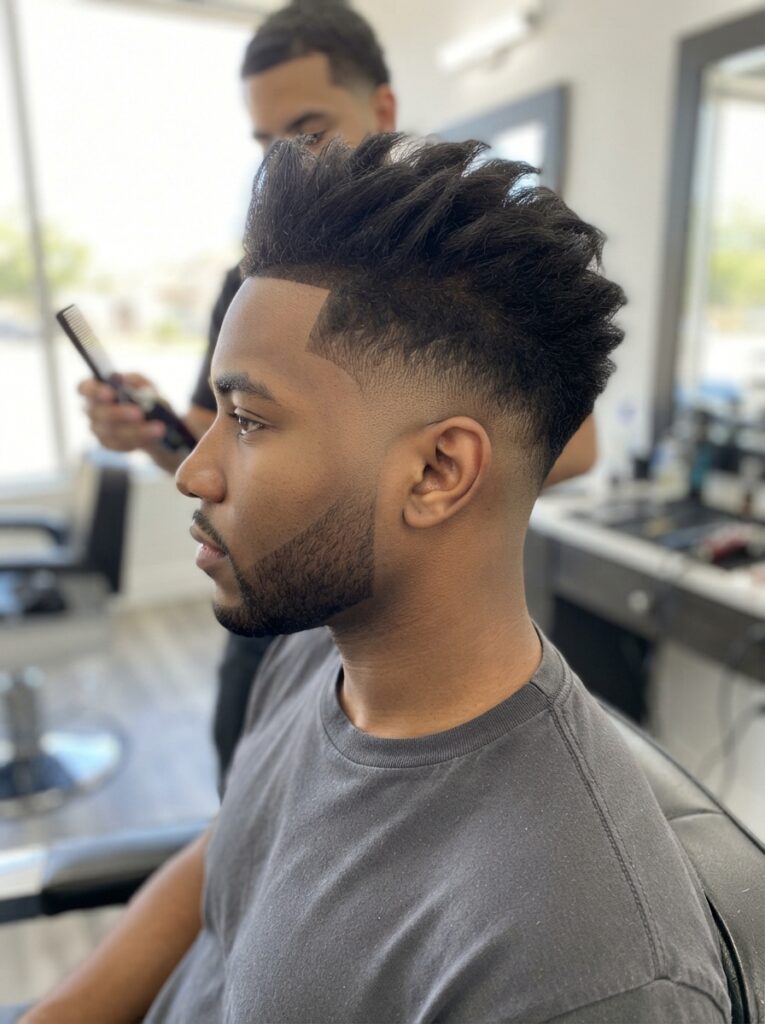
Vague requests cause most haircut regrets. A clear brief, a photo, and a few key terms get you close to what you pictured.
What to say
Try this: “I’d like a low taper fade on the sides and back, staying close to the ears and neckline. Leave about four inches on top so I can blow-dry it up and back.”
A few extra details help:
- Fade height: Say “low” and mention the ear and neckline.
- Taper vs skin: Say whether you want it blended to skin or left with some length.
- Top length: Give a number, or pinch it and show your barber.
- Texture: Ask for point cutting if you want a softer or lighter top.
- Edges: Say whether you want a crisp lineup or a natural finish.
Reference photo tips
- Choose a photo where the hair type matches yours. The same cut looks different on straight and curly hair.
- Bring two or three angles, especially a side view.
- Point to the exact part you like, such as the fade height or the fringe.
- Be honest about how much styling time you actually have.
Barber terms worth knowing
| Term | What it means |
| Taper | A gradual shortening of hair toward the hairline |
| Fade | A blend that goes shorter, sometimes to bare skin |
| Guard number | The clipper attachment that sets hair length (a #1 is shorter than a #4) |
| Neckline taper | How the back of the neck is finished |
| Sideburn taper | How the hair blends around the sideburns |
| Lineup (edge-up) | Crisp outlining along the hairline |
| Point cutting | Snipping into the ends for a soft, textured finish |
| Thinning shears | Scissors that remove bulk without cutting length |
| Blowout | Volume and lift created by blow-drying the top |
What happens during the cut
Knowing the process helps you spot a good barber and speak up if something drifts.
- Consultation: Your barber checks your hair growth, face shape, and top length, then confirms the fade height with you.
- Setting the perimeter: The neckline and sideburn tapers are cut first. This defines how low the fade will sit.
- Building the taper: Clippers and guards, usually working up from a shorter length at the bottom, create the gradual blend.
- Blending upward: The sides are connected to the longer top so there’s no harsh line at the crown.
- Shaping the top: Scissors add layers or texture, and your barber leaves enough length to lift.
- Cleanup and finish: The edges are tidied, and some barbers blow-dry and style the top so you see how it should sit.
If your barber offers to dry and style it, watch how they do it. It’s a free lesson in technique.
How to style a low taper fade blowout at home
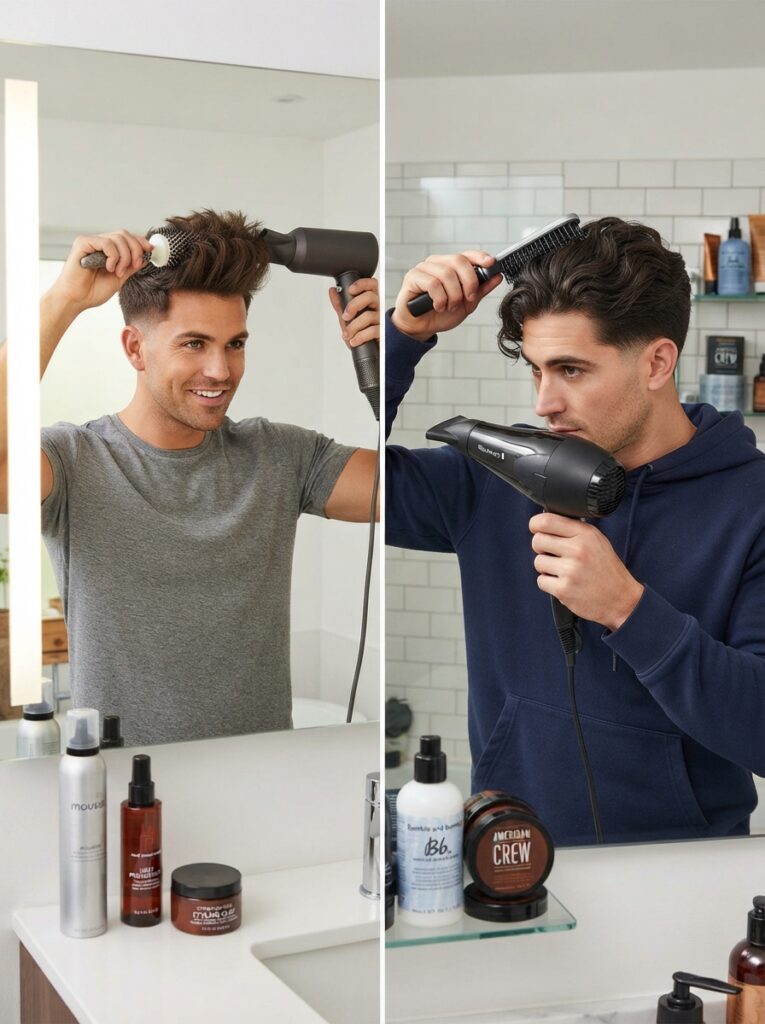
You don’t need salon tools. A dryer with a nozzle, a round brush, and a couple of products will get you there. Plan on five to ten minutes once you’ve practiced a few times.
Step by step
- Start damp: Towel-dry until the hair is damp, not dripping.
- Apply prep product: Work mousse or sea salt spray through the roots and mid-lengths with your fingers.
- Add heat protection: Use a light heat protectant if you dry with a hot setting.
- Rough-dry the top: Move the dryer around with your fingers lifting the roots, until it’s about 70% dry.
- Shape with a brush: Use a round brush to lift the hair up and slightly back, following with the dryer.
- Cool it down: Use the cool shot to set the shape.
- Finish light: Add a small amount of matte clay or texture powder and shape with your fingers.
Blow dryer technique
- Use a nozzle attachment so the air stays focused instead of fluffing everything.
- Choose medium heat and medium airflow. High heat dries the ends before the roots set.
- Point the dryer against the direction of growth at the roots to create lift.
- Keep it moving so you don’t overheat one spot.
- Finish with the cool shot while the hair is still lifted.
Adding texture and volume
- Apply texture powder to dry roots, then rub it in with your fingertips.
- Flip your head upside down for the first minute of drying to build root lift.
- Go easy on the brush if you have wave or curl, since too much brushing flattens the pattern.
- Break up a smooth finish with a pea-sized amount of matte clay.
- Skip anything glossy. Shine products weigh the hair down and undo the lift.
Best products to use
Light, matte products usually work best. Heavy pomade and wax pull the top down.
| Product | Best for | What it does |
| Volumizing mousse | Straight or fine hair | Adds root lift and body without weight |
| Sea salt spray | Wavy and medium hair | Adds grit and texture on damp hair |
| Texture powder | Fine or flat hair | Gives grip and instant volume on dry hair |
| Matte clay or paste | Thick or textured tops | Provides control and definition with no shine |
| Curl cream | Curly and coily hair | Defines curls and controls frizz |
| Heat protectant | Anyone using a hot dryer | Reduces heat damage |
| Light-hold hairspray | Humid days and long hours | Locks the shape without stiffness |
Use less than you think you need. You can always add more, but you can’t take it out without washing.
Maintenance and upkeep
Good upkeep is what keeps the cut looking sharp instead of shaggy.
How often to get a touch-up
Book every three to four weeks. The low fade grows out a bit more gracefully than a high or mid fade, but the neckline and sideburns still soften first. Pushing beyond five weeks usually means the blend starts to look fuzzy.
| Time since cut | What you’ll notice | What to do |
| Weeks 1 to 2 | Sharp and clean | Style normally |
| Weeks 2 to 3 | Neckline starts to fuzz | Light cleanup at home or a quick barber visit |
| Weeks 3 to 4 | Fade softens, top gets heavier | Book your touch-up |
| Week 5+ | Blend looks grown out | Full haircut needed |
Keeping the fade clean
- Clean up the neckline every four to five days if you own a trimmer.
- Leave the taper line to your barber. Cutting into it at home usually makes it uneven.
- Wash and dry your hair fully so the edges don’t look flat or greasy.
Maintaining volume between cuts
- Dry the roots fully every time. Damp roots are the number one cause of collapse.
- Ask for a light trim on top if it gets too heavy to lift.
- Use a volumizing shampoo occasionally to clear product buildup.
- Book your next appointment before you leave. Barbers who do blowouts well tend to fill up fast.
Common mistakes to avoid
| Mistake | Why it hurts | Fix |
| Cutting the top too short | Nothing left to lift | Start longer, then trim gradually |
| Not saying “low” | The fade can drift higher | Point to your ear and the hairline |
| Using too much product | Weighs hair down and kills volume | Start with a pea-sized amount |
| Skipping the dryer | Top lies flat | Dry at least the roots |
| Stopping at damp | Volume drops within hours | Dry fully, then cool it |
| Over-brushing curls or waves | Straightens the natural pattern | Use fingers and a diffuser |
| Waiting too long between cuts | Fade and shape look messy | Book every 3 to 4 weeks |
| Using high heat every day | Dryness and damage | Use medium heat and a protectant |
Low taper fade blowout for different hair lengths
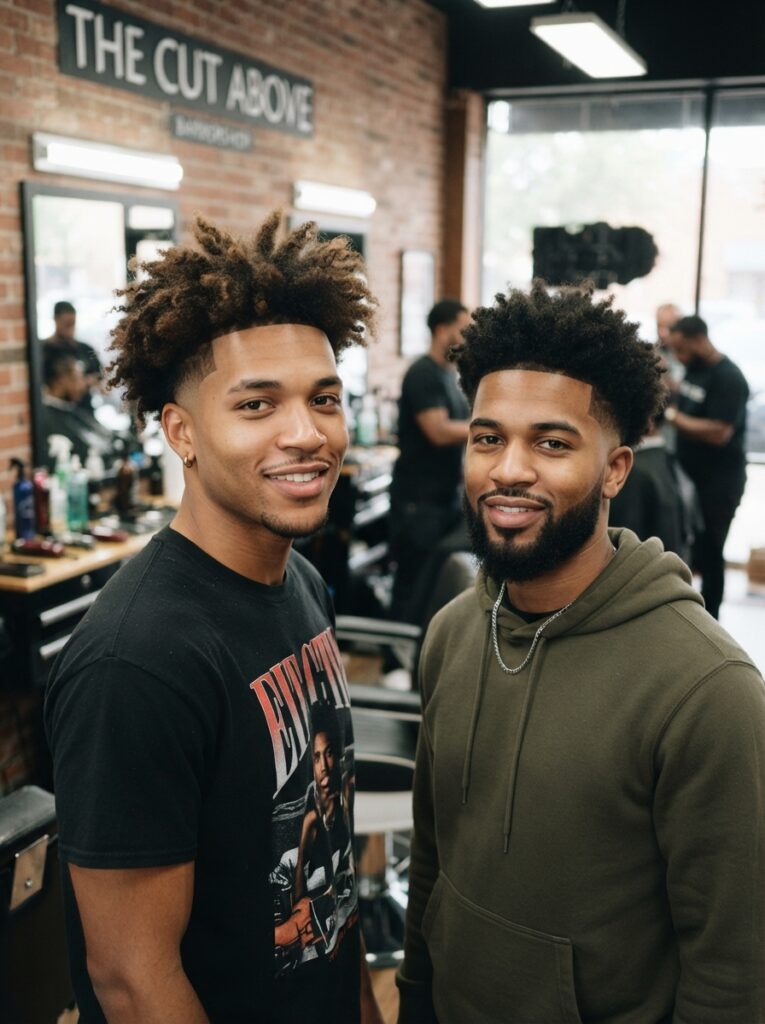
Length changes how much lift you can get and how much effort it takes.
| Top length | Result | Styling effort |
| Short (2 to 3 inches) | Subtle lift, neat and modern | Low |
| Medium (3 to 5 inches) | Best balance of volume and control | Medium |
| Long (5+ inches) | Full brushed-back shape or a fringe | Higher |
Short hair still works, especially for thin hair, since less length can look denser. Medium length is the sweet spot for most guys. Longer lengths give you more styling options but need more time and product.
How it compares to other fades
| Cut | Fade position | Overall look | Best for |
| Low taper fade blowout | Low, near ears and neckline | Subtle, versatile, volume on top | Everyday and professional wear |
| Mid taper blowout | Mid-level, around the temple | Bolder contrast | Guys who want a stronger look |
| High taper blowout | High on the sides | Sharp, dramatic | Statement styles |
| Burst fade blowout | Curves around the ear | Stylized edge | Guys who want something different |
| Skin fade blowout | Down to bare skin | Very high contrast | Maximum sharpness, more upkeep |
The low version is the most forgiving. If you’re unsure, start here. You can always go higher next time.
Is it a professional haircut?
Yes, in most settings. The low fade is understated, and the blowout reads as neat when kept moderate. To lean more formal:
- Keep the volume modest instead of exaggerated.
- Choose a smooth or lightly textured top over a messy one.
- Use a matte or low-shine finish.
- Keep the neckline and sideburns crisp.
Some very traditional workplaces may prefer a flatter, more conservative style. When in doubt, go smoother and shorter on top.
Frequently asked questions
What is a low taper fade blowout?
It’s a low fade on the sides and back with a longer top that’s blow-dried up and back. The fade sits near the ears and neckline.
Is a low taper fade blowout good for curly hair?
Yes. Curls add natural lift and texture. A diffuser and curl cream help keep them defined.
How long does a low taper fade blowout last?
It looks best for three to four weeks. The neckline and sideburns usually soften first.
What should I tell my barber?
Ask for a low taper on the sides and back with about four inches left on top for a blowout. Bring a reference photo.
Does a low taper fade blowout need daily styling?
Usually a quick one. Five to ten minutes with a dryer and light product rebuilds the lift.
Which face shapes suit a low taper fade blowout?
Oval, square, and round faces suit it best. Long faces should keep the volume moderate.
Can I get a low taper fade blowout with thin hair?
Yes. A slightly shorter top with mousse or texture powder can make thin hair look fuller.
What’s the difference between a taper and a fade?
A taper leaves some length at the bottom, while a fade can go down to bare skin. A taper is subtler.
Can I do a low taper fade blowout without a blow dryer?
You can, but you’ll get less lift. Sea salt spray and finger-drying give a softer, messier version.
Is a low taper fade blowout hard to maintain?
It’s moderate. You need regular barber visits and a short daily routine.
Final thoughts
The low taper fade blowout works because it balances two opposite ideas: precision below and volume above. The low fade keeps the sides neat, while the blow-dried top adds shape and movement. It suits most face shapes, hair textures, and lengths, and it moves easily between casual and professional settings.
Before you book, save two or three reference photos and decide how much styling time you really have. Ask for a low taper, leave length on top, and keep your product light. Dry the top fully, schedule a touch-up every three to four weeks, and the cut will stay sharp.