

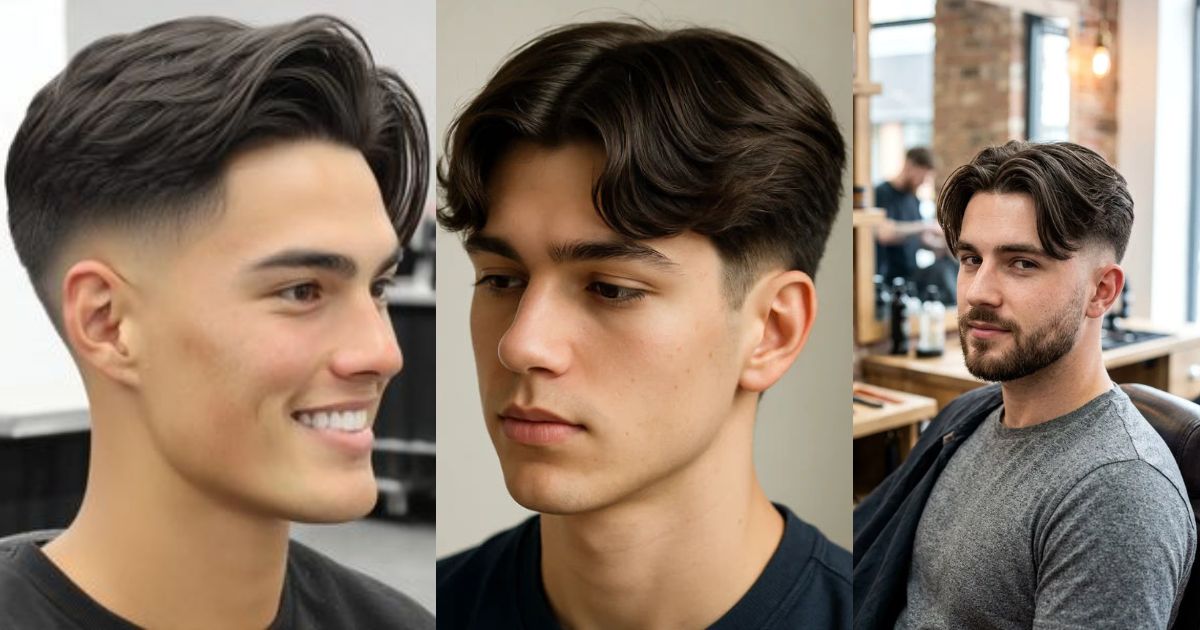
Choosing a new haircut can feel overwhelming when there are so many fades and partings to pick from. The low taper fade middle part solves that problem by combining a subtle, barely-there fade with a clean center part that works on almost any face shape. It’s polished enough for the office yet relaxed enough for weekends.
This guide breaks down exactly what the cut is, who it suits, how it stacks up against other fades, and how to keep it looking sharp between barber visits. By the end, you’ll know precisely how to describe the style to your barber and how to maintain it at home without guesswork.
What is a low taper fade middle part haircut?
The low taper fade middle part is a men’s haircut that pairs a gentle, gradual fade near the hairline with hair parted straight down the middle of the head. The top stays longer for texture and movement, while the sides taper subtly instead of dropping into a dramatic skin fade.
The low taper fade, explained
A “taper” refers to how the hair gradually shortens as it moves down toward the ears and neckline. A low taper keeps that blending action close to the bottom of the head, usually starting just above the ears rather than higher up on the sides. This means:
- Less contrast between the top and sides compared to a mid or high fade
- A subtler, more natural-looking transition
- Sideburns and hairline stay mostly intact rather than exposed
Why the middle part works with it
A middle part adds symmetry and structure to the longer hair on top. Because a low taper leaves more length and volume overall, the part has enough hair to actually hold its shape without excessive product. The part also naturally frames the face, drawing attention toward the eyes and cheekbones rather than the hairline.
Why the low taper fade middle part is so popular
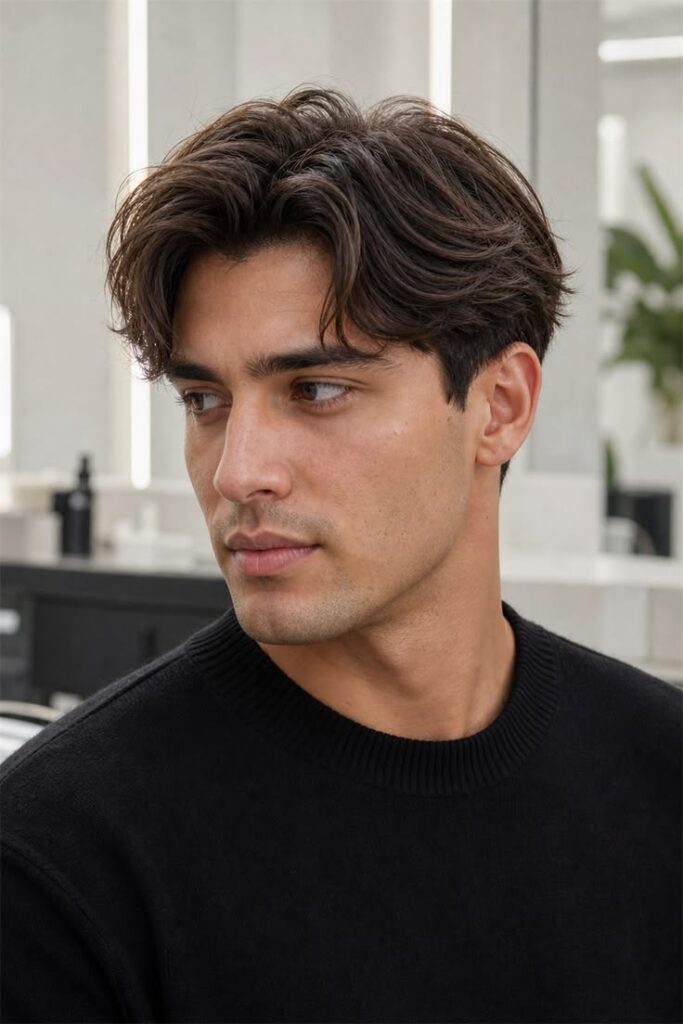
This style has become a favorite among barbers and clients alike for a few practical reasons:
| Reason | Why It Matters |
| Low maintenance | Grows out evenly, so touch-ups are needed less often than high fades |
| Versatile styling | Works slicked back, textured, or air-dried |
| Face-framing effect | Middle part highlights cheekbones and balances proportions |
| Works with most hair types | Straight, wavy, and curly hair all adapt well |
| Subtle, professional look | Doesn’t scream “fresh haircut” the way a skin fade can |
It’s also social-media friendly. The style photographs well because the part creates a clean line while the fade keeps everything tidy without looking severe.
Who does it suit best?
Almost anyone can wear a low taper fade middle part, but a few tweaks make it look even better depending on your features.
Learn more:Textured Fringe With Low Taper Fade: Complete Style Guide for Men
By face shape
| Face Shape | Best Approach |
| Oval | Nearly any variation works; classic middle part with medium top length |
| Round | Add more height on top to elongate the face |
| Square | Softer, textured top to balance strong jawlines |
| Heart | Keep sides close and let the part draw focus to the mid-face |
| Long | Avoid excessive height; keep top length moderate |
By hair texture
- Straight hair: Holds a crisp, defined part easily; may need light pomade to prevent flatness.
- Wavy hair: Adds natural texture to the part without much product.
- Curly hair: Works well with a slightly longer top; a curl cream helps define the part instead of a comb-heavy approach.
- Thick hair: Benefits from some thinning at the crown so the part doesn’t look bulky.
- Fine hair: A light matte product adds texture and prevents the style from looking too flat.
Types of low taper fade middle part styles
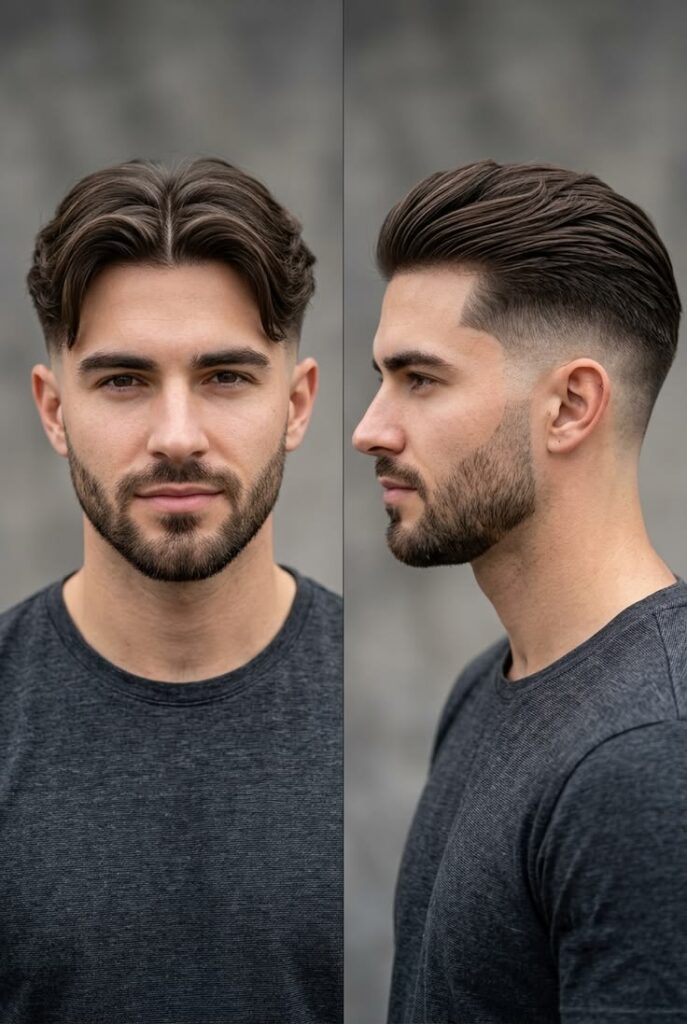
The base cut is flexible enough to support several variations:
- Classic low taper middle part – Even length on top, simple center part, minimal texture.
- Textured middle part – Point-cut ends for a choppier, more casual finish.
- Curly middle part fade – Longer curls on top left natural, low taper keeps sides clean.
- Middle part with burst fade – A rounded fade around the ear for a slightly edgier look.
- Slick back middle part – Top combed back and to the sides from a center part, styled with a stronger hold product.
- Middle part mullet-inspired flow – Slightly longer length at the back paired with the low taper and center part.
How it compares to other fades
Understanding how a low taper stacks up against other fade heights helps you decide if it’s the right pick.
| Fade Type | Fade Starting Point | Contrast Level | Maintenance Frequency |
| Low taper fade | Just above ears/neckline | Subtle | Every 4–6 weeks |
| Mid taper fade | Mid-way up the sides | Moderate | Every 3–4 weeks |
| High taper fade | Near the temple | High | Every 2–3 weeks |
| Skin/bald fade | Down to the skin at the base | Very high | Every 1–2 weeks |
A low taper is the best option for anyone who wants a clean look without the upkeep commitment of a high or skin fade.
How to ask your barber for it
Clear communication makes all the difference. Try saying something like:
- “I’d like a low taper fade, keep the blend close to my ears and neckline, not too high.”
- “Leave enough length on top for a middle part, roughly [X] inches.”
- “Keep my sideburns mostly intact.”
- Bring a reference photo, verbal descriptions can be interpreted differently by different barbers.
How much length you need on top
| Desired Look | Approx. Top Length |
| Short, textured part | 1.5–2 inches |
| Classic middle part | 2–3 inches |
| Flowing/longer part | 3–4+ inches |
Anything under 1.5 inches usually won’t hold a middle part well, since there isn’t enough weight to keep the hair in place.
How to style it at home
- Start with damp, towel-dried hair.
- Apply a small amount of styling cream, matte paste, or light pomade.
- Use a comb to create a clean, straight part down the middle.
- Blow-dry on a low-medium heat setting, brushing hair away from the part on each side.
- Finish with a light-hold spray if you want the part to stay put all day.
For curly or wavy hair, skip the comb and instead use fingers with a curl cream to encourage natural separation at the part.
Maintaining the cut
Keeping the style sharp doesn’t require constant barber visits, but a few habits help:
- Schedule a trim every 4–6 weeks to keep the taper crisp.
- Wash with a sulfate-free shampoo 2–3 times a week to avoid drying out styled hair.
- Use a lightweight conditioner to prevent frizz from disrupting the part.
- Trim split ends on top periodically, even if you’re not fading the sides yet.
Habits that trip people up
- Over-washing, which strips natural oils and makes hair harder to style.
- Using too much product, which weighs hair down and hides the part’s natural line.
- Skipping touch-ups, letting the taper grow out unevenly and lose its shape.
- Forcing a part on hair that’s too short, which won’t hold and looks patchy.
Picking the version that fits you
There’s no single “correct” way to wear a low taper fade middle part, the right version depends on your hair texture, face shape, and how much daily styling time you’re willing to invest. Someone with curly hair and an oval face has very different needs than someone with straight hair and a square jaw.
The best approach is to start with the classic version, test it for a few weeks, then adjust the top length, texture, or fade height based on what works for your routine. A quick conversation with your barber about your lifestyle will help you land on the variation that suits you best long-term.