


The mullet is back, but it doesn’t look like it did in 1985. Today’s version leans on a low taper fade to keep the sides clean while the back keeps its rebellious length, and the result is a haircut that works in a boardroom and a bar without missing a beat. It’s one of the most requested cuts at barbershops right now.
If you’re on the fence about whether this style suits your hair type, your face shape, or your lifestyle, this guide breaks down everything: the anatomy of the cut, the best variations, how to talk to your barber, and how to keep it looking sharp between visits. No fluff, just what you need to make the decision and pull it off.
What is a low taper fade mullet?
A low taper fade mullet is a modern twist on the classic mullet haircut, where the sides and back fade gradually starting low, usually just above the ear, instead of shaving high up the head. The top and back keep noticeable length, creating the mullet’s signature short-front, long-back silhouette, but the fade softens the whole thing so it never looks harsh or dated.
Unlike a high or mid fade mullet, the low taper barely touches the upper head, so the contrast between short and long is subtle. That’s exactly why it’s become the go-to choice for people who want the mullet’s attitude without the retro shock value.
The features that define the cut
A few core traits separate a real low taper fade mullet from a generic long haircut:
- Fade placement: starts around one to two centimeters above the ear and blends into the neckline.
- Top length: typically two to five inches, left long enough to texture, style, or comb back.
- Back length: noticeably longer than the sides, ranging from a slight two-inch drop to shoulder-length depending on preference.
- Gradual blend: no harsh lines between the faded sides and the longer hair on top; the transition should look seamless.
- Neckline shape: usually rounded or naturally tapered rather than squared off, which keeps the low-key vibe intact.
| Feature | Low Taper Fade Mullet | Traditional Mullet | High Fade Mullet |
| Fade start point | 1–2 cm above ear | No fade, blunt sides | Above the temple |
| Contrast level | Subtle | None | High |
| Everyday wearability | High | Low | Medium |
| Best for | Straight, wavy, curly hair | Thick, straight hair | Textured or curly hair |
| Maintenance frequency | Every 3–4 weeks | Every 5–6 weeks | Every 2–3 weeks |
Why choose a low taper fade mullet over other mullet styles?
The low taper version wins out for people who want versatility more than shock value. Because the fade sits so low, the haircut reads as a normal, professional trim from the front and only reveals the mullet’s flowing back when you turn your head. That makes it far easier to wear to work, school, or a formal event compared to a high-contrast mullet.
It also grows out more gracefully. A high fade needs frequent touch-ups to avoid looking patchy, while a low taper blends naturally as it grows, stretching the time between barber visits. On top of that, the subtle fade flatters more face shapes and hair textures than a shaved-high alternative, which is why barbers often recommend it as the safer entry point into mullet culture.
Learn more:Taper Low Burst Fade: Styles, Barber Tips, and a Complete Guide 2026
Best low taper fade mullet styles and variations
The low taper fade mullet isn’t a single haircut, it’s a framework you can customize. Here are five of the most popular variations barbers are cutting right now.
The textured crop mullet
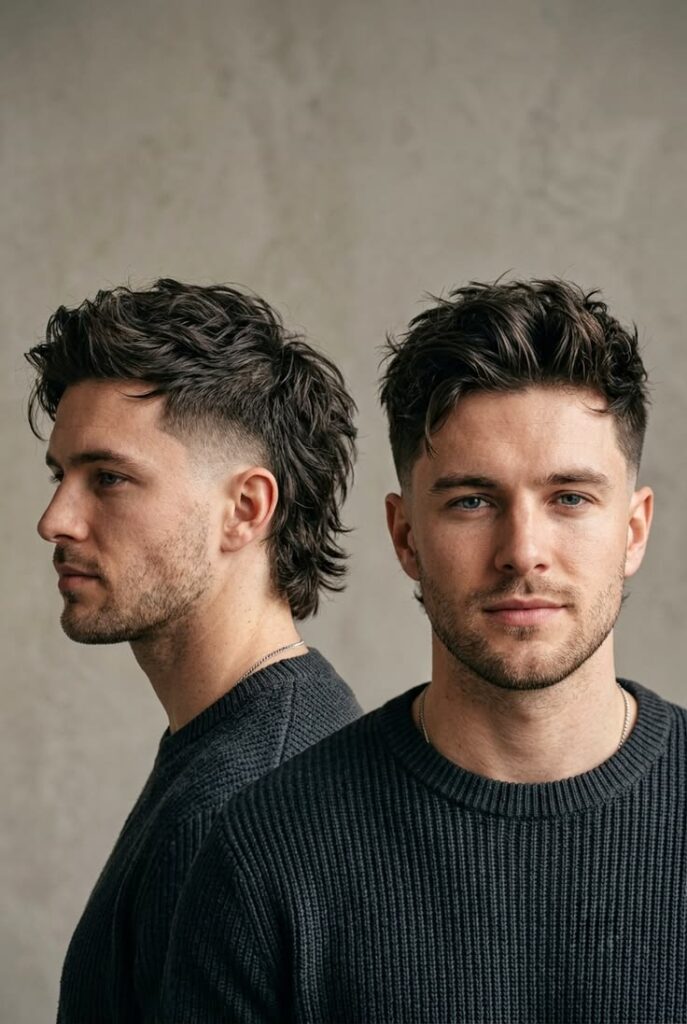
This version pairs a French crop-style fringe on top with a low taper fade and a moderately long back. The top is cut short enough to sit forward in choppy, textured pieces, giving a modern, effortless look that works well in an office setting while still keeping the mullet’s flair in the back.
The curly mullet fade

Built for natural curls or coils, this style lets the curl pattern do the work. The fade stays low and tight, while the top and back are left long enough for the curls to bounce and add volume. A curl-defining cream and a diffuser are usually all it takes to maintain the shape.
The slicked-back business mullet

Here the top is grown out and combed straight back with a light pomade, creating a sleek, polished front. The low fade keeps the sides tidy, and the length flows into the back for a look that reads as sharp and professional from every angle except behind.
The shaggy surfer mullet

This is the low-maintenance, tousled option. The top and back are layered unevenly and left to dry naturally or with a sea salt spray, giving that “just came from the beach” texture. The low fade keeps it from looking unkempt despite the relaxed styling.
The wolf cut hybrid

A mash-up of the mullet and the shag, the wolf cut hybrid adds heavy layering and volume throughout the crown while keeping the fade low and the back long. It’s especially popular with wavy and curly hair types because the layers amplify natural texture.
| Style Variation | Best Hair Type | Styling Effort | Vibe |
| Textured crop mullet | Straight, wavy | Medium | Modern, sharp |
| Curly mullet fade | Curly, coily | Low | Natural, fun |
| Slicked-back business mullet | Straight, thick | Medium-High | Polished, formal |
| Shaggy surfer mullet | Wavy, fine | Low | Relaxed, casual |
| Wolf cut hybrid | Wavy, curly | Medium | Edgy, textured |
Short vs. long: which length is right for you?
The length of the back is where a low taper fade mullet gets its personality, and it’s the biggest decision you’ll make with your barber. A shorter back (around two to four inches of drop) looks closer to a regular haircut and is easier to maintain, while a longer back (six inches or more) leans fully into the dramatic mullet silhouette.
Shorter lengths suit first-timers, professional settings, and anyone who doesn’t want to commit to a bold statement. Longer lengths suit people who already have some length to work with, want more styling versatility, and don’t mind a bit more upkeep. As a rule of thumb, start shorter if you’re unsure, since it’s much easier to grow the back out later than to fix an overly dramatic cut.
Low taper fade mullet for straight, wavy, curly, and thick hair
Hair type changes how the cut falls, how long it takes to style, and which variation will look best. Here’s how the low taper fade mullet adapts across textures.
Straight hair

Straight hair shows off the taper fade’s clean lines most clearly, and the back tends to lie flat, creating a sleek, defined mullet shape. It’s the easiest texture to style with a comb or brush and pairs well with the slicked-back or textured crop variations.
Wavy hair

Wavy hair adds natural movement and body to the back without extra effort, making it ideal for the shaggy surfer or wolf cut hybrid styles. A light sea salt spray enhances the wave pattern and keeps the style looking effortless.
Curly and coily hair

Curls add volume and shape on their own, so the mullet silhouette often looks fuller and rounder. Barbers usually cut curly hair slightly longer since shrinkage reduces the visible length, and a curl cream or diffuser helps maintain definition.
Thick and fine hair

Thick hair holds the mullet’s structure well and can carry more length without looking thin, while fine hair benefits from layering to create the illusion of volume. Fine-haired clients often do best with a shorter back to avoid the ends looking stringy.
Which face shapes suit a low taper fade mullet best?
The low taper fade mullet is genuinely one of the more face-shape-friendly cuts because the fade and length can both be adjusted to balance proportions.
| Face Shape | Recommended Adjustment |
| Oval | Nearly any version works; this shape has the most flexibility. |
| Round | Add height on top and keep the sides tight to elongate the face. |
| Square | Softer, textured layers on top balance a strong jawline. |
| Heart | Keep more width at the jaw-level back length to offset a narrower chin. |
| Long/Rectangular | Avoid excessive height on top; keep length balanced front to back. |
| Diamond | Textured fringe softens sharp cheekbones. |
How to ask your barber for the perfect low taper fade mullet
Walking in with the right vocabulary makes a huge difference in the result you walk out with. Use these pointers when you sit in the chair:
- Name the fade height clearly: say “low taper, starting about an inch above my ear,” not just “a fade.”
- Specify the guard numbers: most barbers use a #1 or #0.5 at the bottom blending into a #2 or #3 higher up.
- Give a length target for the back: in inches, or reference a photo, so there’s no guesswork.
- Mention your hair type: curly, wavy, straight, or thick hair all behave differently once cut.
- Ask for a gradual blend: request no visible line between the fade and the longer hair.
- Bring reference photos: even one or two images help align expectations before the clippers start.
How to style a low taper fade mullet at home, step by step
You don’t need a professional stylist to maintain the look day-to-day. Follow this routine:
- Start with damp hair. Towel-dry until it’s just damp, not soaking wet.
- Apply the right product. Use a texturizing cream or sea salt spray for wavy and curly types, or a light pomade for straight hair.
- Work product through the back first. This is where most of the styling and definition happens.
- Shape the top. Comb straight back for a polished look, or use fingers to push it forward for a textured, messy finish.
- Blow-dry on low heat if needed. A diffuser attachment works best for curly and wavy textures.
- Set with a light-hold spray. This keeps the shape intact without making it stiff or crunchy.
How often should you trim and maintain it?
A low taper fade mullet needs more frequent attention at the sides than the back, since the fade grows out faster than the long length does. Most people should get the fade refreshed every three to four weeks to keep the blend clean, while the back can go six to eight weeks between trims if you’re growing it out.
Between visits, wash with a moisturizing shampoo two to three times a week, avoid over-washing which dries out styling products’ effectiveness, and use a light trim of split ends if the back starts looking uneven. Regular maintenance is what keeps this cut looking intentional rather than simply “grown out.”
Frequently Asked Questions
Does a low taper fade mullet work for thinning hair?
Yes, keeping the back shorter and adding layers on top can create the illusion of fuller, thicker hair even as it thins.
How long does it take to grow out a low taper fade mullet?
Most people need three to six months of growth before the back reaches a noticeably long mullet length.
Is a low taper fade mullet hard to maintain?
Not particularly; it needs a fade touch-up every three to four weeks but is otherwise as low-maintenance as any medium-length haircut.
Can I get a low taper fade mullet with a beard?
Absolutely, a well-groomed beard actually balances the longer back and adds to the overall polished look.
Does this haircut work for older men?
Yes, especially the shorter, business-friendly variations, which read as modern rather than retro.
Final Thoughts
The low taper fade mullet earns its popularity by solving a real problem: it lets you enjoy the mullet’s bold personality without sacrificing a clean, professional look. Whether your hair is straight, curly, thick, or fine, there’s a version of this cut built for your texture, your face shape, and your lifestyle.
The key to nailing it is communication with your barber and consistent upkeep between visits. Get the fade height and back length right from the start, stick to a simple styling routine, and this haircut will reward you with versatility that few other cuts can match.