

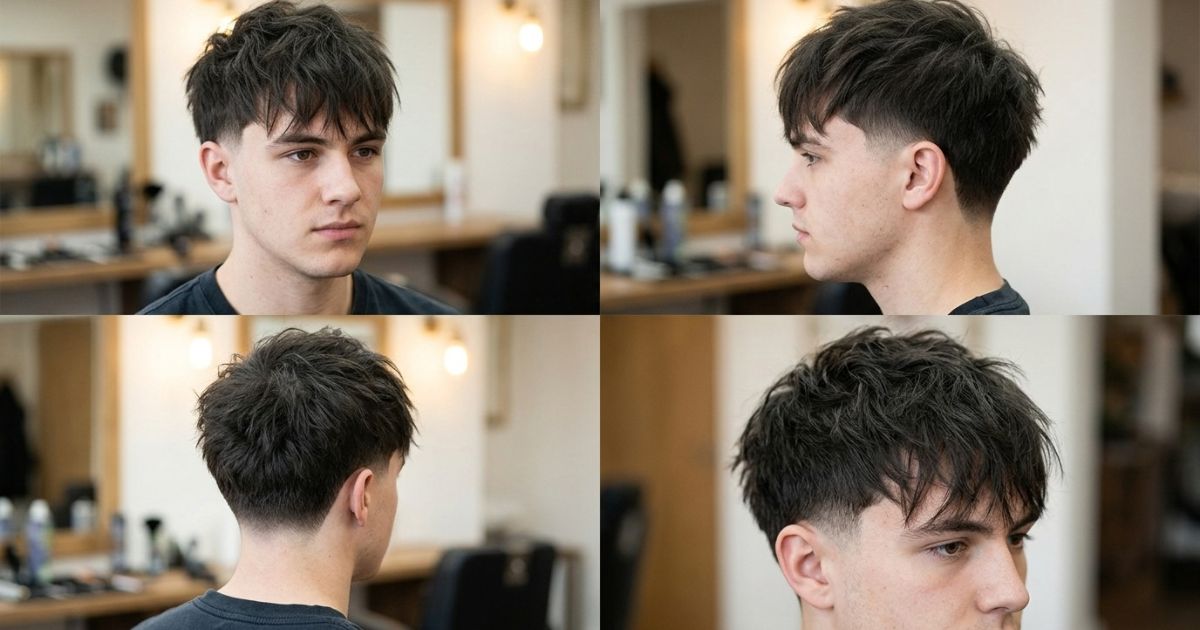
The low taper fade with textured fringe is one of the cleanest ways to look sharp without looking stiff. The sides stay neat, the top stays relaxed, and the whole cut works at the office, the gym, and on weekends.
This guide covers what the cut is, its best variations, and how to ask your barber for it. You’ll also learn how to style it at home, how often to trim it, and who it suits, so you leave the chair confident.
What Is a Low Taper Fade Textured Fringe?
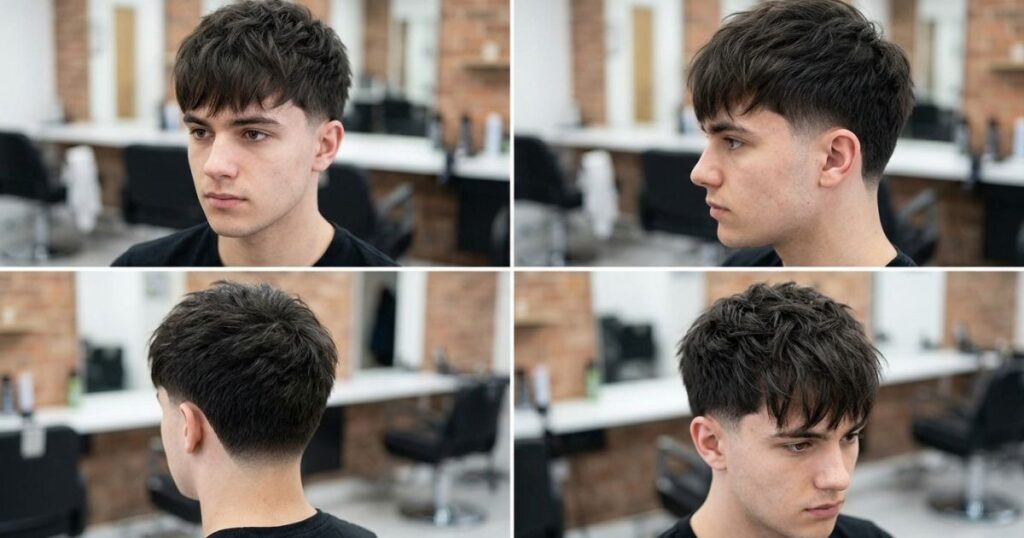
A low taper fade textured fringe pairs two things. The first is a subtle taper that starts low, around the sideburns, ears, and neckline. The second is a top section with choppy, piecey length that falls forward onto the forehead.
The taper is soft rather than dramatic. Hair shortens gradually toward the skin at the edges, but the sides keep their shape higher up. The fringe is cut with texture, using point cutting, razor work, or thinning shears, so it separates instead of lying flat.
Quick definition: A low taper fade textured fringe is a haircut with a gentle fade at the lower hairline and a forward-styled, layered top with visible separation.
Low Taper vs. Other Fades
| Feature | Low Taper | Mid Fade | High Fade |
| Starting point | Around ears and neckline | Mid-temple level | High on the temple |
| Contrast | Subtle | Moderate | Bold |
| Grow-out look | Gradual | Noticeable | Very noticeable |
| Office-friendly | Very | Yes | Depends on workplace |
| Best for | Natural, polished looks | Balanced, modern looks | Sharp, high-contrast looks |
Learn more:Burst Fade Design: Best Hair Design Ideas, Placement, and Barber Tips (2026)
Why This Style Became So Popular
Several practical reasons explain why this cut keeps appearing in barbershops:
- It’s versatile. It looks fine in a suit and in a hoodie.
- It’s forgiving. The low taper grows out more gracefully than a skin fade.
- It’s quick to style. Most people need two or three minutes and a small amount of product.
- It’s customizable. Fringe length, texture level, and taper tightness can all be adjusted.
- It suits the shift toward natural hair. Men increasingly want movement and texture, not slicked-back rigidity.
Social media also helped. The cut photographs well from every angle, so barbers and clients share it constantly.
Variations of the Low Taper Fade with Textured Fringe
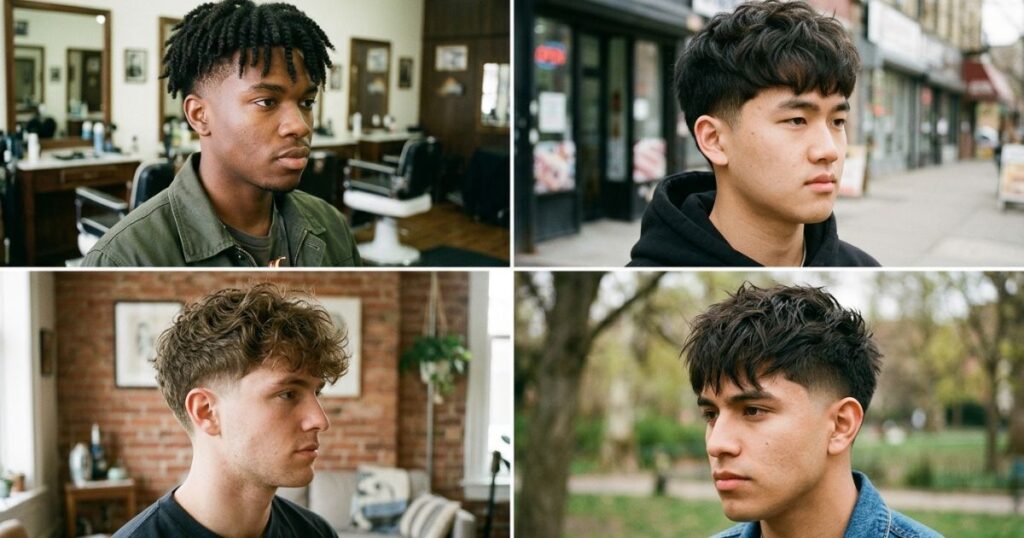
Here is how the five main versions compare.
| Variation | Fringe Length | Best Hair Type | Styling Effort |
| Short Textured Fringe | About 1–2 inches | Straight to wavy | Low |
| Wavy Fringe with Low Taper | 2–3 inches | Wavy | Low to medium |
| Curly Fringe Low Taper | 2–4 inches | Curly and coily | Medium |
| Messy Textured Fringe | 2–3 inches | Thick, straight, wavy | Low |
| Layered Fringe with Low Taper | 3+ inches | Medium to thick | Medium |
Short Textured Fringe
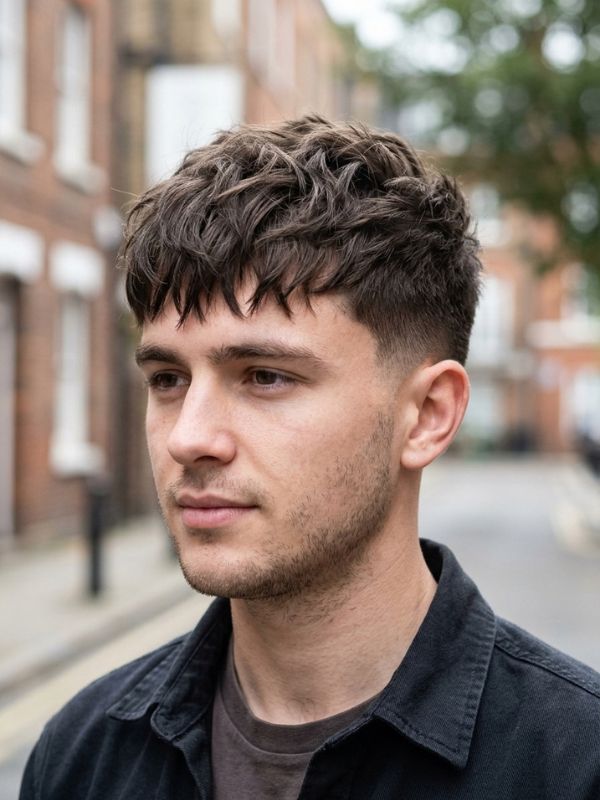
This is the easiest version to live with. The top is kept short, with light layers that stop just above the eyebrows. It suits busy mornings and people who want a neat, low-effort cut.
Wavy Fringe with Low Taper
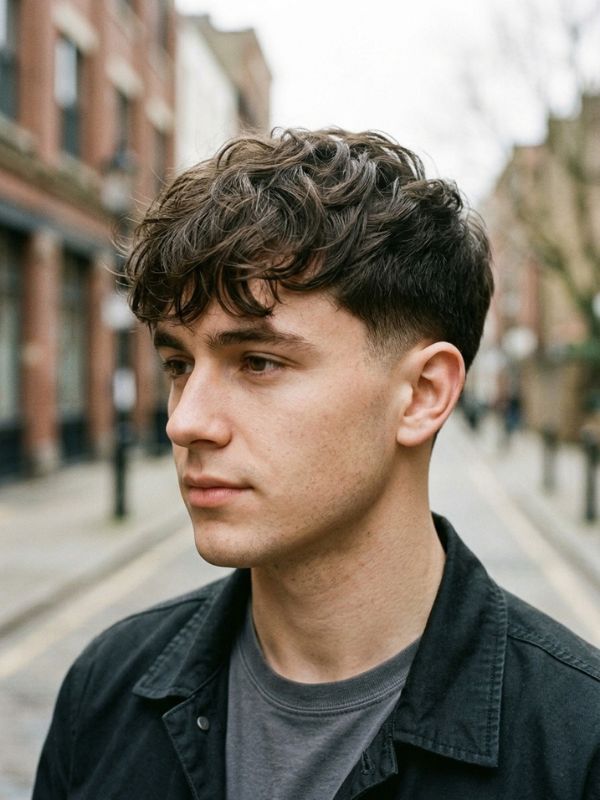
Here the barber works with your natural wave pattern instead of fighting it. Some weight is removed so the waves sit in loose, separated pieces. Leave a little extra length, because waves shrink when they dry.
Curly Fringe Low Taper
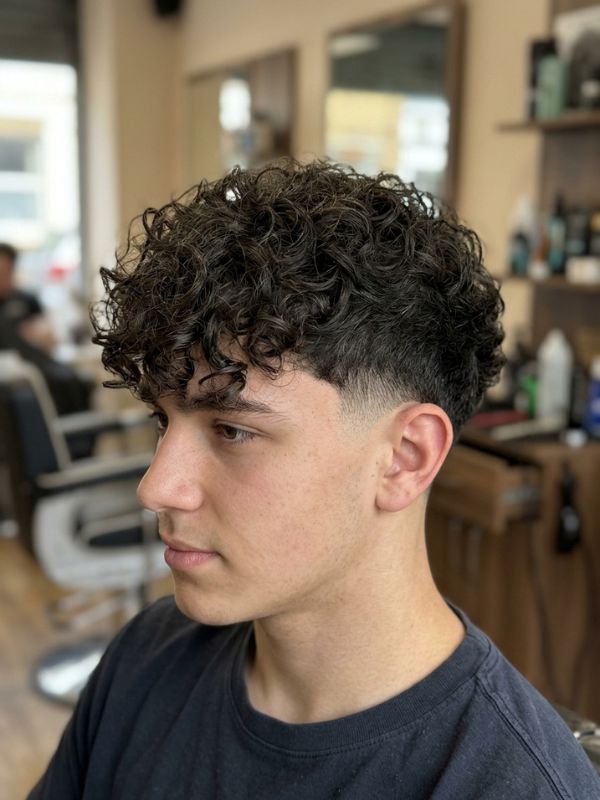
Curls create texture without any effort, so the focus is on shape. A good barber cuts curly hair mostly dry or slightly damp to see how each curl falls. The low taper keeps the sides tidy and stops the head from looking top-heavy.
Messy Textured Fringe

This version has a deliberate, undone look. The ends are heavily chopped, and the styling is more about scrunching than combing. It works best on thick hair that already has some body.
Layered Fringe with Low Taper
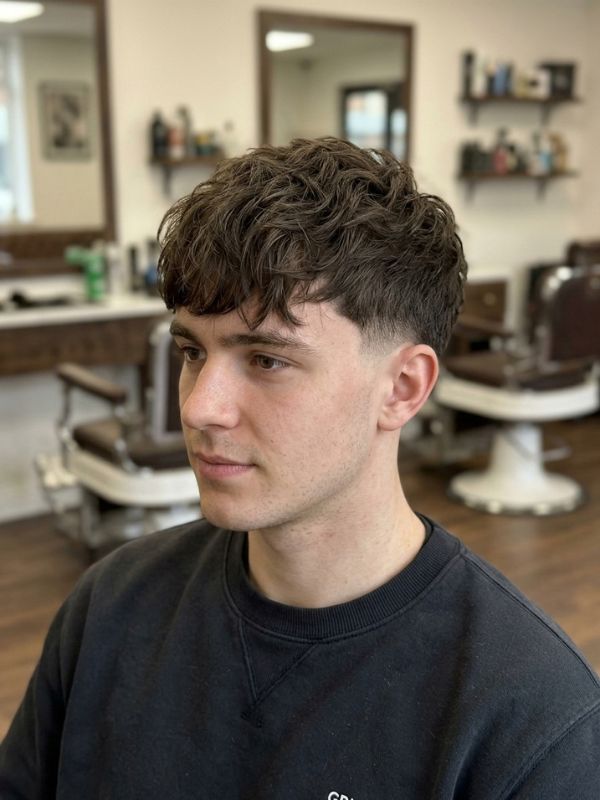
Longer layers add movement and depth. The fringe can be swept to the side or pushed slightly forward. It takes more styling than the others, but it gives the most dimension.
How Your Barber Creates This Haircut
Most barbers follow roughly the same sequence:
- Consultation. They check your hair type, growth patterns, and cowlicks.
- Sides and back. Clippers with guards, often starting around a #1 or #2 at the lowest point, blend upward into longer hair.
- Blending. A shorter guard or clipper-over-comb finishes the transition so there are no harsh lines.
- Top and fringe. Scissors and point cutting add texture and remove bulk.
- Detailing. The neckline and edges around the ears are cleaned up.
- Styling. A small amount of product shows you how the finished cut behaves.
Guard numbers vary between barbers and clippers, so treat these figures as starting points.
What to Say to Your Barber
Clear language prevents most bad haircuts. Try this script:
“I’d like a low taper fade on the sides and back, starting around the ears. Keep the top longer with a textured fringe, cut with scissors or point cutting, not blunt.”
Then cover the details below.
| What to Specify | Example Phrase |
| Taper height | “Start the taper low, below the ears.” |
| Contrast | “I want it subtle, not a skin fade.” |
| Fringe length | “Let it sit about an inch above my brows.” |
| Texture level | “Lots of texture, but not too choppy.” |
| Neckline | “Natural neckline, no hard square edge.” |
Bring a photo if you can. It removes most of the guesswork.
How to Style a Low Taper Fade Textured Fringe at Home
Good styling takes about three minutes. Follow these steps:
- Wash and towel-dry. Leave the hair slightly damp, not dripping.
- Apply a pre-styler. Use a sea salt spray or light mousse for grip and volume.
- Blow-dry forward. Use medium heat and your fingers to lift the roots and push the fringe forward.
- Warm the product. Rub a pea-sized amount between your palms until it disappears.
- Work it through. Use your fingertips, not a comb, so the pieces stay separated.
- Shape the fringe. Twist or pinch the ends for definition.
- Set it. A light mist of flexible hairspray helps in humid weather.
Choosing a Product
| Product | Finish | Hold | Best For |
| Matte clay | Matte | Medium to strong | Thick hair, messy looks |
| Texture paste | Natural | Medium | Most hair types |
| Sea salt spray | Matte, grainy | Light | Fine hair, wavy hair |
| Curl cream | Soft shine | Light to medium | Curly hair |
| Pomade (light) | Slight shine | Medium | Neater, polished versions |
Tip: Start with less product than you think you need. You can always add more, but heavy product weighs the fringe down.
Maintenance and Hair Care
Barber Visits
The low taper looks fresh for a few weeks, but the edges soften as hair grows. Here’s a practical schedule.
| Goal | Visit Every |
| Keep the taper sharp | 2–3 weeks |
| Balanced upkeep | 3–4 weeks |
| Relaxed grow-out | 5–6 weeks (neckline tidy-up in between) |
Many barbers offer quick neckline cleanups between full cuts. Ask about it.
At-Home Care
- Shampoo two to four times a week, depending on how oily your scalp gets.
- Condition the lengths, especially if your hair is wavy or curly.
- Use heat protectant if you blow-dry regularly.
- Wash your hands before styling to avoid transferring oil or old product.
- Avoid heavy waxes. They can clump texture and are harder to wash out.
- Trim split ends at your regular cut, since they make fringes look frizzy.
Who This Haircut Suits Best
It suits most people, but small adjustments help the cut sit better on your features.
Face Shapes
| Face Shape | Recommended Adjustment |
| Oval | Almost any version works. |
| Round | Add height on top, keep the taper tight to add structure. |
| Square | A softer, side-swept fringe balances a strong jaw. |
| Oblong | Keep the fringe longer and fuller so the forehead looks shorter. |
| Heart | Choose medium length and avoid heavy volume at the top. |
| Diamond | Push the fringe forward to soften the cheekbones. |
Hair Types
| Hair Type | What Works | Watch Out For |
| Straight | Texture spray, point cutting | Falling flat without product |
| Wavy | Medium length, light cream | Frizz in humidity |
| Curly | Slightly longer top, curl cream | Cutting too short |
| Coily | Soft shaping, moisture-rich products | Dryness and breakage |
| Fine or thin | Light layers, sea salt spray | Heavy products |
| Thick | Thinning shears, strong clay | Bulk and puffiness |
If you have a receding hairline or thinning at the temples, a slightly longer fringe can help, and a good barber will adjust the cut.
The Style’s Journey and What’s Ahead
Tapered sides go back many decades. Early versions were common in classic short cuts, with the taper blending hair down to the neck. Fades became far more dramatic in the 1980s and 1990s, then went mainstream in the 2010s.
The textured fringe took over from the slick side part as people moved toward natural, lived-in styles. The low taper became the polished anchor for that looser top.
Looking ahead to 2026, expect these trends:
- Softer tapers with less contrast.
- Longer, more natural fringes that show off waves and curls.
- More personalised cuts, tailored to hair density and growth patterns.
- Low-product routines, with lighter creams and sprays.
Haircut trends move on, but this style is built on a flexible structure, so it adapts well.
Low Taper Fade Textured Fringe: Asked Questions
What is a low taper fade textured fringe?
It’s a haircut with a soft fade at the lower hairline and a layered, forward-styled top.
Is a low taper the same as a skin fade?
No. A low taper is subtler and keeps more hair, while a skin fade goes down to bare skin.
How long should my hair be on top?
Roughly 2–4 inches works for most versions, depending on hair type.
How do I make my fringe look textured?
Use a texture paste or clay on slightly damp hair and separate the pieces with your fingers.
How often should I get a trim?
Every 3–4 weeks for most people, or every 2–3 weeks if you want a crisp taper.
Conclusion
The low taper fade with textured fringe works because it balances neat and natural. The taper gives structure, and the fringe gives personality. With the right barber instructions, a simple product routine, and regular trims, it stays easy to manage.
Choose the variation that matches your hair type and face shape, and take a reference photo to your appointment. Small tweaks to fringe length or taper height can make a big difference. Done well, it’s a cut that stays in style.