

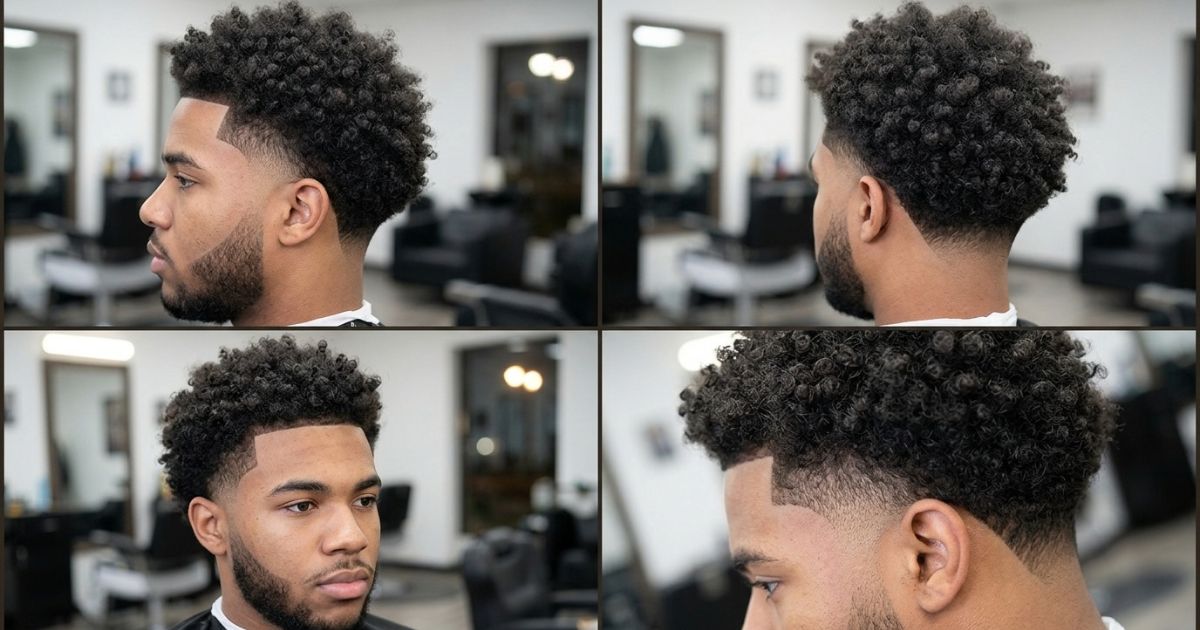
burst fade for curly hair sweeps in a rounded arc around the ear and blends into the curls above it. On curly hair, that curve removes side bulk without flattening your texture. It is why waves, curls, and coils all take this cut so well, and why barbers get asked for it constantly.
This guide helps you decide whether it suits you, choose a height and style, and speak confidently in the chair. You will also get a copy-ready barber script, daily styling steps, care tips, grow-out advice, and fixes for common problems. Everything here is practical and easy to follow.
What is a burst fade on curly hair?
A burst fade is a fade that follows a curved path around and behind the ear instead of running straight down the side of the head. The hair gets shorter toward the ear and nape, then the curve fades out. Your curls stay on top, at full or trimmed length.
The key point: “burst” describes the shape of the fade, not how short it goes. The same arc can end at bare skin or stop at a soft shadow.
Which parts of the haircut can be customized?
Six choices change how a burst fade looks. Name each one to your barber instead of relying on a single photo.
| Choice | What you decide |
| Fade height | Where the arc starts: low, mid, or high |
| Finish | Skin, zero, shadow, or a guard length at the shortest point |
| Arc width | A tight curve or a wider, softer sweep |
| Side weight | How much hair stays directly above the fade |
| Top shape | Cropped curls, fringe, rounded top, or extra volume |
| Back and neckline | Natural, tapered, or left long |
Why does the burst shape work with curls?
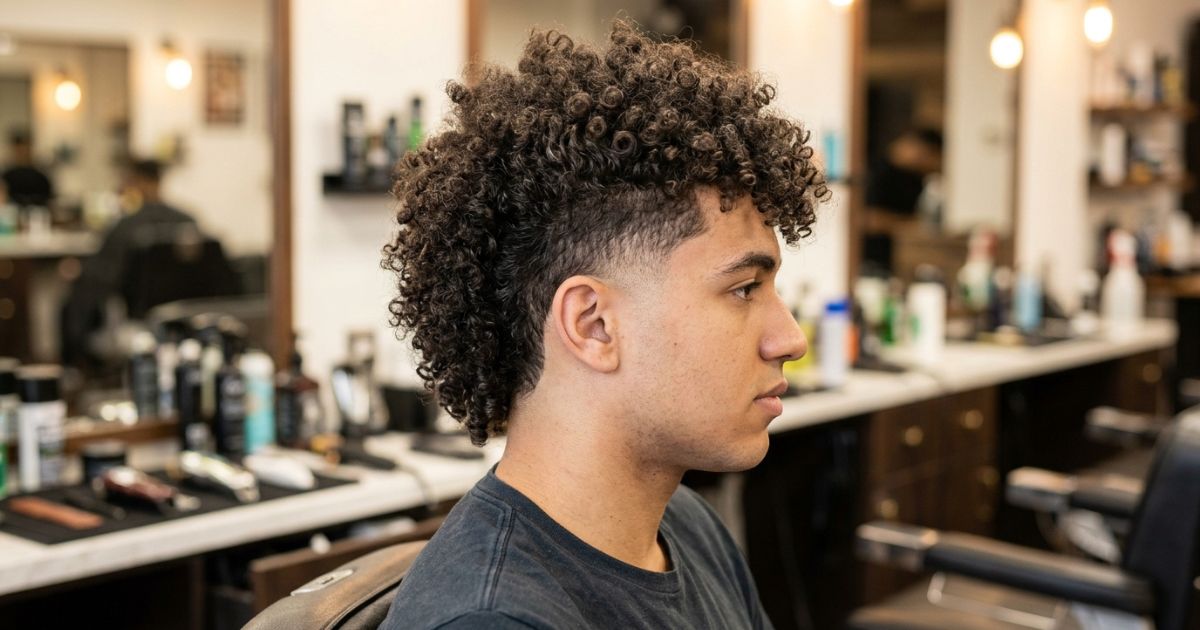
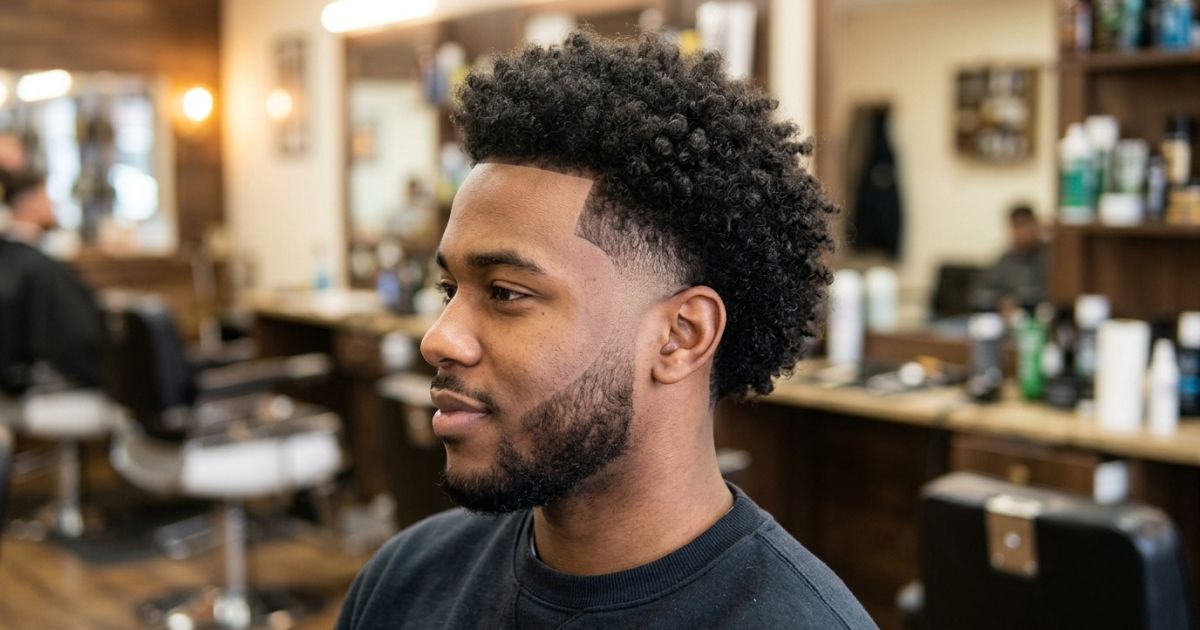
The arc takes weight out around the ears, where curly hair tends to puff outward. The rest of the side keeps its shape, so the top still looks full and defined.
It also adapts easily. You can go subtle for work or bold for a statement, using the same basic curve. That flexibility is why it works across loose waves and tight coils.
Will a burst fade suit your curls?
Most curl types can wear it. Waves, spirals, and coils all work if the barber adjusts height, side weight, and finish to match your hair. Treat suitability as a set of adjustable variables, not a yes-or-no answer.
What hair factors matter most?
Curl pattern matters less than how your hair actually behaves.
| Factor | How it affects the cut |
| Density | Thick hair holds a wider or higher arc; thin hair needs more weight left in |
| Strand thickness | Fine strands show scalp sooner at the same length |
| Shrinkage | Dry curls sit much shorter than stretched or wet curls, so tops are left longer |
| Growth direction | Crowns and cowlicks decide where the fade can blend cleanly |
Ask your barber to check your hair dry before cutting. That one step prevents the most common surprise, a top that ends up shorter than expected once it springs back.
What face, head-shape, and lifestyle factors matter?
Head shape and upkeep habits count for more than strict face-shape rules. A higher or wider arc adds contrast and visual height. A lower, softer one is easier to live with between appointments.
Think about:
- Crown and back-of-head shape
- How long you want the neckline
- Whether you prefer a subtle or statement look
- How often you can visit the barber
- School or workplace grooming rules
- Skin sensitivity around the ears and nape
Learn more:Low Taper Fade with Textured Fringe: Styles, Tips & Barber Guide
Should you choose a low, mid, or high burst fade?
Height describes where the fade starts on the side of your head. It does not tell you how short the hair ends up.
| Low burst | Mid burst | High burst | |
| Starts | Close to the ear | Midway up the side | Near the top of the head |
| Contrast | Subtle | Balanced | Strong |
| Side weight kept | Most | Moderate | Least |
| Grow-out | Softest | Moderate | Most visible |
| Best for | Easy upkeep, conservative settings | Everyday versatility | Bold, high-volume looks |
If you are unsure, start with mid. Go lower for a gentler transition and an easier grow-out. Go higher when you want the fade itself to be part of the look.
Which curly burst fade style should you show your barber?
Choose by silhouette, retained length, and finish. Style names vary between barbers, so bring a side photo and a back photo.
Which options look subtle and grow out softly?
These keep more hair around the ear, so the cut still looks neat weeks later.
Low shadow burst fade
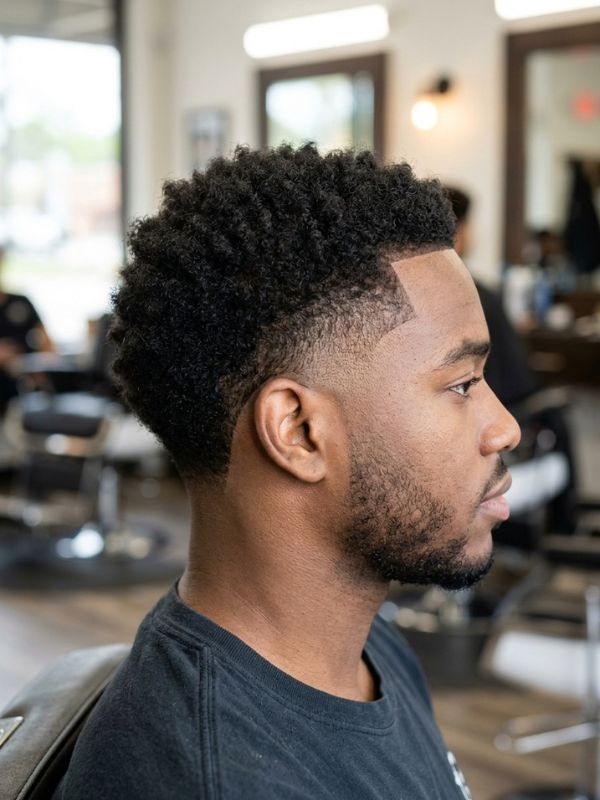
The arc sits close to the ear and ends in very short stubble instead of bare skin. It looks clean without a harsh line, and regrowth is hard to spot.
Low burst fade with short curls or cropped coils
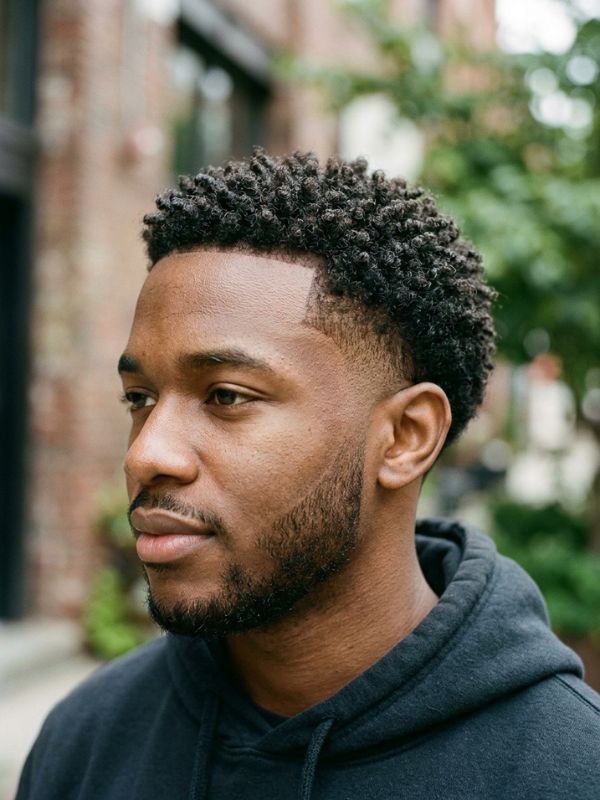
Short curls on top keep the shape compact. Upkeep is mostly about trimming the top, since the low fade changes slowly.
Low burst fade with a natural or tapered neckline
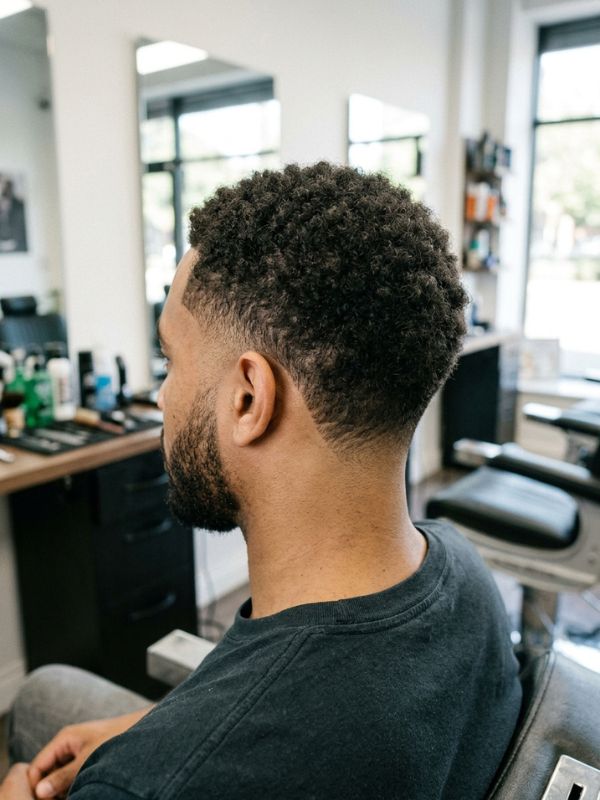
The nape is left natural or lightly tapered instead of cut square. With no hard edge to maintain, the outline grows out gracefully.
Which options balance contrast and everyday versatility?
Mid-height cuts show clear definition without demanding constant visits.
Mid burst fade with defined curls or coils
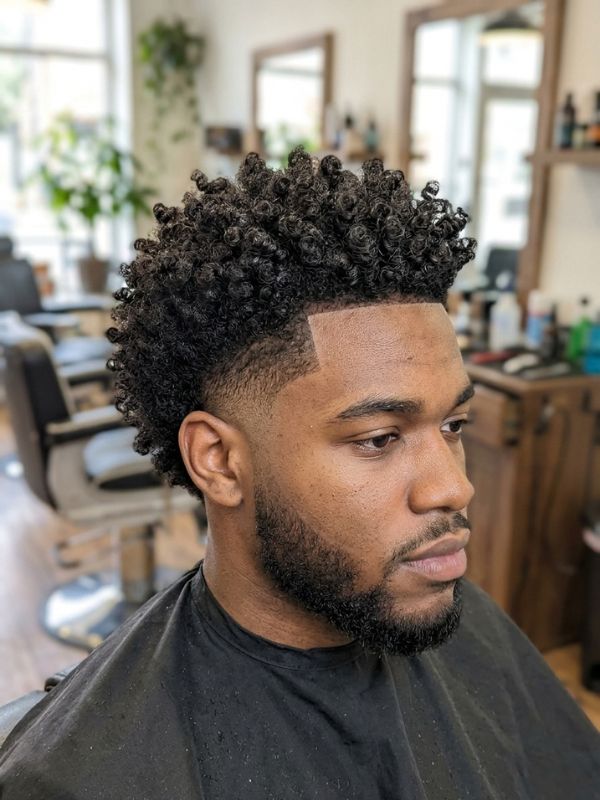
Texture does the work here. The fade frames your curls, and the contrast comes from curl pattern as much as length. It is a dependable all-rounder.
Burst fade with curly fringe
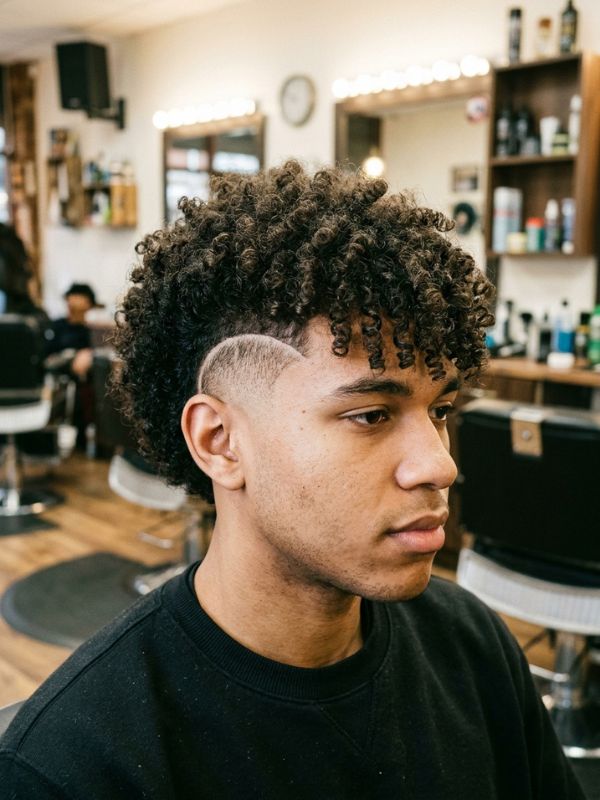
Leave the front long enough to fall forward over the forehead. The fade keeps the sides tidy so the fringe stands out.
Mid burst fade with a rounded curly top
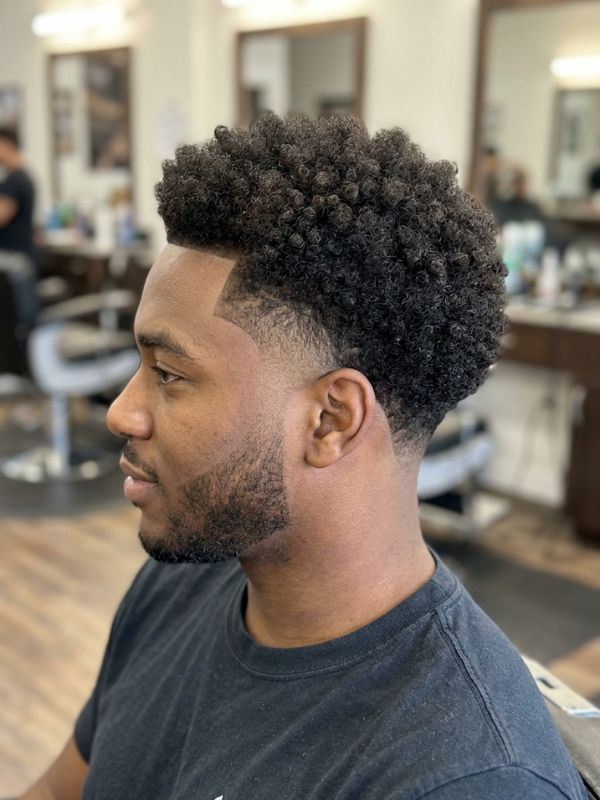
The top is shaped into an even dome instead of pushed in one direction. It suits many density levels and styles easily.
Which options preserve length and make a bolder statement?
These rely on a higher arc or deliberate length. The back view matters most, so bring a rear photo.
High burst fade with volume
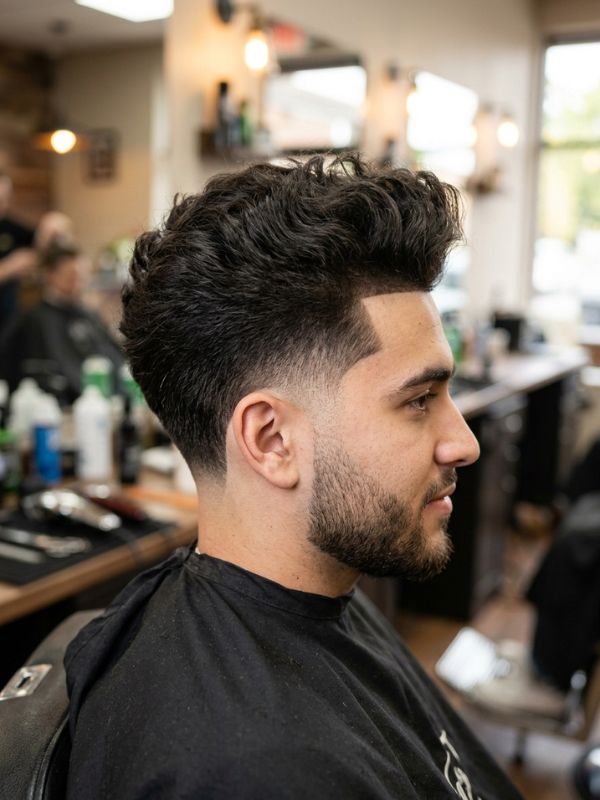
A higher arc removes more side weight, so the curls on top look bigger. Regrowth shows sooner, so expect more frequent clean-ups.
Curly burst-fade mullet
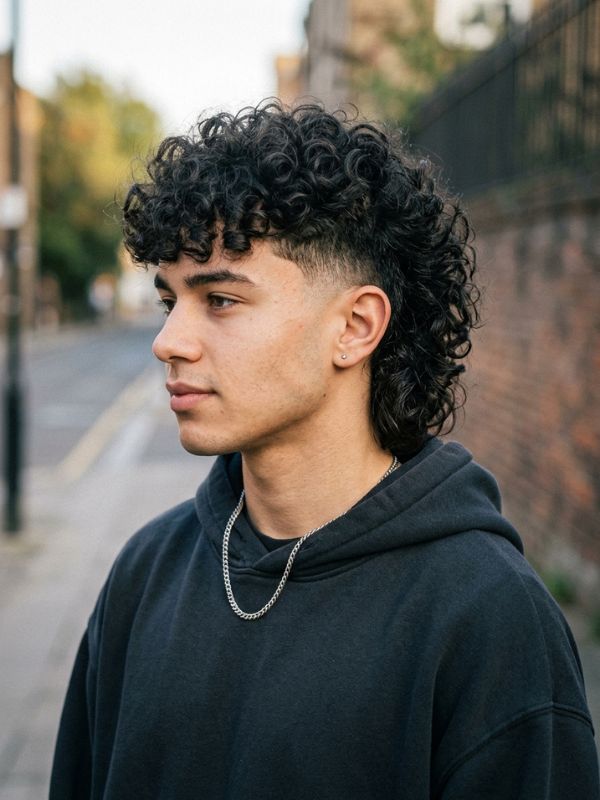
Sides are faded short while the back stays noticeably longer. The contrast between the tight arc and the flowing back is the whole point.
Curly frohawk or mohawk
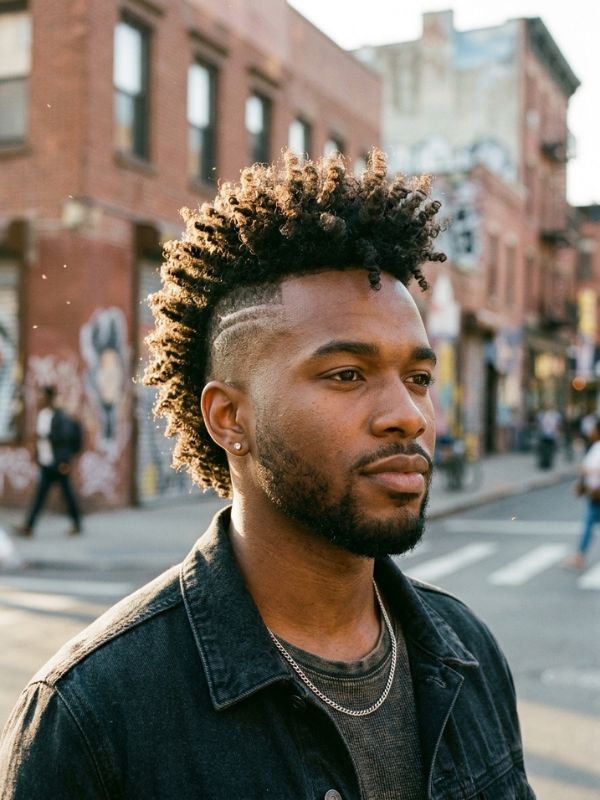
Sides are faded close, and a central strip of curls is left longer and styled upward. It puts all the volume down the middle of the head.
Burst fade vs drop fade vs taper: what is the difference?
A burst fade is a localized arc around the ear. A drop fade curves downward behind the ear toward the nape. A taper keeps more length and limits shortening to the edges. Barbers use these terms slightly differently, so confirm with a photo.
| Burst fade | Drop fade | Taper | |
|---|---|---|---|
| Path | Rounded arc around the ear | Curve dropping toward the nape | Short graduation at edges only |
| Contrast | Sharp but localized | Moderate to high | Soft |
| Back | Blends into a short or natural nape | Line continues into the back | Neckline lightly shortened |
| Grow-out | Arc softens at the edges | Line blurs gradually | Barely noticeable |
Remember that skin, zero, or shadow describe the finish. Any of these three paths can use any finish, so state both.
How do you ask your barber for a curly burst fade?
Describe the six variables, show side and back photos, and ask the barber to assess your curls dry. Guard numbers only describe clipper length. They say nothing about how your hair springs up once it dries.
Which six decisions should you make first?
- Height: low, mid, or high
- Finish: skin, zero, shadow, or guarded
- Arc width: tight or wide
- Side weight: how much stays above the fade
- Top: the dry length and shape you want
- Back and neckline: natural, tapered, or longer
What should your barber brief and reference photos include?
Bring one side photo and one back photo that match what you want. Say what to keep as clearly as what to remove. Mention your shrinkage and any cowlicks.
Try this script, filling in the brackets:
“I’d like a [low/mid/high] burst fade curving around my ear, finished at [skin/zero/shadow]. Please keep [amount] of weight above the arc and leave the top at about [length when dry]. I’d like the back [natural/tapered/longer]. My hair shrinks a lot when it dries, so please plan for that and for how my crown grows.”
Add a note on anything in the photo you do not want copied.
How should you style a curly burst fade?
Work with damp hair and a light touch. Re-wet the curls, add leave-in conditioner or curl cream, shape by hand, and let them dry. The right amount of product depends on your density. Fine curls need less, or they flatten.
What is the fastest daily styling routine?
- Mist your hair with water until the curls loosen and reform.
- Apply a small amount of leave-in or cream through the lengths.
- Scrunch or finger-coil to restore the curl pattern.
- Position your fringe or top.
- Air-dry, or diffuse on low heat without touching the curls.
Want more height instead of definition? A round brush and blow-dryer will stretch and lift the top.
How do you care for curly hair between cuts?
Protect moisture, reduce friction, and keep your scalp clean. You rarely need to wash curly hair daily. Dermatology guidance generally suggests washing as needed, but not leaving it too long, since scalp health matters too.
What should wash-day care include?
- Use a clarifying shampoo occasionally if you use gel, oil, or pomade regularly.
- Follow with a moisturizing conditioner on all your hair, not just the ends.
- Detangle while conditioner is in, using fingers or a wide-tooth comb.
- Wash thick or long hair in sections to cut down on knots.
- Finish with leave-in conditioner to lock in moisture.
How should you protect curls overnight?
Reduce rubbing against the pillow. If your hair is long enough, gather it in a loose “pineapple” on top of your head. A satin or silk pillowcase, bonnet, or scarf also helps. Very short curls only need a light mist of water in the morning.
How often should you refresh a curly burst fade?
Most people refresh every two to four weeks, but it depends on growth speed and finish. A skin finish shows regrowth sooner than a shadow finish. A high arc shows it sooner than a low one. Tidying the fade is also a separate job from reshaping the curls on top.
What signals matter more than a fixed calendar?
Book a refresh when:
- The arc no longer looks like a clean curve
- Contrast between the sides and top has faded
- The neckline has drifted
- Your top feels unbalanced
- Styling takes noticeably longer than usual
How do you grow out a curly burst fade cleanly?
Soften contrast gradually rather than letting it grow unevenly.
- Switch a skin finish to shadow.
- Lower a high arc one step at a time.
- Stop widening the arc so side weight can rebuild.
- Ask for light shaping every few weeks.
- Move toward a taper, curly crop, or longer all-over shape.
The added length gives you a natural path into a softer cut without an awkward in-between phase.
What can go wrong, and how do you fix it?
Most problems come from an arc that is too high or wide, too little side weight, ignoring shrinkage, or heavy products.
Which haircut or styling mistakes are most common?
| Mistake | Fix |
| Arc cut too high or wide | Ask for a lower, narrower arc next time; let it grow back in stages |
| Top cut while stretched | Have the barber judge the length on dry, natural curls |
| Ignoring crown or cowlick | Point it out at the start so the blend works with it |
| Too much product | Use less, and switch to a lighter cream or leave-in |
| Brushing dry curls | Detangle wet with conditioner to limit breakage and frizz |
When should irritation or bumps change the plan?
Occasional razor bumps are common after a close cut. Painful, persistent, or scarring bumps at the nape are different. Dermatology guidance on acne keloidalis nuchae advises avoiding very short cuts and close shaving in the affected area. If you notice this, see a doctor or dermatologist, and ask your barber for a longer, razor-free nape.
What are the best alternatives to a curly burst fade?
| Alternative | What it does | Choose it when |
| Low taper | Shortens only the edges near the ears and neck | You want neat, not dramatic |
| Drop fade | Curve continues down toward the nape | You want the fade to wrap the back |
| Temple fade | Shortens only the temple area | You want to keep nearly all side length |
| Scissor taper | Blends with scissors, no clipper line | You want the softest grow-out |
Curly burst fade FAQs
Does a burst fade have to go down to skin?
No. “Burst” describes the curve, not the finish. You can pair it with skin, zero, shadow, or a guard length.
How long should curly hair be on top?
There is no fixed length. Leave enough, after shrinkage, to form your chosen shape, and ask your barber to judge it dry.
Can a burst fade work on waves and tight coils?
Yes. The barber adjusts height, side weight, and top length to suit your pattern.
Is a curly burst fade appropriate for work or school?
It can be, especially a low or shadow version with a tidy neckline. Check your dress code first.
Can fine or low-density curls wear it?
Yes, with enough weight kept above the arc and a lower, softer finish. Avoid copying photos of thicker hair.
Does it have to be paired with a mullet?
No. A mullet is just one option; short curls, fringes, and frohawks use the same arc.
How often do I need a refresh?
Typically every two to four weeks, sooner for skin finishes and high arcs.
What products work best for styling?
Light leave-in conditioners and curl creams suit most patterns. Use less on fine curls.
Conclusion
A burst fade for curly hair comes down to three choices: the fade height, the finish, and the length you keep on top and at the back. Make those decisions before you book, and the cut will fit your texture instead of fighting it.
Bring a side photo, a back photo, and the barber script above. Mention your shrinkage and growth direction, then ask for a dry-hair check. With simple daily styling and steady care, your curls and your fade will keep looking sharp.