

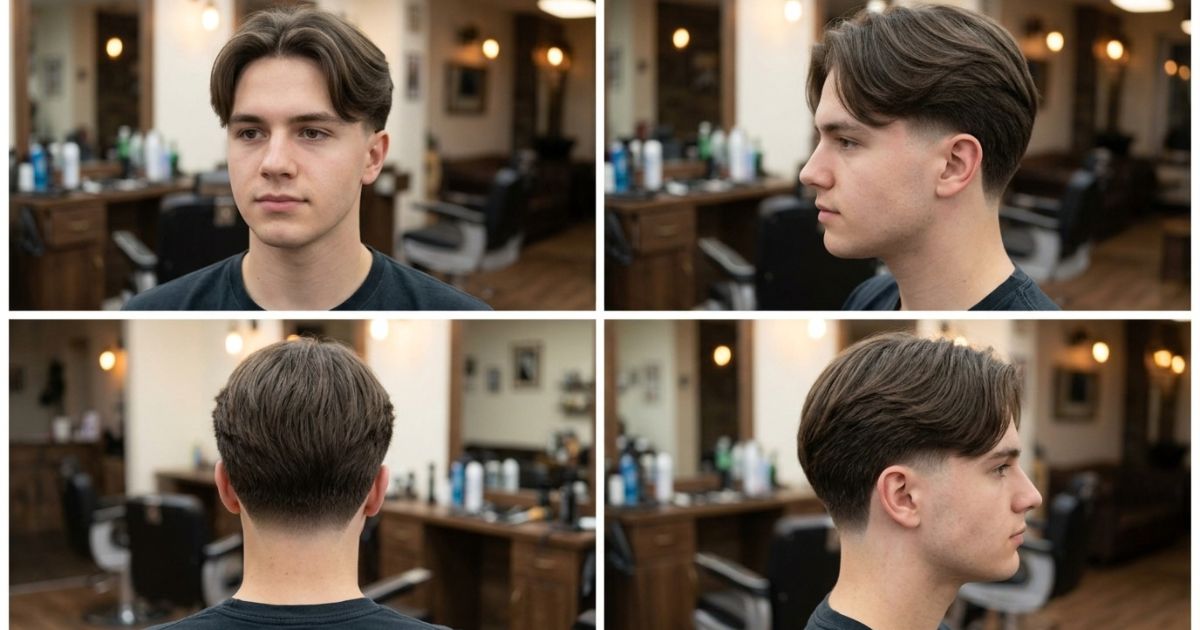
The middle part low taper fade pairs a center-parted top with sides that shorten gently around the ears and neckline. It looks polished without feeling stiff, which explains why barbers keep hearing this request in 2026. It also suits school, work, and weekends equally well, so it rarely feels out of place.
This guide covers everything you need before booking your next appointment: face shapes, hair textures, top length, barber wording, product picks, and home styling. You will also find a comparison table, upkeep timelines, and six variations, so you can walk into the chair knowing exactly what to ask for.
What is a middle part low taper fade?
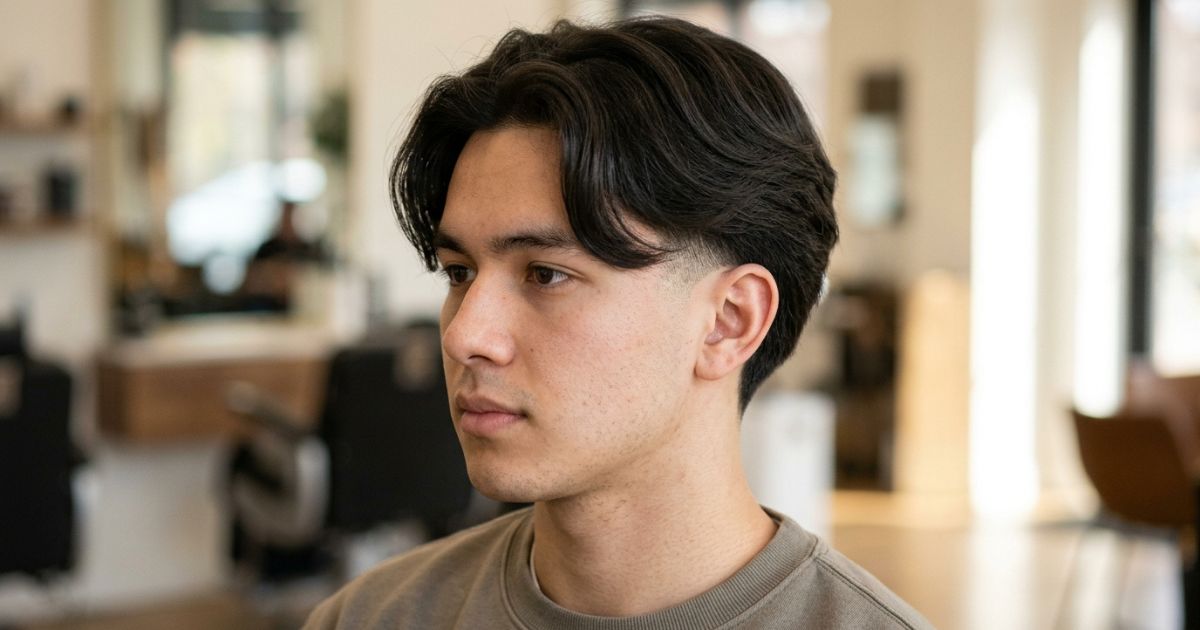
A middle part low taper fade is a haircut with a center-parted top and sides that blend from longer to shorter hair, starting low near the ears and nape. The top stays long enough to fall naturally on both sides, while the fade keeps the outline clean.
The cut combines two ideas:
- Middle part: the top is split down the center, creating a symmetrical, curtain-style shape.
- Low taper: the shortening begins near the ears and neckline, not up at the temples, so the change stays soft.
Taper and fade are often used as if they mean the same thing, but they differ slightly. A taper shortens hair gradually and usually leaves some length at the bottom. A fade blends closer to the skin for a crisper finish. A low taper fade borrows from both, which is why barbers sometimes use the words interchangeably.
| Term | What it means | Typical look |
| Taper | Gradual shortening, hair stays visible | Soft and natural |
| Fade | Blends down toward bare skin | Crisp and high contrast |
| Low taper fade | Gentle blend starting near ears and nape | Clean but relaxed |
Learn more:Burst Fade for Curly Hair: 9 Styles and Care Tips
Why it’s popular in 2026
Three things keep this cut in demand: it is easy to wear, easy to grow out, and easy to adapt.
- It reads as modern, not extreme. The low fade adds definition without the stark contrast of a high skin fade.
- It works in many settings. The tidy sides look appropriate in an office, and the loose top keeps it casual enough for a weekend.
- It grows out gracefully. Because the fade sits low, the shape stays presentable for longer than a temple-height fade.
- It borrows from the curtain trend. The center part continues the 90s-inspired curtain look that has stayed popular on social feeds.
In short, the cut gives you structure where it matters and freedom on top.
Best face shapes
Most faces can wear this cut. Small changes to length and volume make the difference.
| Face shape | How it fits | Adjustment to ask for |
| Oval | Excellent, balanced proportions suit almost any length | Keep the part natural |
| Square | Strong match, soft top eases a sharp jawline | Add a little texture |
| Round | Good, if you keep some height | Lift at the roots, avoid a flat, wide part |
| Heart | Good, curtains soften a wide forehead | Keep width near the temples |
| Diamond | Very good, frames narrow forehead and chin | Medium to long top |
| Long or oblong | Works with care | Shorter top, tighter taper, less height |
Not sure of your shape? Measure forehead, cheekbones, and jaw width in a mirror, then compare which is widest. A barber can confirm it in seconds.
How it looks on straight, wavy, and curly hair
Texture changes both the final look and the effort needed to style it.
Straight hair

Straight hair gives the sharpest, cleanest part line. The top falls flat and even, so the style looks neat with very little product. The risk is flatness, so ask your barber to point cut the ends for movement. A light matte clay or water-based pomade works well.
Wavy hair
Wavy hair is arguably the easiest to style here. The natural bend adds flow and volume, and the part blends in softly. Use a sea salt spray on damp hair, then air dry or diffuse. Avoid heavy creams that pull waves flat.
Curly hair

Curls add the most volume and personality. The clean low taper keeps the shape controlled, while the curls do the talking on top. Apply curl cream to wet hair, let it air dry, and avoid brushing once dry. A part may need re-creating when hair is wet.
Thick hair

Thick hair can sit like a heavy block if left untouched. Ask for internal thinning or texturizing so the top moves and falls cleanly on both sides. A slightly longer top often looks better on thick hair than a short one.
Fine or thin hair

Fine hair needs lightness. Keep the top short to medium, around 3 inches, and use a volumizing mousse or powder rather than a greasy pomade. Blow drying at the roots adds lift that holds the part open.
Choosing the right top length
Top length controls how the part behaves. The hair needs enough weight to fall to each side instead of standing up.
| Top length | Result | Styling effort |
| 2 to 3 inches | Subtle, tidy part | Low |
| 3 to 4 inches | Everyday middle part, easy to manage | Low to medium |
| 4 to 6 inches | Full curtain effect with movement | Medium to high |
Advice differs a little between barbers, so treat these numbers as a starting point. Hair density and curl pattern change how long hair looks once it dries.
- Fine hair: stay near the shorter end.
- Thick or wavy hair: 3 to 5 inches usually works.
- Curly hair: remember curls shrink, so ask for more length than you expect.
If you have a strong cowlick at the front, tell your barber. Very short hair there may refuse to part cleanly.
How to ask your barber
Barbers work best with specifics. Vague requests like “something low-key” leave too much to guess.
Use this checklist:
- Name the cut: say “middle part with a low taper fade.”
- Give the fade height: it should start near the ears and nape, not at the temples.
- State the top length: give inches, such as “about four inches on top.”
- Choose the finish: natural taper (some hair left) or skin taper (closer to bare skin).
- Mention texture work: ask for point cutting or texturizing if your hair is thick or flat.
- Bring a photo: it removes guesswork.
A simple script you can use: “I’d like a middle part with about four inches on top, point cut for movement, and a low taper around the ears and neckline. Keep the blend soft, not a skin fade.”
Clipper guards vary, but many barbers start a low taper around a #1 or #1.5 at the nape and step up gradually. Ask what guards they plan to use if you are curious.
Low taper vs mid taper fade
The main difference is where the blend begins and how much contrast it creates.
| Feature | Low taper fade | Mid taper fade |
| Starts | Near ears and neckline | Around the middle of the sides |
| Contrast | Soft | Moderate to strong |
| Grow-out | Graceful | Loses shape faster |
| Upkeep | Every 3 to 4 weeks | Every 2 to 3 weeks |
| Best for | Office, school, easy upkeep | Bolder, sharper look |
If you are new to fades, start low. You can always go higher next time, but you cannot add hair back.
Styling products that work
Choose a product by hair type and the finish you want, not by the cut.
| Product | Finish | Best for |
| Matte clay | Hold, no shine | Straight and thick hair |
| Water-based pomade | Clean part line | Straight and wavy hair |
| Sea salt spray | Texture, tousled look | Wavy and straight hair |
| Lightweight cream | Soft, flowing | Wavy, medium hair |
| Curl cream | Defined, less frizz | Curly hair |
| Mousse or volumizing powder | Lift | Fine and thin hair |
Use a pea-sized amount first. You can always add more, but too much product weighs the part down.
How to style it at home
This routine works for most textures and takes about five minutes.
- Start damp. Towel dry until hair is damp, not dripping.
- Find the part. Use a comb tail or your fingers to split hair from the hairline back.
- Blow dry outward. Point the dryer away from the part on each side, on medium heat.
- Add product. Warm a small amount in your palms and work it through.
- Shape it. Finish with fingers or a wide-tooth comb for a natural look.
- Set it. Use a light mist of texture spray if your part drifts.
Curly hair is the exception: style it wet with cream, then leave it alone to dry.
How often to maintain it
A low taper looks subtle, so growth shows quickly at the nape and around the ears.
| Area | Typical schedule |
| Taper cleanup | Every 2 to 4 weeks |
| Top trim | Every 6 to 8 weeks |
| Neckline and sideburns | Quick touch-up every 2 to 3 weeks |
| Texture or thinning | Every second or third visit |
If you want sharper contrast, visit closer to the two-week mark. If you prefer a softer grown-in look, stretch toward four weeks.
Variations to try
Classic
A neat center part with moderate length, usually 3 to 4 inches. It suits straight to slightly wavy hair and works almost anywhere.
Textured
Point cutting and choppy layers on top create a lived-in, piecey finish. Ask for texture if your hair looks flat when parted.
Curly top
Let the curls grow into a rounded shape while the sides stay clean. It is the boldest version and needs very little styling beyond curl cream.
Wavy curtain
Longer waves frame the face with soft, parted movement. Aim for 4 to 6 inches and finish with sea salt spray.
Longer fringe
Extra length at the front sits near the eyebrows for a softer, face-framing effect. It flatters round and square faces especially well.
Subtle skin finish
A small amount of skin near the nape adds contrast while keeping the low placement. It looks sharper but needs more frequent visits.
Frequently asked questions
Is a middle part low taper fade good for straight hair?
Yes. Straight hair holds a crisp part line and lies flat on both sides with little effort.
How long should the top be for a middle part?
Most people need 3 to 4 inches for a clean part. Go to 4 to 6 inches for a full curtain look.
Is a low taper fade professional?
Yes. It is subtle and neat, which makes it suitable for most offices and formal settings.
How often should I refresh a low taper?
Clean up the taper every 2 to 4 weeks and trim the top every 6 to 8 weeks.
What is the difference between a low taper and a low fade?
A low taper keeps some length at the bottom, while a low fade blends closer to the skin. Both start low.
Can curly hair get a middle part low taper fade?
Yes. Ask for extra length, since curls shrink, and style the part while hair is wet.
Conclusion
The middle part low taper fade works because it balances structure and ease. The low fade keeps the sides tidy, while the center part gives the top a relaxed, face-framing shape. Choose a top length that suits your hair density, and the cut will flatter most textures and faces.
Success comes down to three habits: give your barber specific instructions, style the top while damp, and book a taper refresh every few weeks. Do those consistently and the cut stays sharp and intentional between visits. Bring a photo to your next appointment and you are ready.