

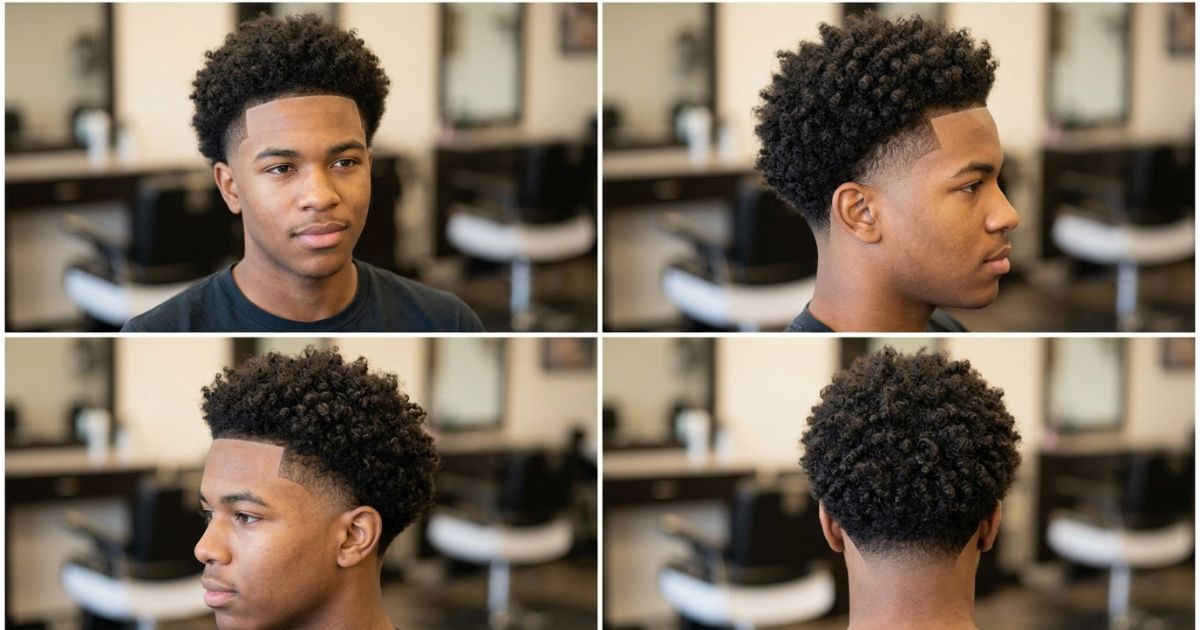
A mid taper fade curly hair keeps your curls full on top while the sides and back shorten gradually, starting around the temple. It gives you a clean outline without flattening natural volume, which is why so many people with waves, curls, and coils ask for it.
This guide explains how the cut works, how it compares with low and high tapers, and which styles suit your curl pattern. You will also get barber wording you can use in the chair, a simple styling routine, and realistic upkeep timelines to keep the blend sharp.
What is a mid taper fade on curly hair?
A mid taper fade on curly hair leaves the top and crown at a natural length. The sides and back get shorter in a smooth gradient, and that gradient begins around the temple. The shortest hair sits at the sideburns, the hairline, and the nape.
The cut works well on curls because it tidies the edges and leaves the shape of your curls alone. Curls grow up and out, so a neat perimeter makes the volume look intentional instead of heavy.
Quick definition: a mid taper is a haircut where the length shortens gradually from the temple down, keeping the curls on top intact and the outline clean.
Mid taper vs. mid fade: why the names get confused
Many barbershops use “taper” and “fade” as if they mean the same thing. They do not, at least not strictly.
| Feature | Mid taper | Mid fade |
| Where the short hair sits | Sideburns, temple edge, neckline | A wider band of the sides and back |
| Side length | Mostly kept | Cut much shorter |
| Finish | Often a guard length or soft shadow | Often down to skin |
| Overall look | Subtle and neat | Sharper and more graphic |
“Mid” only describes height. It does not tell your barber how close the finish should be. That is why a photo and a clear finish (shadow, skin, or blended) matter more than the name.
Learn more:Short Textured Haircut for Men: 2026 Style Guide
Mid taper vs. low and high tapers on curly hair
Taper height is simply the point where the shortening starts. Raise it and you remove more side hair, which increases contrast against your curls. Lower it and you keep more weight and a softer look.
| Taper height | Where the blend starts | Side weight kept | Contrast with curls |
| Low taper | Near the ear and nape | Most | Subtle |
| Mid taper | Around the temple | Moderate | Moderate |
| High taper | Above the temple | Least | Strong |
Low taper vs. mid taper on curly hair
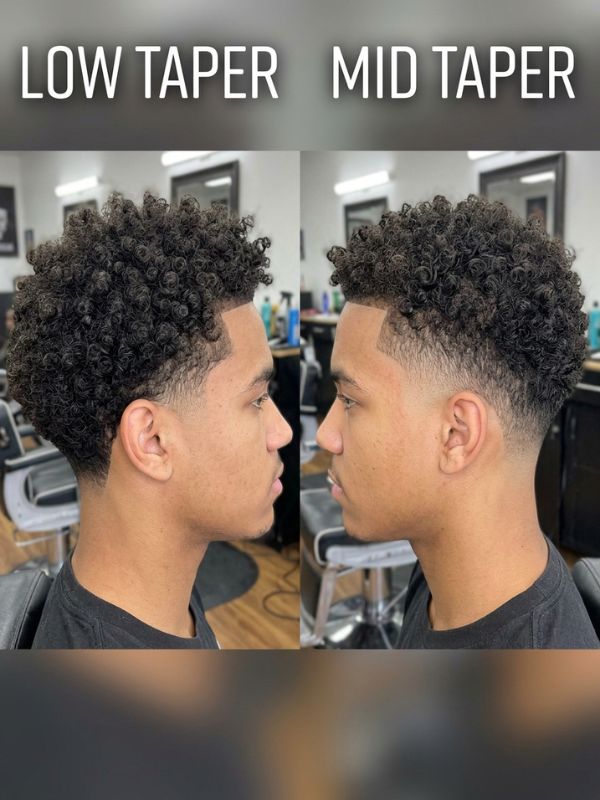
A low taper stays close to the ear and neckline. It keeps almost all of your side volume and works well for strict dress codes or fine, thin sides.
A mid taper starts higher and removes more bulk. Choose it if dense sides make your curls look wide or boxy. It draws a clearer line between the sides and the curls above.
Mid taper vs. high taper
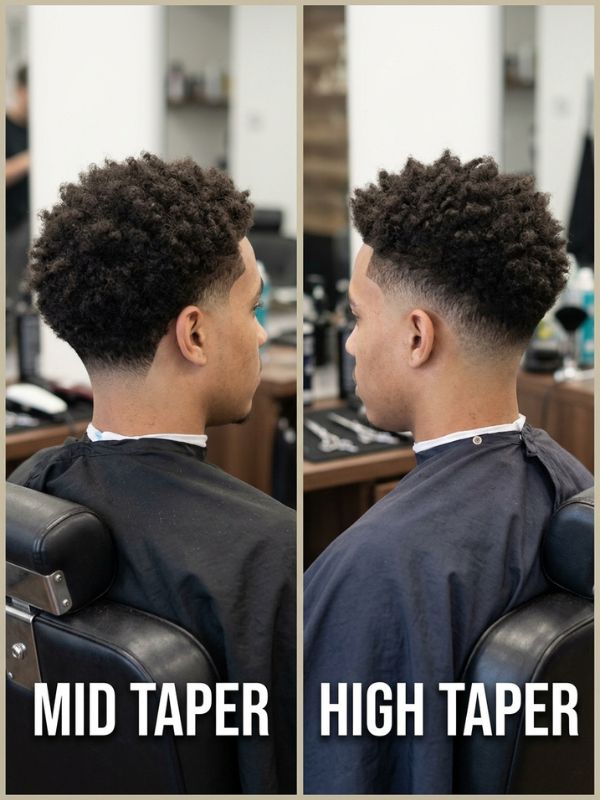
A high taper moves the blend above the temple. More scalp shows, and the contrast against your curls is stronger. It also loses its crisp look sooner.
A mid taper sits in the middle and is easy to adjust. If you are unsure, start with mid. Your barber can go higher next time, but hair cannot be put back on the same day.
Is a mid taper good for your curly hair?
For most people, yes. The cut shapes the edges, not the curls, so it rarely clashes with your natural pattern. Success depends on three things: a barber who knows textured hair, a reference photo close to your density, and an honest view of how much styling time you want.
Loose curls, tight curls, and coily hair
The taper works on every texture, but the silhouette changes.
| Curl type | How the taper looks | Tip |
| Loose curls and waves | Soft, blends easily into the sides | Keep the top slightly longer so waves don’t fall flat |
| Tight curls | Defined, with a visible curl crown | Ask for dry-length checks because of shrinkage |
| Coily or afro-textured | Full crown that contrasts strongly with short sides | Look for a barber who cuts afro texture often |
Curl charts are less helpful than people think. Density, curl diameter, and shrinkage affect the cut more than a number or letter. A good barber will read all three in the chair.
Short, medium, or long curls on top
- Short curls: compact shape, with the taper as the star. Lowest styling effort.
- Medium curls: a balance of definition and easy styling. A good starting point.
- Long curls: more movement and flow, but more product and careful drying.
Decide top length and taper height separately. They are two different instructions.
Best mid taper fade curly hair styles
These six looks differ in top volume, front direction, and detail work. Treat them as combinations to describe, not fixed names to say at the counter.
| Style | Top length | Effort | Best for |
| Classic curly mid taper | Medium | Low | First-time tapers |
| Mid taper with curly fringe | Medium to long | Medium | Framing the forehead |
| Curly blowout mid taper | Medium to long | High | Maximum volume |
| Short curly mid taper | Short | Very low | Busy mornings |
| Mid taper with coily hair | Short to long | Medium | Sculpting a full crown |
| Mid taper with line-up or beard blend | Any | Medium to high | Sharp, finished edges |
1. Classic curly mid taper
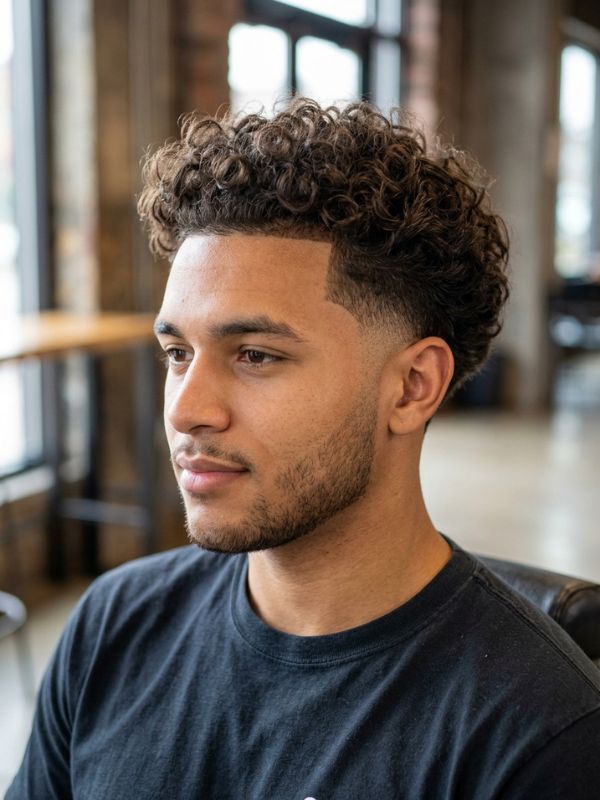
Natural curls at a moderate length sit over a cleanly shortened perimeter. It looks neat without trying too hard, needs little product, and is easy to adjust next visit.
2. Mid taper with curly fringe
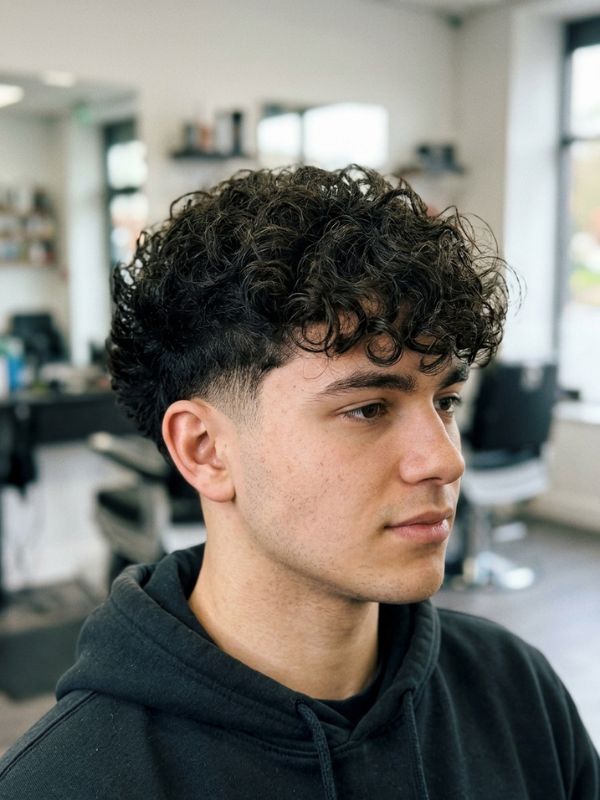
The top curls are cut and directed forward so they sit across the forehead. Tell your barber how far down the fringe should fall, since this look changes the front much more than the sides.
3. Curly blowout mid taper
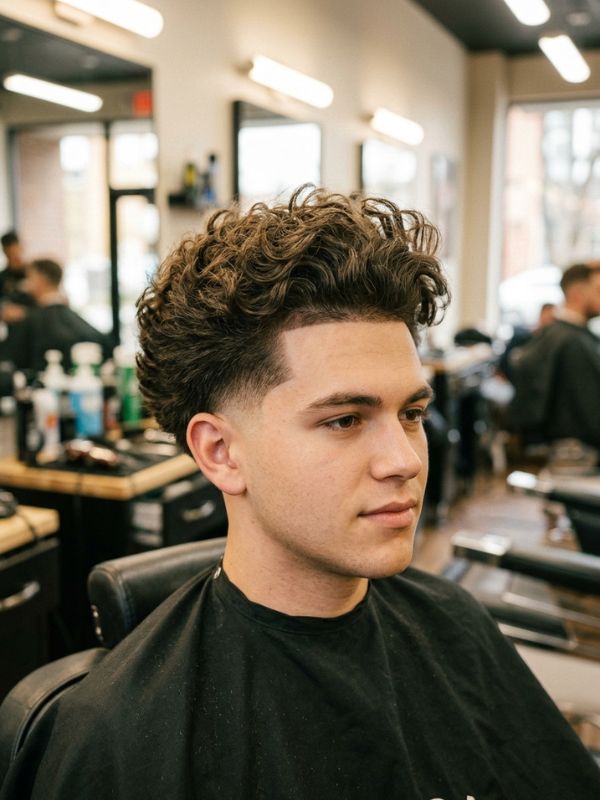
The top is dried and lifted for extra height while the sides stay tapered and tidy. The volume comes mostly from how you dry it, so expect a bit more daily effort.
4. Short curly mid taper
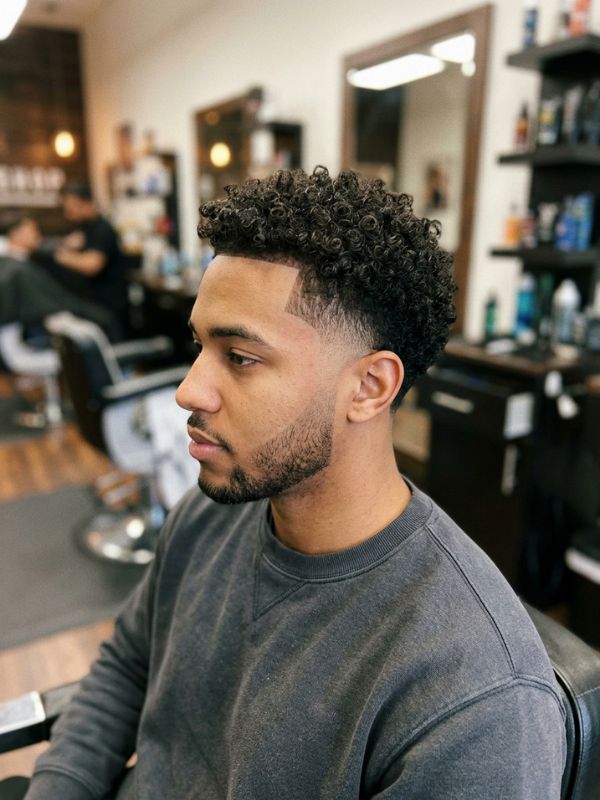
Curls are cut close and even, so the taper lines take center stage. It is the fastest look to style, though you have less length to play with between cuts.
5. Mid taper with coily or afro-textured hair
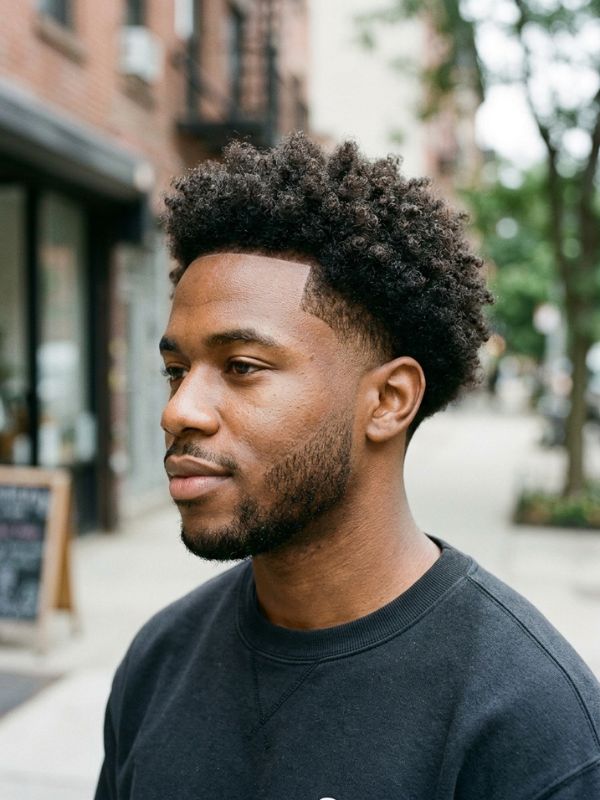
The taper can shape and frame a full crown instead of shrinking it. Keep the top rounded and let the sides blend smoothly into it. A barber who specializes in textured hair makes a big difference here.
6. Mid taper with line-up or beard blend
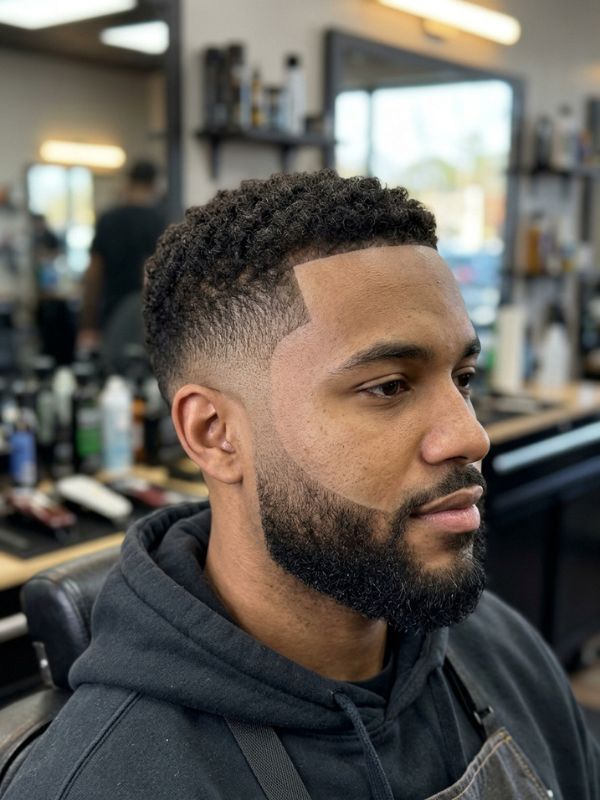
A line-up sharpens the hairline and temples. A beard blend runs the sideburn taper into facial hair so there is no visible step at the jaw. Both are optional extras, and both add upkeep because clean edges are the first thing to grow out.
What should you ask your barber for?
A clear brief covers five things. Use the checklist below, then say it out loud before the clippers start.
| Detail | What to say | Why it matters |
| Reference photo | Show front and side views | Words like “taper” vary between shops |
| Taper start | Point to the temple or another spot | Removes guesswork about height |
| Bottom finish | Skin, shadow, or a guard number | Sets contrast and upkeep |
| Curl length | Describe the result you want, dry | Avoids shrinkage surprises |
| Bulk, fringe, neckline | Full, thinned, rounded, or tapered | Shapes the final silhouette |
Sample script: “I’d like a mid taper on curly hair. Start the blend at my temple, finish with a soft shadow instead of skin, and leave enough length on top to keep my curls defined. Please check the length dry before you finish.”
1. Show a reference photo
Bring one or two clear photos. Pick hair with a similar curl pattern and density to yours. A photo of straight hair will not translate to tight curls.
2. Say where the taper should begin
Point to the spot instead of describing it. A taper that starts too high cannot be undone that day.
3. Decide how short the bottom goes
A taper does not have to reach skin. A guard length or soft shadow looks gentler and usually grows out better.
4. Explain how much curl length to keep
Describe the finished look, such as “curls that reach my forehead” or “defined but short.” Curls spring up as they dry, so ask your barber to check length when the hair is dry.
5. Discuss bulk, fringe, and neckline
Say whether you want weight kept at the front, thinned overall, or evenly balanced. A tapered neckline grows out most naturally. Blocked or rounded necklines need more regular cleanups.
How do you style a mid taper with curly hair?
Only the top needs styling. The taper is your barber’s work and does not need product. Follow these steps on wash day.
Step 1: start with damp, detangled hair
Detangle while the hair is wet and coated with conditioner. Use your fingers or a wide-tooth comb, working in sections. Dermatologists, including the American Academy of Dermatology, advise against brushing curly hair when it is dry because that can cause breakage and frizz.
Step 2: add moisture and definition
- Apply a leave-in conditioner to damp hair.
- Add a curl cream, mousse, or gel, depending on how much hold you want.
- Use the smallest amount that works, and keep product off the scalp.
Step 3: air-dry or diffuse without flattening the shape
Air-drying is the gentlest option. If you use a diffuser, keep the heat low and scrunch upward instead of pulling down. Pulling down flattens curls against the taper line.
Step 4: refresh between wash days
Mist with water, add a little leave-in, and shape curls with your fingers. Skip the brush. Wash again when your hair or scalp needs it, not on a strict schedule.
How do you maintain a curly mid taper?
You are managing two schedules. The taper needs a barber every few weeks. The curls need gentle care all the time.
How often should you get the taper cleaned up?
Most people need a cleanup every 2 to 4 weeks. The finish matters more than the height.
| Finish | Typical cleanup window |
| Skin or very close finish | About 2 weeks |
| Soft shadow | About 2 to 3 weeks |
| Guard-length finish | About 3 to 4 weeks |
These are rough guides. Fast growers need visits sooner, and the clearest sign is when the blend starts to look like growth instead of a fade. Between visits, only tidy the neckline and sideburns, and leave the blend itself to your barber.
How should you care for the curly top?
- Condition the whole length of your hair, not just the ends.
- Use a leave-in or light oil after washing to lock in moisture.
- Avoid heavy, waxy products that build up on the scalp.
- Sleep on a satin or silk pillowcase, or wear a satin bonnet or durag, to reduce friction.
- Loosely gather longer curls on top at night in a pineapple style.
Common mid taper mistakes to avoid
| Mistake | What goes wrong | Fix |
| Letting the taper start too high | A mid taper turns into a high taper | Point to the start line before cutting |
| Cutting the top while wet only | Curls spring up shorter than expected | Ask for a dry-length check |
| Using a photo of the wrong texture | The result looks different on your hair | Choose photos with a similar curl pattern |
| Skipping curl care | Frizz and dryness overshadow the cut | Keep a simple moisture routine |
| Ignoring cleanup timing | Blend looks messy and unfinished | Book your next visit before you leave |
Alternatives if a mid taper is not the look you want
- Low taper: subtler, with more side weight and less scalp showing.
- High taper or mid fade: more contrast, with a wider band of short hair.
- Burst fade: curves around the ear and leaves the back longer.
- Drop fade: follows the curve of the head behind the ear and dips toward the nape.
- Temple taper: keeps most of the sides and shortens only the temples and edges.
Frequently asked questions
Can you get a mid taper without going down to skin?
Yes. A mid taper can end at a guard length or soft shadow. Ask for that finish when you sit down.
How much curly hair should you leave on top?
It depends on your curl pattern and shrinkage. Describe the look you want and ask your barber to check the length dry.
Does a mid taper grow out well?
Yes, usually better than a skin fade. The blend softens gradually as the hair grows.
Can you keep long curls with a mid taper?
Yes. Taper height and top length are separate choices, so long curls pair easily with a mid taper.
Is a mid taper suitable for school or work?
Usually yes, since it is neater than a high fade. Check your dress code, or ask for a shadow finish to keep it conservative.
Can a mid taper work with a curly fringe?
Yes. The fringe shapes the front while the taper shapes the sides and back, so the two work independently.
How much does a mid taper on curly hair cost?
Prices vary by city and shop. Ask for a quote first, and expect to pay a little more for a line-up or beard blend.
Conclusion
A mid taper fade suits curly hair because it shapes the edges and leaves your curl pattern alone. The name matters less than the details: where the blend starts, how short it ends, and how much length stays on top. Get those right and the cut works.
Bring a clear photo, point to the starting line, and ask your barber to check length dry. At home, keep things simple with moisture, gentle handling, and regular cleanups. Do that, and your taper will look sharp while your curls stay healthy.