
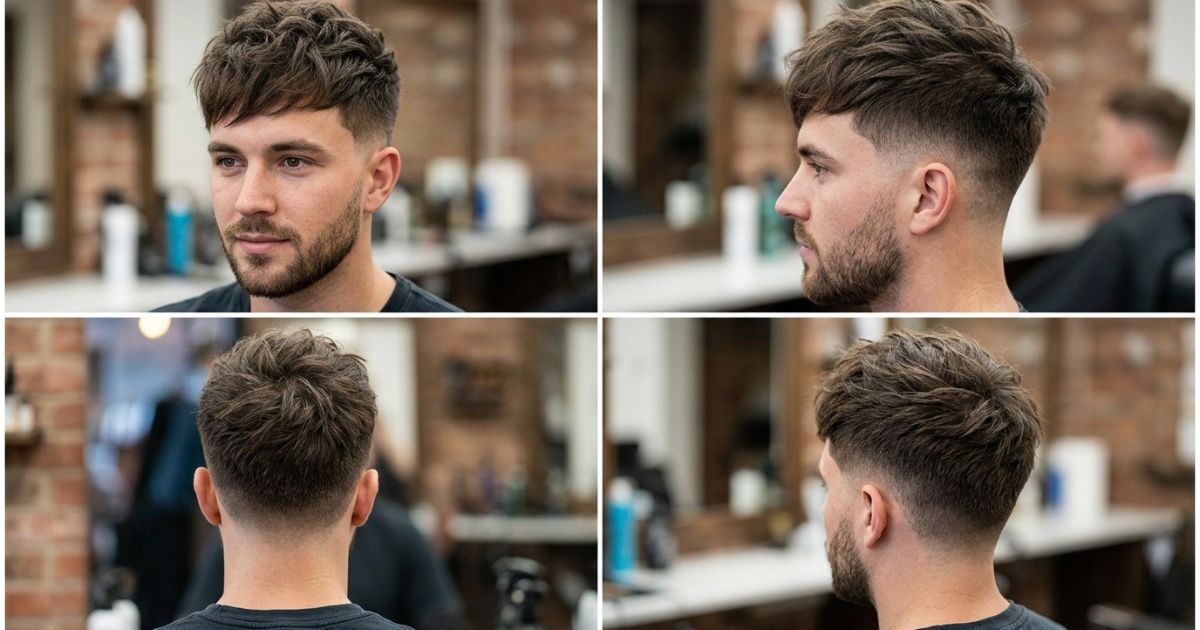
A short textured haircut is one of the most versatile hairstyles for men who want a modern, stylish, and easy-to-manage look. It combines short hair with layers, movement, and natural definition, creating a finish that looks neat without appearing too flat or overly styled. Whether you prefer a clean professional appearance or a relaxed casual look, a short textured haircut can be adapted to suit your personal style.
This hairstyle works with several hair types, including straight, wavy, and naturally curly hair. It can also be paired with a low fade, mid fade, high fade, taper, or undercut to create different results. Some versions have a soft, natural finish, while others feature sharp edges and more noticeable contrast.
In this guide, you will learn about the best short textured haircuts for men, how to choose a style for your hair type, which products to use, how to explain the cut to your barber, and how to maintain the hairstyle at home.
What Is a Short Textured Haircut?
A short textured haircut is a hairstyle in which the hair is cut into different lengths to create visible separation, movement, and dimension. Instead of leaving the top completely flat and uniform, a barber uses techniques such as point cutting, layering, and texturizing to give the hair a more natural appearance.
The sides and back can be cut short with scissors or clippers. Many men choose a fade or taper because it creates a smooth transition between the shorter sides and the longer top. However, a fade is not essential. A classic scissor cut can also create a stylish textured look.
The main feature of this haircut is its finish. The hair on top usually has enough length to show texture but remains short enough to style quickly. Depending on the cut, you can wear it forward, upward, slightly to one side, or in a messy finish.
A short textured haircut is particularly useful for men who want a contemporary hairstyle without spending a long time in front of the mirror every morning.
Learn more:Women’s Hairstyles: 20 Beautiful Haircut and Hairstyle Ideas for 2026
Why Is the Short Textured Haircut Popular?
The short textured haircut remains popular because it combines flexibility with everyday practicality. It can look casual with a natural finish or more polished when styled carefully. Its adaptability makes it suitable for different ages, professions, and personal preferences.
Another advantage is that texture creates visual interest without requiring a complicated shape. Men who do not like perfectly slicked-back hair may prefer this style because it allows natural movement. A small amount of matte styling product can define the hair while keeping it from looking excessively shiny.
The haircut can also be customized. A low fade creates a subtle finish, while a high fade produces a stronger contrast. A textured fringe adds coverage at the front, and a short crop creates a compact, structured shape.
Although the haircut is relatively easy to maintain, the best result depends on the individual hair type, the barber’s technique, and the amount of styling required.
1. Short Textured Crop
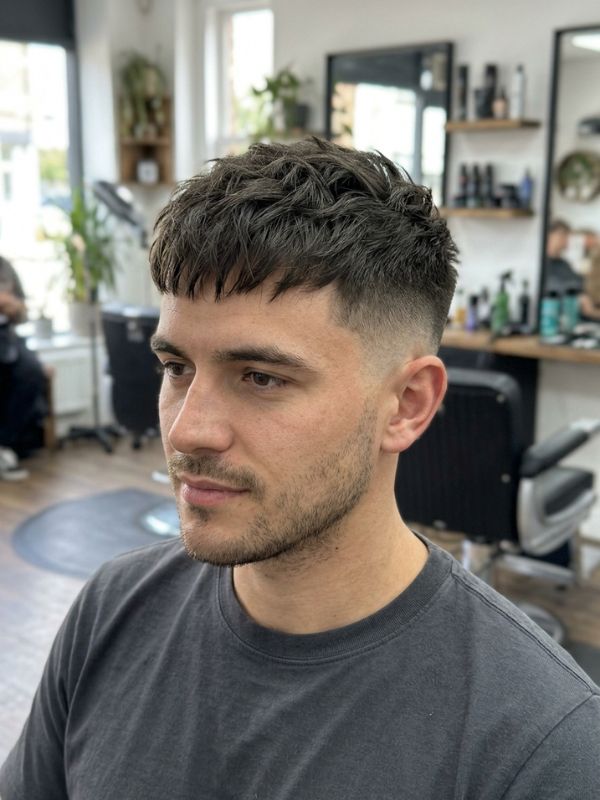
The short textured crop is a classic choice for men who want a simple, modern haircut. The hair on top is kept short and cut into layers that create natural separation. The front may be worn slightly forward, forming a small fringe across the forehead.
The sides can be tapered or faded, depending on the desired appearance. A low fade creates a softer outline, while a mid fade makes the haircut more noticeable. The top generally requires very little styling, making this option convenient for busy mornings.
To style a short textured crop, apply a small amount of matte paste to dry hair. Use your fingertips to separate a few sections and create definition. Avoid applying too much product because it can make short hair look heavy.
This haircut is a useful option for men who prefer a clean shape with a relaxed, contemporary finish.
2. Short Textured Haircut with Low Fade
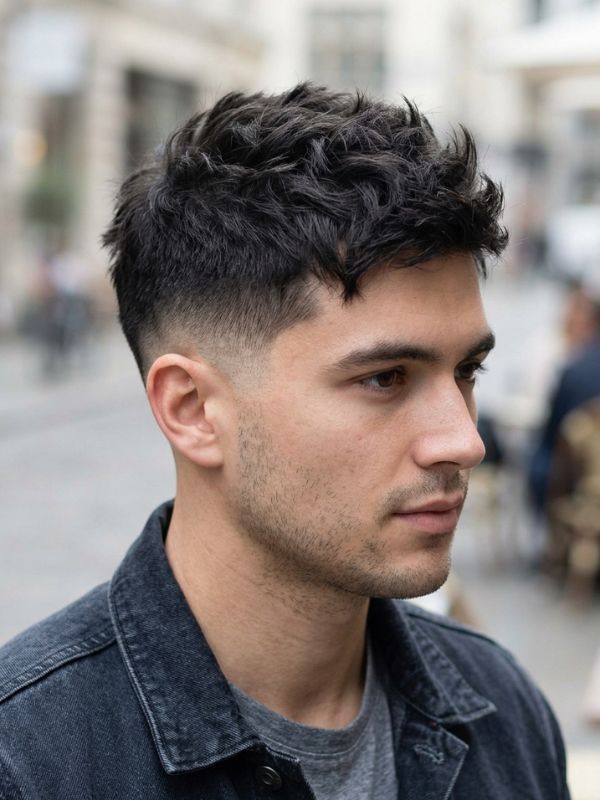
A short textured haircut with a low fade combines a layered top with sides that gradually become shorter near the ears and neckline. Because the fade begins relatively low, the transition looks subtle rather than dramatic.
This combination works well for men who want a modern haircut that can also look appropriate in professional settings. The textured top adds movement, while the faded sides keep the overall shape tidy.
Ask your barber to leave enough length on top for visible texture and to blend the fade smoothly around the temples and neckline. You can request a natural hairline or a more defined outline according to your preference.
For daily styling, use a light matte cream or paste. Work the product through the top and move the hair into place with your fingers. This creates a controlled finish without removing the natural texture.
3. Short Textured Haircut with Mid Fade
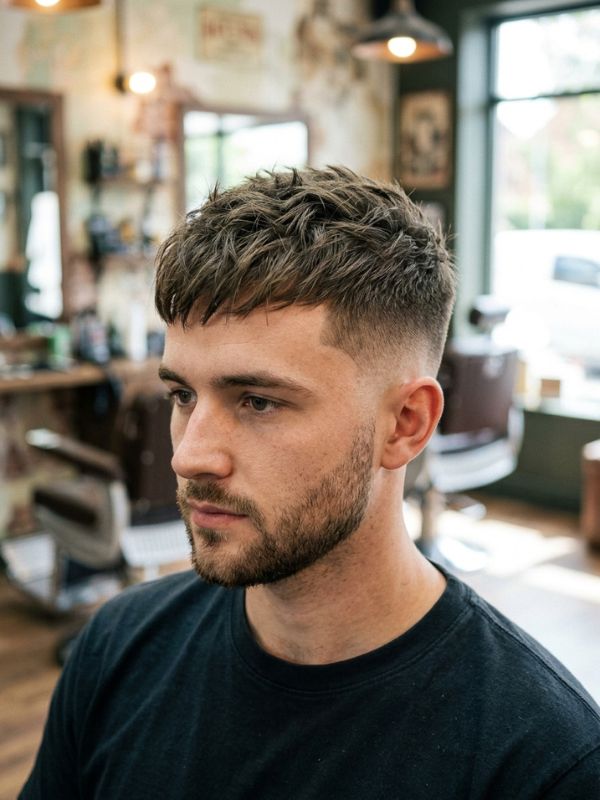
The mid fade begins higher than a low fade and creates more contrast between the sides and the top. When combined with a short textured top, it produces a balanced haircut that looks modern and defined.
This option is suitable for men who like visible structure but do not necessarily want the sides shaved extremely high. The top can be styled forward, upward, or slightly toward one side.
A mid fade can also complement a short beard when both areas are blended carefully. Ask your barber to connect the sideburn area with the beard if you want a continuous appearance.
The maintenance routine is straightforward. Use a small amount of styling paste to define the top, and schedule regular barber visits to keep the fade looking neat. The frequency of trims depends on how quickly your hair grows and how sharp you want the sides to remain.
4. Short Textured Haircut with High Fade
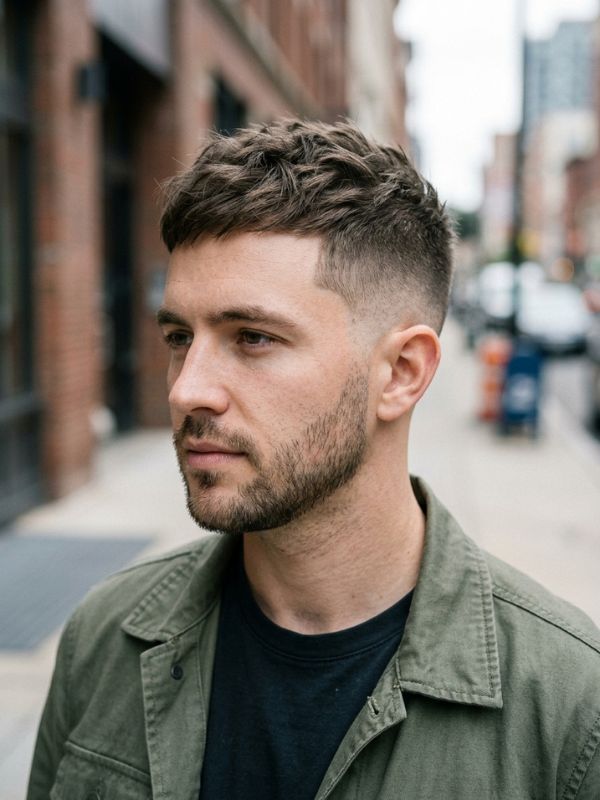
A high fade creates a stronger contrast by keeping the sides very short from a higher point on the head. With a textured top, this produces a sharp and contemporary appearance.
The top can be short and spiky, slightly messy, or arranged forward. The high fade emphasizes the shape of the haircut, so it is a good option for men who prefer a more noticeable style.
When discussing this haircut with a barber, explain how high you want the fade to begin. Showing a reference photograph is helpful because terms such as high fade and skin fade can mean slightly different things to different people.
This style often needs more frequent side trims to preserve its clean contrast. The top, however, can remain relatively easy to manage with a lightweight styling product.
5. Short Textured Fringe
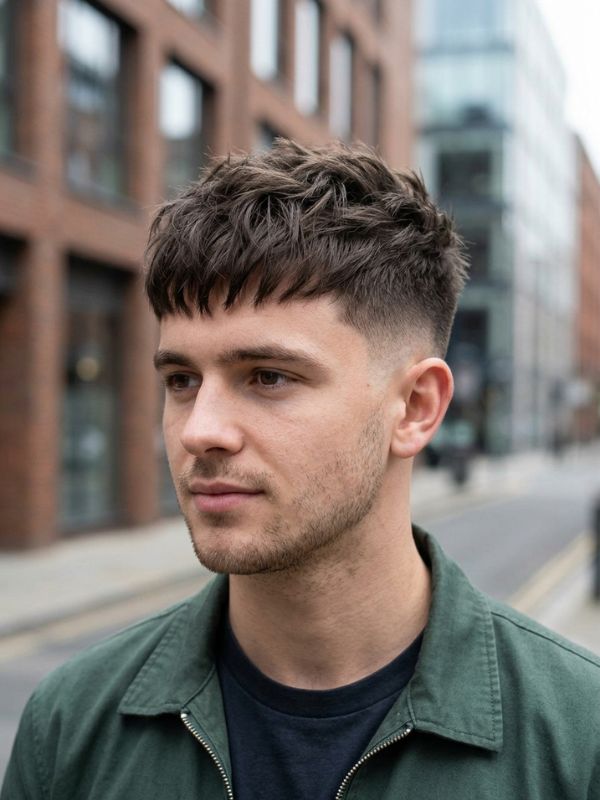
A short textured fringe features hair directed toward the forehead. The fringe can be straight, slightly uneven, or softly separated to create movement. The top is usually cut in layers, while the sides may be tapered or faded.
This hairstyle is worth considering if you prefer a forward-styled look rather than brushing your hair backward. It can also be adapted for different hair textures, although naturally wavy hair may require a little extra control around the front.
For styling, start with towel-dried hair and use a blow-dryer on a low or medium setting if needed. Direct the hair forward with your fingers. Finish with a small amount of matte paste to separate the fringe into natural sections.
Tell your barber whether you prefer a short fringe above the forehead or a slightly longer fringe. That detail can make a significant difference in the final shape.
6. Messy Short Textured Haircut

The messy short textured haircut is designed to look relaxed rather than perfectly arranged. The barber creates uneven layers that help the hair move in different directions while maintaining an overall short shape.
This is a useful choice for men who prefer casual clothing, relaxed styling, and a natural finish. It can work with straight or wavy hair, depending on the cut and the amount of natural movement.
To achieve the look, apply a small amount of matte clay or paste to dry hair. Rub the product between your palms before distributing it through the top. Then lift and separate small sections with your fingertips.
The goal is to create controlled movement rather than make every strand stand in a different direction. Keeping the sides tidy helps the haircut look intentional even when the top is messy.
7. Short Textured Quiff
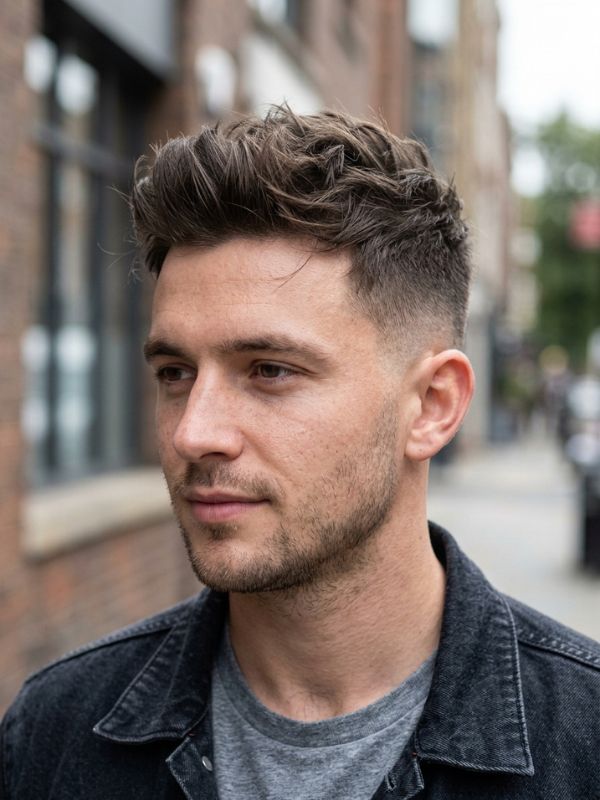
A short textured quiff adds height at the front while keeping the overall haircut compact. Unlike a long, highly styled quiff, this version is designed to be practical for everyday wear.
The barber leaves slightly more length near the front and blends it into the shorter crown and sides. A taper or fade can be added for a cleaner outline.
To style the quiff, use a blow-dryer to lift the front gently while directing the hair upward and slightly backward. Apply a small amount of lightweight paste or clay to hold the shape. If you prefer a softer finish, use less product and allow some natural movement.
This haircut may require more styling time than a short crop, but it offers a good balance between structure and texture.
8. Short Textured Caesar Cut
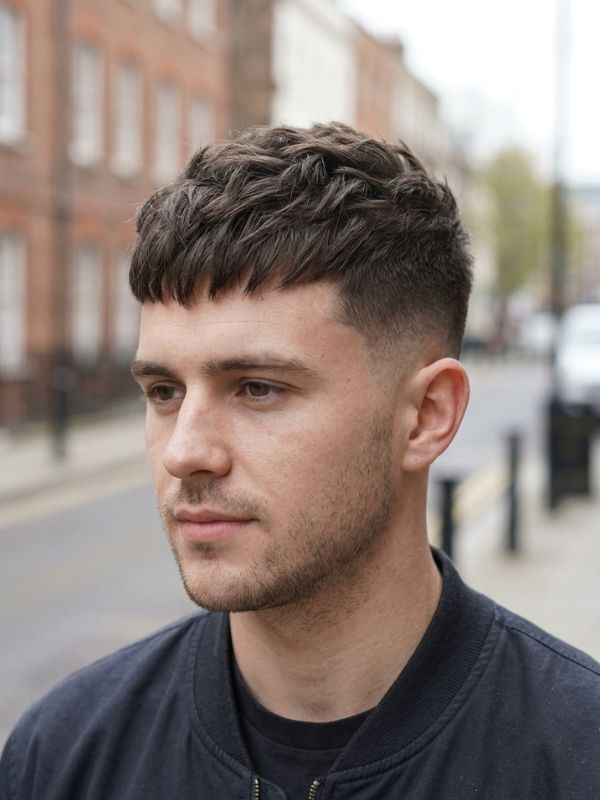
The Caesar cut is recognized by its short top and forward-directed fringe. A textured version introduces layers and separation, making the haircut appear more modern than a completely uniform crop.
The sides can be kept short with clippers or finished with a taper. The fringe is usually compact, so the style does not require much daily effort.
For styling, distribute a small amount of matte product through the top and direct the hair forward. The cut should retain its shape without requiring a large amount of hold.
If you want a particularly low-maintenance hairstyle, ask your barber to keep the top short enough to fall naturally into place. You can also discuss whether a subtle fade would complement the overall shape.
9. Short Textured French Crop
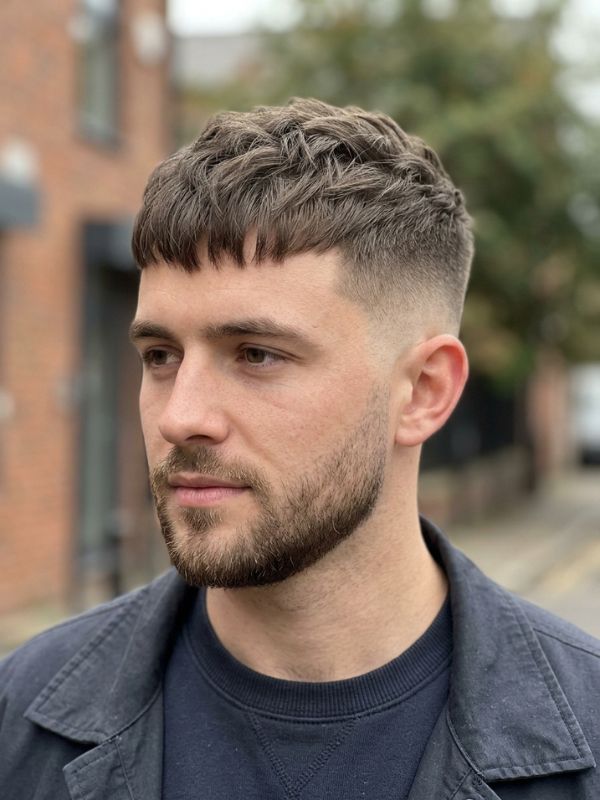
The French crop combines a short top with a forward fringe and neatly trimmed sides. The textured version uses layers to create definition and a slightly separated finish.
This haircut can be customized with a low, mid, or high fade. A softer taper gives it a more classic appearance, while a strong fade creates a more contemporary result.
One benefit of the French crop is that it can be styled without a complicated routine. After washing, dry the hair with a towel and direct the top forward. A little matte paste can help define the layers.
Tell your barber how much fringe you want and whether you prefer a soft or sharply defined outline. These details help ensure that the finished haircut matches your expectations.
10. Short Textured Haircut with Taper
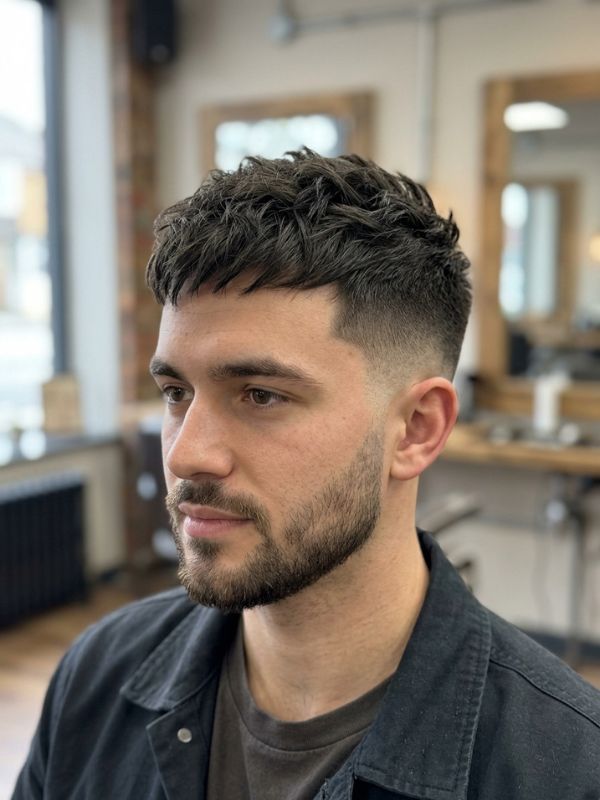
A taper gradually shortens the hair around the temples and neckline without necessarily creating a dramatic fade across the entire side. When paired with a textured top, it produces a neat, understated hairstyle.
This option is useful for men who want a modern haircut that does not look overly sharp or high-contrast. The top can be styled forward, to the side, or with a little lift at the front.
A taper can also work well when you need a haircut that transitions easily between casual and formal situations. The exact result depends on the length of the top and how closely the barber trims the edges.
Use a lightweight cream or paste to define the texture while keeping the overall appearance natural. Regular trims will help preserve the outline as the hair grows.
11. Short Textured Haircut for Straight Hair
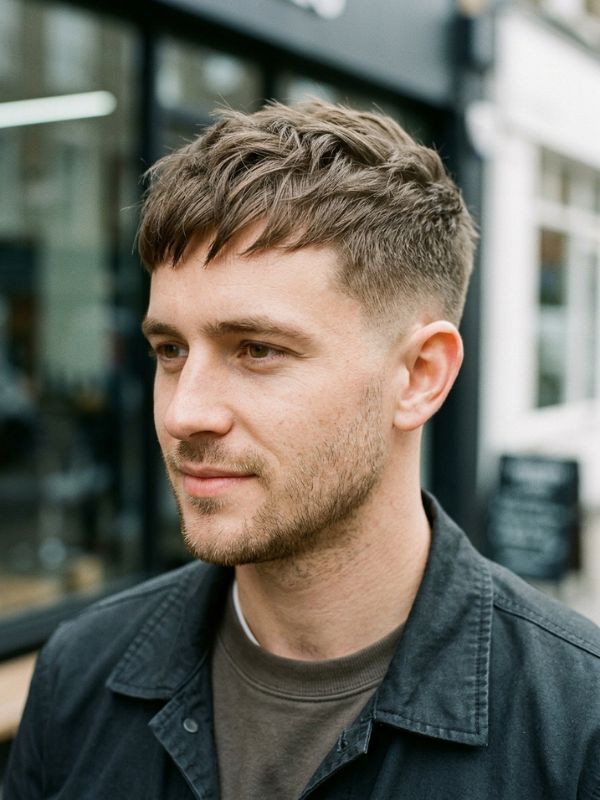
Straight hair can sometimes appear flat when it is cut to one uniform length. A short textured haircut addresses this by introducing layers and separation, giving the top more visible movement.
Ask your barber for a textured crop or short layered cut. The barber may use point cutting to soften the ends and prevent the top from looking like a solid block of hair.
For styling, a lightweight matte paste can help create definition. Apply it sparingly and separate the hair with your fingertips. If you want extra lift, use a blow-dryer while lifting the roots gently.
Avoid using too much heavy product, as it can weigh the hair down and reduce movement. The best styling routine is usually simple and depends on how much natural volume your hair already has.
12. Short Textured Haircut for Wavy Hair
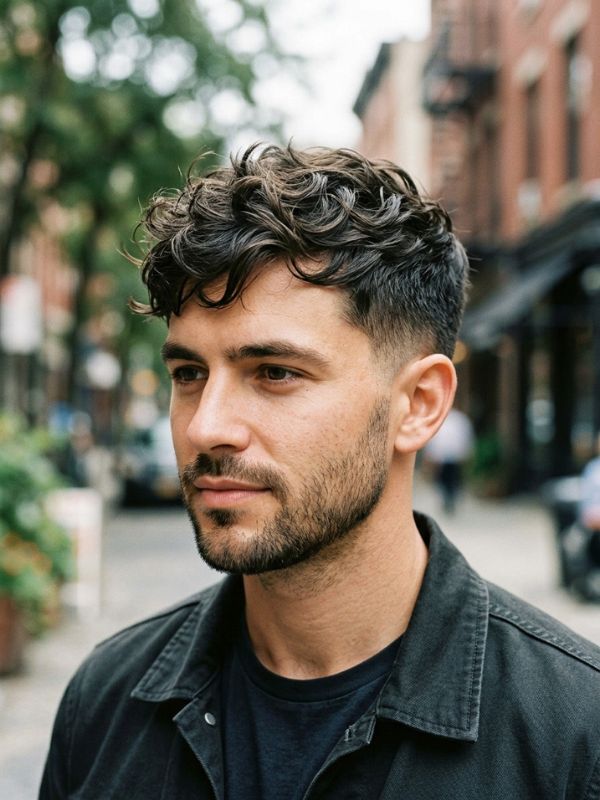
Wavy hair naturally creates movement, making it a good match for many short textured styles. A layered top can allow the waves to form naturally while the shorter sides keep the overall shape controlled.
The amount of length left on top is important. If it is cut too short, the natural wave pattern may become less visible. If it is left longer, the hair may need more attention to keep the shape balanced.
After washing, gently towel-dry the hair rather than rubbing it aggressively. Use a lightweight styling cream if you need extra control, then allow the hair to dry naturally or use a diffuser on a suitable setting.
Ask your barber to consider your natural wave pattern before choosing the final length. This can help the haircut sit more naturally as it grows.
13. Short Textured Haircut for Curly Hair
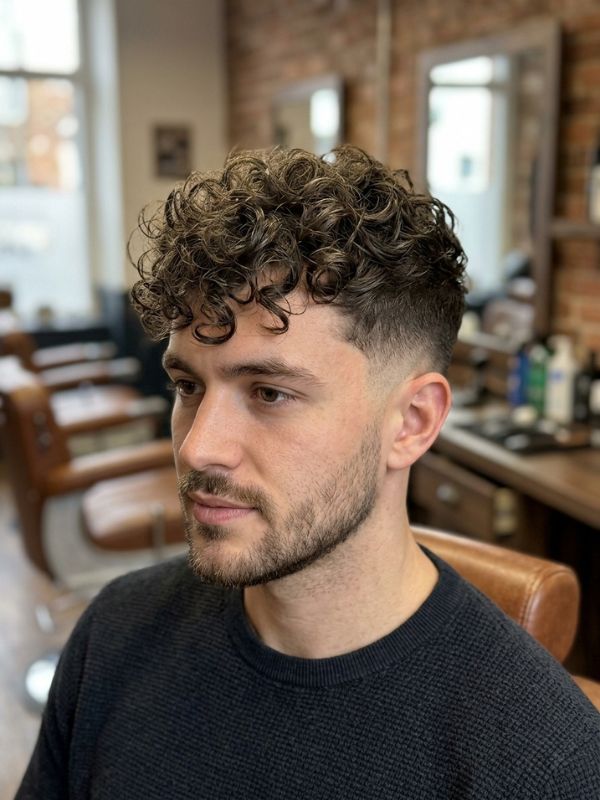
Curly hair can create excellent definition in a short textured cut. The curls provide natural separation, while the barber shapes the top to suit the curl pattern and the desired overall length.
A curly crop can be combined with a taper or fade for a cleaner outline. However, the top should not be shortened without considering how much the curls contract when dry.
Use a suitable lightweight curl cream if needed, and avoid excessive brushing when the hair is dry because it can disrupt the curl pattern. A gentle drying method can help preserve the natural shape.
Discuss your usual styling routine with your barber. If you prefer to wash and go, request a cut that works with your natural curls rather than one that depends on extensive daily styling.
14. Short Textured Haircut for Thick Hair
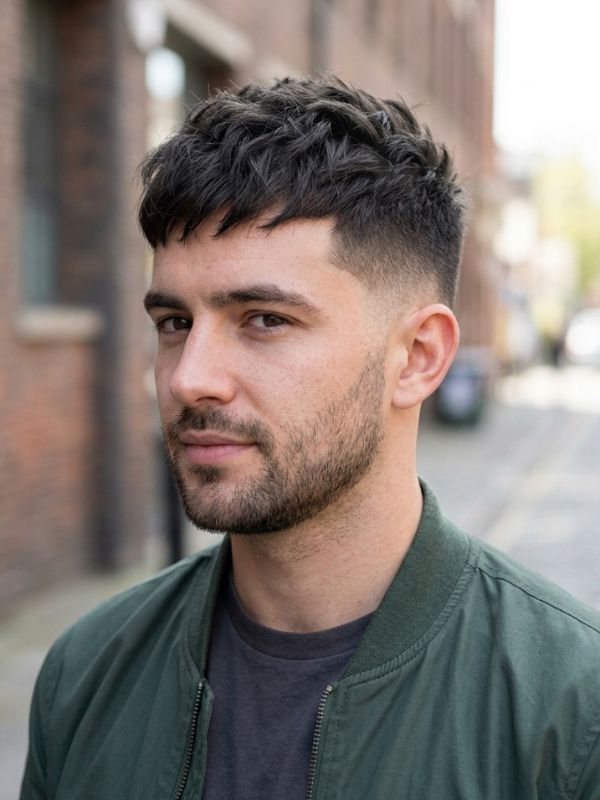
Thick hair can provide plenty of volume, but it may also feel bulky if it is not shaped properly. A short textured haircut uses layers and careful weight removal to make the top easier to manage.
The barber can adjust the top length and texture according to the direction in which your hair grows. A taper or fade may help reduce bulk around the sides while keeping enough volume on top.
For daily styling, a medium-hold matte paste can help control the hair without making it appear excessively shiny. Use only as much product as needed to separate the layers.
Tell your barber if your hair tends to puff outward or become difficult to style. That information helps them decide where to remove weight and how to shape the top.
15. Short Textured Haircut for Fine Hair
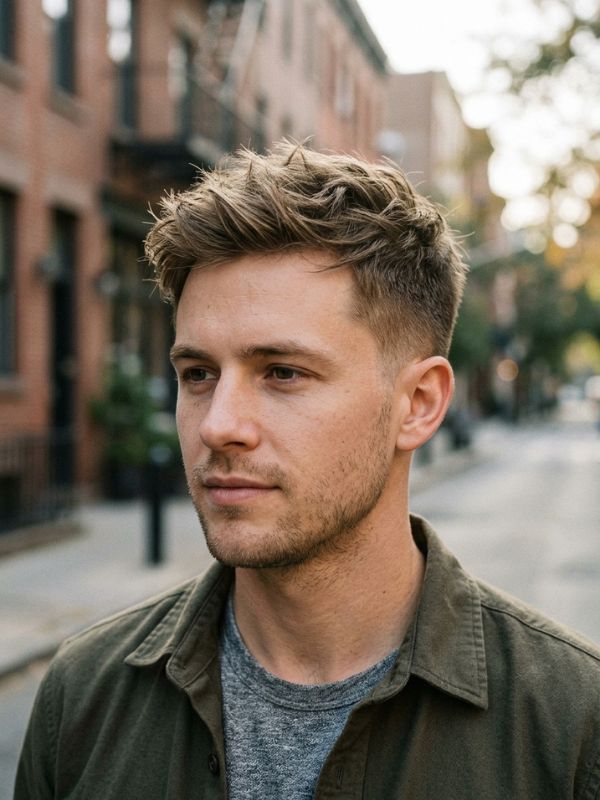
Fine hair can benefit from a short textured cut because carefully placed layers may create the appearance of greater separation and movement. The result depends on the density of the hair and the barber’s technique.
A compact textured crop or short quiff may be worth considering. Keeping the sides neat can also help the top look balanced without requiring excessive styling.
Choose a lightweight product that does not make the hair look greasy or heavy. Apply a small amount and work it through the top with your fingertips. A gentle blow-dry may help create lift if your hair naturally lies flat.
Ask your barber to avoid removing too much weight from areas where the hair already looks sparse. The goal is to create a shape that works with your natural hair rather than forcing it into an unsuitable style.
16. Short Textured Haircut with Beard
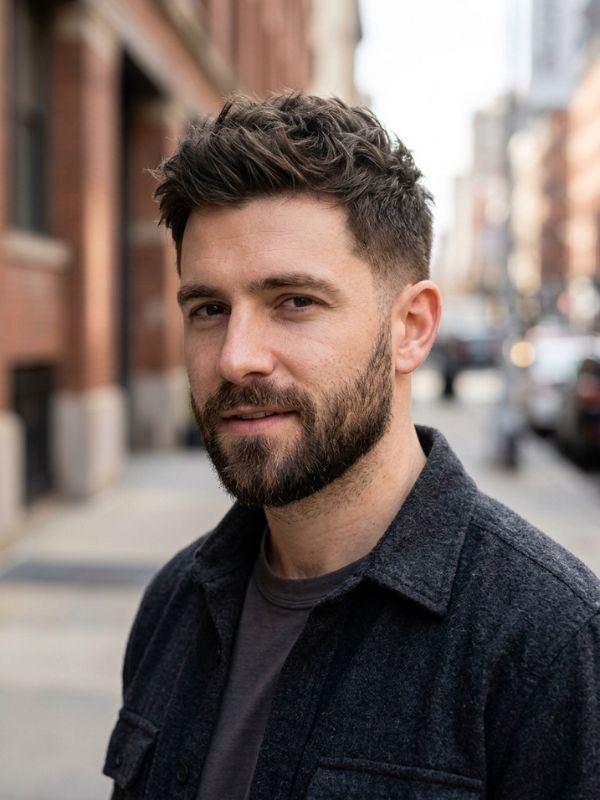
A short textured haircut can be paired with a beard to create a coordinated appearance. The textured top adds movement, while a carefully maintained beard introduces another element to the overall style.
The haircut may feature a taper or fade that blends into the sideburns. If you prefer a more defined look, ask your barber to shape the beard and haircut together so the transitions appear consistent.
The best beard length depends on your personal preference, facial hair growth, and maintenance routine. A short beard can look neat and understated, while a fuller beard creates a stronger visual contrast with a short top.
To maintain the combination, keep the neckline and cheek edges tidy according to the shape you prefer. You do not need an elaborate routine; consistent grooming is usually more important than using many products.
How to Choose the Best Short Textured Haircut
Choosing the right haircut involves more than selecting a photograph. Consider your hair type, natural growth direction, preferred styling time, and the kind of finish you want.
If you prefer minimal daily styling, a short textured crop or Caesar cut may be a practical choice. If you enjoy adding volume, a short textured quiff may suit your routine better. Men who want a stronger contrast can consider a fade, while those who prefer a subtle outline may choose a taper.
Your barber can also help adapt a reference haircut to your hair’s natural characteristics. A style that looks excellent on straight hair may need a slightly different cut to work well with curls or waves.
Before making a decision, save two or three reference photographs showing the top, sides, and front. Explain which features you like instead of asking the barber to copy a style without considering your hair type.
How to Ask Your Barber for a Short Textured Haircut
Clear communication helps you get a haircut that matches your expectations. Start by explaining how short you want the top and whether you prefer a crop, fringe, quiff, or messy finish.
Next, specify the sides. You can request a low fade, mid fade, high fade, or taper. If you are unsure about the difference, ask your barber to explain the options before cutting.
Mention how much time you want to spend styling your hair each morning. This helps the barber choose a shape that suits your routine. You can also explain whether you normally use styling products or prefer your hair to fall naturally into place.
Finally, show a reference photograph. A picture often communicates the desired texture, length, and outline more clearly than hairstyle names alone. Before leaving the chair, ask for simple instructions on how to recreate the finish at home.
Best Products for Styling Short Textured Hair
The right styling product depends on your hair type and the finish you prefer. You do not need to use several products at once; one suitable product is often enough.
Matte paste: A useful option for defining layers without adding much shine. It works well for textured crops and relaxed styles.
Matte clay: Often provides a firmer, more structured finish. It may suit thick hair or men who want stronger separation.
Lightweight styling cream: Can help control wavy or slightly unruly hair while keeping the finish softer.
Sea salt spray: May add texture and a slightly tousled appearance to some hair types. Start with a small amount and see how your hair responds.
Hair dryer: Not a styling product, but it can help lift the roots and direct the hair into the desired shape. Use a suitable heat setting and avoid excessive heat.
Apply products gradually. Starting with a small amount makes it easier to control the result and prevents the hair from becoming heavy or greasy.
Step-by-Step Guide to Styling a Short Textured Haircut
You can style most short textured haircuts in a few simple steps.
Step 1: Start with clean hair. Wash your hair as needed for your hair type and gently remove excess water with a towel.
Step 2: Choose your drying method. Allow the hair to air-dry for a natural finish, or use a blow-dryer on a moderate setting if you want more lift.
Step 3: Apply a small amount of product. Rub a little paste or cream between your palms before spreading it through the top.
Step 4: Define the texture. Use your fingertips to lift, separate, or direct small sections. Follow the shape of your haircut instead of forcing every strand into place.
Step 5: Check the front and sides. Make sure the fringe or front section sits as you prefer and that the overall shape looks balanced.
Step 6: Finish lightly. Add a little more product only if necessary. Avoid repeatedly applying product, which can make short hair feel heavy.
With practice, this routine can become quick and easy. The exact steps will vary according to whether your haircut is a crop, quiff, fringe, or curly style.
How Often Should You Maintain a Short Textured Haircut?
A short textured haircut generally needs periodic trims to preserve its shape. How often you visit the barber depends on your hair growth, the length of the top, and the sharpness of the sides.
A very short fade may need more frequent attention because regrowth becomes noticeable around the temples and neckline. A longer textured top with a soft taper may remain presentable for longer.
Between haircuts, keep your hair clean and use products sparingly. If you have a fringe, you may need to have it trimmed when it begins to interfere with your preferred style. Avoid making major changes yourself unless you are comfortable using hair-cutting tools.
You can also ask your barber for a maintenance schedule suited to your chosen cut. That will help you keep the hairstyle looking consistent without visiting the barber more often than necessary.
Common Mistakes to Avoid
One common mistake is choosing a haircut based only on a photograph without considering natural hair texture. A style that works for thick, straight hair may behave differently on fine, curly, or wavy hair.
Another mistake is using too much styling product. Heavy application can flatten the top, create buildup, or make the hair look greasy. Begin with a small amount and add more only if necessary.
Some men also request a very high fade without realizing how much contrast it creates. If you prefer a more understated appearance, discuss a low fade or taper before the barber starts.
Finally, avoid expecting every textured haircut to look identical. Hair density, growth direction, and styling habits all influence the final result. The best haircut is one that suits your hair and is practical for your everyday routine.
Frequently Asked Questions
1. What is a short textured haircut?
A short textured haircut is a short hairstyle that uses layers and varied lengths to create movement and definition. It can be worn with a fringe, crop, quiff, taper, or fade depending on personal preference.
2. Is a short textured haircut easy to maintain?
Many versions are easy to maintain because they need only a small amount of styling product. However, a very short fade may require more frequent barber visits to preserve its clean outline.
3. Does a short textured haircut work with straight hair?
Yes. Layers can create separation and movement in straight hair. A lightweight matte paste or a gentle blow-dry can help define the style without making the hair look heavy.
4. Can men with curly hair get a short textured haircut?
Yes. A textured crop or curly top with a taper can work well with natural curls. The barber should account for curl shrinkage and the way the hair behaves when dry.
5. Which product is best for a short textured haircut?
Matte paste is a versatile starting point for many short textured styles. Matte clay may provide a firmer finish, while a lightweight cream may be more suitable for softer control.
6. Is a fade necessary for a short textured haircut?
No. A fade is optional. You can choose a taper, a classic scissor cut, or clipper-cut sides. The best option depends on the appearance you want and how much maintenance you prefer.
7. How do I explain this haircut to my barber?
Show a reference photograph and explain your preferred top length, fringe, and side finish. Mention your hair type and how much time you want to spend styling it each day.
Conclusion
A short textured haircut is a practical and versatile option for men who want a modern hairstyle with natural movement. From a short textured crop and French crop to a messy finish or short quiff, there are several variations to consider.
The key is to choose a version that works with your natural hair type and everyday routine. A suitable cut, a small amount of styling product, and regular maintenance can help you achieve a neat finish without making styling unnecessarily complicated.
Before your next barber appointment, save a reference photograph and discuss the top length, fade or taper, and texture you prefer. With the right combination, a short textured haircut can become an easy part of your daily grooming routine.