

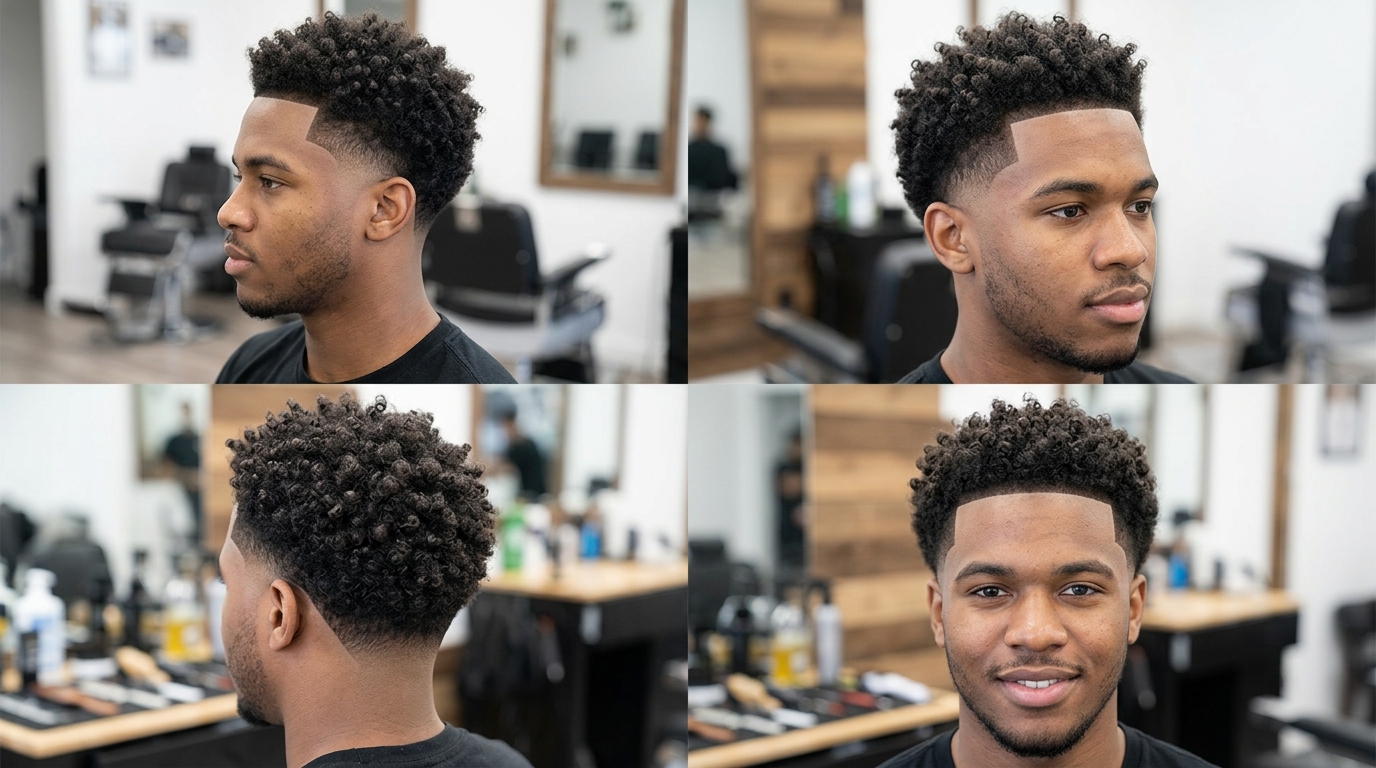
Mid taper fade curly hair are a natural match, but the phrase “mid taper” gets thrown around loosely enough that two people can walk into the same barbershop asking for it and walk out with different cuts. This guide breaks down what the style actually means on curly hair, how to compare it against other taper heights, and exactly what to say in the chair so you get the result you pictured.
Beyond the terminology, curl pattern, density, and shrinkage all change how a mid taper looks once it’s finished and dry. We’ll cover the best style variations to bring as inspiration, a step-by-step styling routine, a realistic maintenance schedule, and the mistakes that most often turn a good haircut into a disappointing one.
What is a mid taper fade on curly hair?
A mid taper fade on curly hair is a cut where the sides and back shorten gradually starting around the temple, while the curls on top keep most of their natural length and pattern. It sits between a low taper (which starts near the ear) and a high taper (which starts above the temple), giving a moderate amount of contrast without exposing much scalp.
On curly hair specifically, this matters because curls add visual volume outward and upward. A mid taper trims the bulk at the sides so the head doesn’t look wider than it is, while leaving the crown untouched so the curl pattern still does the visual work. It’s a balanced choice: noticeable enough to look intentional, subtle enough to work in most settings.
Mid taper vs. mid fade: why the names get confused
“Taper” and “fade” technically describe different things, but barbers and clients use them almost interchangeably. A taper is a gradual, gentler shortening that usually stops before skin, while a fade blends hair down to the skin or very close to it. A “mid taper fade” is really shorthand for a moderate-height blend that can end either way.
Because shops don’t apply the term consistently, the safest move is to specify the finish yourself, skin, shadow, or a guard-length stop, rather than relying on the word “taper” to communicate it for you.
Mid taper vs. low and high tapers on curly hair
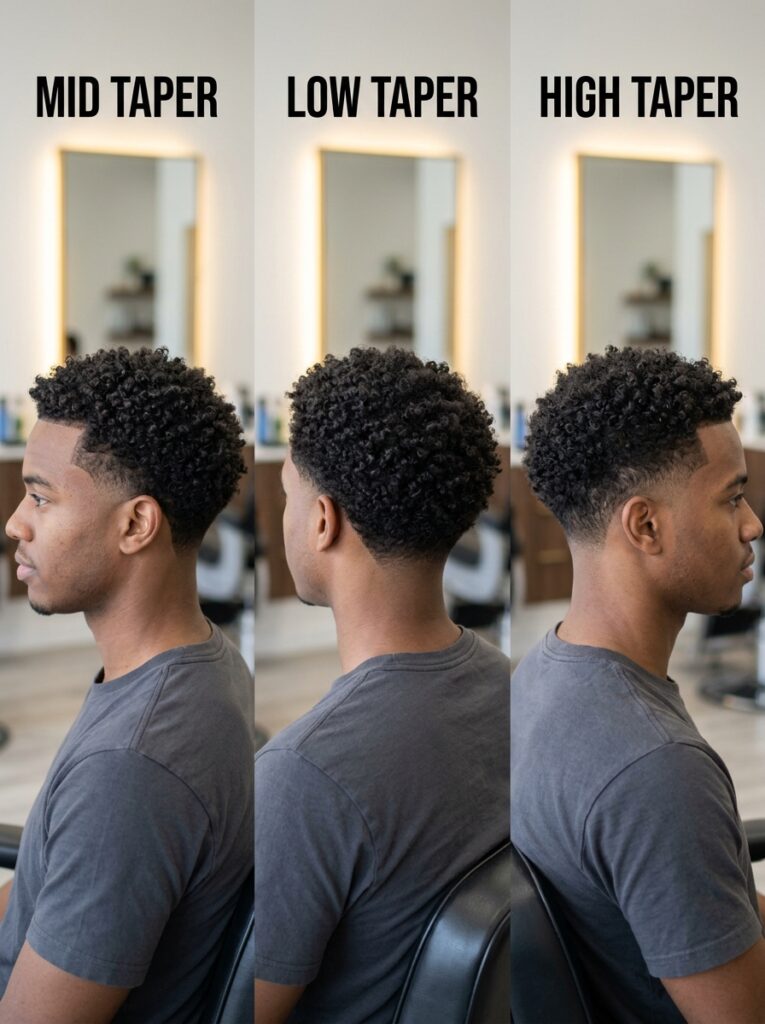
Taper height controls two things: how much side volume is removed and how much contrast shows against the curls on top. Here’s how the three common heights compare:
| Taper Height | Where It Starts | Side Volume Kept | Contrast Against Curls | Best For |
| Low taper | Near the ear/nape | Most | Subtle | Conservative looks, thinner curls |
| Mid taper | Around the temple | Moderate | Moderate | Most curl types and face shapes |
| High taper | Above the temple | Least | Strong | Bold, high-contrast styles |
Low taper vs. mid taper on curly hair
A low taper barely disturbs the sides, which suits fine or sparse curls and workplaces that prefer an understated look. A mid taper removes noticeably more bulk, which helps when dense curls on top are making the whole shape feel heavy or wide.
Mid taper vs. high taper
A high taper pushes the blend well above the temple, exposing more scalp and creating a sharper break beneath the curls. It looks bolder but needs more frequent touch-ups to stay crisp. A mid taper is the more forgiving middle ground, a barber can always take it higher later, but there’s no undoing a cut that started too aggressive.
Is a mid taper good for your curly hair?
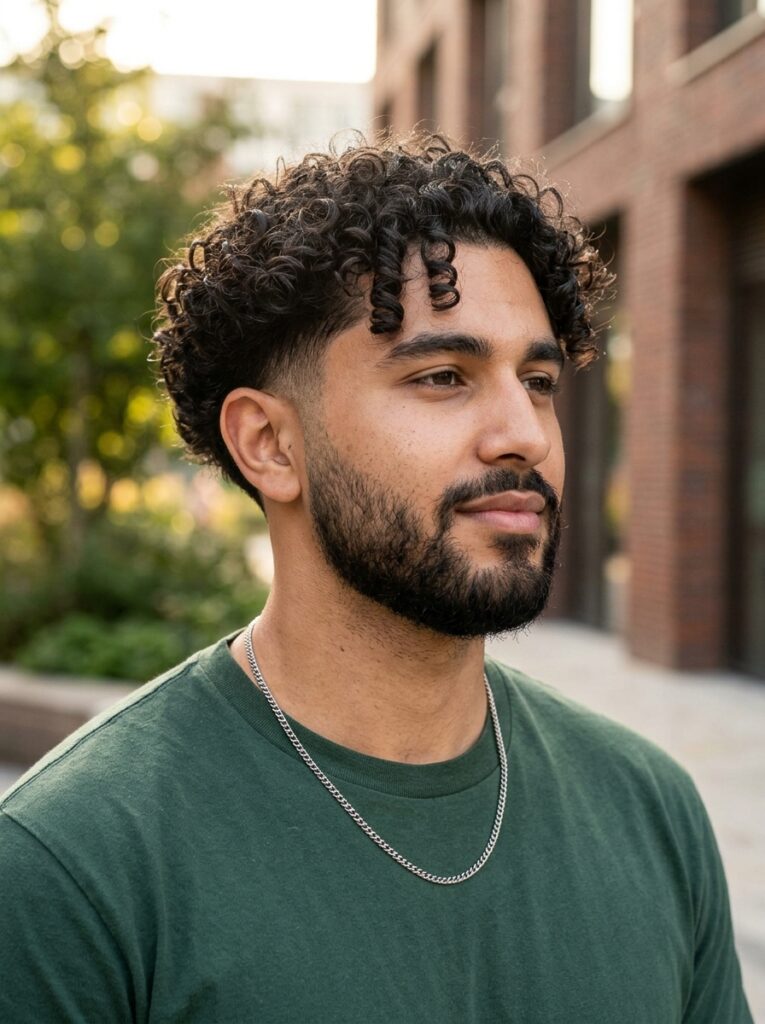
Yes, for most curl types and most people, because the cut only reshapes the perimeter, it doesn’t touch how your curls behave on top. Whether you’ll love the result depends more on how much length and volume you keep on top than on the taper itself.
Loose curls, tight curls, and coily hair
The mid taper adapts across the curl spectrum:
- Loose curls or waves blend more softly into the taper line, giving a smoother transition.
- Tighter curls build more visible volume on top, creating stronger contrast against the tapered sides.
- Coily or afro-textured hair holds its shape well above the blend, letting the taper act almost like a frame around a fuller crown.
Density and shrinkage matter more than curl “type” charts. A skilled barber will judge your hair in the chair rather than relying on a category.
Short, medium, or long curls on top
| Top Length | Look | Styling Effort | Notes |
| Short | Compact, low-maintenance | Minimal | Taper lines become the focal point |
| Medium | Balanced definition | Moderate | Most versatile option |
| Long | Movement, volume | Higher | Needs more product and drying time |
Learn more:Low Taper Fade Haircut for Boys: Best Styles, Tips, and Guide for 2026
Decide on top length before the appointment, it’s a separate decision from taper height, and leaving it unspecified is a common source of mismatched results.
Best mid taper fade curly hair styles
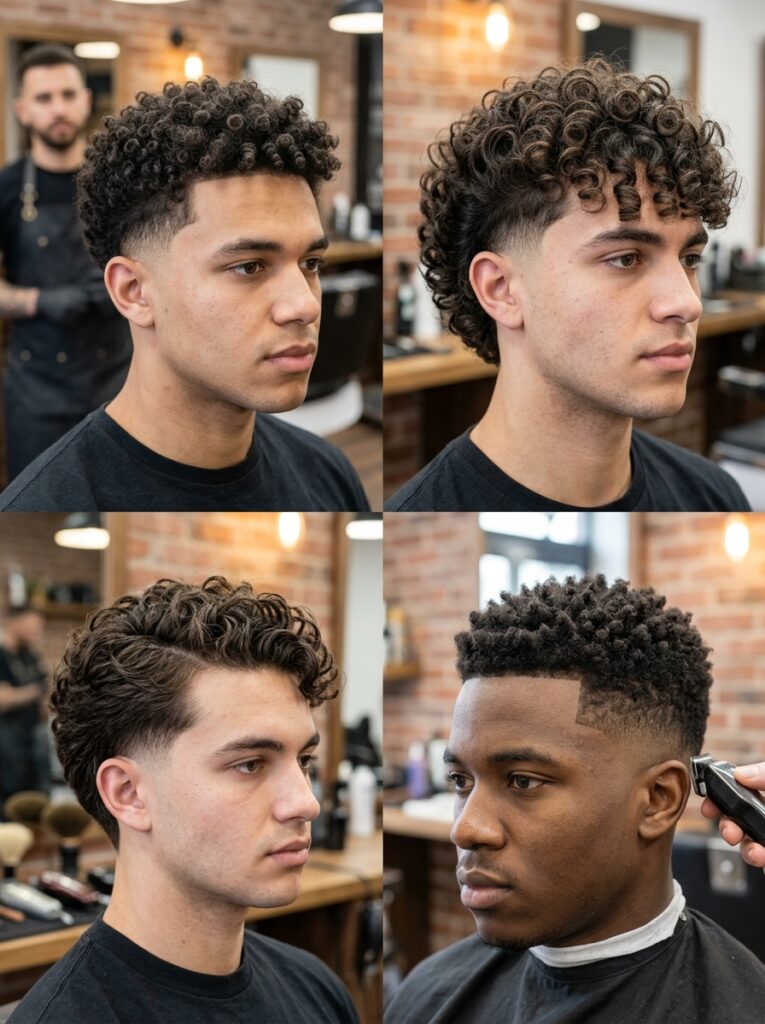
These are variations to describe or show as reference photos, not fixed names a barber will automatically recognize.
1. Classic curly mid taper
Natural curl length on top, clean tapered perimeter beneath. Low-maintenance and easy to adjust at the next visit, a solid starting point if you’ve never had a taper before.
2. Mid taper with curly fringe
Curls on top are directed forward into a fringe that sits over the forehead. Because this changes the front more than the sides, specify fringe length and forehead coverage separately from the taper.
3. Curly blowout mid taper
More height and lift on top, dried outward for volume, over a clean tapered perimeter. This is the highest-maintenance version since the shape depends on daily drying technique, not just the cut.
4. Short curly mid taper
Curls kept close and even on top, letting the taper lines dominate the look. Quick to style but less flexible between haircuts since there’s minimal length to work with.
5. Mid taper with coily or afro-textured hair
The taper sculpts around a fuller, natural crown rather than compressing it. This pairing is common with coils, twists, and natural afro textures, where preserving volume on top is the priority.
6. Mid taper with line-up or beard blend
A line-up sharpens the hairline and temple edges, while a beard blend connects the sideburn taper into facial hair for one continuous line. Both are optional add-ons that increase upkeep since edges show growth fastest.
What should you ask your barber for?
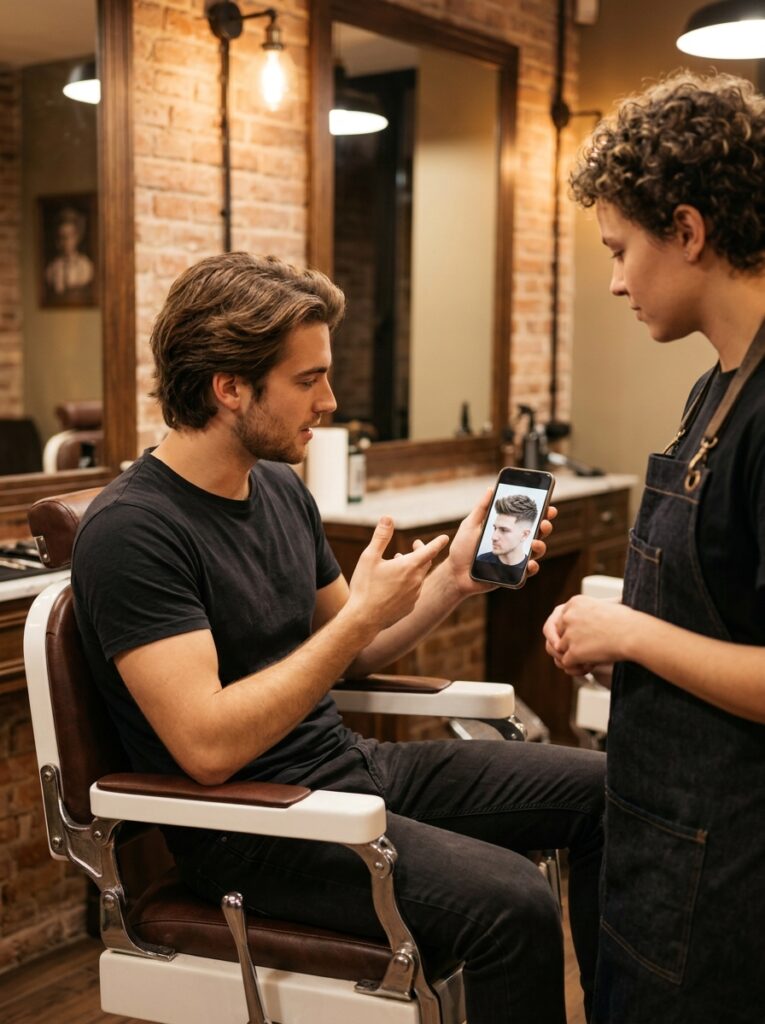
A clear brief covers five specifics. Vague requests like “just a mid taper” leave too much open to interpretation.
| What to Specify | Why It Matters |
| Reference photo | Removes guesswork the word “taper” leaves open |
| Where the blend starts | Prevents the taper landing higher than intended |
| How short the bottom finishes | Skin, shadow, or guard length changes contrast and regrowth time |
| How much curl length stays on top | Shrinkage means wet length isn’t final length |
| Bulk, fringe, and neckline shape | Shapes the overall silhouette as much as taper height does |
1. Show a reference photo
Bring one or two clear photos, ideally of hair with similar density and curl pattern to your own. A photo settles what words alone often can’t.
2. Say where the taper should begin
Point to the spot on your head rather than just naming “mid.” This is a one-way adjustment, a barber can always go higher next time, but not lower on the same day.
3. Decide how short the bottom goes
Choose between bare skin, a soft shadow, or a guard length. This single decision affects both how much contrast you’ll see and how soon the cut needs a touch-up.
4. Explain how much curl length to keep
Describe the finished look you want, visible definition versus a fuller, blown-out shape, and ask your barber to check the length once it’s dry, since curls spring back as they dry.
5. Discuss bulk, fringe, and neckline
Say whether fullness should sit toward the front or spread evenly, and whether the neckline should follow its natural shape or be squared off. A natural neckline grows out more gracefully.
How do you style a mid taper with curly hair?
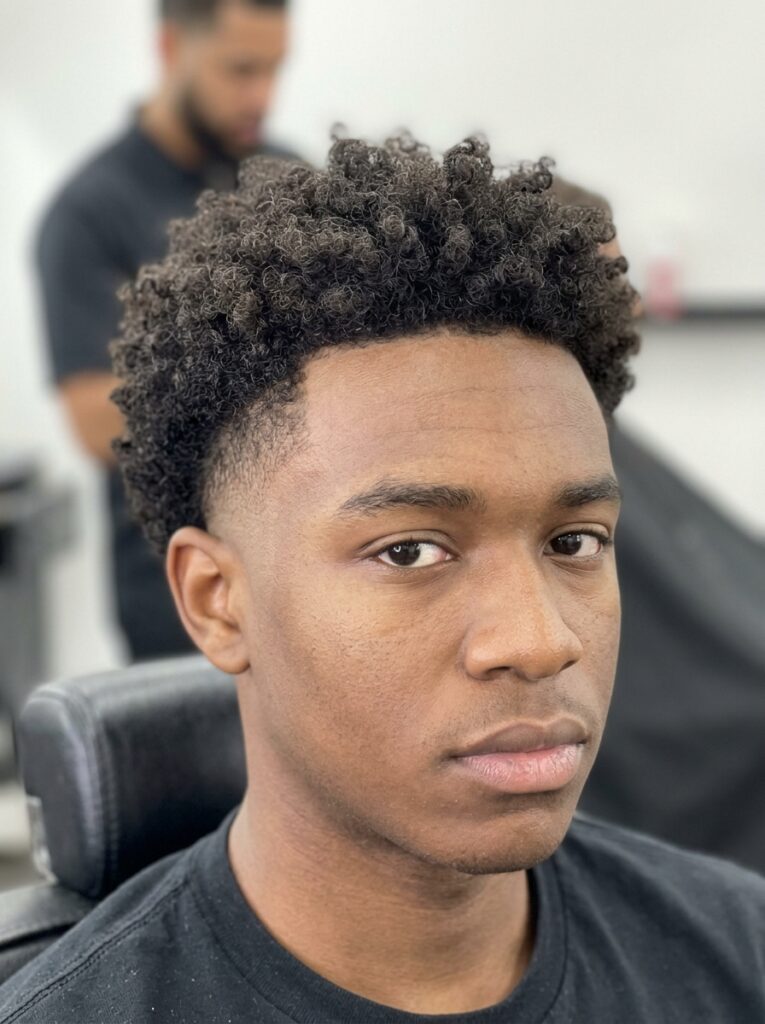
Only the top needs active styling, the tapered sides are best left alone so product doesn’t build up on freshly cut hair.
Step 1: start with damp, detangled hair
Detangle while hair is wet using fingers or a wide-tooth comb, working in sections. Avoid brushing curly hair when it’s dry, which causes frizz and breakage.
Step 2: add moisture and definition
Apply a leave-in conditioner first, then a curl cream, mousse, or gel depending on desired hold. Use a small amount and keep product off the scalp.
Step 3: air-dry or diffuse without flattening the shape
Air-drying is gentler on curl structure. If diffusing, scrunch upward instead of pulling down, which flattens curls and reduces the contrast against the tapered sides.
Step 4: refresh between wash days
Mist with water and work in a small amount of leave-in rather than restyling from scratch. Finger-detangle only, and skip the brush.
How do you maintain a curly mid taper?
The taper and the curls run on two separate maintenance schedules that both need attention.
How often should you get the taper cleaned up?
| Finish Type | Typical Touch-Up Window |
| Guard length / shadow | 3–4 weeks |
| Mid taper (standard) | 2–3 weeks |
| Skin-close finish | 2–3 weeks |
A closer finish blurs faster, so it needs more frequent visits. Between appointments, you can clean up the neckline and sideburns yourself, but leave the main blend to your barber.
How should you care for the curly top?
Condition regularly since curly hair is naturally drier and more prone to breakage. Follow up with a leave-in or light oil after washing, and wash only as often as your scalp and curls actually need. At night, a loose pineapple-style tie or a satin/silk pillowcase reduces friction and protects both the curls and the shorter tapered sides from getting compressed.
Common mid taper mistakes to avoid
- Letting the taper creep too high – Confirm the starting point by pointing to it before clippers touch your head; it’s easy to correct upward later but impossible to add length back the same day.
- Cutting too much off the top – Curls shrink significantly as they dry, so hair that looks right wet can look noticeably shorter once dry. Always ask for a dry check before the cut is finished.
- Using a mismatched reference photo – A photo from a different curl type or density won’t translate accurately; bring examples close to your own texture.
Alternatives if a mid taper is not the look you want
- Low taper – Keeps more side volume and shows the least contrast; a safer, more conservative option.
- High taper – Removes more side hair for a bolder, sharper look, with more frequent upkeep.
- Burst fade – Curves around the ear in a semicircle rather than a straight line down the side.
- Drop fade – Follows the curve of the head, dropping lower toward the back of the neck.
- Temple fade – Concentrates the short work only at the temples, leaving the rest of the sides longer.
Final thoughts
A mid taper fade works well on curly hair because it shapes the perimeter without interfering with your natural curl pattern, which is why it adapts so easily across textures and densities. The name matters less than the specifics you bring to the chair.
Walk in with a reference photo, point to where the blend should start, name your preferred finish, and agree on top length and neckline shape beforehand. From there, a simple routine of damp styling, gentle drying, and a touch-up every two to four weeks keeps both the taper and the curls looking sharp.