

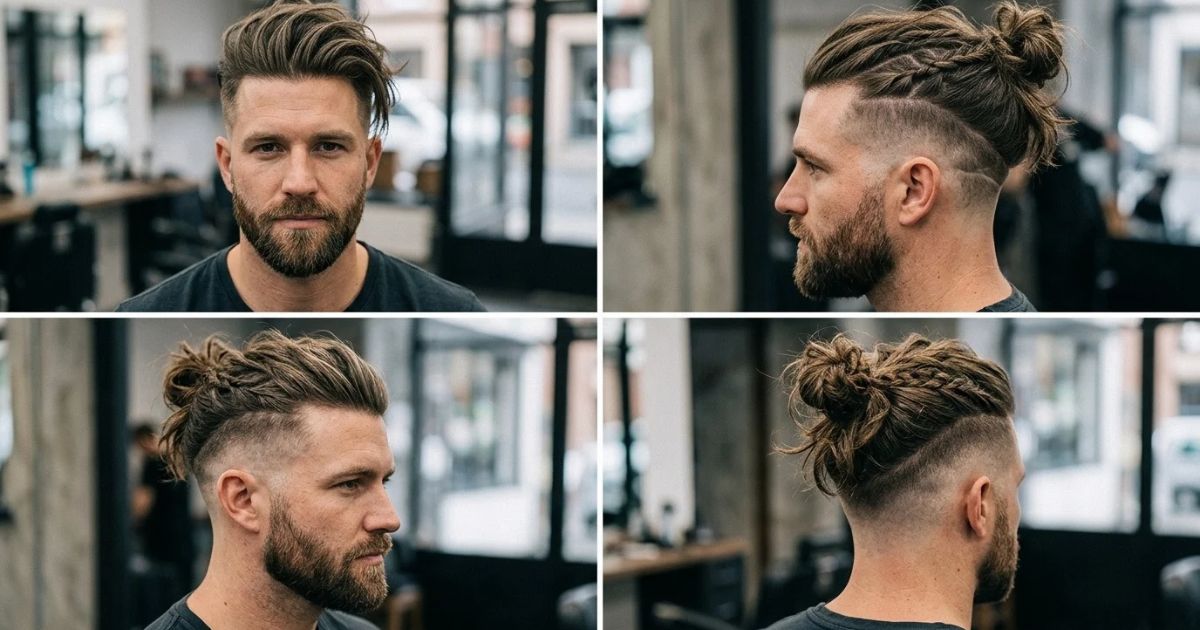
The warrior cut is a bold and masculine hairstyle that combines texture, volume, and a rugged appearance. Inspired by strong, adventurous looks, this haircut can feature short sides, longer hair on top, choppy layers, or a textured fringe. Its exact shape depends on the variation you choose and your natural hair type.
Whether you prefer a modern haircut with a clean fade or a longer, messy style, the warrior cut offers several ways to express your personal style. In this guide, you will discover popular warrior cut hairstyles for men, how to choose the right variation, styling tips, maintenance advice, and answers to common questions.
What Is a Warrior Cut?
A warrior cut is a modern hairstyle inspired by rugged, textured, and masculine looks. It usually features layered hair, noticeable texture, and a natural finish. Some versions have short sides and a longer top, while others use medium-length hair to create a more relaxed appearance.
Unlike a single standardized haircut, the warrior cut can be customized in different ways. You can combine it with a fade, taper, textured fringe, or longer layers depending on your preference. This flexibility makes it an interesting option for men who want a hairstyle that looks distinctive without requiring an overly polished finish.
Learn more:Burst fade for curly hair: styles, fit, barber script and care 2026
Best Warrior Cut Hairstyles for Men
1. Classic Warrior Cut
The classic warrior cut features textured layers and a slightly messy finish. The top has enough length to create movement, while the sides can remain short or naturally tapered. This version emphasizes a rugged appearance without relying on complicated styling.
It is a useful starting point if you want to try the warrior cut for the first time. Ask your barber for layered texture and a natural shape that works with your hair type. A small amount of matte styling product can help define the layers without making the hair look overly shiny.
2. Warrior Cut with Fade
The warrior cut with a fade combines textured hair on top with sides that gradually become shorter. A low, mid, or high fade can change the overall appearance, making the haircut more subtle or more dramatic.
This variation works well for men who like a contemporary barbershop finish. The textured top creates contrast with the faded sides, giving the haircut a clean outline. Choose the fade height according to the style you prefer and discuss the final shape with your barber before cutting.
3. Textured Warrior Cut
A textured warrior cut focuses on separated layers and natural movement. The barber uses suitable cutting techniques to prevent the top from appearing too heavy or flat. This can make the hairstyle look relaxed and dynamic.
For styling, apply a small amount of matte paste or lightweight texturizing product to dry or slightly damp hair, following the product instructions. Use your fingers to arrange the layers instead of forcing every strand into a fixed position. The goal is a natural, flexible finish.
4. Short Warrior Cut
A short warrior cut keeps the overall length manageable while retaining some of the style’s signature texture. The top is cut short enough for easy daily styling, and the sides can be tapered or faded to create a balanced shape.
This option is practical for men who prefer a low-maintenance routine. It generally requires less styling time than longer versions, although the exact maintenance needs depend on how quickly your hair grows and how sharp you want the sides to look.
5. Medium-Length Warrior Cut
A medium-length warrior cut provides more room for layered movement and a slightly fuller appearance. The extra length allows the hair to fall naturally across the forehead or sweep toward the back, depending on how the barber shapes it.
This variation may be worth considering if you enjoy experimenting with different finishes. It can look relaxed when air-dried or more defined with a suitable styling product. Regular trims help preserve the layers and prevent the haircut from losing its intended shape.
6. Warrior Cut with Messy Fringe
A messy-fringe warrior cut brings some of the textured hair forward toward the forehead. The fringe may be uneven, lightly separated, or layered to complement the rest of the haircut.
This variation creates a casual, modern look without requiring every strand to sit perfectly. Tell your barber how much forehead coverage you want and whether you prefer a short, choppy fringe or a longer, softer one. Your natural hair direction can affect the final result.
7. Curly Warrior Cut
A curly warrior cut works with the natural shape and movement of curls. The top can retain enough length to show the curl pattern, while the sides are trimmed to keep the overall shape balanced.
The key is to avoid removing too much length without considering how the curls shrink as they dry. Ask your barber to account for your natural curl pattern. A suitable curl cream or lightweight leave-in product may help manage frizz and maintain definition.
8. Wavy Warrior Cut
A wavy warrior cut uses natural waves to create texture and movement. Medium or slightly shorter layers can help the waves sit in a balanced shape instead of forming a heavy block.
For everyday styling, use a lightweight product that supports your natural texture. Avoid applying too much heavy wax or paste, as it may weigh down the waves. Your barber can recommend a length that works with your hair’s natural direction and density.
9. Warrior Cut with Taper
The warrior cut with a taper keeps the sides and neckline gradually shorter without necessarily creating the strong contrast of a high fade. This gives the hairstyle a neat outline while allowing the top to remain textured and relaxed.
It is a useful choice for people who want a modern look that is not too dramatic. The top can be short, medium-length, or layered, depending on the version you select. A taper can also be adjusted to suit your preferred level of contrast.
10. Long Warrior Cut
A long warrior cut uses longer layers to create a more flowing and dramatic appearance. The hair may fall around the ears, cover part of the forehead, or move backward depending on the cut and natural texture.
Longer versions usually require more care than short styles. Gentle washing, conditioning, and careful detangling can help keep the hair manageable. Ask your barber how to preserve the shape while allowing enough length for the style you want.
Warrior Cut Styles Comparison Table
The following table compares popular warrior cut variations to help you decide which one to discuss with your barber.
| Warrior Cut Style | Main Feature | Styling Effort | Best For |
| Classic Warrior Cut | Rugged, layered texture | Low to medium | Natural-looking styles |
| Warrior Cut with Fade | Short faded sides | Medium | Modern, high-contrast looks |
| Textured Warrior Cut | Separated layers | Low to medium | A relaxed, messy finish |
| Short Warrior Cut | Short, manageable top | Low | Simple daily styling |
| Medium-Length Warrior Cut | More movement and volume | Medium | Flexible styling options |
| Messy Fringe Warrior Cut | Textured front section | Low to medium | Casual hairstyles |
| Curly Warrior Cut | Natural curl definition | Medium | Curly hair |
| Wavy Warrior Cut | Soft, natural movement | Low to medium | Wavy hair |
| Warrior Cut with Taper | Gradually shortened sides | Low to medium | A neat, subtle finish |
| Long Warrior Cut | Longer, flowing layers | Medium to high | Longer hairstyles |
Styling effort is approximate and depends on your hair type, chosen products, and desired finish.
Is the Warrior Cut Suitable for Your Hair Type?
Straight Hair
Straight hair can work well with a warrior cut when the barber creates enough texture and layering. Without suitable shaping, the top may appear flat or overly uniform. A lightweight matte product can help add separation and a more relaxed finish.
Wavy Hair
Wavy hair naturally provides movement, making it a useful match for layered warrior cut variations. Your barber can shape the top to work with your natural waves rather than forcing the hair into an entirely different pattern.
Curly Hair
Curly hair can create a fuller, more defined version of the warrior cut. The main consideration is how the curls behave when dry. A barber experienced with curls can help maintain the desired shape while preserving natural definition.
Thick Hair
Thick hair can support textured layers and a fuller top. Strategic layering may help reduce excessive bulk and improve movement. Tell your barber whether you want the hair to look controlled, messy, or naturally full.
Fine Hair
For fine hair, a shorter or moderately textured version may be easier to manage. Ask for a shape that avoids removing too much density from the top. Lightweight styling products can help create separation without weighing the hair down.
How to Ask Your Barber for a Warrior Cut
Getting the result you want starts with explaining the details clearly. The term “warrior cut” may mean different things to different barbers, so bring a reference photo of the exact variation you like.
Use these tips during your consultation:
- Choose the top length: Explain whether you want short, medium, or long layers.
- Decide on the sides: Ask for a fade, taper, or more natural sides.
- Describe the texture: Tell your barber whether you prefer a messy, choppy, or controlled finish.
- Discuss your fringe: Explain whether you want hair falling forward or swept away from your forehead.
- Consider your natural hair: Share whether your hair is straight, wavy, curly, fine, or thick.
- Ask about upkeep: Find out how often the cut may need trimming to maintain its shape.
A reference photo is often more useful than relying on the haircut name alone. You can also ask your barber to recommend small adjustments based on your hair growth pattern and daily routine.
How to Style a Warrior Cut at Home
Styling depends on the length and texture of your chosen variation, but a simple routine can help you maintain the look.
Step 1: Start with Clean Hair
Wash your hair as needed using a shampoo suitable for your scalp and hair type. If your hair tends to feel dry, use conditioner as appropriate. Gently towel-dry your hair instead of rubbing it aggressively.
Step 2: Shape the Hair
While your hair is slightly damp, use your fingers to arrange the top in your preferred direction. For a messy finish, allow some natural separation between the layers. For a more controlled style, guide the hair backward or toward the side.
Step 3: Apply a Suitable Product
Choose a matte paste, lightweight cream, or another product suited to your hair type. Start with a small amount and add more only if needed. Using too much product can make the hair heavy or greasy.
Step 4: Create Texture
Use your fingertips to separate selected sections and define the layers. If you use a blow-dryer, choose a comfortable heat setting and avoid holding the dryer too close to your hair or scalp.
Step 5: Check the Final Shape
Look at the hairstyle from the front and sides. Adjust any sections that do not sit as intended, but avoid overworking the hair. A warrior cut is often designed to retain some natural movement rather than look perfectly fixed.
How to Maintain a Warrior Cut
Regular maintenance helps keep a warrior cut looking intentional. Short fades and tapers may need more frequent barber visits than longer, naturally layered versions. The right schedule depends on how quickly your hair grows and how precise you want the sides to remain.
Keep your hair clean according to your scalp’s needs, condition it when appropriate, and use styling products in moderation. If you have curly or longer hair, gentle detangling can help reduce unnecessary breakage. For longer versions, occasional trims can preserve the layers without removing more length than you want.
It is also helpful to communicate with your barber about what worked and what did not after your first cut. If the top felt too short or the sides looked too dramatic, those details can guide the next appointment.
Warrior Cut vs. Other Men’s Hairstyles
The warrior cut shares features with several other modern hairstyles, but the exact result depends on the reference and the barber’s technique.
| Hairstyle | Key Difference | Overall Look |
| Warrior Cut | Flexible, rugged texture and layers | Bold and relaxed |
| Wolf Cut | Often emphasizes pronounced layers and a fuller, shaggy outline | Shaggy and expressive |
| Crew Cut | Short, practical length throughout the top | Clean and simple |
| Textured Crop | Usually features a shorter top and forward fringe | Compact and modern |
| Undercut | More noticeable separation between top and sides | Strong contrast |
| Classic Taper | Gradual shortening around the sides and neckline | Traditional and neat |
These categories can overlap. For example, a warrior-inspired haircut may include a fade or use layered texture similar to a wolf cut. The best way to communicate your preference is to show your barber a reference image.
Common Warrior Cut Styling Mistakes
A few simple mistakes can make it harder to achieve your preferred finish.
Using too much product: Heavy application can make textured hair look greasy or flat. Begin with a small amount.
Choosing the wrong reference: Not every hairstyle described as a warrior cut has the same shape. Select a photo that clearly shows the front, sides, and top.
Ignoring natural texture: Straight, wavy, and curly hair behave differently. A good haircut should account for your natural hair pattern.
Overlooking maintenance: A sharp fade may require more frequent touch-ups than a longer layered cut. Choose a version that fits your schedule.
Trying to force a fixed shape: Some warrior cut variations look best with natural movement. Use products to support the hairstyle instead of making it unnecessarily stiff.
Frequently Asked Questions
1. What Is a Warrior Cut for Men?
A warrior cut is a rugged, textured hairstyle that can feature layered hair, a longer top, short sides, or a messy finish. Its exact shape depends on the chosen variation.
2. Is the Warrior Cut Good for Short Hair?
Yes. A short warrior cut can maintain textured layers and a masculine appearance while keeping daily styling relatively simple. Ask your barber to preserve enough texture for your preferred finish.
3. Can You Get a Warrior Cut with Curly Hair?
Yes. Curly hair can create a distinctive warrior cut with natural volume and movement. A barber should account for curl shrinkage and shape the hair according to its natural pattern.
4. Does a Warrior Cut Need a Fade?
No. A fade is optional. You can choose a taper, naturally shortened sides, or a longer layered shape depending on the warrior cut variation you prefer.
5. How Do You Maintain a Warrior Cut?
Maintain the shape with suitable trims, wash and condition your hair as needed, and use a styling product appropriate for your hair type. Short fades may need more frequent touch-ups.
Conclusion
The warrior cut is a versatile hairstyle for men who want a textured, rugged, and modern appearance. From short warrior cuts and faded variations to curly, wavy, and longer layered styles, there are several ways to customize the look. The best option depends on your natural hair texture, preferred length, styling routine, and the amount of maintenance you want.
Before visiting your barber, choose a clear reference photo and discuss the top length, sides, layers, and finish. With a suitable cut and a simple grooming routine, you can create a warrior-inspired hairstyle that fits your personal style. Explore different variations to find the version that works best for you in 2026.