

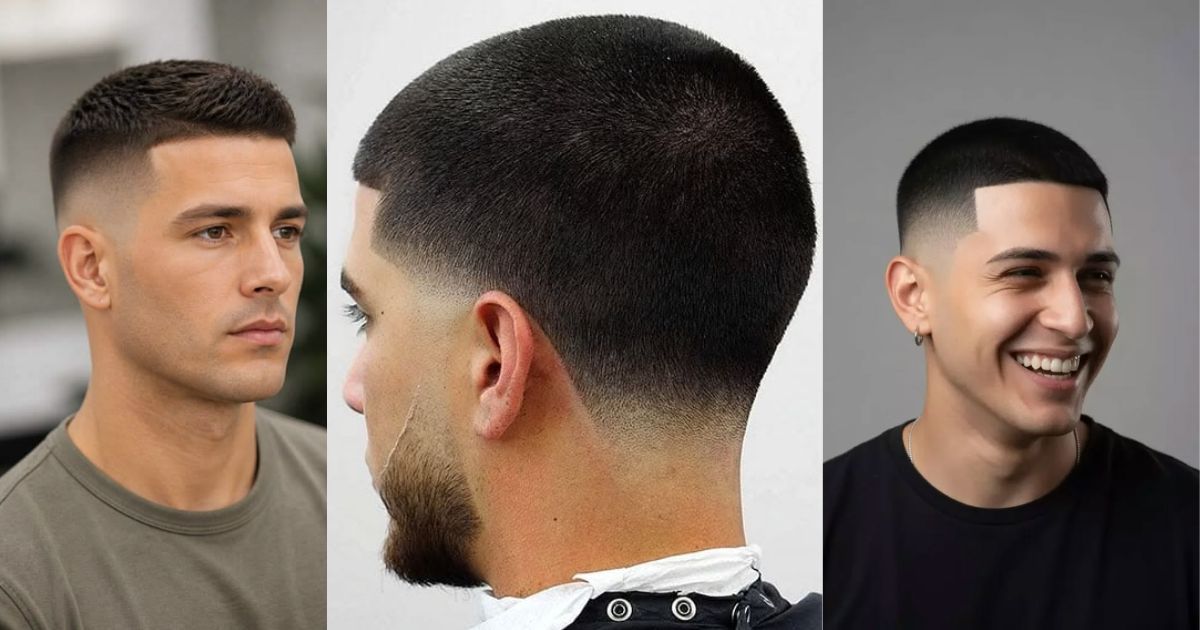
If you want a haircut that looks sharp without demanding much of your morning routine, the low taper fade buzz cut is hard to beat. It combines short, even length on top with a gentle fade near the ears and neckline, giving you a clean silhouette that works in the office, the gym, or anywhere in between.
This guide breaks down everything you need to know before your next barber visit: the best style variations, how to pick a clipper guard length, what to expect based on your hair texture and face shape, and how to keep the cut looking fresh between appointments. No fluff, just the details that actually help you get the haircut right the first time.
What is a low taper fade buzz cut?
A low taper fade buzz cut is a short, clipper-cut hairstyle where the hair is buzzed to a uniform length on top and gradually blends into shorter hair near the ears and nape of the neck. Unlike a high or mid fade, the blending, or “taper”, begins low on the head, usually just above the ears, keeping more visible length on the sides.
The result is a subtle transition rather than a dramatic contrast. It reads as neat and low-key rather than edgy, which is part of why it’s become a go-to choice for men who want short hair without looking like they just left basic training.
Why the starting point matters
The height at which a fade begins changes the entire personality of the haircut. A low fade keeps the taper close to the hairline, so more of the head retains length. This creates a softer, more traditional look that suits conservative settings like offices, client meetings, or formal events.
A high fade, by contrast, starts near the temples and removes much more hair, creating sharper contrast and a bolder statement. The low taper sits at the quieter end of that spectrum, which is why it pairs so well with classic buzz cut lengths.
What a taper adds that a plain fade doesn’t
A plain buzz cut is one uniform length all over, cut with a single clipper guard. A taper introduces graduated shortening at the perimeter, sides, back, and neckline, so the cut doesn’t end abruptly at the hairline.
The taper does three things a flat buzz cut can’t:
- Softens the edges so the haircut grows out more evenly
- Frames the face by drawing the eye toward the jaw and cheekbones
- Adds shape without needing a fully shaved skin fade
Best low taper fade buzz cut styles
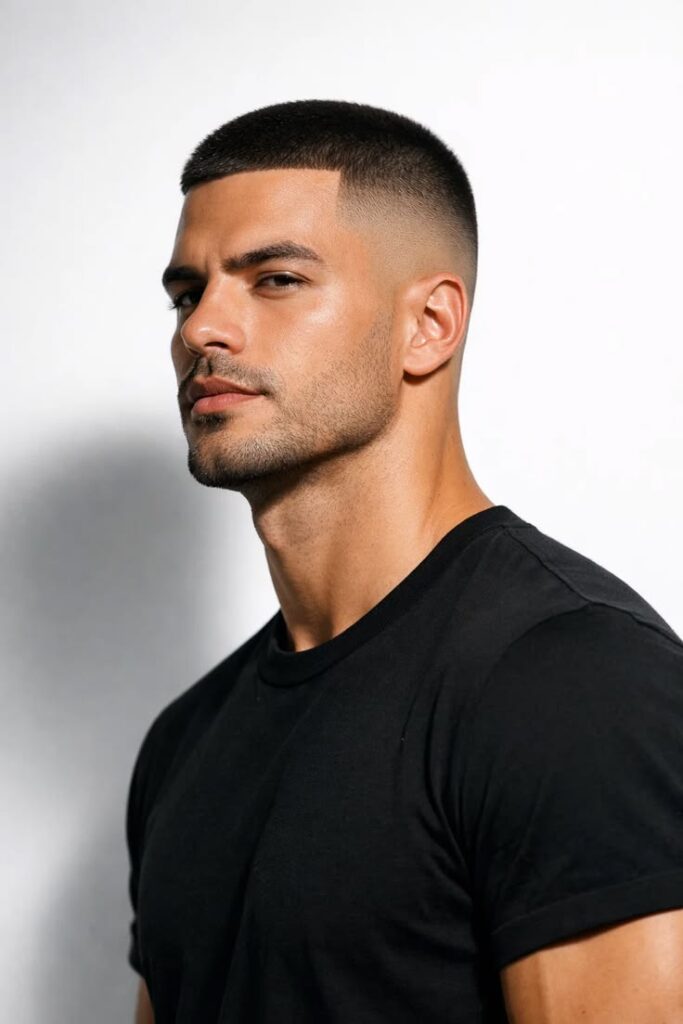
Not every low taper fade buzz cut looks the same. Small changes in top length, texture, and finish create noticeably different results. Here are the most requested variations:
- Classic buzz with low taper, uniform length (guard #2–#4) with a simple, subtle taper at the sides.
- Textured crop with low taper, slightly longer top (guard #4–#6) styled with texture for a more modern, tousled finish.
- Low taper with a hard part, a shaved line separating the top from the faded side, adding definition.
- Low taper with a fringe, a touch more length left at the front for a soft, brushed-forward look.
- Buzz cut with a low bald/skin fade blend, a subtler take on the skin fade that still keeps the low starting point.
- Low taper with a beard fade, the haircut’s taper is mirrored into the beard line for a cohesive, groomed look.
Choosing your buzz length: a clipper guard guide
Clipper guard numbers correspond to specific lengths, and the number you choose changes how bold or subtle the buzz looks. Here’s a quick reference:
Learn more:Low taper fade with fluffy hair: best styles, styling tips, and maintenance guide
| Guard Size | Length (inches) | Length (mm) | Look |
| #1 | 1/8″ | ~3mm | Very short, close to skin |
| #2 | 1/4″ | ~6mm | Short, classic buzz |
| #3 | 3/8″ | ~10mm | Slightly fuller, still tight |
| #4 | 1/2″ | ~13mm | Balanced, versatile length |
| #5 | 5/8″ | ~16mm | Noticeable texture on top |
| #6 | 3/4″ | ~19mm | Longer buzz, more styling options |
For a low taper fade buzz cut, most barbers recommend a #3 or #4 guard on top, tapering down through #1 or #0.5 near the ears and neckline. If you’re unsure, start longer, you can always go shorter at your next visit, but you can’t add hair back.
Low taper fade buzz cut for straight, wavy, curly, and coily hair
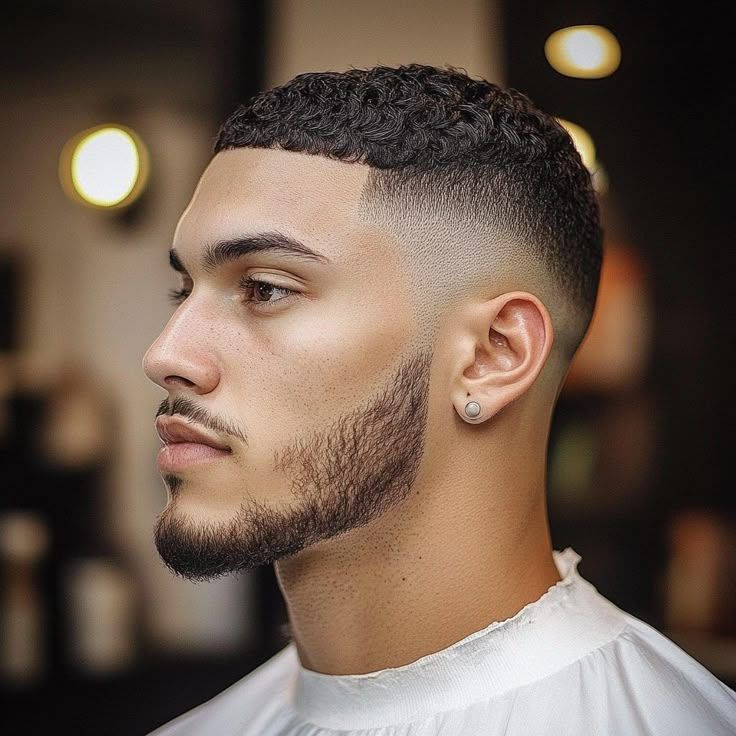
Hair texture affects how a buzz cut behaves as it grows out, and how sharp the taper will look right after the cut.
| Hair Type | How It Wears | Styling Tip |
| Straight | Lies flat, taper looks crisp immediately | Minimal product needed; a light matte clay adds texture |
| Wavy | Slight texture on top, softens the taper line | A small amount of pomade defines waves without shine |
| Curly | Curls create natural volume on top | Ask for a slightly longer top guard to preserve curl pattern |
| Coily | Holds shape well, taper needs frequent upkeep | A sponge/twist tool can enhance texture between cuts |
Curly and coily hair types often benefit from leaving a touch more length on top, since shrinkage can make a very short buzz look shorter than intended once it dries.
Best low taper fade buzz cut for your face shape
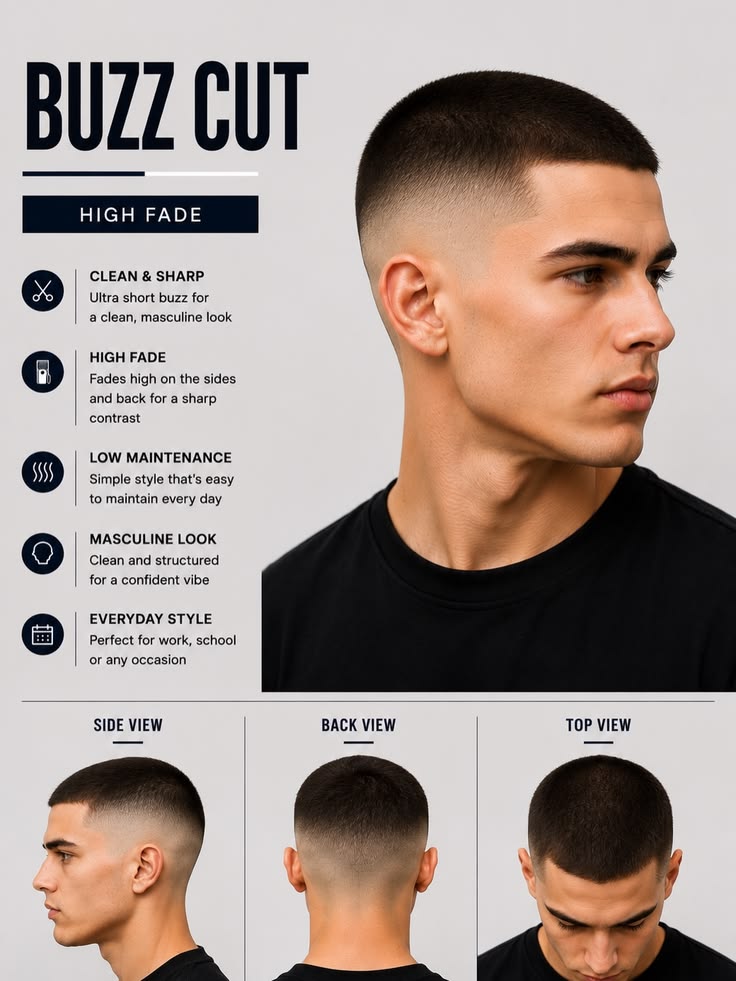
The right buzz length and taper height can subtly balance your facial proportions. Here’s how to match the cut to your face shape:
| Face Shape | Recommended Style | Why It Works |
| Oval | Almost any variation works | Balanced proportions suit most lengths and tapers |
| Round | Slightly longer top, higher taper | Adds vertical length, reduces width |
| Square | Classic low taper with soft edges | Complements strong jawlines without adding bulk |
| Rectangular | Textured crop with a low taper | Shorter sides prevent the face from looking longer |
| Diamond | Low taper with a fringe or slight top length | Softens angular cheekbones |
| Triangle | Low taper with volume on top | Balances a narrower forehead against a wider jaw |
Line-ups and shape-ups: getting the edges right
A crisp line-up finishes off the low taper fade and makes the haircut look intentional. This usually includes:
- Defining the hairline, a straight or slightly curved line across the forehead
- Cleaning the temples, sharp edges where the taper meets the sideburns
- Outlining the neckline, either a natural curve or a blocked, squared-off line
- Detailing the ears, trimming stray hair for a polished finish
Line-ups typically need refreshing every 1–2 weeks, faster than the rest of the haircut, since new growth along the hairline is the first thing to look unkempt.
How to ask your barber for a low taper fade buzz cut
Clear communication makes the difference between a great cut and a disappointing one. When you sit in the chair, try saying:
- “I want a buzz cut, guard [number] on top, with a low taper fade, keep the blend close to my ears, not up near the temples.”
- “Please don’t go skin-level on the taper, I want it to stay soft.”
- Bring a reference photo if possible, “low taper” can mean slightly different things to different barbers.
It also helps to mention your hair type and how much maintenance you’re willing to do, since that affects whether the barber leaves more length on top.
Low taper fade vs mid taper vs skin fade
| Feature | Low Taper Fade | Mid Taper Fade | Skin Fade |
| Fade starting point | Just above the ears | Mid-way up the side of the head | Can start low, mid, or high, down to skin |
| Contrast level | Subtle | Moderate | High |
| Maintenance frequency | Every 3–4 weeks | Every 2–3 weeks | Every 1–2 weeks |
| Best for | Conservative, professional settings | Balanced, everyday versatility | Bold, high-contrast looks |
| Grow-out appearance | Blends in gradually | Noticeable within 2 weeks | Grows out fastest looking |
The low taper fade is the lowest-maintenance of the three because the blend is subtle enough that regrowth doesn’t create a sharp, obvious line right away.
How to maintain a low taper fade buzz cut
Keeping this cut sharp is straightforward, but a few habits make a real difference:
- Get touch-ups every 2–4 weeks to keep the taper and line-up crisp.
- Use a boar-bristle brush on top to train hair direction if you leave some length.
- Apply a lightweight product, matte clay or light pomade, rather than heavy gel, which can look greasy on short hair.
- Moisturize your scalp, especially with very short guard lengths, since dryness is more noticeable with less hair coverage.
- Trim between barber visits with a home clipper if you’re comfortable, focusing only on the neckline and stray edges.
- Protect your scalp from sun exposure if your buzz length is very short, since more skin is visible.
FAQ’S
How often should I get a low taper fade buzz cut trimmed?
Most people need a touch-up every 2 to 4 weeks to keep the taper and hairline sharp.
Does a low taper fade work with thinning hair?
Yes, a low taper often looks better on thinning hair than longer styles, since it minimizes the contrast between thin and thick areas.
Can I do a low taper fade buzz cut at home?
Basic maintenance is possible with clippers and guards, but the blending technique for a clean taper is easier to get right with a barber, especially at first.
What guard number is best for a low taper fade buzz cut?
A #3 or #4 guard on top with a taper down to #1 or #0.5 near the ears is the most common combination.
Is a low taper fade good for job interviews?
Yes, its subtle, polished look is one of the most interview- and workplace-friendly buzz cut variations available.
Conclusion
The low taper fade buzz cut earns its popularity by being genuinely practical: short, sharp, and easy to maintain, while still adapting to different hair textures and face shapes. Whether you choose a classic uniform buzz or a textured crop on top, the low fade keeps things clean without looking severe.
Getting the details right, the correct guard length, a barber who understands where to start the blend, and a simple maintenance routine, is what separates an average cut from a great one. With the guidance above, you’re ready to walk into your next appointment and ask for exactly what you want.