

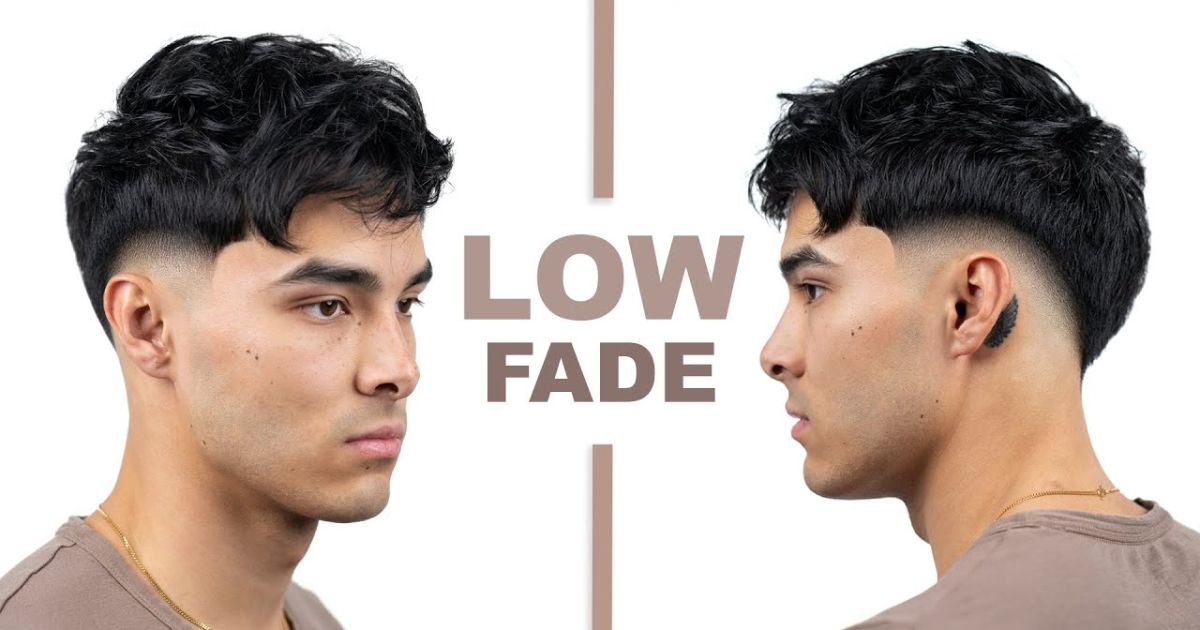
If your hair has natural volume that never quite lies flat, chances are you’ve spent years fighting it with clippers set too short or gel that turns your texture into a helmet. The low taper fade with fluffy hair skips that fight entirely. It keeps your sides neat and your top loose, textured, and full of movement.
This guide breaks down exactly what the cut is, which fluffy variations work best for different hair types, how to describe it to your barber without confusion, and the product routine that keeps it looking good on day four, not just day one. We’ll also cover face-shape pairings and a realistic maintenance schedule so the cut actually holds up.
What is a low taper fade with fluffy hair?
A low taper fade with fluffy hair is a men’s haircut where the sides and back fade gradually near the hairline, ears, and nape, while the top is cut and dried to stay loose, voluminous, and textured rather than slicked down. The fade does the tidying; the top does the personality.
Unlike a skin fade that leaves bare patches of scalp, a low taper usually stops short of the skin, softening the whole transition. The result is a cut that reads clean from the sides but relaxed and full on top, a combination that’s become one of the most requested looks at barbershops heading into 2026.
How a low taper differs from mid and high fades
The main difference is where the fade begins on the head, and that placement changes how much contrast you get against a fluffy top.
| Fade type | Starting point | Effect with a fluffy top |
| Low taper fade | Near the bottom of the ear or just above the neckline | Blends smoothly into volume, minimal contrast |
| Mid fade | Around temple height | Noticeable break between short sides and long top |
| High fade | Near the crown, sometimes down to skin | Can look top-heavy against a lot of fluff |
A low taper keeps things subtle. Since the sides stay close to the natural hairline, the eye is drawn upward to the texture on top instead of the sharp line where the fade sits, which is exactly why it pairs so well with fuller, fluffier styles.
What actually makes hair “fluffy”
Fluffiness isn’t a hair type, it’s an outcome. It comes from three things working together: length left on top (usually two to four inches), texturizing to remove weight without removing volume, and drying with fingers instead of a brush or comb.
That’s why straight, wavy, curly, and coily hair can all achieve a fluffy top using the same underlying principles, just with different products and drying techniques. A comb flattens; fingers and air lift. That single habit shift matters more than almost any product on the shelf.
Why the low taper fade with fluffy hair is so popular
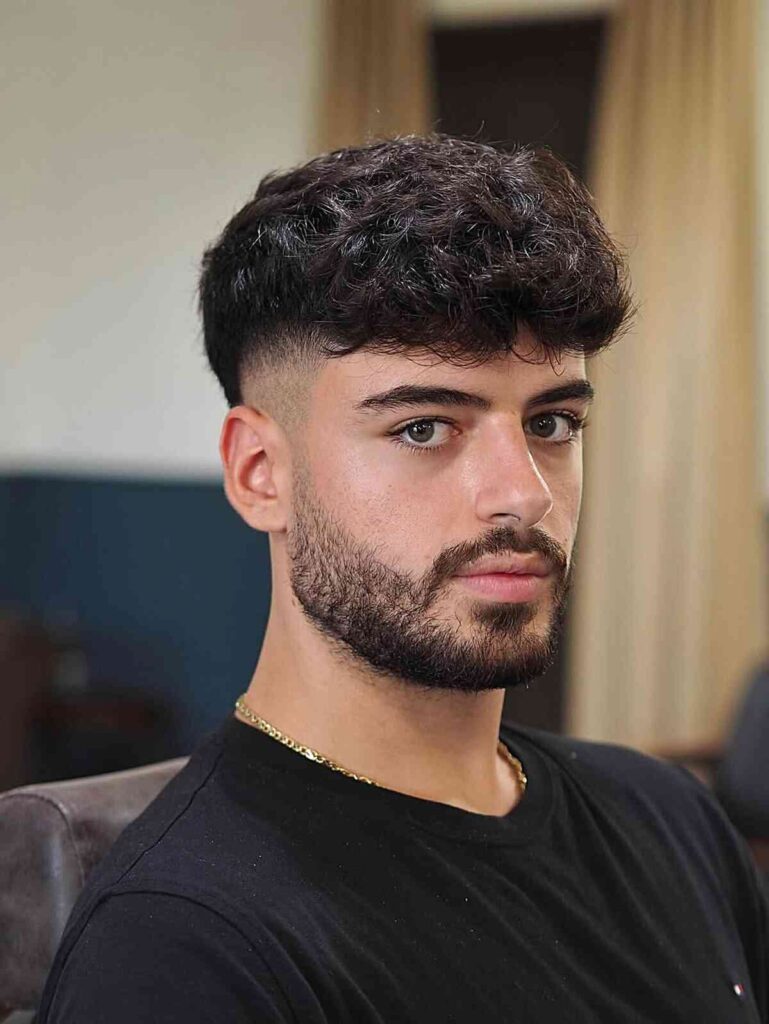
A few practical reasons explain why this cut has stuck around instead of fading as a trend:
- It grows out cleanly. Because there’s no hard shaved line, the fade doesn’t look patchy after a few weeks the way a skin fade does.
- It works with texture instead of against it. Thick, wavy, or curly hair often looks awkward under a slicked style, but fluffy styling embraces natural movement.
- It’s low-effort once you know the routine. Most guys get it styled in under ten minutes with the right products.
- It suits nearly every face shape. Since most of the visual adjustment happens on top, the same base cut can be tweaked for round, long, square, or oval faces.
- It matches current style trends. Soft, slightly undone hair has been dominant in men’s grooming for a few years now, influenced heavily by East Asian street style and casual, off-duty aesthetics.
Best low taper fade fluffy hair styles for men
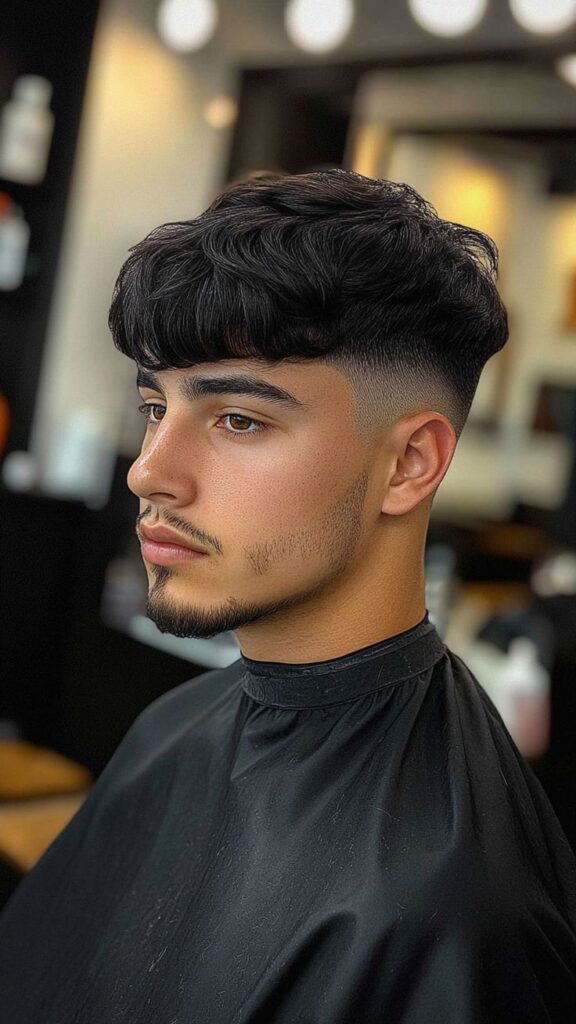
Not every fluffy top looks the same. Your hair type, density, and how much time you want to spend styling should decide which variation you ask for.
Fluffy fringe
The fringe falls forward over the forehead in loose, curtain-style pieces rather than a hard middle part. It’s a natural fit for wavy or lightly curly hair, since the existing movement keeps the fringe from looking stiff or pasted down.
Fluffy quiff
This version builds volume near the front hairline and lifts it up and back. It’s a strong match for straight or thick hair, which tends to hold shape better with a bit of matte product and a quick blow-dry.
Textured crop
Shorter on top than the other options, the textured crop uses heavy texturizing for a choppy, lived-in finish. It’s a good pick if your hair is fine or thin and gets weighed down easily by longer lengths.
Natural curls
Here, the curl pattern on top is left mostly untouched and just shaped so it grows upward instead of outward. It’s the go-to option for type 3 curly or coily hair, where the natural bounce already does most of the styling work.
Messy fluffy top
The lowest-maintenance option: dry with fingers, finish with a texturizing spray, and leave it deliberately undone. No parting, no precision, just casual volume.
| Style | Best hair type | Daily effort | Good for face shape |
| Fluffy fringe | Wavy, lightly curly | Low | Round, square |
| Fluffy quiff | Straight, thick | Medium | Long, oval |
| Textured crop | Fine, thin | Low–medium | Most shapes |
| Natural curls | Curly, coily | Low | Oval, heart |
| Messy fluffy top | Wavy, straight | Very low | Round, oval |
How to ask your barber for a low taper fade with fluffy hair
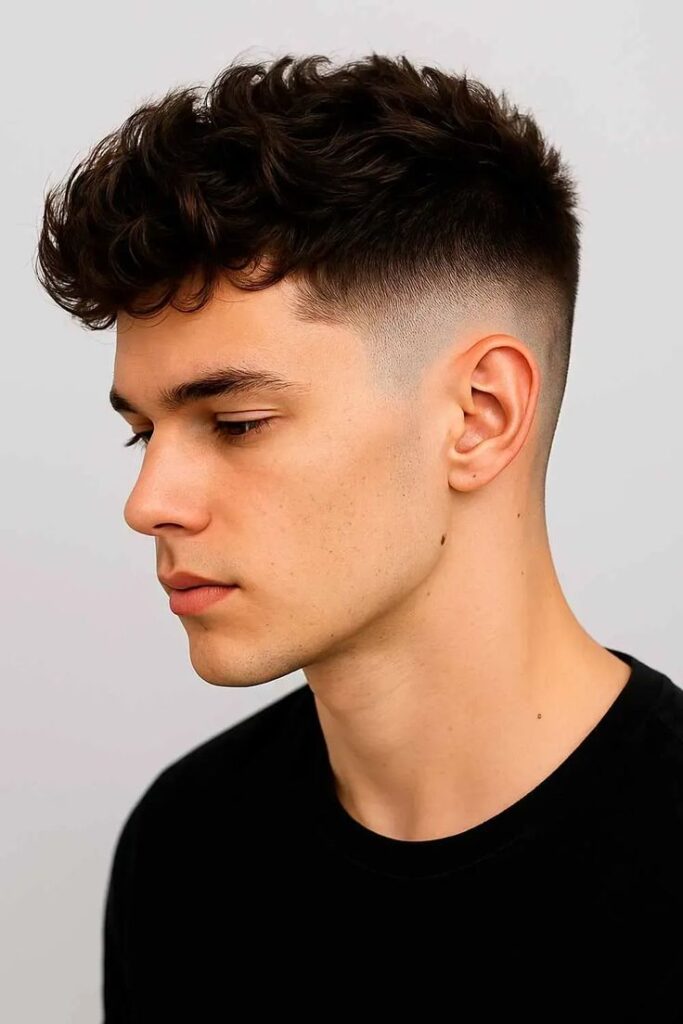
Vague requests lead to disappointing haircuts. “Fade with fluffy hair” means something different to nearly every barber, so specifics matter more than a single reference photo.
Cover these points in the chair:
- Fade placement. Ask for the blend to start near the bottom of the ear or just above the neckline, not climbing toward the temple.
- Skin or no skin. Decide whether you want a bit of bare skin at the nape for sharpness, or a fully soft blend with no visible skin.
- Top length. Give an actual measurement or point to a spot on your head, mid-forehead, eyebrow-length, past the brow, rather than saying “a few inches.”
- How much thinning. Fine or medium hair usually needs minimal thinning to avoid losing density; thick or coarse hair often needs weight removed so it dries lighter and faster.
- Your hair type. Mention whether your hair is straight, wavy, or curly, since the same top length behaves differently depending on texture, even with an identical photo reference.
How to style fluffy hair with a low taper fade, step by step
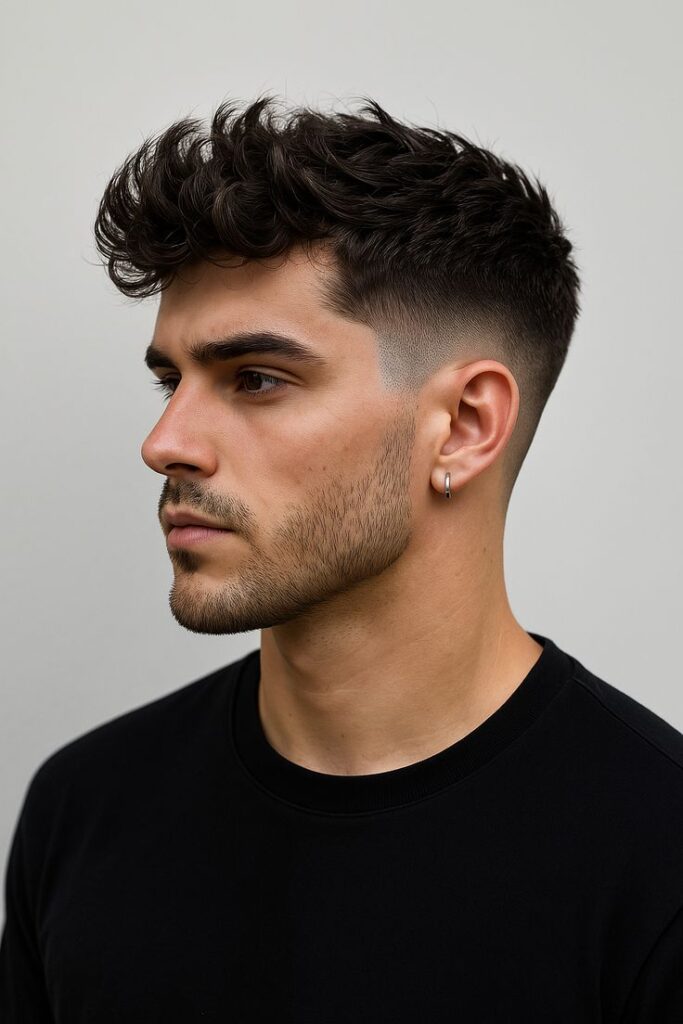
The order of operations matters more than the products themselves. Skipping a step, or doing it out of sequence, is usually why a fresh cut looks great on day one and flat by day three.
Learn more:Low Taper Fade Mullet: Styles, Hair Types, Face Shapes, and Upkeep 2026
- Wash two to three times a week, not daily, overwashing strips the natural oils that help hair hold texture.
- Towel-dry until just damp, using a microfiber towel or old t-shirt rather than rough terrycloth, which roughens the cuticle and causes frizz.
- Apply product to damp hair, working a light cream, mousse, or texturizing spray through with fingers, focusing on mid-lengths and avoiding heavy product at the roots.
- Dry with fingers, lifting as you go, either air-drying or using a diffuser on low heat, this is the step that actually creates the fluffy shape.
- Finish with a small amount of matte clay or paste once fully dry, to add shape without weighing the hair down.
- Tousle it once more to break up any evenness, a perfectly styled fluffy top looks like a contradiction in terms.
Most guys have this down to under ten minutes after a week or two of practice. The biggest learning curve is product quantity: too little and it falls flat by midday, too much and it looks greasy instead of textured.
Best hair products for a fluffy low taper fade
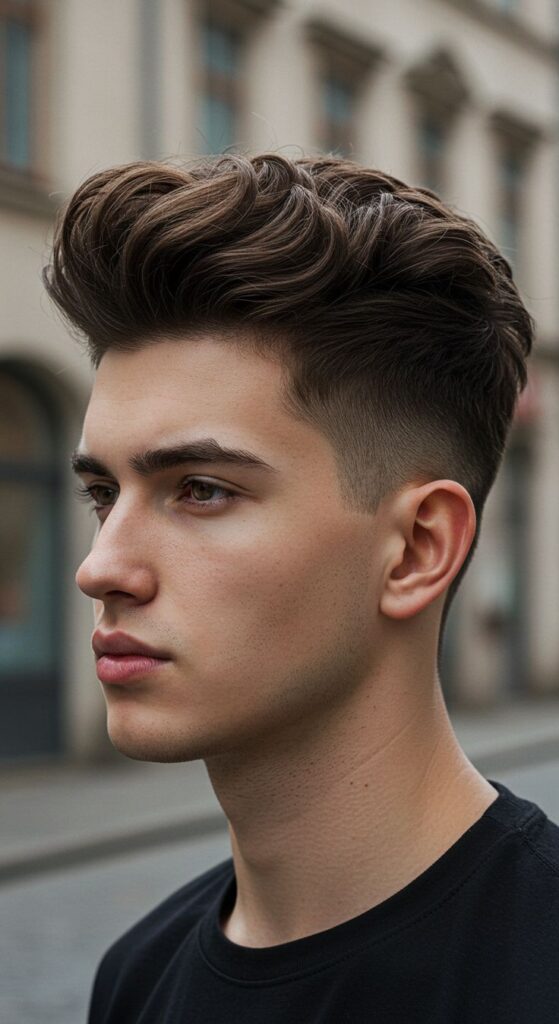
Heavy pomades and strong-hold gels work against this style because they’re built to lock hair in place. What you want instead is texture and light, flexible hold.
| Product type | What it does | Best suited for |
| Sea-salt or texturizing spray | Adds grip and volume to damp hair | Straight, wavy hair |
| Light cream or mousse | Adds moisture and lift, controls frizz | Fine or frizz-prone hair |
| Matte clay or paste | Shapes and holds without stiffness | Thick, curly, or coily hair |
| Curl-defining cream | Enhances curl clumps, reduces frizz | Curly, coily hair |
A texturizing spray is usually the first product worth buying, since it roughens the hair’s surface so everything applied afterward has something to grip.
Styling by hair type: straight, wavy, and curly
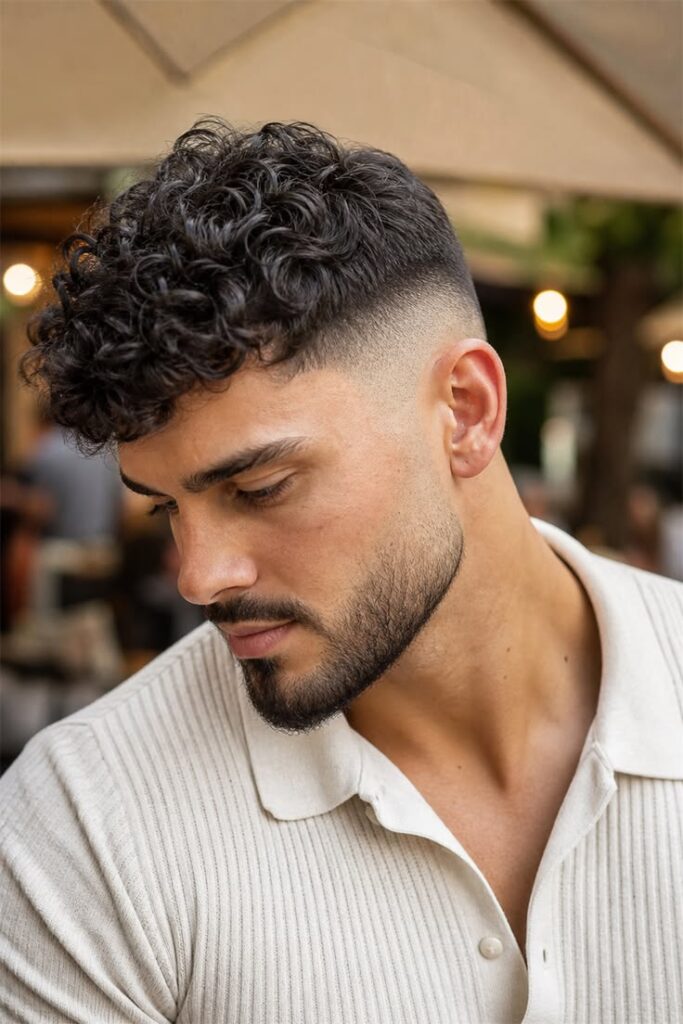
The cut stays the same across hair types, but the styling technique needs to shift.
- Straight hair has the hardest time holding volume since there’s no natural bend to create lift. Apply texturizing spray to damp roots, then finger-dry with your head tipped forward to build fullness that straight hair won’t produce naturally. Some guys also get a loose perm on top to make styling easier long-term.
- Wavy hair is the easiest match for this cut. The natural bend does most of the volume-building on its own, air-dry with a light cream, then scrunch gently once dry. Avoid over-brushing, which pulls waves out and leaves hair frizzy rather than textured.
- Curly and coily hair pairs naturally with a low taper since the curl pattern already provides the fullness other textures have to build artificially. Use a curl-defining cream instead of a plain spray, and dry with a diffuser on low heat. Many barbers also cut curly hair dry, since curls shrink noticeably once cut wet.
Which face shapes suit a low taper fade with fluffy hair?
Because the fade stays low and unobtrusive, nearly all the visual balancing happens through how the top is styled, which is why this cut adapts well to almost any face shape.
| Face shape | Best top style | Why it works |
| Round | Fluffy quiff or lifted fringe | Adds vertical height, narrows the appearance of width |
| Square | Soft, forward-falling fringe | Softens a strong jawline without hiding it |
| Long/rectangular | Wider, messy top | Adds fullness at the sides instead of extra height |
| Heart | Curtain fringe | Softens the forehead without adding crown bulk |
| Oval | Nearly any fluffy style | Naturally balanced proportions suit most variations |
How to maintain the fade and keep your hair fluffy
The fade line and the fluffy top are on two different maintenance clocks, and treating them the same way is the most common upkeep mistake.
The fade: Plan on a touch-up every three to four weeks, especially around the neckline and behind the ears, where regrowth shows first. A low taper is more forgiving than a skin fade if you stretch it slightly, but past four weeks the blend starts to look uneven.
The top: This can typically go six to eight weeks between real trims, since length and texture are the whole point. A barber will usually just clean up split ends and re-texturize lightly rather than cutting off length.
A few daily habits that make a real difference:
- Skip daily washing, it strips the oils that hold texture together.
- Switch to a satin or silk pillowcase, which causes less friction than cotton and reduces overnight frizz.
- Use a light anti-humidity spray on damp or muggy days, since fine and wavy hair tends to fall flat in humidity.
- Don’t stretch the fade out to save money on visits, an overgrown low taper looks patchier than people expect, since the blend line shifts as it grows.
Frequently asked questions
How often should I get my low taper fade touched up?
Every three to four weeks keeps the blend clean, since regrowth around the neckline and ears shows first.
Does a low taper fade work with thick or coarse hair?
Yes, thick hair holds fluffy volume especially well once a barber removes some internal bulk through texturizing.
Can I get this style with naturally straight hair?
Yes, with the right products and finger-drying technique; some guys add a loose perm for easier volume long-term.
Is this haircut high maintenance?
The sides need regular trims, but daily styling usually takes under ten minutes once you’ve found your routine.
What’s the real difference between a taper and a fade?
A taper blends hair down without necessarily reaching the skin, while a fade typically tapers all the way to bare skin at some point.
Can I style fluffy hair without heat tools?
Yes, air-drying with fingers and a light styling product works well for most hair types, no heat required.
Does this cut suit round or long face shapes?
Both work well; round faces benefit from more height on top, while long faces do better with a wider, flatter finish.
Conclusion
A low taper fade with fluffy hair works because it stops fighting your natural texture and starts using it. The quiet, low fade keeps the sides sharp without stealing attention, while the fluffy top lets thickness, waves, or curls show instead of getting flattened into something they were never suited for.
Getting the look right comes down to three things: a clear conversation with your barber, the correct lightweight products, and a styling routine you actually stick to. Nail those, and this cut holds its shape far longer between visits than most people expect, which is exactly why it’s stayed popular.