

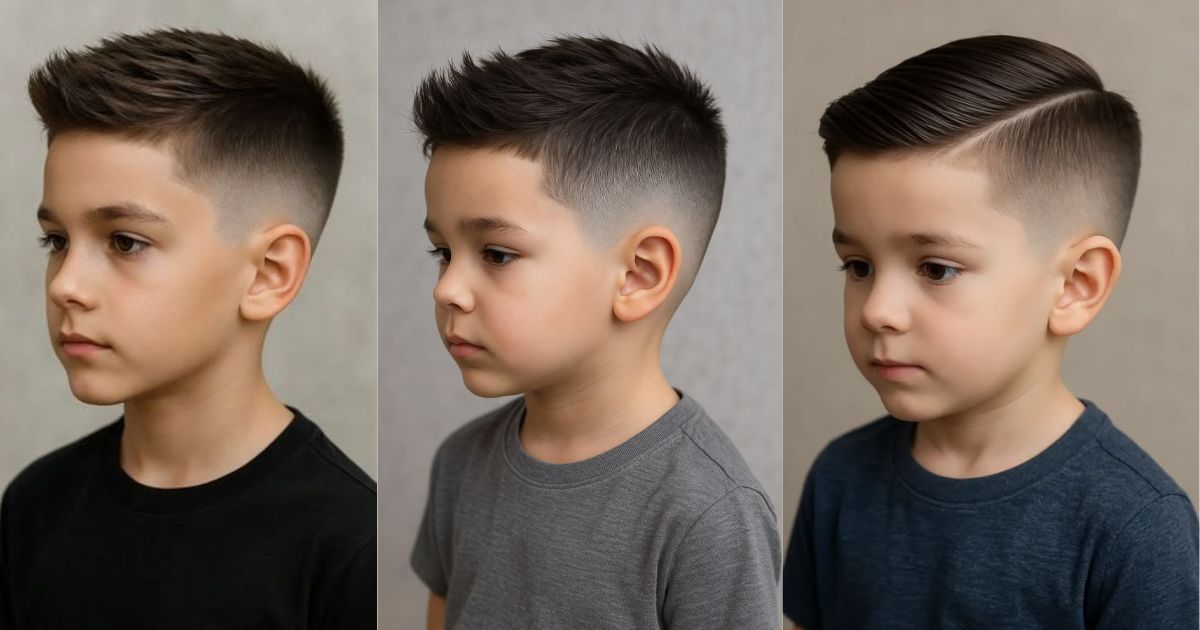
Choosing your son’s next haircut shouldn’t feel like guesswork, especially when he comes home asking for a “low taper fade” he saw on someone’s phone. This guide breaks down exactly what the cut is, which version suits his hair and age, and how to describe it so your barber gets it right the first time.
You’ll find 15+ style variations sorted by hair type and age, a face-shape breakdown, ready-to-use barber scripts, home maintenance steps, pricing ranges, and school dress-code guidance, everything a parent needs before booking the next chair appointment.
What is a low taper fade for kids, and at what age can boys get one?
A low taper fade for kids is a haircut where the hair shortens gradually starting just above the ear, keeping the top longer and the blend soft rather than sharp. Most boys can comfortably handle their first one around age 4 or 5, once they’re able to sit still for the clippers.
Key points:
- The fade line begins low, near the ear, and never exposes bare scalp
- It suits every texture, straight, wavy, curly, or coily
- One cut typically holds its shape for three to five weeks
- It meets nearly every school grooming policy when kept simple
- Toddlers should stick with a #3 or #4 guard to protect a sensitive scalp
What Is a Low Taper Fade for Kids & Boys?
A low taper fade keeps length on top while the hair around the ears and down the neckline tapers off gradually, with no harsh lines and no bare skin showing. It’s widely considered the safest, easiest fade to maintain for boys of any age.
Think of the head in three bands. The crown and top keep the most hair, this is where your child’s actual “style” happens. Moving toward the ears and the back of the neck, the hair gets progressively shorter in a smooth gradient rather than a sudden drop-off. Because that gradient starts low, right above the ear, it earns the name “low” taper.
How Does a Low Taper Fade Actually Work?
Barbers build this cut in three sections. The top holds the most length, whatever style your son wants layered on it. Below that sits the blend zone, where clipper guards of decreasing size and a fade comb merge the long top hair into the shorter sides without a visible line. Finally, the base, around the ears, temples, and nape, is trimmed shortest, starting just above the ear and following the curve of the skull toward the back.
Done well, the transitions are invisible and the whole cut reads as one clean shape from any angle.
What Is the Difference Between a Taper and a Fade?
Parents mix these terms up constantly, so here’s a side-by-side comparison.
| Feature | Taper | Fade |
| Hair length | Shortens gradually toward the neckline | Drops sharply, sometimes to bare skin |
| Overall look | Soft, natural transition | High-contrast, crisp gradient |
| Best suited for | Younger kids, dress-code-heavy schools | Older boys and teens wanting a bolder look |
| Trim frequency | Roughly every 4–6 weeks | Roughly every 2–3 weeks |
| School acceptance | Almost universal | Depends on height and sharpness |
A taper never fully disappears into skin, which is exactly why it grows out gracefully and stays under most dress codes. A low taper fade lands in the middle, gradual like a taper, but with a cleaner, more defined finish near the neckline.
What Makes the Low Taper Fade Different from Mid and High Fades?
The starting point on the head is what separates these three. A low fade begins just above the ear, keeping contrast gentle, the safest bet for younger boys. A mid fade starts around the temple, adding more visual punch and suiting boys roughly 8 and older who want something sharper. A high fade begins near the top ridge of the skull, creating a bold, modern look better reserved for teens 13 and up.
Quick guidance: for boys under 10, the low taper fade is the easiest to maintain, the most forgiving as hair grows out, and the least likely to draw attention from a school administrator.
Why Is the Low Taper Fade So Popular for Boys Right Now?
This haircut has become the default request among school-age boys thanks to a mix of internet culture and genuinely practical benefits, it’s easy to maintain, it grows out cleanly, and it clears almost any school’s grooming rules.
The TikTok Effect: How a Viral Meme Made Every Kid Want This Haircut
If your son suddenly started asking for this exact haircut by name, a viral internet moment is almost certainly why. A rapper’s freestyled line referencing a well-known streamer’s haircut spread rapidly across short-form video platforms in early 2024, and the phrase “low taper fade” turned into an inside joke that Gen Alpha latched onto instantly. Once the streamer in question actually got the cut, the trend cemented itself as a genuine style request rather than just a punchline.
The result: kids who’d never expressed an opinion about their hair before suddenly had a very specific ask for their next barbershop visit.
Why Parents Love This Haircut Too
Beyond the meme origin, there are solid reasons this style has staying power with parents:
- It holds its shape. Unlike a skin fade that looks overgrown within days, a low taper stretches comfortably to three or five weeks.
- It clears dress codes. No shaved lines, no bare scalp, no dramatic contrast to flag at drop-off.
- It adapts to any texture. Straight, wavy, curly, or coily hair all respond well with the right guard and blending approach.
- It’s budget-friendly. Longer stretches between trims mean fewer barbershop bills across the year.
- It’s an all-occasion cut. The same haircut works for gym class, picture day, and a family wedding without a second thought.
What Are the Best Low Taper Fade Styles for Kids & Boys in 2026?
The strongest low taper fade pairings for 2026 include the textured crop, curly top, comb-over, pompadour, buzz cut, French crop, faux hawk, and broccoli cut, each suited to a different hair type, age, and occasion.
Below are 15 combinations, each with a hair-type match, age guidance, upkeep schedule, product suggestion, and an exact phrase to hand your barber. Snap a photo of your favorite before the appointment, it removes almost all guesswork.
Learn more:50 Best Low Taper Fade Designs for Men: Back, Side & Freestyle Ideas (2026)
1. Low Taper Fade with Textured Crop
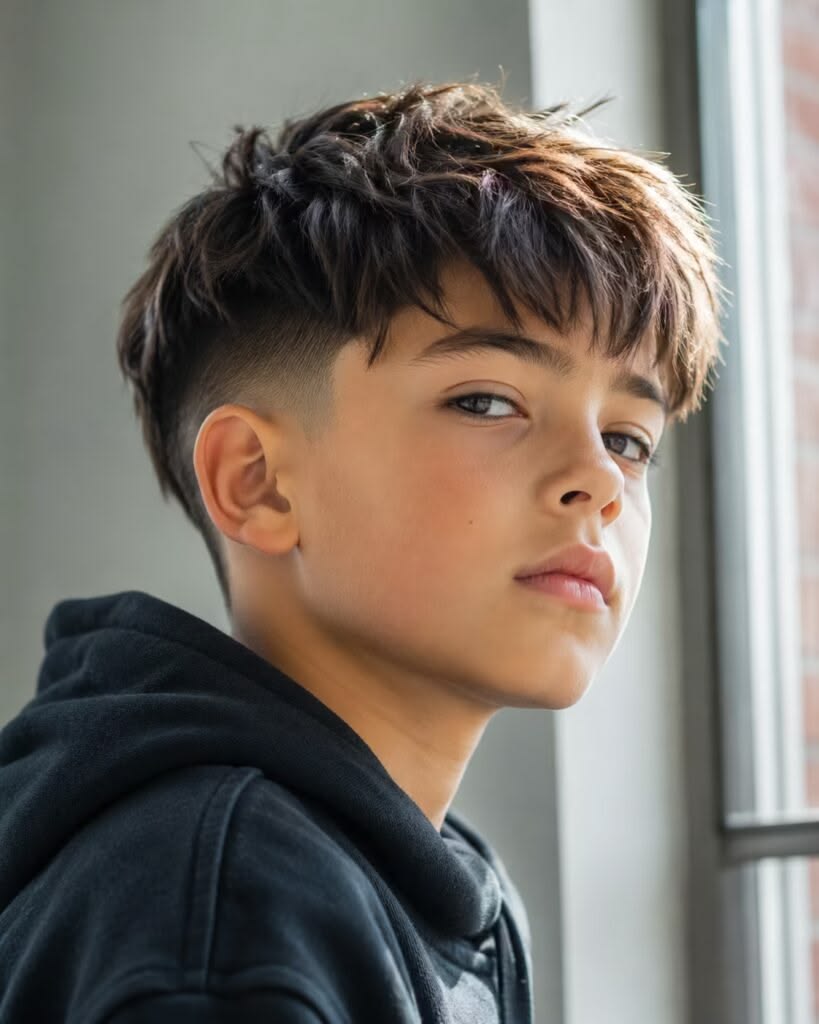
Best for: most hair types, especially straight, wavy, and thick. Age range: 6–12. Maintenance: every 3–4 weeks. Occasion: everyday, school, sports. Product: matte clay or light pomade. Barber phrase: “Low taper fade, textured crop on top, light point-cutting for texture, keep it school-safe.”
This is the most common pairing for a reason, enough length on top for texture and movement without demanding a lengthy morning routine.
2. Low Taper Fade with Curly Top
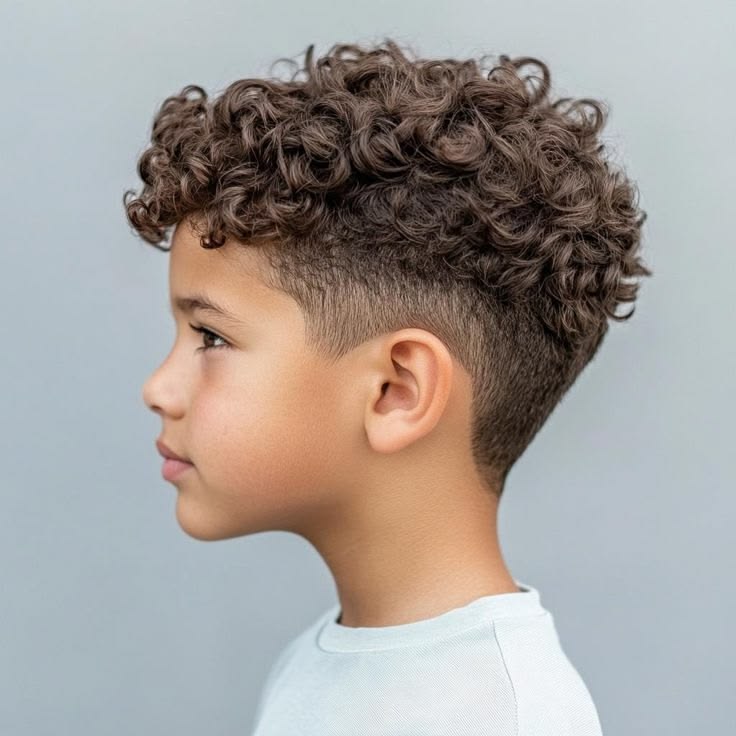
Best for: natural curls, waves, or afro texture. Age range: 4–16. Maintenance: every 4–5 weeks. Product: curl cream and leave-in conditioner. Barber phrase: “Low taper fade, leave the top natural, just shape and define the curl pattern with freehand blending on the sides.”
Curl definition stays intact on top while the sides stay tidy underneath.
3. Low Taper Fade with Comb Over
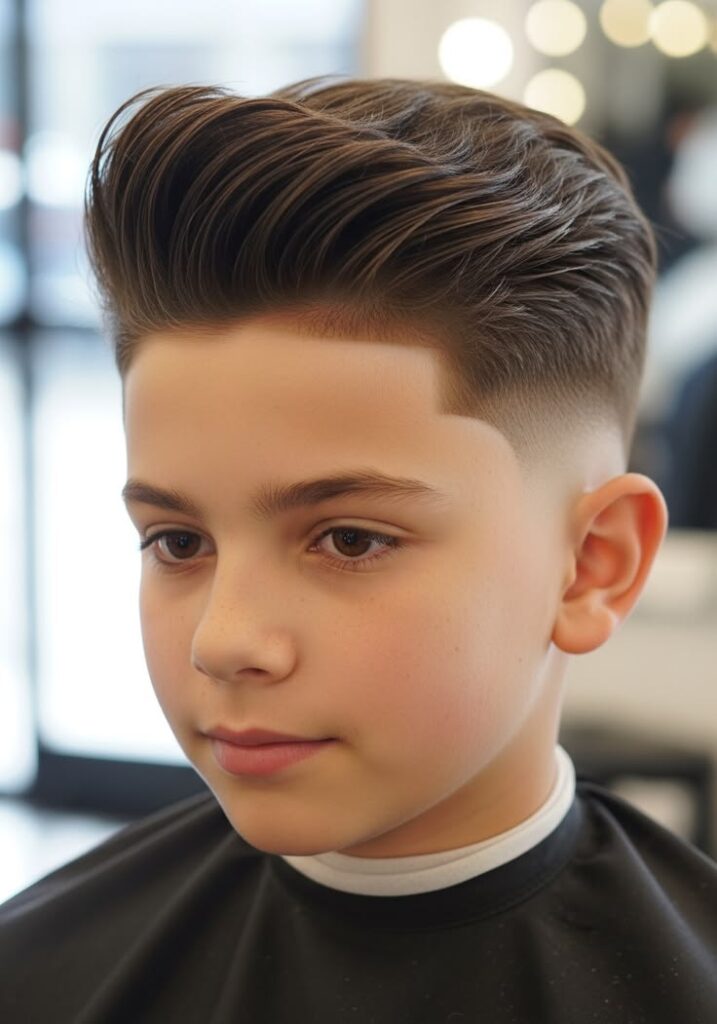
Best for: straight or fine hair. Age range: 7–16. Maintenance: every 3 weeks. Product: light pomade or water-based gel. Barber phrase: “Low taper fade, hard part on the left, comb the top over to the right, gradual blend.”
A dependable pick for anything that needs to photograph well, from class pictures to holiday cards.
4. Low Taper Fade with Pompadour
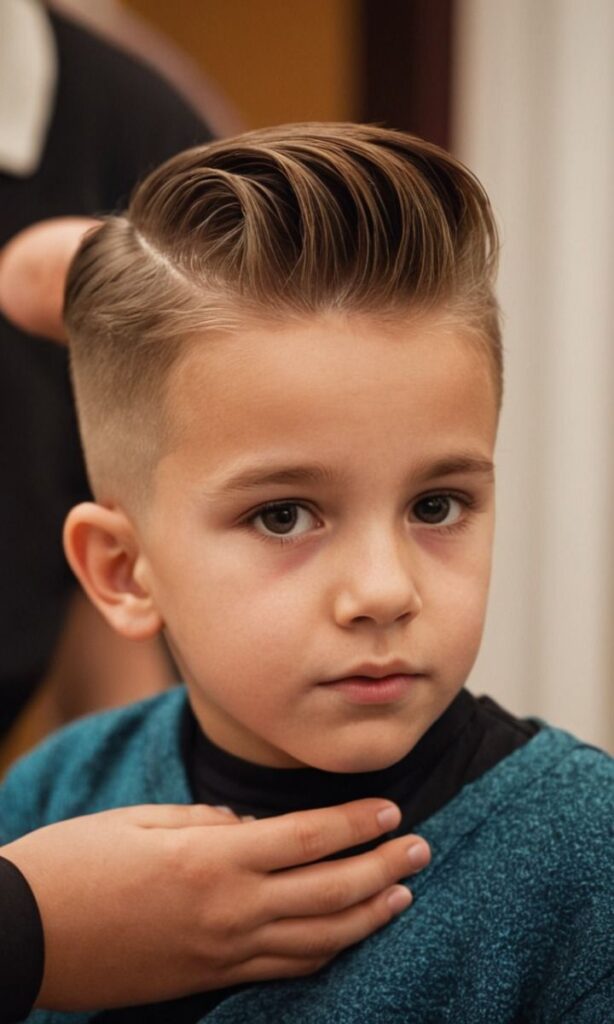
Best for: tweens and teens for dressier occasions. Age range: 10+. Maintenance: every 3 weeks. Product: light pomade for a slick finish, matte paste for texture. Barber phrase: “Low taper fade, leave 3–4 inches on top for a pompadour, blend the sides gradually.”
Great for boys with thicker, straighter hair who want a polished, classic silhouette.
5. Low Taper Fade with Buzz Cut
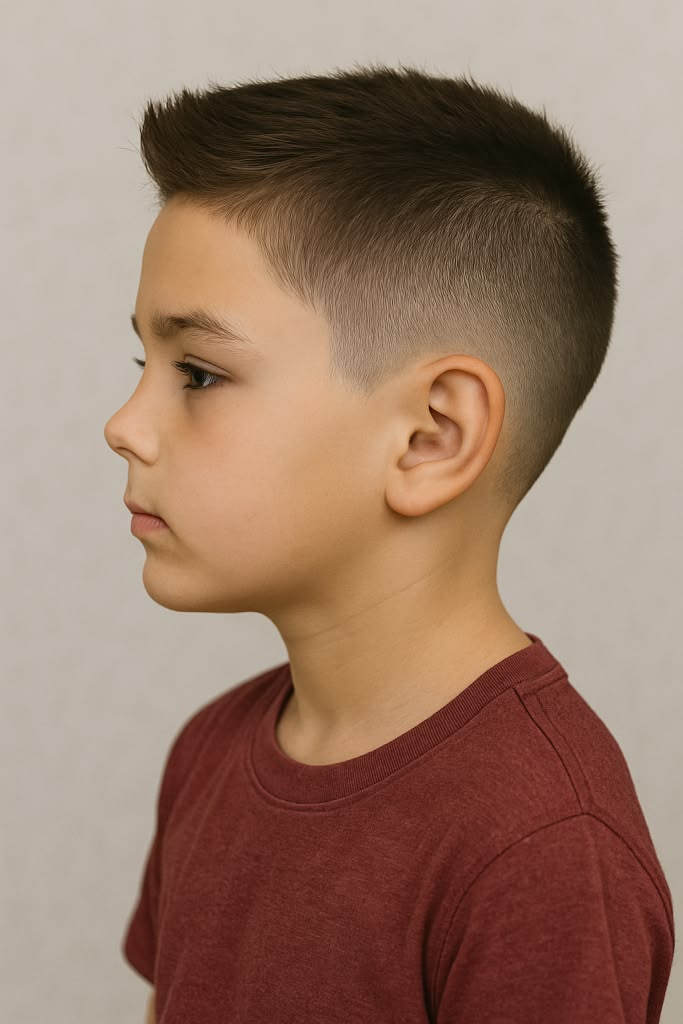
Best for: toddlers and active boys, especially in summer. Age range: 3–16. Maintenance: every 4–5 weeks. Product: none required. Barber phrase: “Low taper fade with a number 3 or 4 buzz on top, keep it simple.”
The lowest-effort option on this list, no product, no daily styling, no fuss.
6. Low Taper Fade with French Crop
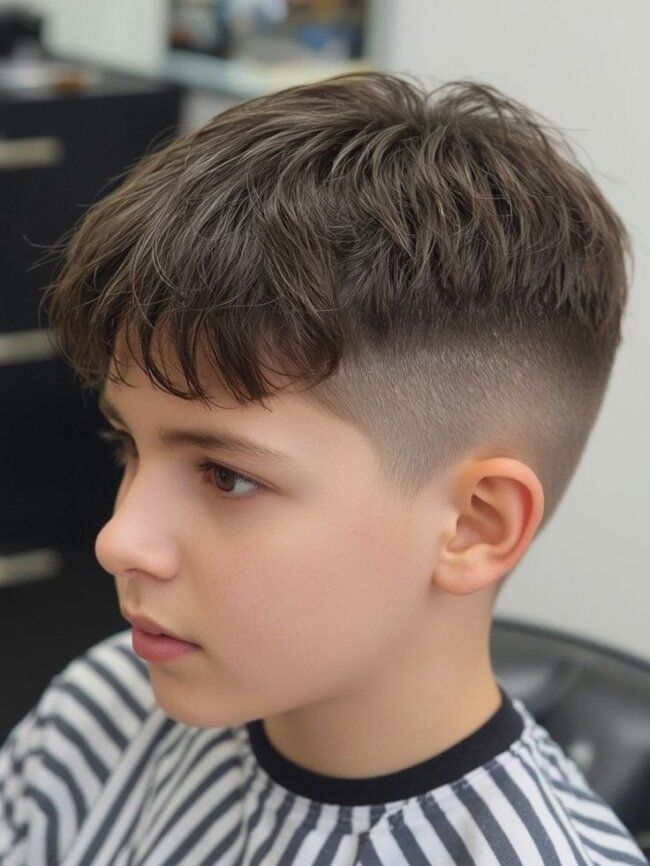
Best for: straight or wavy hair. Age range: 7–13. Maintenance: every 3–4 weeks. Product: matte clay or texturizing spray. Barber phrase: “Low taper fade, blunt crop fringe up front, point-cut the top for texture.”
A short, blunt fringe with tapered sides that’s become a genuine trend among school-age boys.
7. Low Taper Fade with Faux Hawk
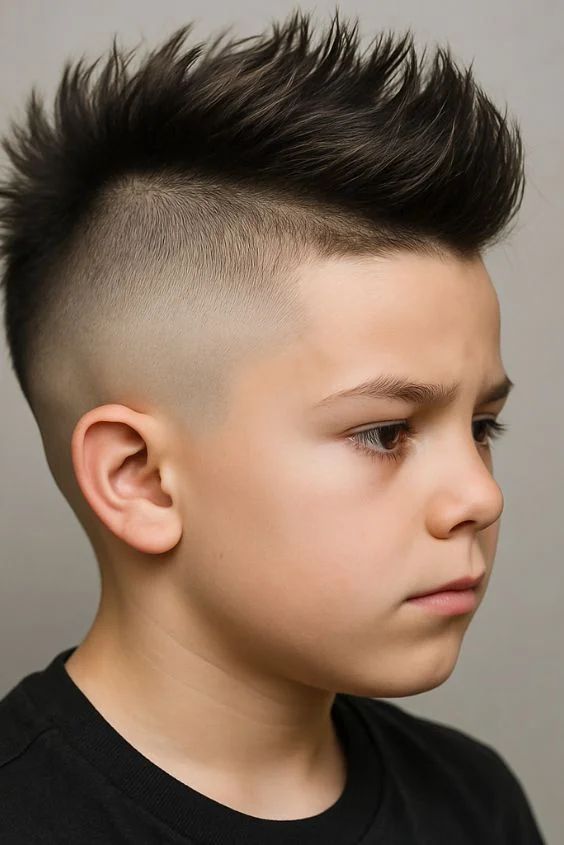
Best for: boys who want something bolder but still manageable. Age range: 6–14. Maintenance: every 2–3 weeks. Product: matte clay or light wax. Barber phrase: “Low taper fade, leave a mohawk strip on top, keep it kid-friendly, not too narrow.”
Gives the impression of edge without the commitment of shaved sides.
8. Low Taper Fade with Side Part
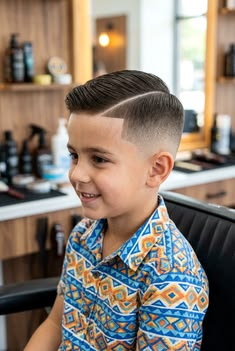
Best for: straight, fine, or wavy hair. Age range: 7–16. Maintenance: every 3 weeks. Product: light pomade or water-based gel. Barber phrase: “Low taper fade with a razor-shaved hard part on the left, comb the top over.”
A crisp, timeless look that reads well in formal photos.
9. Low Taper Fade with Afro Top
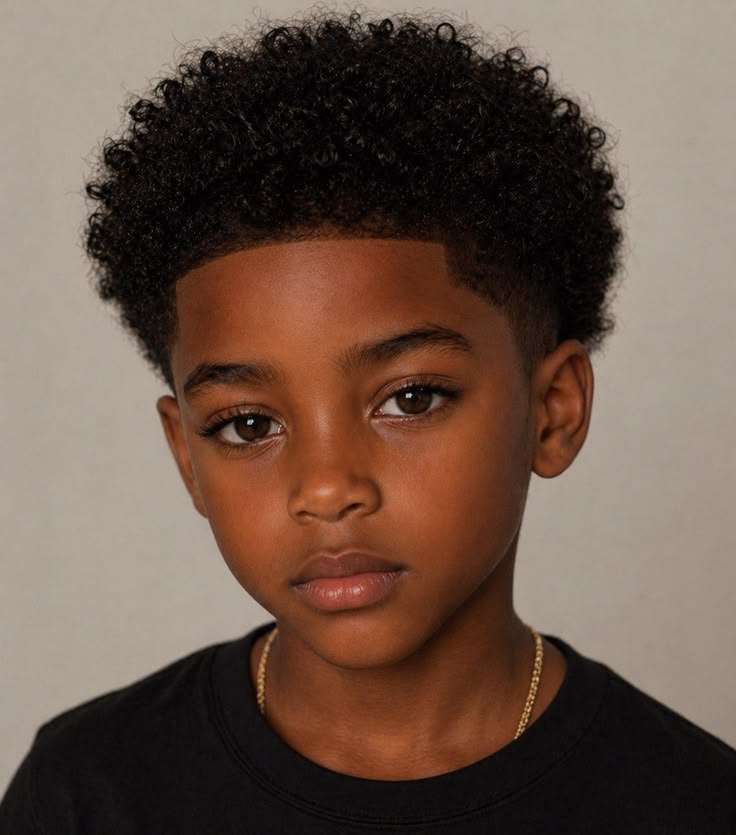
Best for: natural afro or 4C hair. Age range: 4–16. Maintenance: every 4–5 weeks. Product: curl sponge and defining cream. Barber phrase: “Low taper fade, shape the afro on top, keep the taper gradual, clean shape-up on the hairline.”
Look for a barber who is comfortable with freehand blending on tighter curl patterns.
10. Low Taper Fade with Broccoli Cut
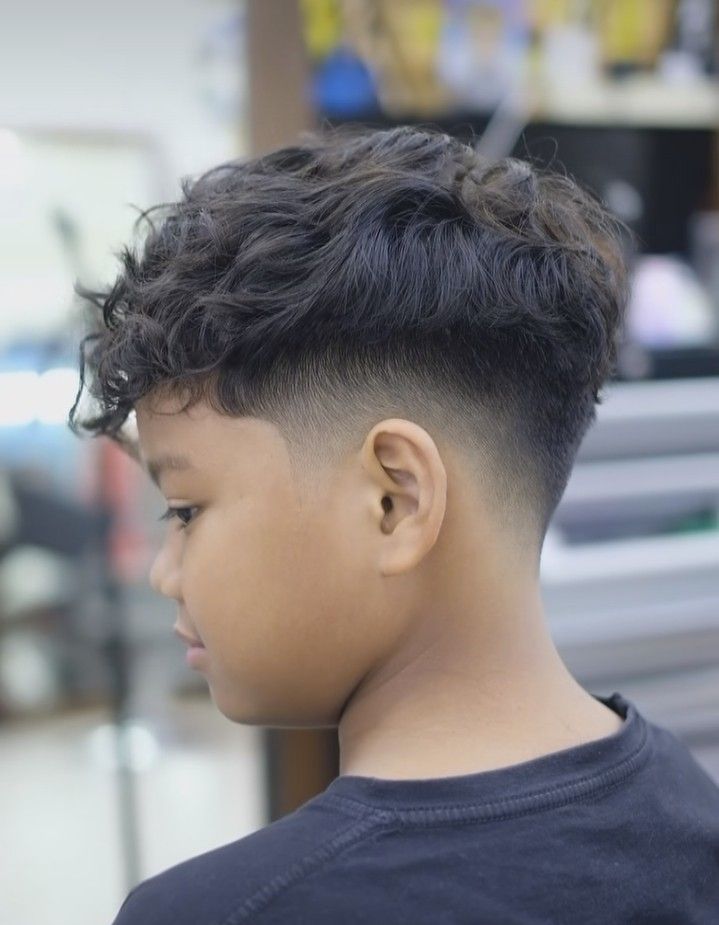
Best for: curly or wavy hair. Age range: 4–10. Maintenance: every 5–6 weeks. Product: curl cream with a diffuser. Barber phrase: “Low taper fade, round the curls on top into a broccoli shape, keep volume on the crown.”
A rounded, voluminous curl silhouette that’s grown into one of the most requested younger-boy styles.
11. Low Taper Fade with Crew Cut
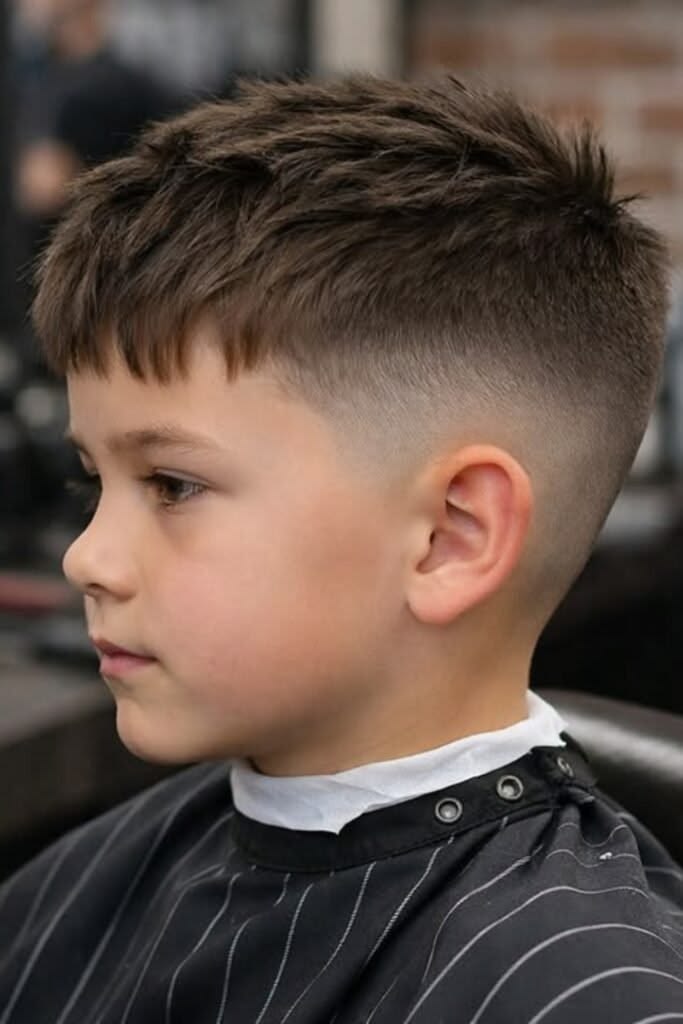
Best for: active, school-age boys. Age range: 6–12. Maintenance: every 3–4 weeks. Product: light texturizing spray. Barber phrase: “Low taper fade with a crew cut on top, number 3, blending down to the taper.”
Short, neat, and durable through recess, sports, and gym class.
12. Low Taper Fade with Slicked-Back Top
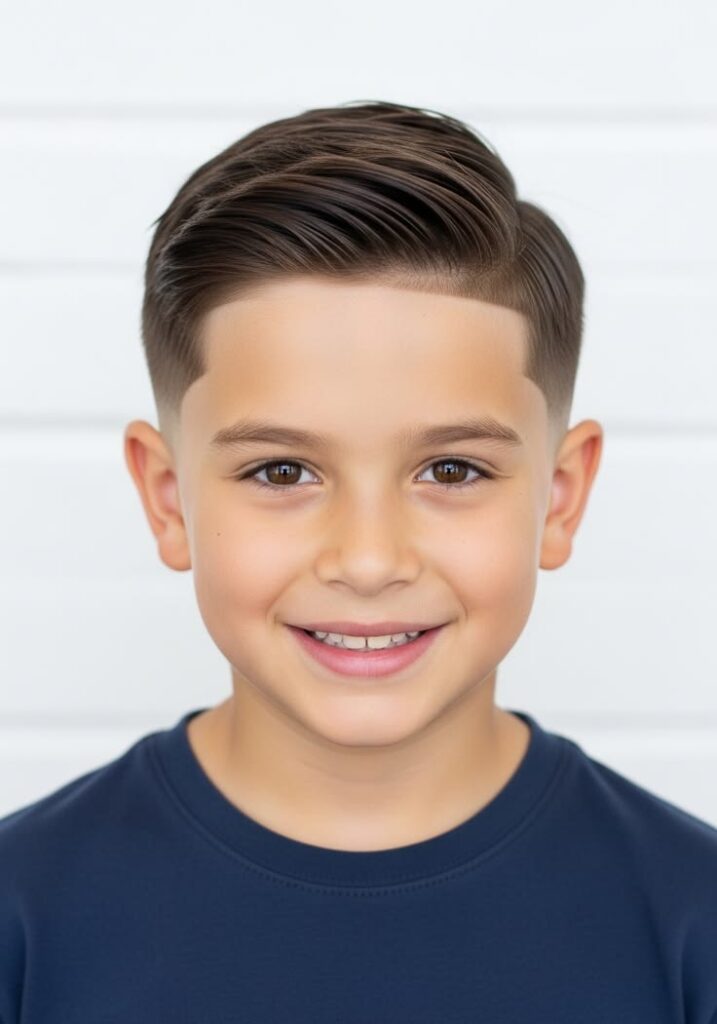
Best for: formal occasions. Age range: 10–16. Maintenance: every 3 weeks. Product: light pomade for shine. Barber phrase: “Low taper fade, leave at least 3 inches on top to brush back smoothly.”
Reserved for weddings, holidays, and other dress-up days.
13. Low Taper Fade with Spiky Top
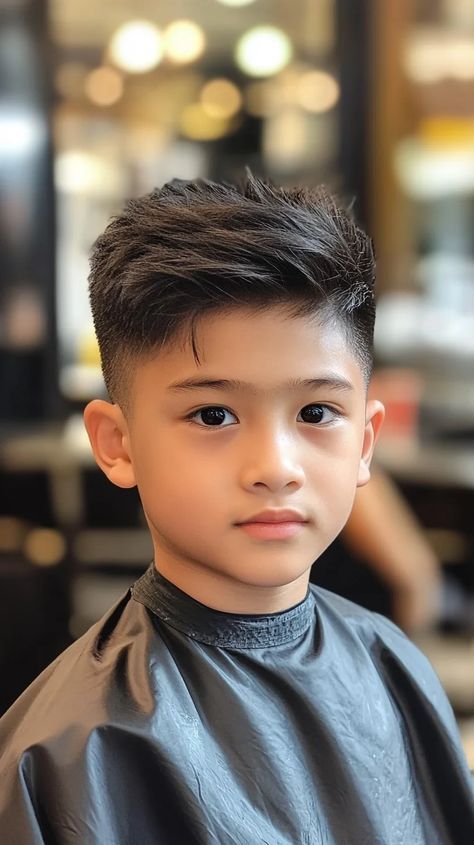
Best for: boys who like playful styling. Age range: 5–12. Maintenance: every 3–4 weeks. Product: water-based gel or light wax. Barber phrase: “Low taper fade, leave about 2 inches on top for spikes.”
A quick, fun morning style that younger boys enjoy having a hand in.
14. Low Taper Fade with Modern Mullet
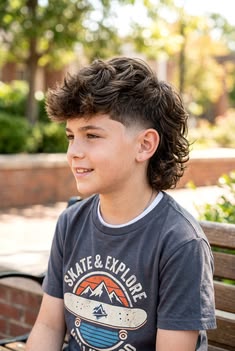
Best for: trend-forward boys. Age range: 8–16. Maintenance: every 3 weeks. Product: matte paste or sea salt spray. Barber phrase: “Low taper fade on the sides, leave the back longer for a modern mullet, keep the front textured.”
Check the school handbook before committing, not every dress code embraces it.
15. Low Taper Fade with 360 Waves
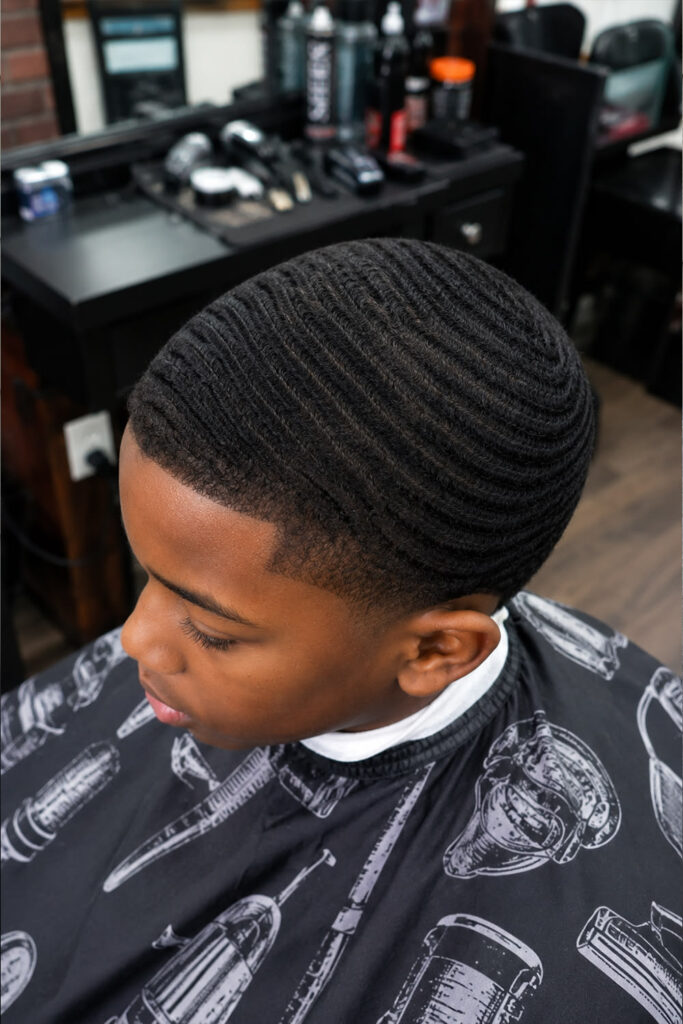
Best for: boys committed to wave training. Age range: 10–16. Maintenance: every 2–3 weeks. Product: wave grease, wave brush, durag. Barber phrase: “Low taper fade, shape up the hairline, keep the top flat for wave training.”
Requires daily brushing and consistent upkeep, but the payoff is a genuinely sharp look.
Tip: always bring a saved photo or one of the phrases above to the appointment. It’s the single biggest factor in avoiding a haircut that doesn’t match what you pictured.
Which Low Taper Fade Works Best for Your Child’s Hair Type?
Curly hair does best with natural volume on top and a curl-friendly product. Straight hair suits sharper, structured styles. Thick hair needs gradual blending to avoid bulk. Fine hair benefits from lighter, texture-adding products.
Low Taper Fade for Curly Hair Boys
Curls stay full and bouncy on top while the sides stay controlled underneath. Best styles: curly top, broccoli cut, afro top. Products: curl cream, alcohol-free leave-in conditioner. Barber tip: ask for freehand blending so the curl pattern isn’t disturbed. Trim schedule: every 4–5 weeks.
Low Taper Fade for Straight Hair Boys
Straight hair shows off the clean lines of a taper especially well, though regrowth is more visible sooner. Best styles: comb-over, textured crop, side part, slicked-back. Products: light pomade or water-based gel. Barber tip: request scissor-over-comb on top for precision. Trim schedule: every 3–4 weeks.
Low Taper Fade for Wavy Hair Boys
Wavy hair is arguably the most flexible texture for this cut, letting a medium-length top show natural movement. Best styles: textured crop, French crop, crew cut. Products: sea salt spray or lightweight mousse. Barber tip: keep the top slightly longer so waves have room to form. Trim schedule: every 4 weeks.
Low Taper Fade for Thick Hair Boys
Thick hair benefits from a fade that removes bulk and keeps the shape controlled. Best styles: crew cut, pompadour, buzz cut. Products: matte clay or texture powder. Barber tip: ask for point-cutting on top to reduce weight. Trim schedule: every 3 weeks.
Low Taper Fade for Fine Hair Boys
Fine hair looks fuller with a gradual fade and a higher guard on the sides. Best styles: textured crop, French crop, broccoli cut. Products: texturizing spray or lightweight mousse. Barber tip: use a #3 or #4 guard minimum to preserve visual density. Trim schedule: every 5–6 weeks.
Low Taper Fade for Black Kids (Afro / 4C Hair)
This pairing celebrates natural texture, an afro, defined curls, or 360 waves, while keeping the edges sharp. Best styles: afro top, 360 waves, curly crop, broccoli cut. Products: curl sponge, defining cream, leave-in conditioner. Barber tip: find a barber experienced specifically with 4C blending. Trim schedule: shape-up every 3–4 weeks, full regrowth trim every 5–6 weeks.
Children’s scalps tend to be more sensitive than adult scalps because the skin is thinner and holds more moisture, which is why dermatologists generally advise keeping clipper guards at a #2 or higher for toddlers and choosing sulfate-free, alcohol-free products.
What Is the Best Low Taper Fade for Each Age Group?
Toddlers do best with a soft, longer top and a higher guard size. School-age boys can comfortably wear almost any low or mid-taper variation. Teens have the flexibility to try higher fades, sharper lineups, and design elements.
Baby Taper Fade: Is It Appropriate for Babies Under 2?
Most barbers recommend holding off. A baby’s scalp is still developing and their hair is often too fine for clean clipper work, so a gentle scissor trim around the ears and neckline is the safer route until they’re a bit older.
Toddler Taper Fade (Ages 2–5): What Works Best?
Comfort comes first at this age. Stick to a #3 or #4 guard on the sides, keep the top soft with scissor work only, and skip designs or hard parts that require extended time under the clippers. Best styles: buzz cut with low taper, textured crop, broccoli cut. Trim schedule: every 5–6 weeks. If your toddler is nervous, ask whether they can sit on your lap for the first few minutes, most barbers who work with young kids are used to this request.
Little Boy Taper Fade (Ages 5–7): Playful But Neat
Most 5-year-olds can sit through a full cut without much trouble, and they’re old enough to have real opinions about the outcome. Best styles: textured crop, French crop, comb-over, spiky top. Trim schedule: every 4–5 weeks.
School-Age Boys Taper Fade (Ages 8–12): The Core Audience
This age group drives the most demand for this haircut, and nearly all 15 styles above work well here, let hair type, face shape, and your son’s own preference guide the choice. Trim schedule: every 3–4 weeks.
Teen Taper Fade (Ages 13–17): Style-Driven Choices
Teens are generally ready to make their own calls, including higher fades, sharper lineups, or design elements like etched patterns. Best styles: pompadour, mullet, faux hawk, 360 waves, slicked-back. Trim schedule: every 2–3 weeks.
Quick Age Reference Guide
| Age Group | Best Fade Type | Minimum Guard | Top Style | Trim Frequency |
| Baby (under 2) | Scissor trim only | No clippers | Soft, natural | 6–8 weeks |
| Toddler (2–5) | Low taper only | #3 or #4 | Buzz, natural, broccoli | 5–6 weeks |
| Little Boy (5–7) | Low taper | #2 minimum | Crop, comb-over, spiky | 4–5 weeks |
| School-Age (8–12) | Low or mid taper | #1 minimum | Any style | 3–4 weeks |
| Teen (13+) | Any fade type | Any | Any style | 2–3 weeks |
Which Low Taper Fade Suits Your Child’s Face Shape?
Round faces suit added height on top. Oval faces work with nearly any style. Square faces benefit from softer, gradual blending. Heart-shaped faces look best with volume up top and a soft taper on the sides.
Low Taper Fade for Round Faces
Height elongates the face, a pompadour or textured crop with lift works well. Avoid buzz cuts, which tend to emphasize roundness. Best styles: pompadour with low taper, textured crop with volume.
Low Taper Fade for Oval Faces
Oval is the most adaptable face shape, so nearly any of the 15 styles above will suit it, let hair type and personal taste decide instead.
Low Taper Fade for Square Faces
Soft, gradual blending keeps a strong jawline from looking overly angular. Avoid hard parts or sharp lineups. Best styles: textured crop, comb-over, curly top.
Low Taper Fade for Heart-Shaped Faces
Volume up top balances a narrower chin. Skip high fades, which can widen the appearance of the forehead. Best styles: French crop, broccoli cut, comb-over.
| Face Shape | Best Pairing | What to Avoid |
| Round | Pompadour, textured crop with height | Buzz cuts, flat tops |
| Oval | Any style | No specific restriction |
| Square | Textured crop, comb-over | Hard parts, sharp lineups |
| Heart | French crop, broccoli cut | High fades, skin fades |
How Do You Tell the Barber What Low Taper Fade You Want?
Say: “I’d like a low taper fade starting just above the ear, blending gradually to the neckline, with the top kept at this length and style. Use at least a number 2 guard, and keep it school-safe.” Then hand over a photo reference.
Vague requests are the most common reason parents leave disappointed, so specificity matters more than anything else.
The Complete Parents’ Barber Scripts
Script 1, Classic Low Taper (toddler or young boy): “I’d like a low taper fade starting just above his ear, kept very gradual, blending down to the neckline. Use a number 3 guard minimum. Leave the top natural, just trim for shape, nothing too short, it needs to stay school-safe.”
Script 2, Low Taper with Textured Crop: “Can we do a low taper fade with a textured crop on top? Start the fade just above the ear and blend it down smoothly. Leave about 2 inches on top with a point cut for texture. Water-based products only, please.”
Script 3, Low Taper for Curly Hair: “He has curly hair. I’d like a low taper fade starting just above the ear. Keep the curls on top natural, just shape them, and use freehand blending so the curl pattern isn’t disturbed.”
Script 4, Low Taper for Black Kids or Natural Hair: “I’d like a low taper fade with a clean shape-up on the hairline. Keep the top natural, just define the curl or afro shape. Use at least a number 2 guard on the fade with a very gradual transition.”
Essential Questions to Ask the Barber Before the Cut
- Have you done many kids’ haircuts before?
- What guard size are you planning to use for the fade?
- Can I see photos of similar cuts you’ve done for children?
- Roughly how long will the appointment take?
- Do you have quieter, vibration-reduced clippers available?
What NOT to Say at the Barbershop
- “Just a fade”, too vague to act on
- “Make it look cool”, no concrete direction
- “Same as last time”, the barber may not recall the details
- “Just a little off the sides”, this isn’t a fade request at all
- Instead, always bring a photo and state the fade height and guard number clearly
Barber-industry surveys consistently point to vague verbal requests without any photo reference as the leading cause of client dissatisfaction, which is exactly why a saved image does so much of the heavy lifting during the appointment.
How Do You Maintain a Low Taper Fade for Kids at Home?
Brush daily, wash two to three times a week with a gentle shampoo, apply a product suited to the hair type, and schedule barber visits every three to five weeks depending on age and growth rate.
The Complete Weekly Home Maintenance Routine
| Step | Action | Product |
| 1 | Brush daily to train growth direction | Soft-bristle or boar-bristle brush |
| 2 | Wash 2–3 times weekly | Sulfate-free, child-safe shampoo |
| 3 | Apply product to damp hair | Curl cream, matte clay, or light pomade |
| 4 | Sleep on silk or satin | Silk or satin pillowcase |
| 5 | Detangle curly or wavy hair | Wide-tooth comb |
| 6 | Book a trim on schedule | See age table above |
How to Do a Quick At-Home Touch-Up Between Barber Visits
You’ll need: clippers with guard attachments, a trimmer, a fade comb, and a handheld mirror. Use a number 2 guard only on the very lowest section of the sides, below the ear and along the neckline, and clean up the neckline edge with a trimmer. Leave all blending in the transition zone to the professional; attempting it at home is the fastest way to create a visible, hard-to-fix line.
How to Keep Curly Hair Looking Fresh Between Trims
- Refresh curls daily with a leave-in conditioner spray
- Redefine the pattern with a curl sponge
- Sleep with a satin pillowcase or durag to preserve shape overnight
- Skip alcohol-based products, which dry curls out and cause frizz
Signs It Is Time for a Barber Visit
- The fade line has grown out and is no longer visible
- The neckline has lost its clean edge
- The top no longer holds its shape with product
- Your child mentions their hair feels “messy”
- Picture day is coming up, always a good prompt to book early
How Much Does a Kid’s Low Taper Fade Haircut Cost?
A kids’ low taper fade generally runs $15 to $60 in the U.S., depending on location and barbershop type, basic shops charge $15–$25, specialty kids’ salons run $25–$40, and premium or urban barbershops range from $40–$60.
Kids Taper Fade Price Breakdown
| Barbershop Type | Average Price (USA) | What’s Included |
| Basic neighborhood barbershop | $15–$25 | Cut and basic styling |
| Specialty kids’ salon | $25–$40 | Cut, styling, kid-friendly setup |
| High-end or urban barbershop | $40–$60 | Premium cut, consultation, styling |
| Mobile barber (home visit) | $50–$80 | Convenience premium |
| Chain salon | $18–$28 | Standard cut |
Smart Ways to Save Money on Kids’ Taper Fades
- Ask about sibling discounts, many shops offer them but don’t advertise them
- Book off-peak weekday hours, when some barbers charge less
- Maintain the cut well at home to stretch the interval between trims
- Look into loyalty programs offering a free cut after a set number of visits
- Learn basic neckline touch-ups to buy an extra week or two between appointments
Is a Low Taper Fade Haircut School-Appropriate for Boys?
Yes, a low taper fade generally clears school dress codes across the U.S. as long as it avoids skin-bald sections or bold shaved designs. Higher, sharper fades or dramatic patterns are more likely to run into stricter grooming policies.
What Most School Dress Codes Say About Fade Haircuts
- Generally approved: low taper fade, mid taper fade, scissor fade
- Often restricted: skin fades, extreme high fades, bold shaved designs
- Key rule of thumb: no visible skin and no carved patterns usually means it’s accepted
The Safest Low Taper Fade Choices for Strict Schools
- Low taper fade with textured crop
- Low taper fade with comb-over
- Low taper fade with French crop
- Low taper fade with crew cut
School-Safe Fade Checklist for Parents
- Choose a low, not high or skin, fade
- Skip bold patterns or shaved designs
- Keep at least 2 inches of length on top
- Ask for a gradual blend, not harsh contrast
- Request a rounded or squared neckline rather than a sharp razor line
- Check the student handbook before booking
How Do You Prepare Your Child for Their First Taper Fade Haircut?
Watch a barber video together beforehand, pick a barber who’s comfortable working with kids, book during a quiet time slot, bring a comfort item, and ask for a brief consultation before the clippers start.
Step-by-Step First Barbershop Visit Preparation
- Watch videos together a few days ahead. Narrate what’s happening, “See, he’s using clippers on the sides, it buzzes a little but doesn’t hurt”, so nothing feels unfamiliar on the day.
- Pick the right barber. Look for shops that specifically mention kids’ cuts and reviews that call out patience with young children.
- Book strategically. Weekday mornings tend to be quieter and calmer than busy Saturday afternoons.
- Bring a comfort item. A tablet, small toy, or familiar snack works wonders as a distraction.
- Practice at home first. Use an electric toothbrush or a hairdryer on low near the ears so the buzzing sensation isn’t a surprise.
- Let your child weigh in. Showing them the photo reference and letting them pick between two options makes the process feel like their choice.
Low Taper Fade for Kids with Sensory Sensitivity
Kids with sensory processing differences, ADHD, autism, or general clipper anxiety can absolutely get this haircut with the right approach:
- Ask for vibration-reduced clippers and mention sensory sensitivity when booking
- Request a few short breaks during the cut
- Start with scissors only on the first visit and introduce clippers gradually
- Book the quietest available time slot
- Bring noise-canceling headphones
- Search specifically for “sensory-friendly haircuts near me” if needed
Research on sensory processing suggests these differences affect a meaningful share of children generally, which is exactly why a slower, more deliberate approach at the barbershop can make a real difference.
What Are the Best Styling Products for a Kids’ Low Taper Fade?
Stick to water-based, alcohol-free products that are gentle on a child’s scalp, matte clay for thick or straight hair, curl cream for curly hair, light pomade for comb-overs, and texturizing spray for fine hair.
Product Recommendations by Hair Type
| Hair Type | Best Product | Look For | Avoid |
| Straight or fine | Texturizing spray, light pomade | Water-based, lightweight | Heavy wax, oil-based formulas |
| Curly or wavy | Curl cream, leave-in conditioner | Alcohol-free, hydrating | Alcohol-heavy formulas |
| Thick or coarse | Matte clay, texture powder | Medium hold, matte finish | Heavy gels that build up |
| 4C or afro | Curl sponge, defining cream | Moisturizing, natural ingredients | Sulfates, parabens |
| All types | Sulfate-free shampoo | Gentle, child-safe | Harsh chemicals, strong fragrance |
Products to Always Avoid for Kids’ Hair
- Alcohol-heavy products that dry out hair and irritate young scalps
- Chemical relaxers, which are too harsh for developing hair
- Heavy petroleum-based products that can clog pores
- Adult-strength waxes, which are too heavy for finer kids’ hair
- Strongly fragranced products, which raise the risk of scalp irritation
Consumer safety groups generally advise picking children’s hair products with minimal, low-risk ingredient lists and steering clear of parabens, phthalates, and synthetic fragrance blends whenever possible.
What Are the Best Father-Son Matching Low Taper Fade Ideas?
The strongest matching combinations pair the same fade height with age-appropriate top styles, a textured crop for Dad with a French crop for his son, or a shared comb-over for formal occasions.
| # | Dad’s Style | Son’s Matching Style | Best For |
| 1 | Low taper + textured crop | Low taper + French crop | Everyday, casual |
| 2 | Mid taper + comb-over | Low taper + comb-over | Formal events, photos |
| 3 | Low taper + pompadour | Low taper + textured crop | Family photos |
| 4 | Low taper + 360 waves | Low taper + afro top | Black families, everyday |
| 5 | Low taper + slicked-back | Low taper + side part | Weddings, holidays |
What Is the Best Low Taper Fade for Each Season?
Summer favors shorter, cooler cuts. Winter suits a longer top for warmth. Back-to-school season is peak time for clean, school-safe fades. Holidays call for polished, photo-ready styles.
| Season | Recommended Style | Why It Works |
| Summer | Low taper + buzz cut or short crop | Keeps the head cool during outdoor play |
| Back to School | Low taper + comb-over or textured crop | School-safe and photo-ready |
| Winter | Low taper + longer textured top | More warmth under hats and beanies |
| Holidays | Low taper + comb-over or side part | Sharp and formal for gatherings |
| Birthdays/Events | Low taper + any style with flair | Room for a bit of personal expression |
Search interest in kids’ taper fade styles tends to spike each year around back-to-school season and again around the winter holidays, so booking a week or two ahead of those windows helps avoid a fully booked barbershop.
Frequently Asked Questions
What age is appropriate for a kid’s low taper fade?
Most boys are ready around ages 4–5, once they can sit still through the cut. Toddlers and babies under 18 months do better with a scissor-only trim.
How long does a kid’s taper fade last before needing a trim?
Typically 3–5 weeks, though toddlers can stretch to 5–6 weeks and teens wanting a sharper look may need a trim every 2–3 weeks.
Does a low taper fade work for all hair types?
Yes, straight, wavy, curly, coily, thick, and fine hair all work, with the barber adjusting the guard size and blending technique to the texture.
Is a low taper fade allowed in schools?
In most U.S. schools, yes, as long as it avoids bare-skin sections or bold shaved designs. Checking the student handbook first is always a safe move.
What is the difference between a low taper fade and a skin fade for kids?
A low taper fade never reaches bare scalp, while a skin fade blends all the way down to skin, making the taper the lower-maintenance, more school-friendly option.
How do I ask the barber for a low taper fade for my son?
Describe the starting point, the guard number, and the top style, then hand over a photo reference, specificity is what prevents miscommunication.
Can I do a low taper fade at home on my child?
Light neckline touch-ups with a trimmer are fine between visits, but the actual blend should stay with a professional to avoid visible lines.
What styling products should I use on my child’s taper fade?
Choose water-based, alcohol-free, child-safe formulas matched to hair type, curl cream for curls, matte clay for thick hair, texturizing spray for fine hair.
How much does a kids’ taper fade cost in the United States?
Typically $15–$60, depending on the type of barbershop, with mobile barbers charging more for the convenience of a home visit.
What is the best low taper fade for Black kids?
The afro top, 360 waves, curly crop, and broccoli cut are the strongest picks, ideally with a barber experienced in freehand blending for coily textures.
Conclusion
A low taper fade earns its popularity honestly, it suits nearly every hair type, holds its shape for weeks, and rarely runs into trouble with a school dress code. Whether your son is heading in for his very first haircut or his tenth, the right barber script and a saved photo will get you the result you actually pictured.
Use the age, hair type, and face-shape breakdowns above to zero in on the style that fits your child best, then lean on the maintenance and product tips to stretch the time between visits. A little preparation turns an unpredictable barbershop trip into a quick, confident routine you can repeat every few weeks.