

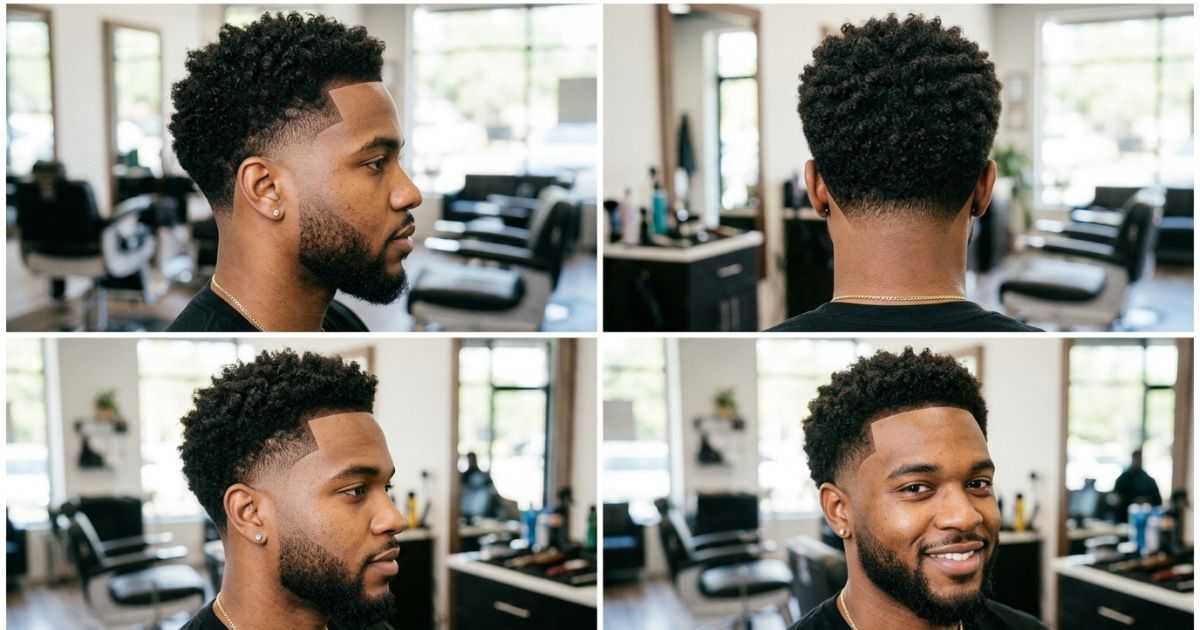
A low taper fade haircut for Black men keeps the cleanup right at the sideburns and neckline while your natural texture stays the star on top. It suits waves, coils, twists, and locs, and it looks sharp without shouting for attention. That balance explains why barbers hear this request daily.
This guide covers what the cut is, the best styles by texture, and how it compares with mid and high tapers. You will also get barber-ready wording, guard lengths, an upkeep routine, product picks, costs, and mistakes to avoid, so you leave the chair with exactly the cut you pictured.
Quick answer: A low taper fade shortens hair gradually around the sideburns, ears, and nape, leaving the sides and top longer. Expect a touch-up every 2–3 weeks, with a 4–5 week limit if you can tolerate some softness at the edges.
What is a low taper fade haircut?
A low taper fade is a cut where the hair gets shorter in a smooth gradient, but only at the very bottom of the head. The shortening happens around the sideburns, behind the ears, and along the neckline. Everything above that zone stays noticeably longer.
Think of it as framing. The taper cleans the outline and leaves your curl pattern, wave pattern, or afro volume untouched.
How it differs from a regular fade
Learn more:Blowout low taper fade curly hair: styles, barber tips, and maintenance 2026
“Regular fade” has no fixed meaning. In some shops it means a mid fade, in others a skin fade. Two things separate a low taper from the rest: where the blend starts and how far it goes.
| Feature | Low taper fade | Typical skin fade |
| Blend starts | Low, at sideburns and nape | Mid to high on the sides |
| Bottom finish | Short stubble or light skin | Down to bare skin |
| Contrast with top | Soft and subtle | Sharp and dramatic |
| Length kept on sides | Most of it | Very little |
| Regrowth visibility | Low | High |
A taper also changes hair length gradually on the edges only. A true fade usually runs across a bigger area of the sides and back.
Why a low taper fade works with Black hair textures
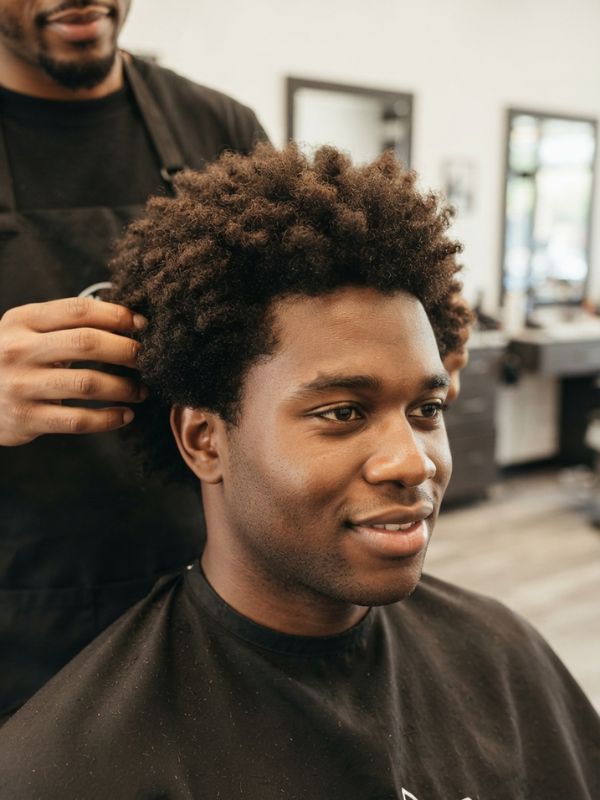
Black hair ranges from loose 3C curls to tight 4C coils, and each type behaves differently once cut. Dense coils shrink and spring up. Waves need consistent length on the sides to stay visible. A low taper respects all of it because it leaves the upper sides and crown alone.
Here is why barbers lean on it:
- It protects volume. Afros and coils keep their shape instead of being flattened by an aggressive high fade.
- It preserves wave patterns. Your brushing work is not cut through by a fade line halfway up the head.
- It softens the hairline. A gentle blend draws less attention to thin temples or a slightly uneven hairline.
- It grows out cleanly. Because the fade sits low, regrowth blends into the existing shape rather than creating a hard line.
- It’s flexible. It works on short crops and on long styles like braids or locs.
Best low taper fade styles for Black men
The taper stays the same. The top is what changes the personality of the cut.
Low taper fade with waves
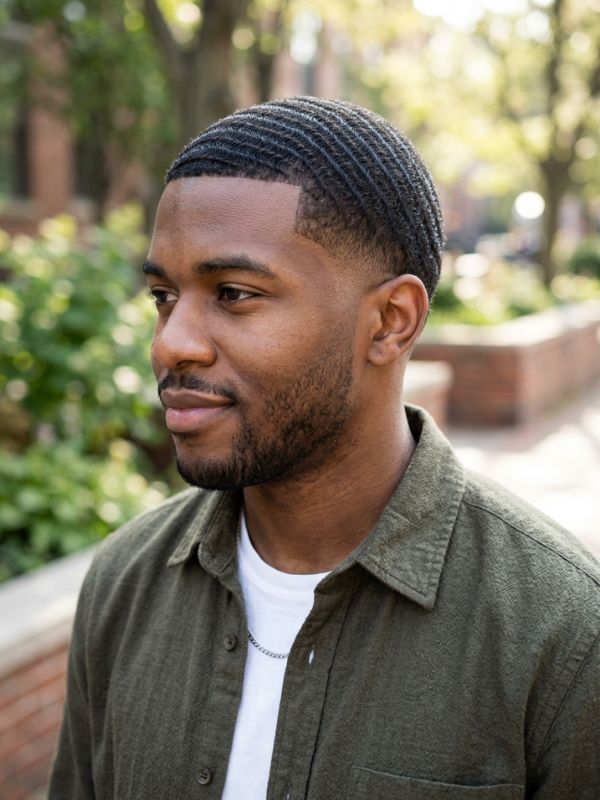
This is a favorite with wavers. Because the fade only touches the base, a 360 wave pattern can keep spinning around the sides and back without interruption. A 180 pattern works too, especially if you are earlier in your wave journey.
- Keep the top short, usually 1/2 inch or less, so the pattern shows clearly.
- Brush daily with a medium or hard bristle brush.
- Sleep in a durag or wave cap to lock the pattern in.
Low taper fade with curls or an afro
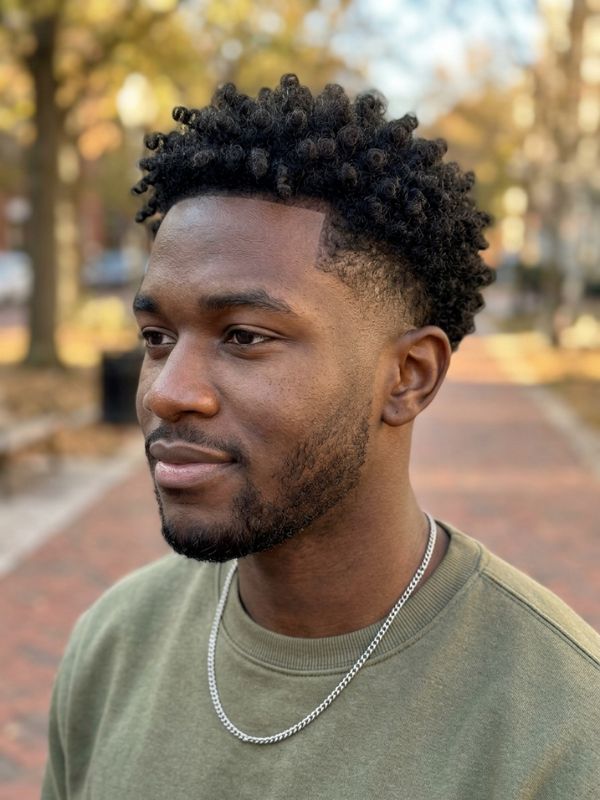
Curls and afros gain the most from a defined perimeter. The top can stay as a natural rounded shape, a tapered mini afro, or a twisted-out crown.
- Mini afro: About 1–2 inches on top, easy to shape daily.
- Full afro: Three inches or more, shaped with a pick at the crown.
- Defined curls: Use a curl cream or gel to separate strands and add shine.
Low taper fade with sponge curls, twists, or locs
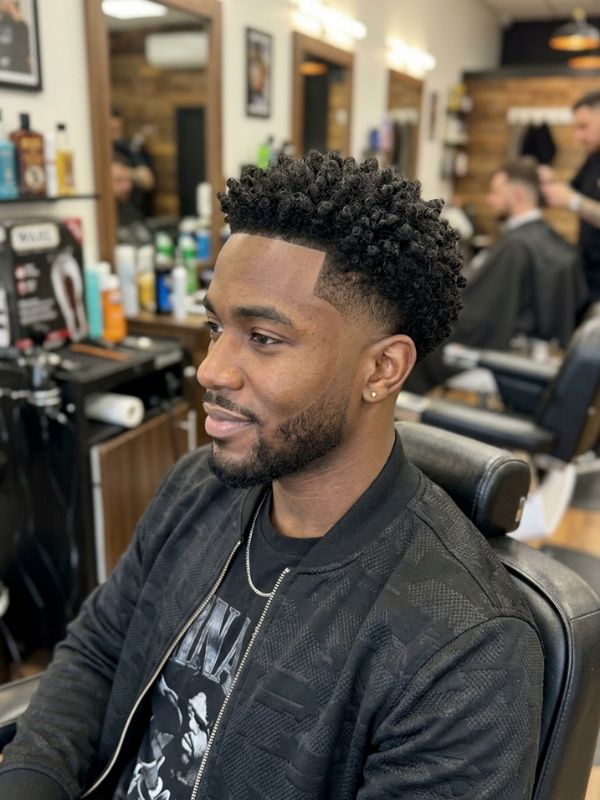
Sponge curls create uniform, coiled texture with minimal styling time. Two-strand twists add definition and work on short to medium hair. Locs pair well with a low taper because it keeps the sides and nape neat while the locs carry the look. If you wear locs, ask your barber to leave the loc bases at the perimeter alone.
Low taper fade with a buzz cut
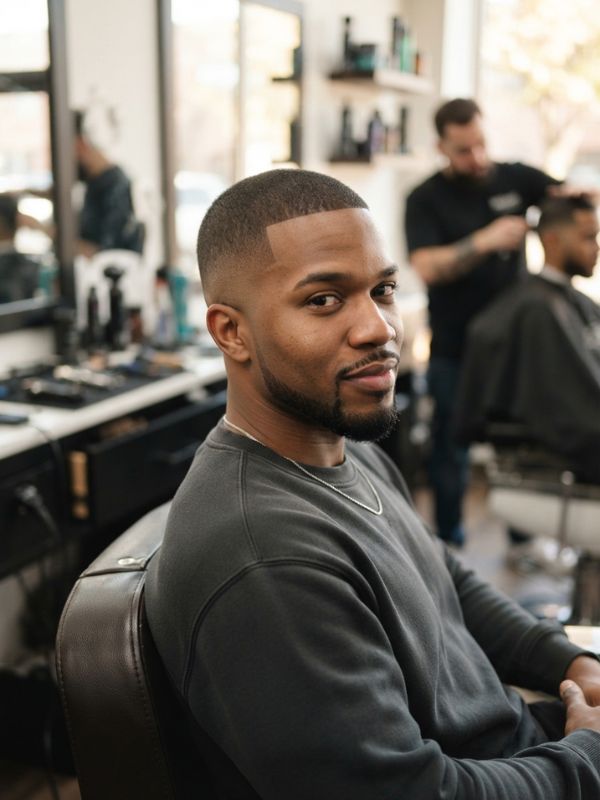
This is the lowest-effort version. A buzz on top with a tight taper at the nape and temples needs almost no styling, and it holds up through gym sessions and humid weather. A useful trick is to use a slightly longer guard on top than on the sides so the cut doesn’t look flat.
Low taper fade with a beard and line-up
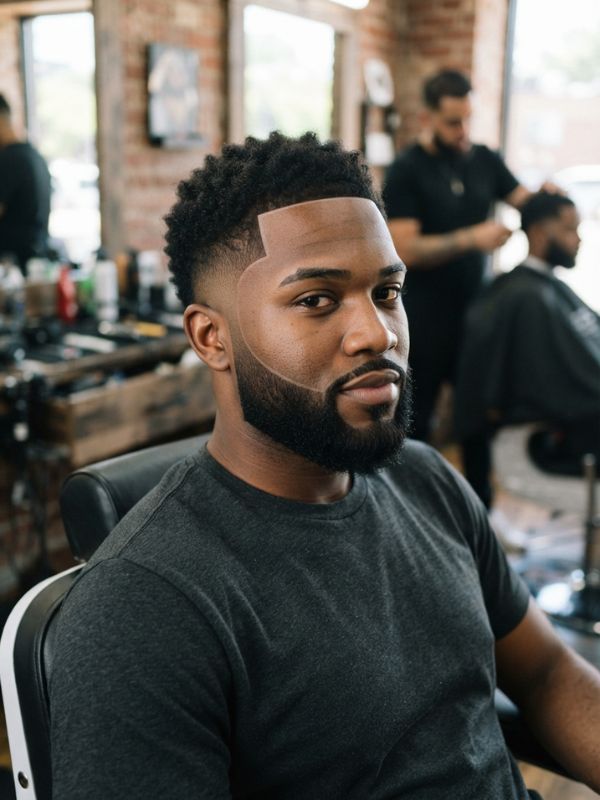
A beard turns a good haircut into a complete look. The key is a seamless connection from sideburn to beard, with no gap or harsh step.
- Ask the barber to match the guard used on the sideburns to the start of the beard.
- Request a light line-up (edge-up) along the forehead and temples.
- Keep the cheek line natural rather than razor-straight, since a very high cheek line can look severe.
Popular combinations at a glance
| Style | Top length | Best for | Upkeep level |
| Waves + low taper | 1/8–1/2 in | Wave builders | Medium to high |
| Mini afro + low taper | 1–2 in | 4A–4C coils | Medium |
| Full afro + low taper | 3+ in | Volume lovers | Medium |
| Sponge curls + low taper | 1–2 in | Quick styling | Low to medium |
| Twists or locs + low taper | Varies | Long-term growers | Medium |
| Buzz cut + low taper | 1/8–1/2 in | Minimal effort | Low |
| Beard blend + low taper | Any | Full-face grooming | Medium |
Low taper vs mid taper vs high taper fade
Height decides how bold the cut looks. Here is a side-by-side comparison you can screenshot for your barber.
| Type | Where the blend begins | Contrast level | Work-friendly | Touch-up timing |
| Low taper | Sideburns, ear base, nape | Subtle | Very | 2–3 weeks |
| Mid taper | Around the temple | Moderate | Yes | 2 weeks |
| High taper | Upper temple or above | Bold | Depends on workplace | 1–2 weeks |
Choose a low taper if you want a natural look, a forgiving grow-out, or a safe first step into fades. Go mid or high if you want more contrast against a fuller top.
How to choose the right low taper fade for your face shape
Fade height stays the same, but top shape and length should shift with your face.
| Face shape | What to aim for | Top style to try |
| Round | Add height, avoid width | Taller afro, high-top twists, textured crop |
| Oval | Nearly anything works | Waves, curls, buzz, or afro |
| Square | Soften strong angles | Rounded top, soft curls, mini afro |
| Long or oblong | Avoid extra height | Shorter top, waves, or a flat-top shape |
| Heart | Balance a narrow chin | Medium length with volume near the sides |
A beard can adjust proportions too. A fuller beard adds width to a narrow jaw, while a tightly trimmed one keeps a round face looking longer.
What to ask your barber for a low taper fade
Clear wording prevents most bad cuts. Try this script:
“I’d like a low taper at the sideburns and neckline only. Please keep it below my temples, blend it into my beard, and finish with a light line-up.”
Then describe the top separately, such as “keep the length for waves” or “shape my afro and leave the volume.”
Guard lengths and fade height
Guard numbers vary a bit by clipper brand, but these ranges are a solid starting point.
| Area | Typical guard | Result |
| Top (waves/buzz) | #1–#2 | Short, brush-ready |
| Top (curls/afro) | Scissor or comb length | Shaped by hand |
| Sides (upper) | #2–#3 | Kept fuller |
| Fade zone (low) | #0.5–#1 | Tight blend |
| Very bottom edge | Skin or foil shaver | Optional clean finish |
Say the word “low” out loud. Also state whether you want the bottom to reach skin, since “low taper” alone doesn’t say how short the edge should go.
Why a reference photo helps
Barbers use the same terms for different results. A photo shows fade height, top length, and line-up sharpness in one glance. Pick an image with hair texture close to yours, and point to the exact detail you like.
How to maintain a low taper fade
How often to get a touch-up
| Goal | Suggested schedule |
| Sharp edges and crisp line-up | Every 2 weeks |
| Standard upkeep | Every 2–3 weeks |
| Relaxed, natural grow-out | Every 3–4 weeks |
| 360 waves in progress | Every 1–2 weeks (line-up only) |
Daily and weekly routine
Daily:
- Brush or comb your pattern in the direction it grows.
- Apply a light moisturizer or leave-in conditioner.
- Tie on a durag or wave cap at night.
Weekly:
- Wash with a gentle, sulfate-free shampoo.
- Condition or apply a light scalp oil.
- Wash your brush and pillowcase or durag.
Keeping the hairline fresh
- Let your barber handle the line-up. Do only light cleanup at home.
- Remove new growth only. Don’t re-cut the same line deeper each time.
- Use a soft brush to keep short hairs lying flat.
- Ask for a “clean up” rather than a “re-shape” if your hairline is already good.
Best products for a low taper fade on Black hair
| Product type | Best for | What to look for |
| Wave brush | Waves | Medium or hard bristles, firm handle |
| Durag or wave cap | Waves, curls | Soft, breathable fabric |
| Light pomade | Waves, short crops | Water-based, non-greasy |
| Curl cream or gel | Curls, sponge styles | Alcohol-free, moisture-rich |
| Leave-in conditioner | All textures | Lightweight formula |
| Afro pick | Afros | Wide teeth, smooth finish |
| Scalp oil | Locs, dry scalp | Jojoba, argan, or similar |
| Beard oil or balm | Beards | Softens hair for cleaner trimming |
| Edge control | Line-up areas | Non-flaking, light hold |
Skip heavy, alcohol-based gels on the scalp. They can dry it out and cause flaking.
Common mistakes to avoid
- Not naming the height. Some barbers default to a mid fade unless you say “low.”
- Over-lining the hairline. Repeated aggressive edge-ups can push the hairline back.
- Skipping moisture. Dry short hair looks dull and can flake.
- Copying a photo without considering texture. Your coil type changes how a cut lays.
- Letting regrowth go too long. The clean look fades fast once the line-up softens.
- Using harsh products. Strong gels and heavy grease irritate the scalp.
- Ignoring the beard blend. A gap between sideburn and beard breaks the whole cut.
Low taper fade cost and appointment time
A standard low taper usually takes 30–45 minutes. Add 10–15 minutes for a beard blend, design lines, or detailed line-up work.
Prices vary a lot by city, shop, and barber experience. As a rough guide, many US shops charge around $25–$60 for a fade, with big-city or premium shops going higher. Confirm pricing with your barber before you sit down.
| Service | Typical add-on time | Typical add-on cost |
| Line-up or edge-up | 5–10 min | Often included or a few dollars |
| Beard shape-up | 10–15 min | Varies by shop |
| Hair design | 10–20 min | Varies by complexity |
| Wash and style | 10 min | Varies by shop |
Tip your barber the way you normally would for personal services. Many people use 15–20%.
Is a low taper fade good for work, school, and formal events?
Yes. It is among the most widely accepted fades because the contrast is gentle and the look stays neat.
| Setting | Recommended version |
| Office or corporate | Short waves, buzz, or neat curls with light line-up |
| School | Any version with a tidy line-up |
| Formal events | Fresh cut, crisp edges, groomed beard blend |
| Casual or creative settings | Afro, twists, or defined curls |
Book your appointment 1–3 days before a big event so the edges look sharp but not brand new.
FAQs about low taper fade haircuts for Black men
Is a low taper fade good for Black hair?
Yes. It cleans up the edges while leaving your natural texture, from waves to coils, fully intact.
How long does a low taper fade last?
Most people refresh it every 2–3 weeks. Waves and sharp line-ups may need visits every 1–2 weeks.
What is the difference between a low taper and a low fade?
A taper shortens hair gradually only at the edges. A low fade usually goes shorter, often down to skin, across more of the sides.
Can I get 360 waves with a low taper fade?
Yes. It keeps the sides and back long enough for the pattern to keep rotating.
What should I tell my barber?
Ask for a “low taper at the sideburns and neckline, below the temples,” then describe your top style and any beard blend.
Does a low taper fade work with a beard?
Yes. Ask the barber to match the sideburn guard to the beard so the blend looks seamless.
Will a low taper fade hide a receding hairline?
It can soften the look, but it won’t hide recession. A barber can shape the line-up to flatter your hairline.
Is a low taper fade low maintenance?
Compared with mid and high fades, yes. It still needs brushing, moisture, and regular trims.
What guard should I use for a low taper fade?
A common range is #2–#3 for the upper sides, tapering to a #0.5–#1 at the bottom edge.
Is a low taper fade professional?
Yes. It is a clean, subtle cut that suits offices, schools, and formal events.
Conclusion
A low taper fade is one of the most flexible cuts a Black man can wear. It frames waves, curls, afros, twists, and locs without changing their pattern, blends smoothly into a beard, and stays polite enough for the office, classroom, or wedding. Few styles offer that range with so little effort.
Success comes down to three habits: name the fade height out loud, bring a reference photo, and keep a steady brushing and moisture routine. Book your next visit before you leave the chair, protect your hairline from over-cutting, and your low taper will look fresh from the first day to the last.